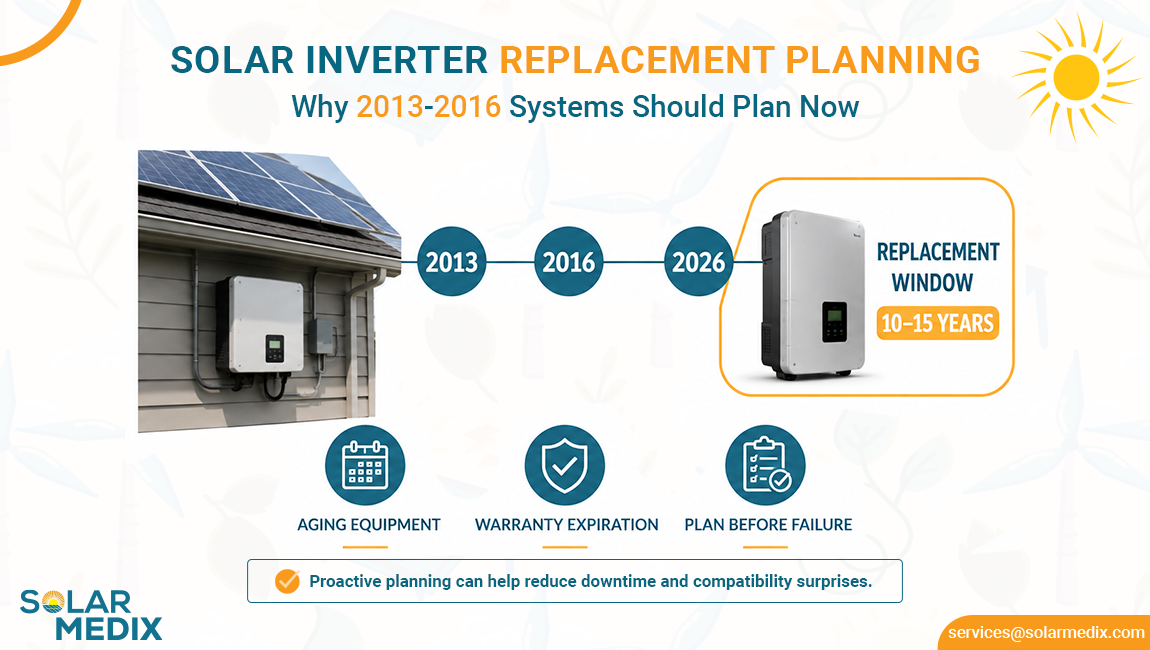
Solar inverter replacement planning matters now because many New Jersey systems installed from 2013 to 2016 have 10-to-13-year-old inverters entering the typical 10-to-15-year replacement window, making proactive replacement worthwhile before failure causes downtime, compatibility problems, or an emergency parts search.
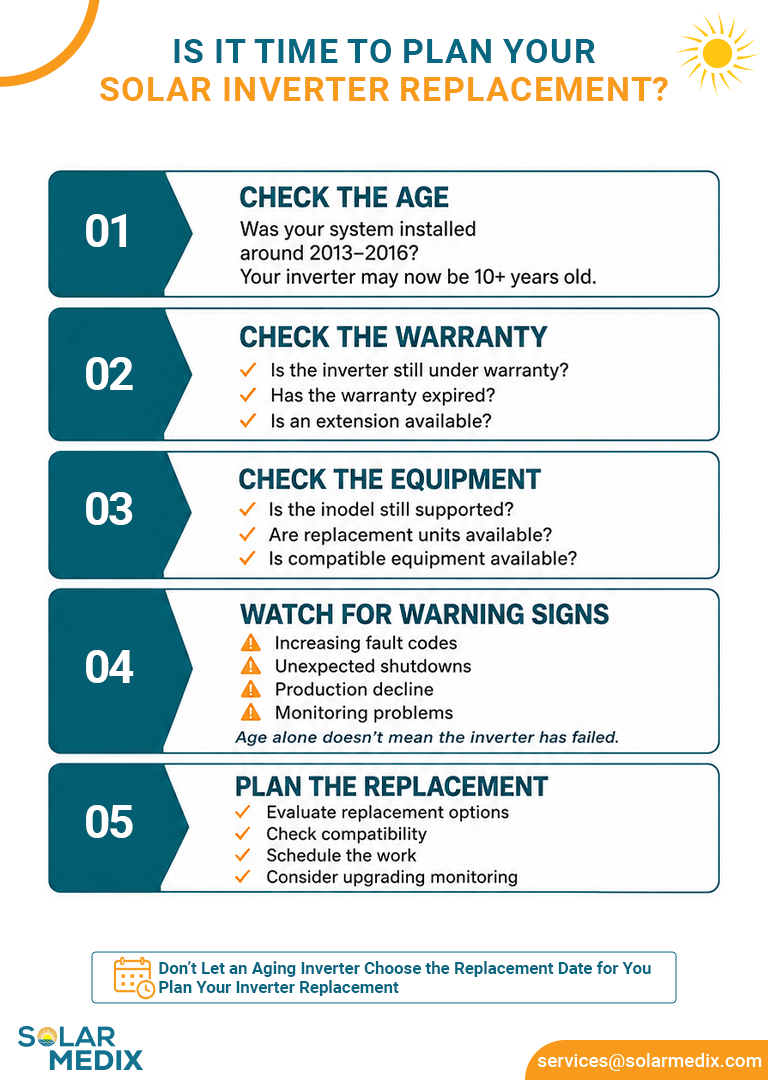
New Jersey’s 2013-to-2016 solar boom created a large group of systems now reaching this replacement window. Waiting for an inverter to fail can mean lost production, limited availability of compatible equipment, and an expired warranty. Planning ahead lets homeowners choose the replacement timing, confirm equipment availability, and potentially upgrade monitoring at the same time. This guide explains how long inverters typically last, when replacement makes sense, and how to plan the change before an aging inverter forces the decision.
Solar Inverter Replacement Planning: Why This Cohort Matters Now
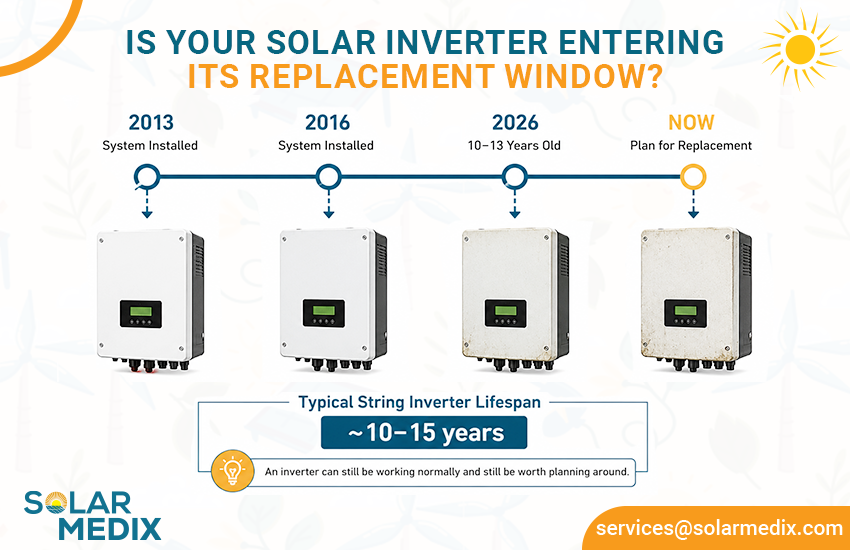
Solar inverter replacement planning is really a timing question as much as a technical one. An inverter installed in 2013 or 2014 has already outlived its standard warranty in most cases, and it’s approaching the far end of its expected service life even if it’s never thrown an error code. That’s a very different situation from a system that’s actively failing, and it calls for a different kind of conversation: not “what’s wrong with my inverter,” but “when does it make sense to swap this out on my own timeline.” The decision between solar inverter repair or replacement can help put the planning question in context, while this piece focuses specifically on systems in this age range.
How Long Do Solar Inverters Actually Last?
Most solar inverters last about 10 to 15 years, although the actual lifespan depends on the inverter type, operating conditions, maintenance, and system age. The two most common configurations, string inverters and microinverters, can have different expected lifespans and replacement timelines.
String Inverter Aging and Typical Lifespan
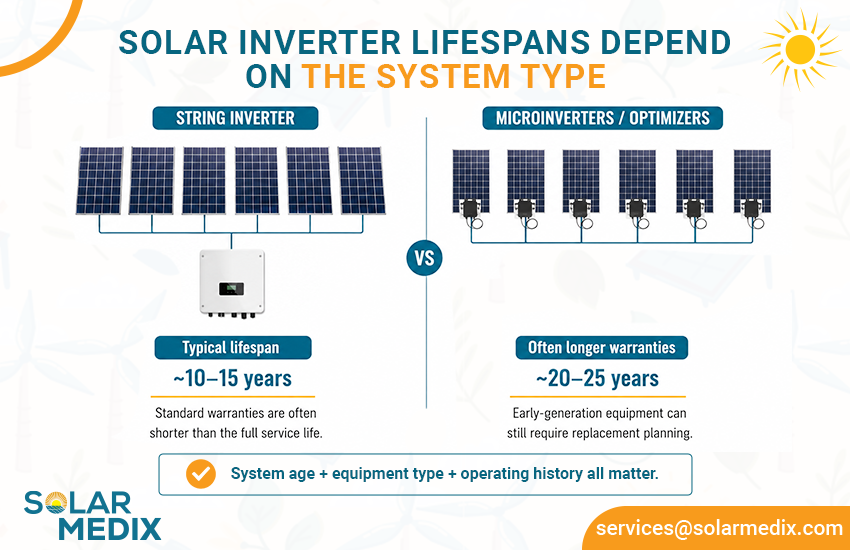
Standard string inverters typically last 10 to 15 years, and industry lifespan data compiled by pv magazine USA confirms that manufacturer warranties on these units generally run 5 to 10 years standard, often extendable to 20. That means a solar inverter lifespan of 10 years is closer to the early end of the range than the finish line, and a unit installed in 2013 to 2016 is now sitting well past its original warranty term even if it’s still producing normally.
Microinverters and Power Optimizers Age Differently
Microinverters and power optimizers generally carry longer warranties, often 20 to 25 years, since each unit handles a single panel rather than the full array. That said, early-generation microinverter models from this same 2010 to 2014 era have shown higher-than-expected failure rates as they’ve aged, which means even a microinverter-based system from this period isn’t automatically exempt from the planning conversation.
When Should You Replace an Old Solar Inverter?
Before it fails, not after, once a unit is within a few years of its warranty expiration and inside its typical lifespan window. Knowing when to replace an old solar inverter is less about waiting for a specific symptom and more about tracking age against the ranges above and recognizing solar inverter end of life as a planning trigger in its own right. Signs that your solar inverter is failing before it breaks down can help identify emerging problems, while repairing versus replacing your solar inverter can help determine the right response when an issue does appear. This piece is specifically about acting on age and timing before symptoms ever show up.
Why Planning Beats Waiting for Failure
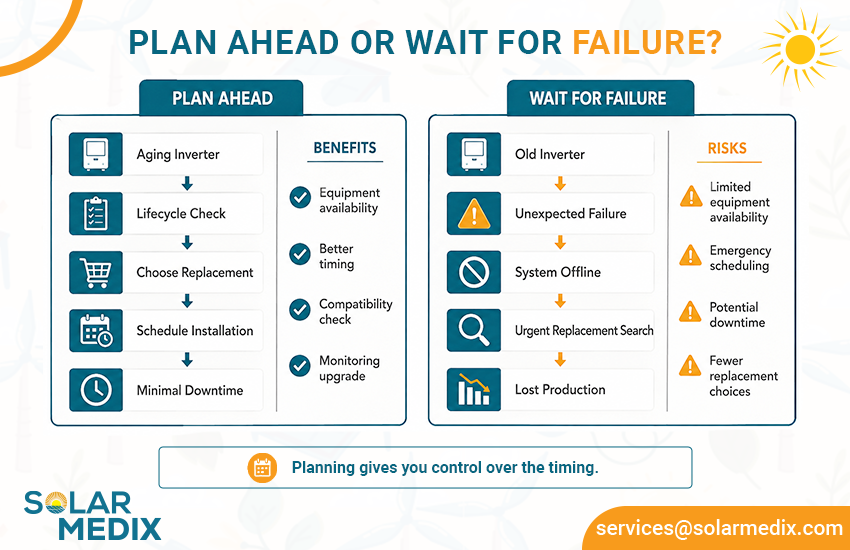
Planning an inverter replacement before failure gives you control over timing, equipment availability, costs, compatibility, and downtime, while waiting for failure can leave you dealing with an urgent replacement, limited parts, longer outages, and fewer choices.
Replacement Lead Times and Brand Availability
Inverter obsolescence is a real factor for a system this age: the exact model installed in 2013 may no longer be manufactured, and a technician sourcing a like-for-like replacement during an active failure is working against both replacement lead time and whatever’s currently in stock. Planning ahead means confirming what’s available and compatible with your existing panels before an outage forces a rushed decision.
Warranty Expiration and the Cost of Waiting
Warranty expiration on an inverter this age has usually already happened or is close, which means a failure at this point is a full out-of-pocket repair rather than a covered claim. Proactive replacement doesn’t get you warranty coverage retroactively, but it does mean choosing that expense on your own schedule rather than during a production outage in the middle of summer.
Does a New Inverter Also Mean a Monitoring Upgrade?
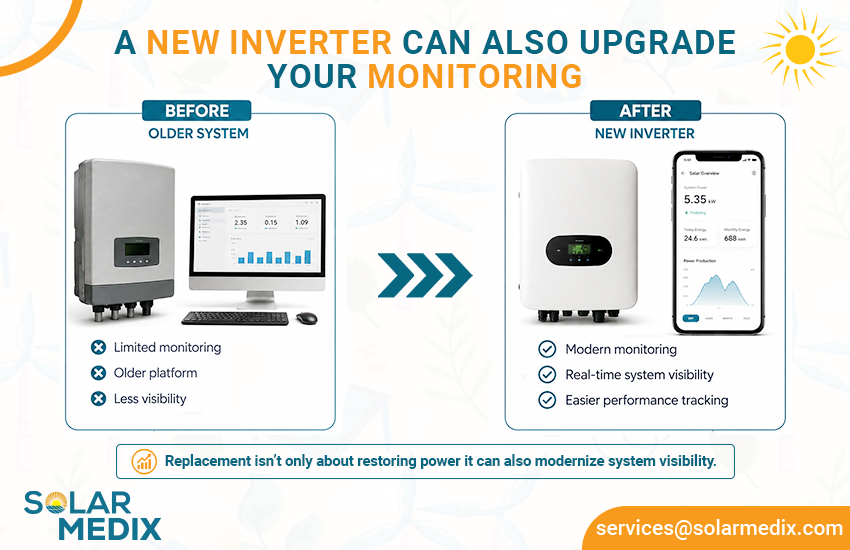
Yes, and it’s one of the most underrated parts of a planned replacement. Inverters installed in the 2013 to 2016 window often shipped with monitoring platforms that have since been discontinued, sold off, or folded into a different app entirely, leaving owners with limited or no visibility into daily production. A new inverter typically comes with current-generation monitoring built in, which means a replacement is also a monitoring upgrade whether or not that was the original goal. Modern solar monitoring systems can provide far more detailed information about system performance than the monitoring available with many decade-old installations.
Get Ahead of Your Inverter’s Replacement Window
If your system went in during New Jersey’s 2013 to 2016 solar boom, your inverter isn’t necessarily failing today, but it’s old enough that the planning conversation is worth having now rather than later. Solar Medix assesses inverter age, warranty status, and available replacement options as part of a lifecycle check, and handles the swap, including a monitoring upgrade, on your schedule rather than in the middle of an unplanned outage. If you’re not sure how old your inverter actually is or what condition it’s in, that’s the first thing worth finding out before it finds out for you.
FAQs
How long do solar inverters last?
String inverters typically last about 10 to 15 years, while microinverters and optimizers often last longer. That means the large wave of systems installed during the early-2010s solar boom is now entering the replacement window, even if those inverters are still running today.
Should I replace my inverter before it fails?
Often, yes. Planning ahead beats an emergency swap: a proactive replacement lets you choose the timing, confirm the model is still available, avoid weeks of lost production during an outage, and upgrade your monitoring at the same time. Waiting for a failure usually costs more and produces downtime.
How do I know my inverter is nearing end of life?
Age is the first clue: anything past about 10 years deserves attention. Rising fault frequency, declining output, discontinued firmware or monitoring support, and an expired warranty are all signs it’s time to plan. For the specific failure symptoms to watch, see our guide on the signs an inverter is failing.
Will a new inverter improve my system’s performance?
It can. Newer inverters are generally more efficient and come with modern monitoring that catches problems earlier, so a well-timed replacement often recovers some lost output and gives you far better visibility, on top of removing the risk of an unplanned failure.
Can I replace just the inverter without touching the panels?
In most cases, yes. The inverter is a serviceable component, and a qualified technician can plan and perform a like-for-like or upgraded replacement, re-commission the system, and restore monitoring without disturbing the panels themselves.