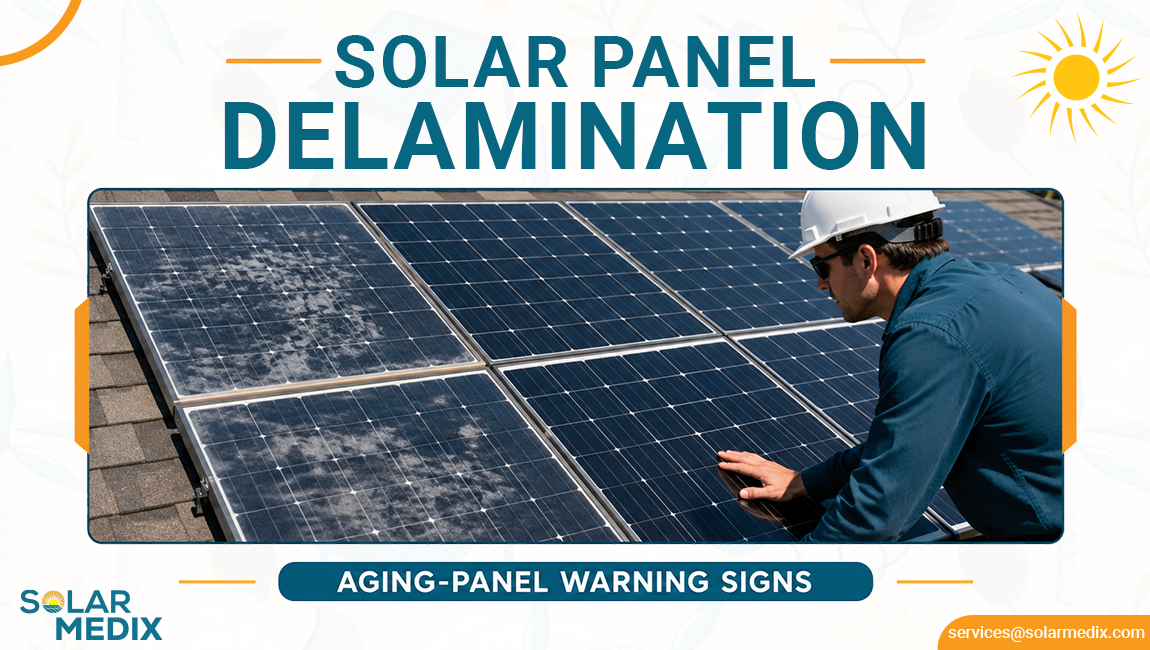
Solar panel delamination and backsheet failure occur when a panel’s protective layers break down, allowing moisture to reach internal electrical components and potentially causing reduced output, ground faults, or fire risks. These defects are usually not meaningfully repairable, so affected panels generally need replacement.
Delamination typically appears as bubbling, cloudiness, or discoloration beneath the glass, while backsheet failure involves cracking or deterioration of the protective rear layer. Both can develop gradually after years of heat, moisture, and UV exposure, often remaining unnoticed until the damage becomes visible. Unlike microcracks or normal panel aging, these defects involve the panel’s internal bonding and sealing, which is why moisture intrusion can turn an initially cosmetic issue into a more serious electrical problem.
What Is Solar Panel Delamination?
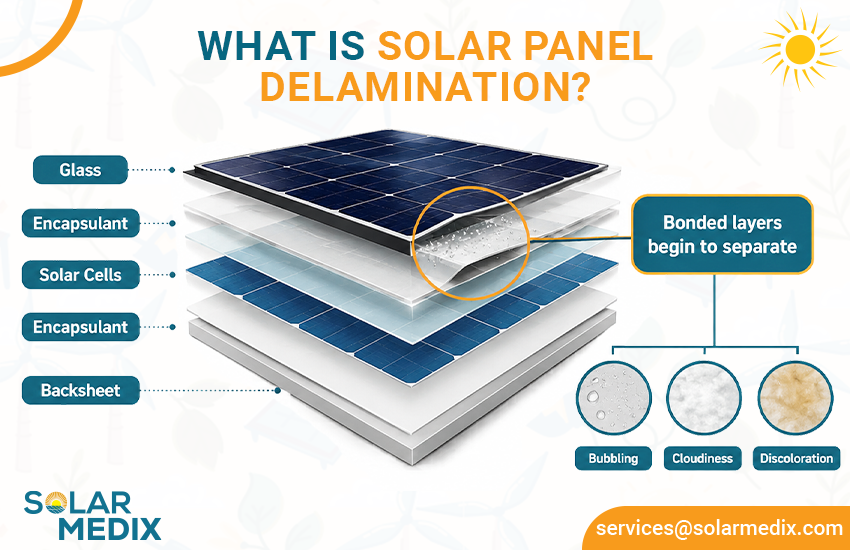
Solar panel delamination is the separation of the bonded layers inside a solar panel, typically caused by long-term exposure to heat, moisture, and UV radiation. It often appears as bubbling, cloudiness, or hazy discoloration beneath the front glass, particularly around panel edges or individual cells.
A solar panel contains tempered glass, encapsulant, silicon cells, another encapsulant layer, and a protective backsheet, all bonded together during manufacturing. Over time, repeated heat cycling, moisture exposure, and UV degradation can weaken those bonds and cause the layers to separate. That is why delamination is more commonly found on aging panels than on newer installations.
What Is Backsheet Failure and Why Does It Matter?
The backsheet is the panel’s rear-facing protective layer, a polymer sheet whose entire job is to keep moisture, dust, and weather away from the electrical components on the underside of the cells. When it cracks, chalks, or otherwise breaks down, it stops doing that job.
A peer-reviewed materials study notes that delamination within a backsheet primarily creates a safety risk by compromising the panel’s wet leakage insulation, meaning the barrier that’s supposed to keep electrical current isolated even when the surface is damp. Once that barrier is gone, backsheet failure stops being a cosmetic issue and becomes an electrical one.
Chalking, where the backsheet develops a powdery, faded surface, and visible cracking are the two most common signs. Both mean the material has become brittle, usually from years of UV and thermal exposure, and brittle backsheet material is far more likely to let moisture through than the flexible material it started as.
How Can I Tell If My Panels Are Delaminating or Degrading?
A handful of visible signs point to delamination or backsheet failure specifically, as opposed to general wear or a microcrack: bubbling or cloudiness visible under the front glass, brown or yellow discoloration spreading across a panel rather than staying in one spot, a backsheet that looks chalky or shows visible cracks when inspected from underneath or from the roof edge, and any sign of moisture or fogging trapped inside the panel itself. An unexplained drop in production from one section of the array, rather than the whole system, is often the first clue that something is happening to a specific panel rather than the system as a whole.
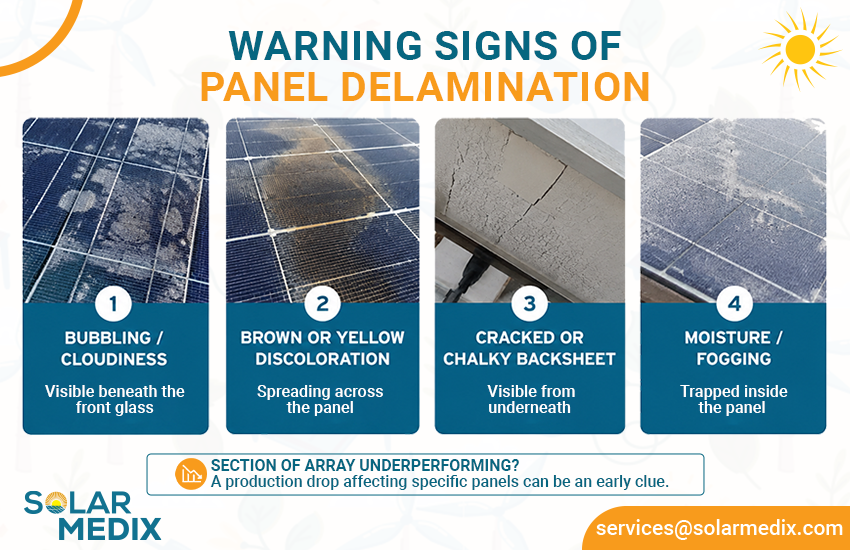
None of these signs are always obvious from the ground. A ladder inspection or a technician with a thermal camera will usually catch discoloration and hot spots well before they’re visible from a driveway, which is part of why these defects can go unnoticed for so long. Signs a solar panel is wearing out include delamination and backsheet failure among the more serious and less visible indicators of panel aging.
Why Delamination and Backsheet Failure Reduce Output and Raise Safety Risk
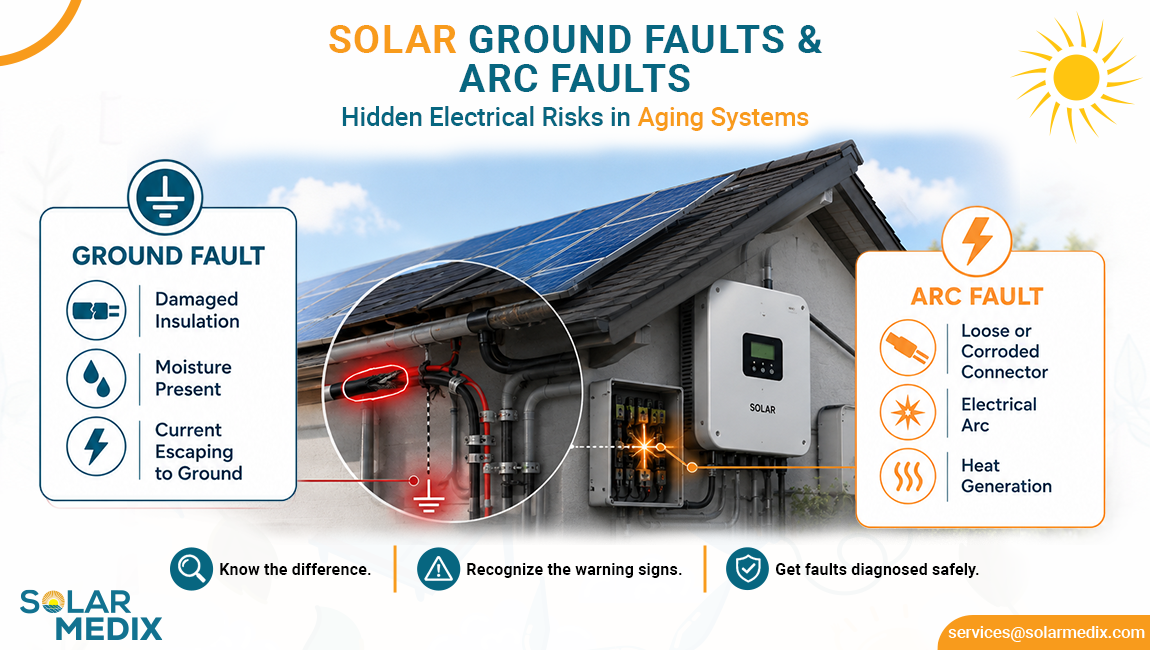
Once moisture gets past a compromised backsheet or into a delaminated section, it reacts with the internal materials of the panel and accelerates further breakdown, which is part of why these defects tend to worsen rather than stabilize once they start. On the performance side, moisture ingress interferes with the electrical connections and encapsulant clarity, which shows up as reduced output from the affected panel or panels. On the safety side, moisture reaching electrical components that were designed to stay sealed can create ground-fault conditions and, in some documented cases, arc faults that pose a fire risk. This is why a delaminating panel isn’t something to leave alone simply because it’s still technically producing power.
Microcracks are a separate defect from delamination and backsheet failure, even though all three can eventually allow moisture-related damage. Microcracks in solar panels and the repair-or-replacement decision involve physical fractures in the silicon cells, usually caused by impact or mechanical stress, while delamination and backsheet failure involve problems with the panel’s sealing and bonded layers. The starting point and diagnostic approach are therefore different.
Can a Delaminated or Backsheet-Damaged Panel Be Repaired?
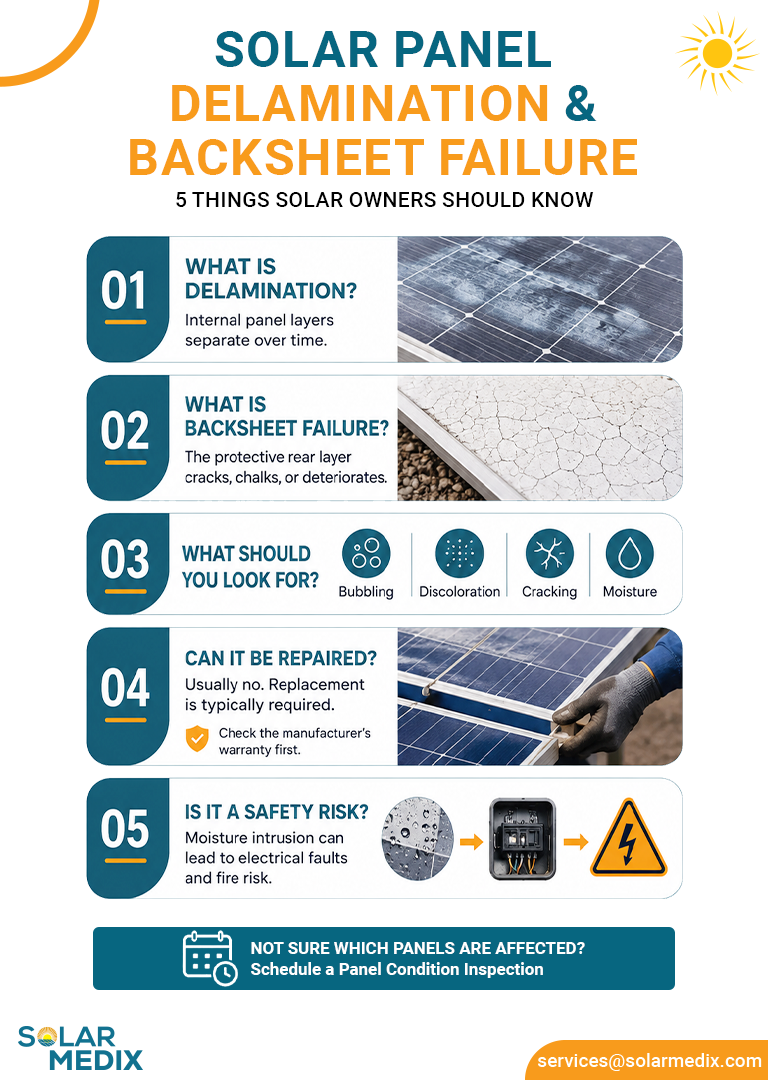
Generally, no. Once the internal layers of a panel have separated or the backsheet has cracked, there’s no practical way to reseal a sandwich structure that was bonded under factory heat and pressure. In almost all cases, the answer is to replace the affected panel rather than attempt a repair. The first step before replacing anything, though, is checking the manufacturer’s warranty. Many panel manufacturers cover delamination and backsheet defects for 10 to 25 years, depending on the product, and a defect that shows up within that window may be replaced at little or no cost.
It’s also worth confirming which panels are actually affected before assuming the whole array needs attention. Delamination and backsheet failure are usually isolated to specific panels, often ones that faced more direct sun exposure or slightly different manufacturing conditions than the rest of the array, rather than a defect that spreads evenly across every panel installed the same day. Solar Medix’s broader comparison of solar panel repair versus replacement walks through how that decision gets made once the affected panels are identified.
Are Aging Panels With These Issues a Safety Risk?
They can be. The core concern is moisture reaching electrical components that are supposed to stay isolated, which raises the risk of ground faults and, in less common but documented cases, arc-related fire risk. This is one of the reasons rooftop solar systems are required to include ground-fault protection under the electrical code, and why a compromised backsheet undermines a safeguard the system was built to have. Beyond the immediate safety question, letting a delaminated panel sit also tends to accelerate the rest of its degradation, since the moisture that gets in doesn’t dry back out on its own.
Heat, moisture, and UV exposure are also major factors in solar panel lifespan and long-term degradation, with delamination being one possible result alongside other forms of wear. Identifying these problems early, before they become a safety concern rather than just a performance issue, is the purpose of a panel condition inspection.
Know Which Panels Are Actually Affected
Delamination and backsheet failure are easy to miss because they develop quietly, inside the panel, long before they’re obvious from the ground. By the time bubbling or discoloration is visible without a ladder, the internal seal has usually already been compromised for a while. A panel condition inspection is built specifically to catch this: checking for the visual signs, confirming which individual panels are affected rather than assuming the whole array is at risk, and reviewing warranty coverage before recommending replacement. For homeowners with an aging system, or anyone who’s noticed one section of the array underperforming the rest, getting those panels looked at directly is a more useful next step than waiting to see if the issue gets worse on its own.
Panel Delamination and Backsheet Failure FAQs
What is solar panel delamination?
Delamination is the separation of the bonded layers inside a solar panel, often visible as bubbling, cloudiness, or discoloration under the glass. It usually develops after years of heat, moisture, and UV exposure, and it lets moisture into parts of the panel that were meant to stay sealed, which reduces output and raises safety risk.
What is backsheet failure and why does it matter?
The backsheet is the panel’s protective rear layer, and when it cracks, chalks, or breaks down, it stops protecting the electrical components underneath from moisture. That can lead to electrical faults, output loss, and in some cases shock or fire risk, since the backsheet is the panel’s main defense against moisture reaching those components.
How can I tell if my panels are delaminating or degrading?
Look for bubbling or cloudiness under the front glass, brown or yellow discoloration spreading across a panel, a chalky or visibly cracked backsheet, or any moisture and fogging trapped inside the panel. An unexplained production drop from one section of the array, rather than the system as a whole, is often the first sign something is affecting a specific panel.
Can a delaminated or backsheet-damaged panel be repaired?
Generally not. These are internal seal and material failures rather than surface damage, so replacement is the usual outcome. It’s worth checking the manufacturer’s warranty first, since many cover this type of defect, and confirming which specific panels are affected rather than assuming the entire array needs replacing.
Are aging panels with these issues a safety risk?
They can be. Moisture reaching electrical components that were designed to stay sealed raises the risk of ground faults and, in some cases, fire risk, and it tends to accelerate further degradation in the affected panel rather than staying static.