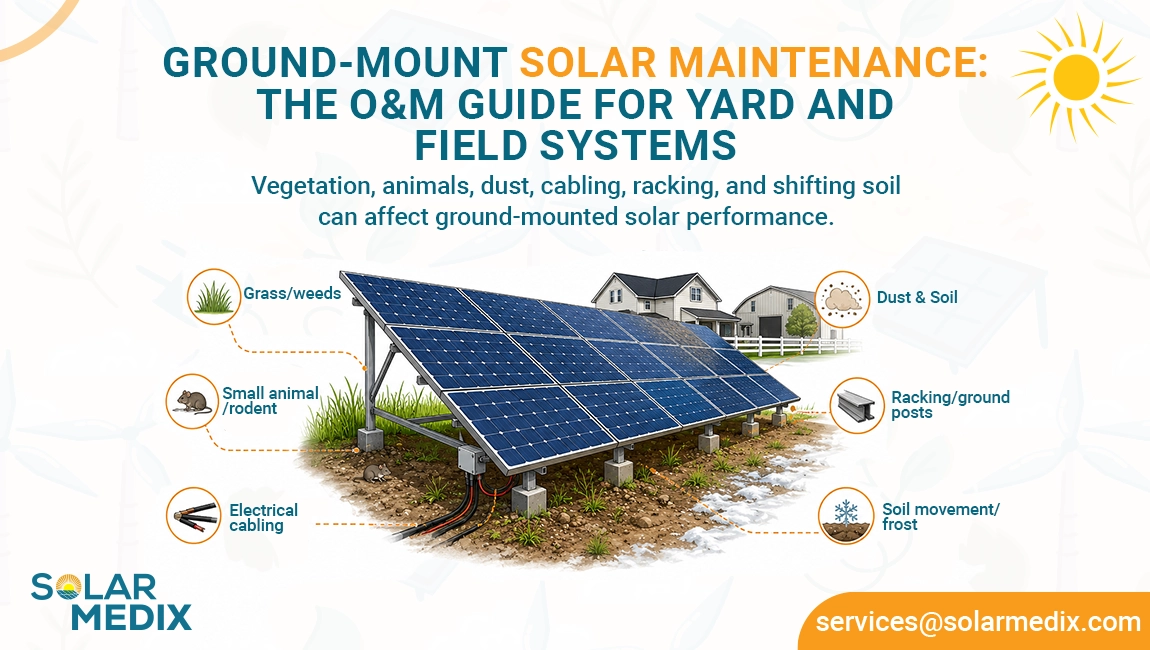
Ground-mount solar maintenance requires specific attention to vegetation, animals, dust, cabling, racking, and shifting soil, so ground-mounted systems need a different O&M approach than rooftop solar. These factors can reduce production, damage equipment, or affect mounting stability if they are not checked regularly.
Rooftop solar dominates the online conversation, but larger properties, farms, and commercial sites often use ground-mount systems. Fast-growing grass and weeds can shade lower panels, rodents can damage wiring and connectors, dust can build up on panels, and New Jersey and New York freeze-thaw cycles can contribute to frost heave and racking movement. Access is easier than a rooftop, but the maintenance checklist is not lighter. This guide covers the key inspection points and how often professional ground-mount solar maintenance should be performed.
Ground Mount Solar Maintenance: A Different System, A Different Wear Pattern
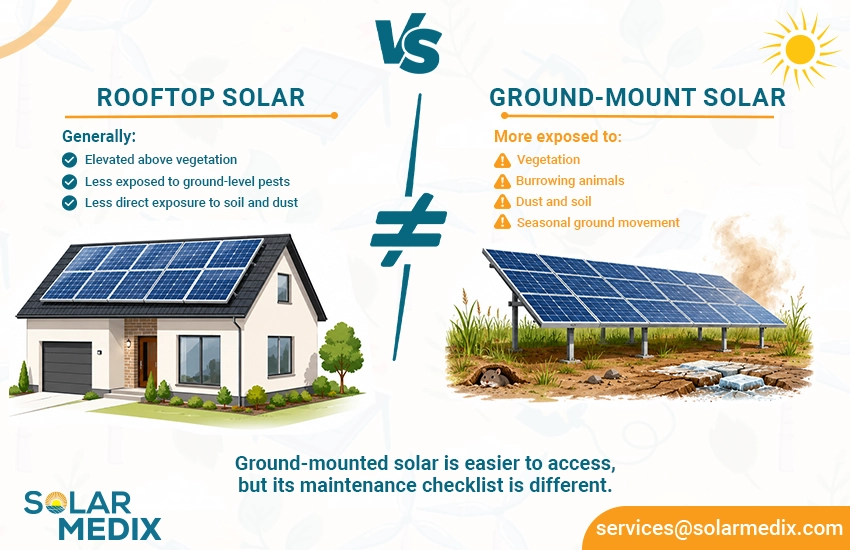
A ground-mounted array is engineered the same way a rooftop system is, but where it sits changes what wears it down. Rooftop panels are elevated, generally free of surrounding vegetation, and shielded from ground-level pests. A ground-mount array sits directly in a yard, field, or farm setting, at the height of the grass, the reach of burrowing animals, and the path of blowing dust and soil. That’s not a flaw in the design. Ground-mount systems are common on larger New Jersey properties, farms, and commercial sites specifically because they offer flexible siting and easier access. It does mean, though, that the maintenance checklist looks different from what a typical rooftop guide covers.
For vegetation practices that apply across both mounting types, our guide to managing vegetation around solar PV systems in the Northeast covers the basics. Ground-mount arrays just experience that pressure more directly and more constantly, which is why solar array vegetation management is especially important when panels sit within reach of what’s growing around them.
The Ground-Mount O&M Checklist: What Actually Needs Attention
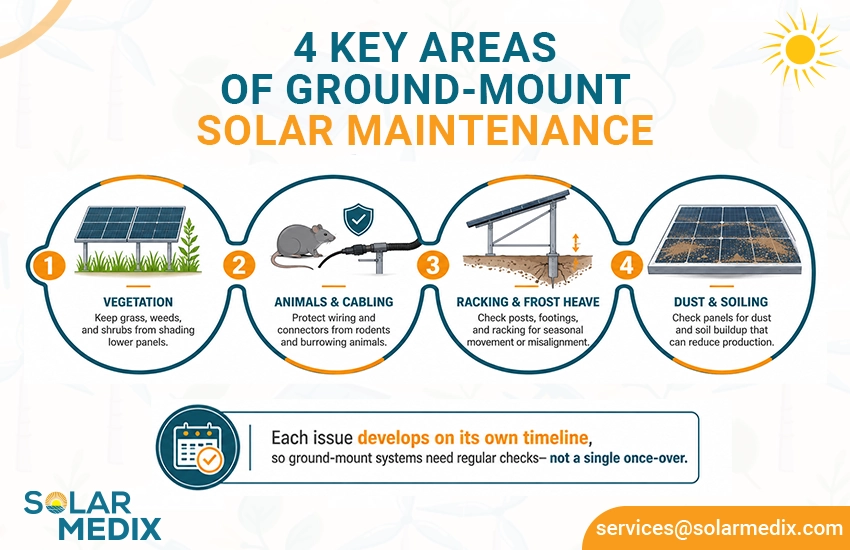
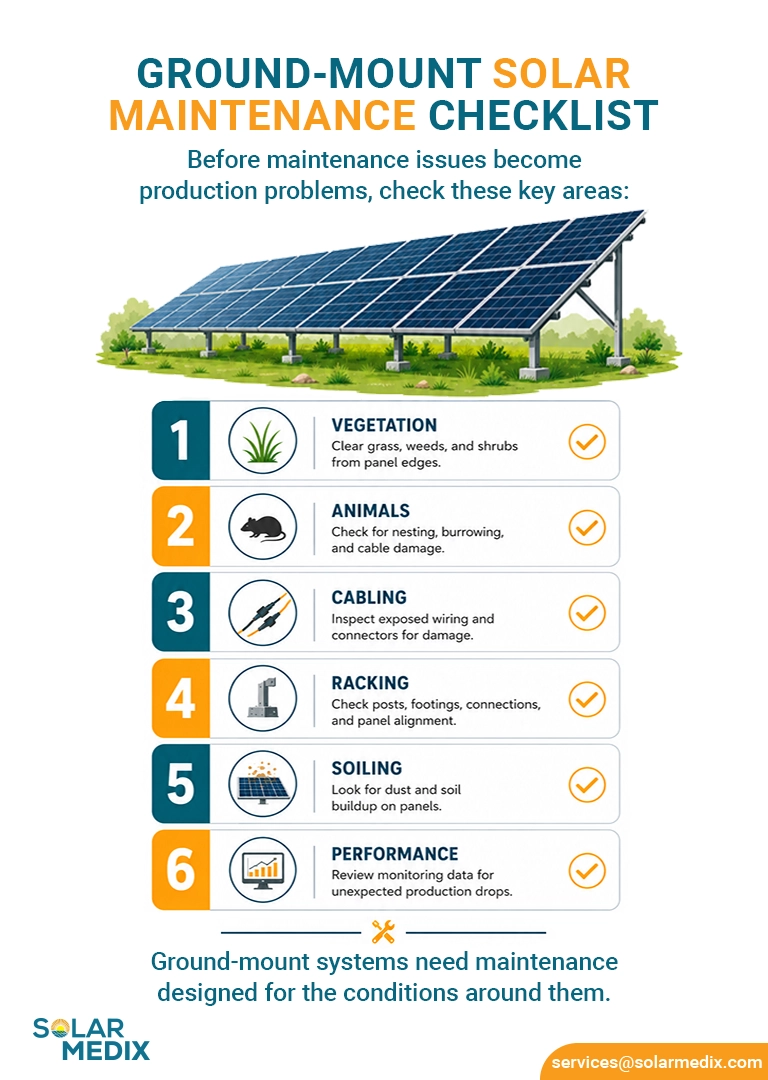
A proper ground-mount maintenance plan covers vegetation and shading, animal intrusion, mounting and racking integrity, and ground-level soiling. Each develops on its own timeline over a season, so each deserves its own look rather than a single once-over.
Vegetation and Shading Management
Vegetation is the fastest-moving issue on a ground-mount array. Grass, weeds, and volunteer shrubs grow into the lower edge of the panels over a single season, and because panels in a string are wired together, shading on even one panel can drag down the output of the whole row. Regular mowing or grazing management around and beneath the array, along with a planting buffer set at installation, keeps this from becoming a recurring production loss instead of a one-time trim. The Department of Energy’s Farmer’s Guide to Going Solar puts forth the value that grazing under and around ground-mount arrays can reduce the need for dedicated mowing on larger sites.
Burrowing Animals and Cable Protection
Rodents and other burrowing animals treat the shaded, sheltered space under a ground-mount array as an ideal place to nest, and they don’t distinguish between soil and the cable runs that pass through it. Chewed wiring and connectors are a common source of underperformance and, in more serious cases, a fault or fire risk. Perimeter fencing or mesh, along with protected cable routing, is standard practice for keeping animals away from exposed wiring.
Frost Heave and Mounting Checks
Ground-mount racking is driven into soil that moves seasonally, and in the Northeast that means freeze-thaw cycles capable of gradually shifting footings over successive winters. This is frost heave: as soil freezes and expands, then thaws and settles, posts and racking can loosen or tilt slightly out of alignment year over year. A periodic mounting check catches this before it becomes a noticeable tilt-angle problem or a stressed connection at the racking joints.
Ground-Dust Soiling
Panels mounted a few feet off the ground pick up more airborne dust and soil than a rooftop array does, especially near unpaved driveways, farm equipment traffic, or dry fields. That soiling builds gradually and cuts output well before it shows up as an obvious drop on a monitoring dashboard. General operations and maintenance guidance from the Department of Energy points to soiling as one of the more common and preventable causes of underperformance across ground-mounted installations, which is why ground-mount systems generally need cleaning on a somewhat tighter interval than rooftop systems in the same region.
Is Ground-Mount Solar Actually Easier to Access and Maintain?
Yes, ground-mount systems are easier and safer to access than rooftop arrays, but ground-mounted solar panel care still requires trained technicians. Diagnosing wiring faults, checking racking integrity, and spotting early frost heave all require experience with ground-level systems.
Ground-Mount Solar Problems Worth Catching Early
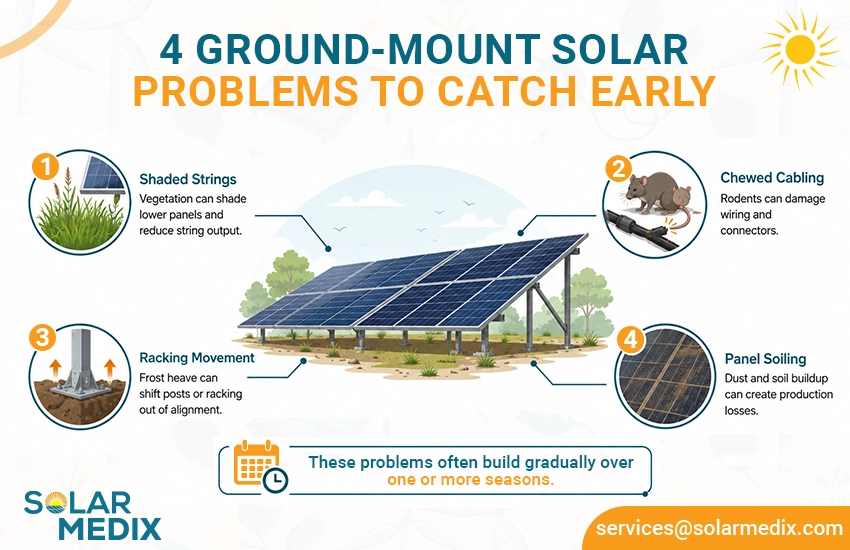
Left unmanaged, the issues above compound into the same handful of ground-mount solar problems again and again: shaded strings pulling down output, chewed cabling causing intermittent faults, racking that’s drifted out of its original tilt angle, and a soiling layer thick enough to show up as a real production gap. None of these tend to appear suddenly. They build over one or more seasons, which is exactly why they’re easy to miss without a system built specifically to check for them.
Our broader guide to 7 ways to care for your solar PV system covers the fundamentals that apply across every mounting type; ground-mount simply adds this layer on top.
How Often Should a Ground-Mount System Be Professionally Inspected?
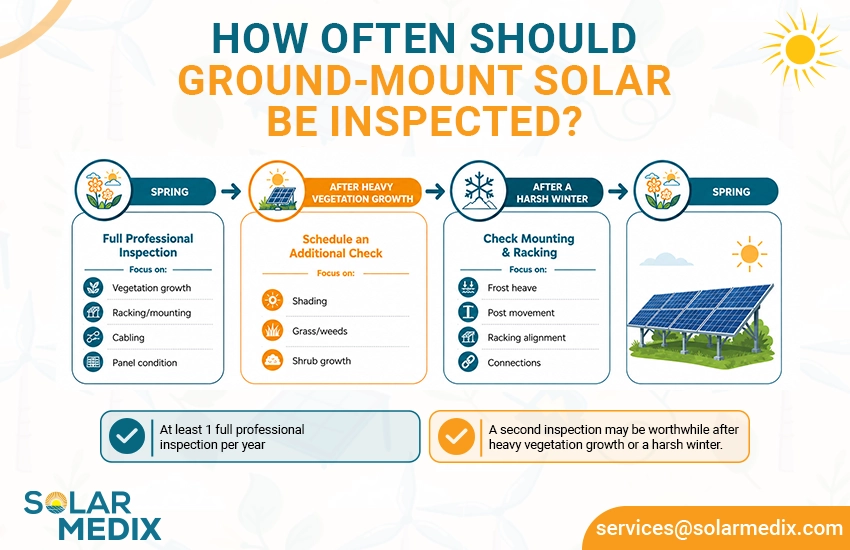
Most ground-mount systems benefit from at least one full professional inspection a year, with a second check worth scheduling after periods of heavy vegetation growth or a harsh winter. Vegetation and dust build on a seasonal rhythm, and frost heave is specifically a winter phenomenon, so timing a visit around spring green-up and again after the first hard freeze cycle catches both categories of wear while they’re still easy to correct. For a full breakdown of general PV maintenance practices, our comprehensive guide to solar operations and maintenance is a useful companion to this ground-mount-specific checklist.
Get Your Ground-Mount Array on a Maintenance Plan Built for It
A ground-mount system needs regular attention to the things that don’t affect rooftop arrays in the same way. Our ground-mount solar maintenance includes checking vegetation, animals, wiring, mounting hardware, frost heave, and panel soiling before these issues affect system performance. Solar Medix inspects your ground-mount system, identifies problems early, and keeps your solar array operating.
FAQs
Does ground-mount solar need more maintenance than rooftop?
Not necessarily more, but different. Ground-mount arrays are easier and safer to access than rooftop systems, but they face issues rooftop systems don’t: fast-growing vegetation shading the lowest rows, burrowing animals reaching cable runs, frost heave shifting the mounting, and dust kicked up from the ground soiling panels.
How does vegetation affect a ground-mount system?
Grass, weeds, and shrubs grow into the array and shade the lowest panels, which, because of how panels are wired, can drag down a whole string’s output. Regular clearance and correct planting distance are core to ground-mount O&M in the Northeast.
Can animals damage a ground-mounted array?
Yes. Rodents and other burrowing animals nest under the array and chew exposed cabling and connectors, which cuts output and creates a fault and fire risk. Perimeter management and cable protection are part of a proper ground-mount maintenance plan.
What is frost heave, and why does it matter for ground-mount solar?
Frost heave is soil movement from freeze-thaw cycles that can gradually shift or loosen ground-mounted footings and racking. Over New Jersey and New York winters, this can misalign panels or stress connections, so mounting integrity should be checked as part of routine service.
Can Solar Medix service a ground-mounted system we didn’t install?
Yes. Solar Medix maintains and repairs ground-mount arrays regardless of the installer, covering vegetation clearance, mounting checks, cabling and connector inspection, cleaning, and full performance diagnostics.