
Commercial solar maintenance cost comes down to four things: system size, service tier, how often the site is inspected and cleaned, and how easy the equipment is to reach. Providers usually set the price per kW of capacity each year or as a flat fee per site, and the gap between an inspection-only plan and a full O&M contract is the largest swing in the bill.
Most solar panel maintenance cost guides combine residential, small commercial, and large-scale solar projects into one broad price range. That makes it difficult for facility managers to estimate what maintenance may actually cost for a commercial site.
This guide focuses specifically on commercial solar sites in New Jersey and New York. It explains what affects maintenance costs, compares the two main types of maintenance plans, and shows you how to review quotes so you can make a fair comparison between providers.
What Drives Commercial Solar Maintenance Cost?

The cost to maintain a commercial solar system is shaped by four factors. Service tier is the biggest and has its own section below, so this section covers the other three: system size, visit frequency, and site access.
System Size and Equipment Count
Larger systems mean more panels, more inverters, more combiner boxes, and more hours on site, so the total bill rises with size. The cost per kW usually falls, because travel, safety setup, and reporting are spread across more capacity. Equipment mix matters as much as kW. An array with hundreds of microinverters calls for different testing than one with a few large inverters, and older or mixed equipment takes longer to diagnose.
Inspection and Cleaning Frequency
Every scheduled visit carries a fixed cost before a technician touches anything: dispatch, access setup, and the report. Each added visit adds that cost again, so inspection frequency and cleaning frequency are the levers an owner controls most directly. The right schedule depends on the site. Flat commercial roofs tend to hold dirt longer than steeply tilted arrays; pollen leaves a film that rain does not always clear, and arrays near trees or roosting birds collect debris faster. A preventive maintenance contract fixes the schedule in advance, which keeps the annual cost predictable.
Site Accessibility
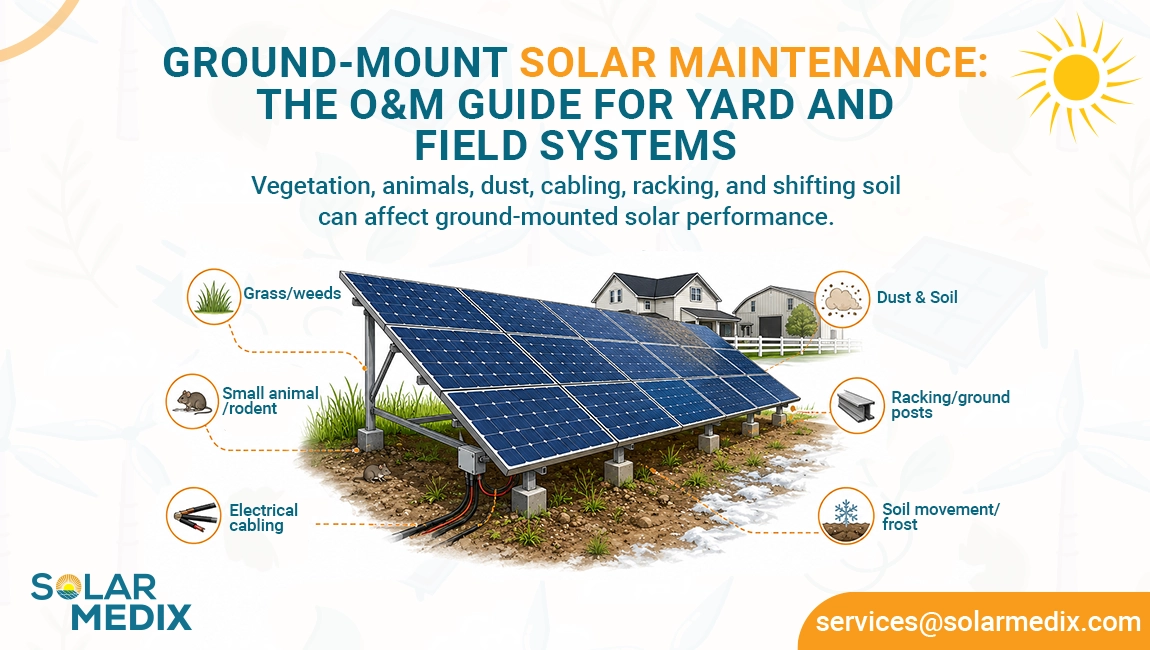
Access is the driver owners underestimate. A roof reached through a hatch and fixed ladder takes longer to work than one with a stair tower, and arrays behind parapets, HVAC units, or skylights need fall protection and careful routing. Some buildings require escorted entry, set time windows, or lifts. Ground mounts bring vegetation control and gate access instead. On a commercial roof, labor and safety setup often drive the price more than the equipment does.
What Is the Difference Between an Inspection-Only Plan and a Full O&M Contract?
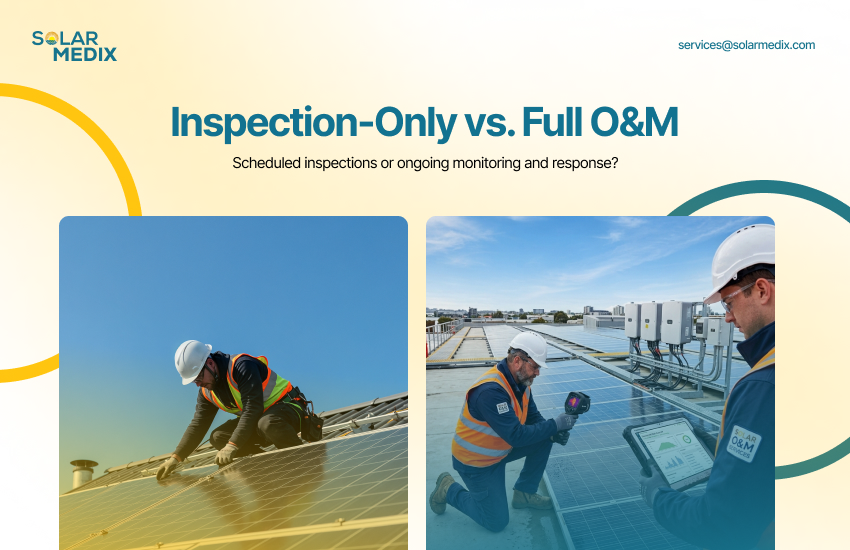
An inspection-only plan sends a technician on a set schedule and gives you a report. A full O&M contract adds continuous monitoring, response commitments, and help managing repairs and warranties. Commercial solar O&M cost is higher for the second because it covers more of the work between visits.
What an Inspection-Only Plan Covers
Expect scheduled visits with a visual inspection, electrical connection checks, an inverter review, and a written report, often with cleaning as an option. Repairs, monitoring alerts, and emergency response are billed separately or handled by someone else. The price is lower and easy to predict, but you carry the risk between visits, since a fault that appears in month two waits for the next scheduled date.
What a Full O&M Contract Adds
A full O&M contract may add performance monitoring, alerts when production drops, defined response times, and assistance with manufacturer warranty claims. These services depend on the provider and contract, so confirm exactly what is included before comparing prices. Some include labor for routine fixes, and most still treat major equipment replacement separately. Read how each provider defines response time and what counts as routine. Our commercial O&M options shows how these plans are structured.
Which Plan Fits Which Site
Inspection-only suits smaller, newer systems where a facilities team already watches the monitoring portal. A full contract fits larger arrays, sites where downtime is expensive, and buildings with lender, tenant, or power purchase agreement requirements for upkeep. Older equipment also pushes toward fuller coverage, because the chance of a fault rises with age. Some owners start with inspection-only while a new system is still under installer warranty, then move to a full contract as that window closes.
Why Does Commercial Solar Maintenance Cost in NJ and NY Differ From National Figures?
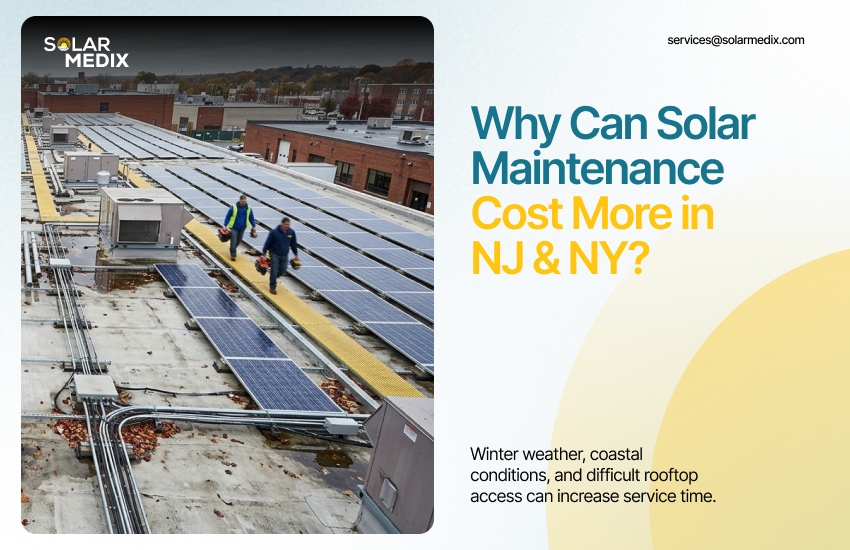
National benchmarks, including NREL’s model of O&M costs for PV systems, are built around averages, and local conditions get layered on top. In the Northeast, those conditions add service tasks and site time that a generic figure leaves out.
Winter Weather and Freeze-Thaw Stress
Snow, ice, and freeze-thaw cycles can place additional stress on solar mounting systems. Inspections after winter may be appropriate where weather or site conditions warrant them, but any torque checks should follow the equipment manufacturer’s specifications rather than being treated as a universal maintenance requirement. These additional inspections can affect the scope and cost of a service contract.
Coastal Salt Air
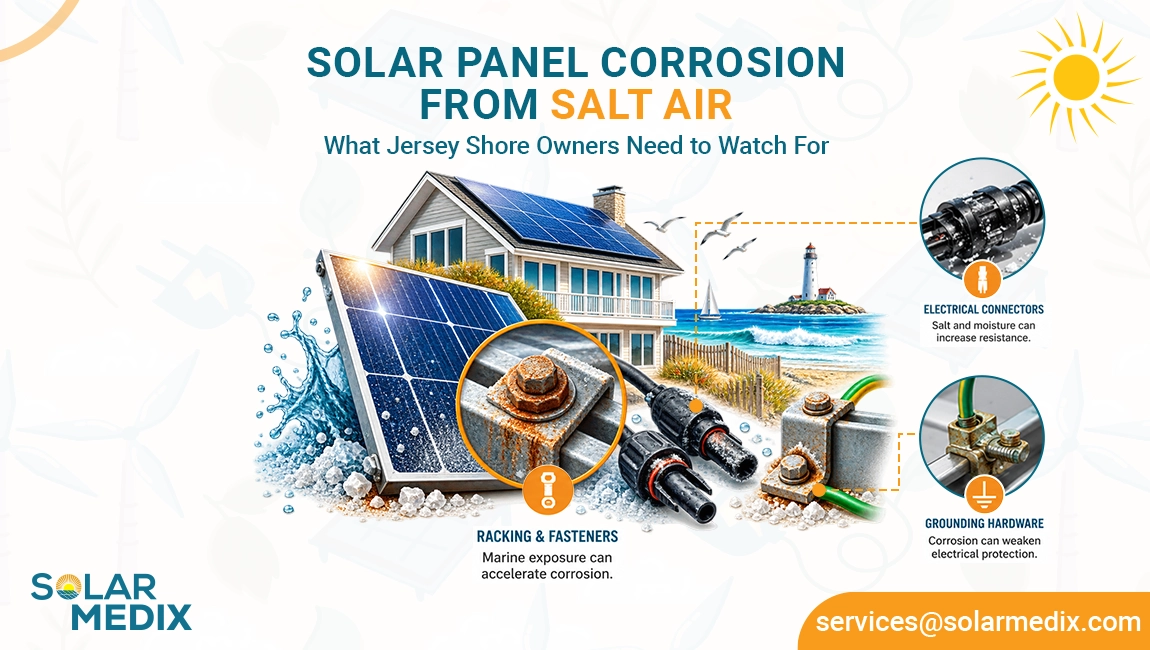
Sites near the Jersey Shore, Long Island, and the New York City waterfront deal with salt air that speeds corrosion on racking, conduit, and terminations. Coastal systems often need extra corrosion checks and protective treatment, which raises the visit scope and the price compared with an inland site.
Dense Urban Rooftops and Local Labor
In dense parts of the region, rooftops can mean limited parking and loading access, strict building rules for contractors, and longer setup before work begins. Labor and insurance costs in the metro area also tend to run higher than a national average assumes. Those costs show up in the quote even when two systems look similar on paper.
How to Read a Commercial Solar O&M Quote

A fair comparison needs the same six answers from every provider. Ask for them in writing before you look at the total.
- How many visits are included per year, and what each visit covers
- Whether panel cleaning is part of the price or billed separately
- Who watches your monitoring, and how quickly they respond to an alert
- Which repair labor and parts are included and which are billed on top
- How inverter replacement and other major equipment are handled
- The contract term, renewal terms, and how to cancel
Invite each provider to walk the site before they price it. A walk-through shows roof access, the electrical room, and equipment age, and it takes guesswork out of the quote. Ask each one how they handle a fault found between visits, since that answer shows the real difference between plans. Our O&M program builds plans around each site, so a walk-through is where the quote starts.
Request a Quote Around Your Site
Your price follows four things: system size, the plan you choose, how often the site is serviced, and how hard it is to reach. Weather, salt air, and urban access shape the rest in New Jersey and New York. A quote that accounts for all of it will look different from a national range, and it should.

Solar Medix works with commercial owners and facility managers across both states. Review our commercial solar services, then tell us about your site and request a quote, so the price reflects what your system needs.
FAQs About Commercial Solar Maintenance Cost
How much does commercial solar maintenance cost per year?
Cost varies with system size, service tier, and how often inspections or cleanings are scheduled.
What’s typically included in a commercial solar O&M contract?
Most contracts include scheduled inspections, performance monitoring, cleaning, and priority response for repairs, though exact inclusions vary by provider and plan.
Does system size affect maintenance cost?
Yes. Larger systems generally involve more panels, more inverters, and more time on site, which affects overall cost.
Is it cheaper to pay per visit or sign an annual contract?
An annual contract can make budgeting easier by setting out scheduled services and their costs in advance. Whether it is cheaper than paying per visit depends on the number of visits, services included, and any additional charges. Compare quotes using the same scope of work before deciding.
Does Solar Medix service commercial systems installed by another company?
Yes. Solar Medix provides commercial O&M regardless of the original installer.