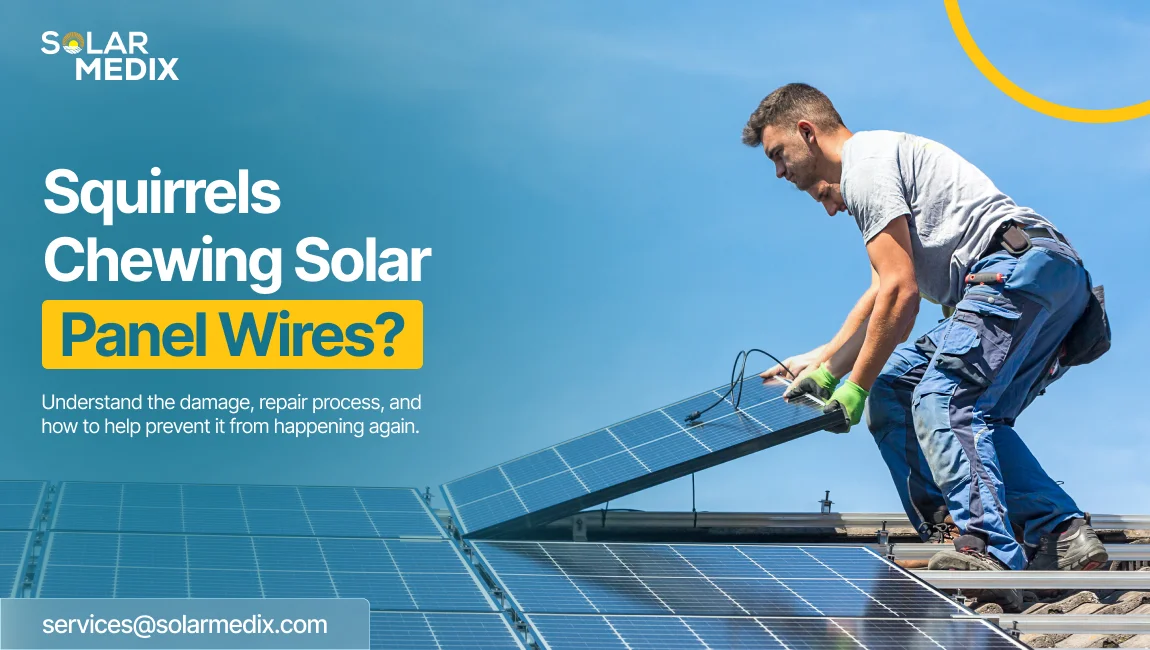
Squirrels chewing solar panel wires is fixable: a qualified technician replaces the damaged cable and connectors, tests the whole system, and seals the array with mesh so squirrels and pigeons cannot get back underneath. It is not a tape-and-ladder job, because chewed solar wiring can be live, and a patched repair tends to fail again.
If you have just found chewed wires, a sudden drop on your monitoring app, or squirrels or pigeons living under the array, take a breath. This is common, and it can be put right. Please do not touch the wires or go up on the roof. Solar wiring can stay live in daylight even when the system is switched off, so the safest first move is to leave everything alone and call a technician. Below, we cover why this happens, what a proper repair involves, and how to keep animals out afterward.
Why Are Squirrels Under Solar Panels in the First Place?
Because the gap between the panels and the roof is dry, shaded and warm, which makes it an ideal shelter. A home technology expert on This Old House points to that air gap as an easy way in for squirrels, and pigeons look at the same space the way you would look at a covered porch. Once one animal settles in, others tend to follow. Squirrels add a second problem on top of the nesting. Their teeth never stop growing, so they gnaw on whatever is handy, and the plastic insulation on solar cable is an easy target. Nesting material and droppings pile up as well, which is not good for connectors or wiring either.
Signs of Squirrels Chewing Solar Panel Wires
The usual signs are a sudden production drop, a monitoring alert, nesting debris or droppings around the array, and a visibly chewed wire at the panel edge. Catching it early matters, and the signs of chew damage are worth knowing, along with the other kinds of damage rodents and birds can cause.
Is It Dangerous When Squirrels Chew Solar Panel Wires?
Yes. Once the insulation is damaged, exposed conductors can create conditions for ground and arc faults, making this a safety issue and not just a performance issue. Lost production is the part you will notice, but the electrical risk is the part that matters most. If you ever see smoke, smell burning or notice sparking, stay away from the equipment and call 911.
Why Taping or Splicing Is Not a Real Fix
You cannot make solar wiring safe by flipping a switch. Panels produce voltage whenever light reaches them, and Fluke’s solar safety guidance points out that PV modules can never be fully de-energized. That is why wrapping tape around the damage or splicing it yourself does not hold up. Tape and quick splices on a roof have to cope with UV, rain and freeze-thaw cycles, and they tend to fail later, often as a fault you only discover when production drops again. Damaged sections and connectors need to be replaced by a technician who can test the circuit afterward.
What a Proper Repair Involves After Squirrels Chew Your Solar Wiring
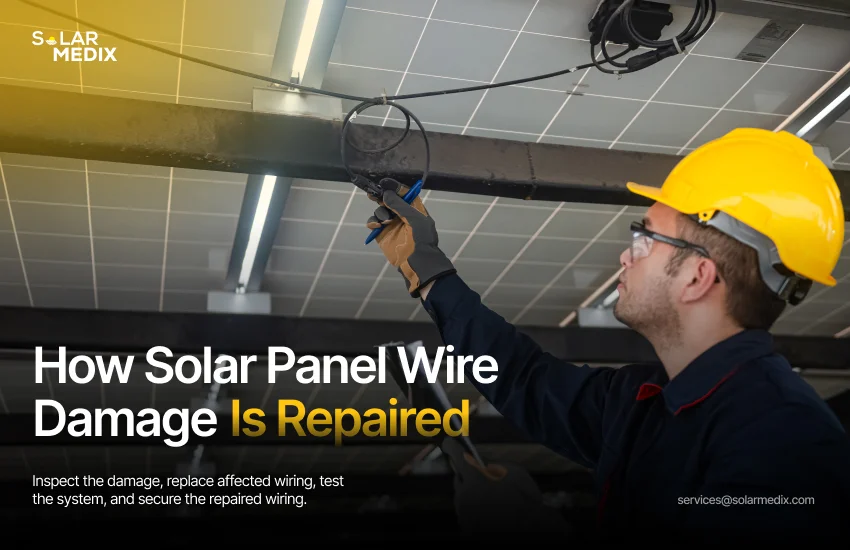
A proper solar panel wire repair includes inspecting all solar wiring for damage, replacing chewed sections, securing exposed wires, and checking the system to ensure everything works safely.
Inspecting the Full String
It starts with checking the entire string, because squirrels rarely chew in only one place and a second damaged section further along can easily go unnoticed.
Replacing the Damaged Cable and Connectors
The damaged cable and any compromised connectors, such as MC4 connectors, are replaced with proper solar-rated parts rather than patched. What gets replaced depends on what the inspection finds. Sometimes it is a short section of cable and a connector. Occasionally the damage reaches the leads attached to a panel itself, which can mean replacing the panel, and that is exactly why the whole string should be checked and not just the spot someone happened to notice.
Testing and Re-Securing the Wire Runs
Before the system goes back online, the circuit is tested to confirm there are no ground faults or insulation problems. The wire runs are then re-secured and tidied up, held off the roof surface and away from edges where animals can reach them, with conduit where it makes sense. The last check is your monitoring data, which should show the affected panels producing normally again.
How to Keep Squirrels and Pigeons From Coming Back
Remove the nests and debris, then close off the gap around the edge of the array with mesh so animals cannot get underneath. Done properly, that does not require drilling into the panels or the roof.
Clear Out the Nests and Debris First
The cleanup comes first, and it is the step people skip. Droppings, nesting material and debris should be cleared out before the mesh goes on. It is also worth knowing that some birds and their active nests are protected under federal law, so if there are eggs or chicks involved, a professional will check before touching anything. Wildlife rules vary, which is one more reason not to start pulling nests out yourself.
Install a Critter Guard Around the Full Perimeter
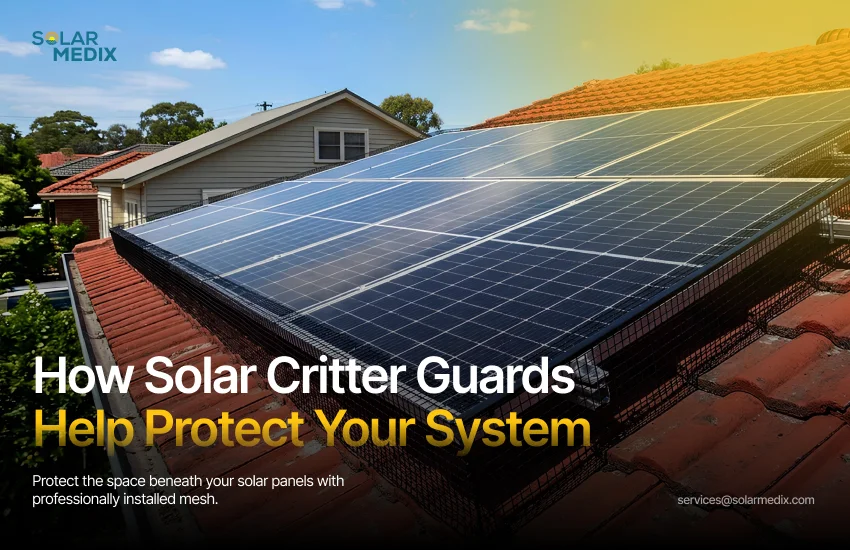
You will see this mesh called a critter guard, a squirrel guard, bird proofing or pigeon proofing, and all of those names describe the same basic idea. Galvanized or PVC-coated mesh clips onto the panel frame or racking, which keeps air moving and leaves the roof untouched. It needs to run around the full perimeter of the array and not just the sides facing the roofline, since animals will use whichever gap is left. Trimming back branches that give squirrels an easy route onto the roof helps too, and wire management and conduit protect the cable runs themselves anywhere the mesh alone does not reach. Our critter guard and bird proofing work follows that same order: clean out, then seal.
Why Fix the Damage and Close the Gap Together?
Repairing wiring without closing the gap is how people end up paying for the same repair twice, because the animals that did the damage are usually still around and the shelter is still there. Looking at the repair and the proofing together means the problem gets dealt with properly, and you can ask for both to be scoped as a single job when you book.
Squirrels Chewed Your Solar Wiring? Let Solar Medix Fix It and Keep Them Out
If squirrels or pigeons have gotten into your array, contact Solar Medix. We handle solar panel wire repair and the critter guard that keeps animals out afterward, so the damage is fixed properly, the system is tested, and nobody has to climb up there and guess. Call or book online, and we will take it from there.
Squirrels Chewing Solar Panel Wires: Your Questions Answered
Can Squirrels Chew Through Solar Panel Wires?
Yes. Squirrels and other rodents chew wiring under solar panels, often while nesting there. Chewed wiring can cut production and create a safety risk, so it should be inspected and repaired properly.
Is It Safe to Tape or Splice Chewed Solar Wires Myself?
No. Solar wiring can stay live in daylight, and a taped or poorly spliced repair can fail or cause a fault later. Damaged sections and connectors should be replaced by a qualified technician.
How Do I Know if Animals Have Damaged My Solar Wiring?
Common signs are a sudden drop in production, monitoring alerts, nesting debris or droppings around the array, and visibly chewed wire at the panel edges.
How Do I Stop Squirrels and Pigeons From Getting Under My Panels Again?
Remove the nests and debris, then install mesh around the edges of the array so animals cannot get underneath. A good installation does not require drilling into the panels or the roof.
How Much Does It Cost to Repair Solar Wires Chewed by Squirrels?
The cost depends on how much wiring and how many connectors are damaged, roof accessibility, and whether critter proofing is also needed. A technician will need to assess your system to determine the work required and provide an accurate quote, so contact Solar Medix for pricing based on your array.