A professional solar panel maintenance visit is a hands-on check of the whole system, from the panels and wiring to the inverter and your monitoring data. The technician reviews your production history, inspects the array, tests the electrical connections, cleans the panels, checks the inverter, and leaves you with a written service report.
If you own solar panels, you have probably wondered what a technician actually does when they come out. The panels have no moving parts, the app shows production, and it is easy to assume nothing needs checking until something breaks. That assumption is why many owners skip a visit, and why small faults can run for months before anyone notices.
This guide covers what happens during a solar panel maintenance visit in the order it usually unfolds, so you know what you are paying for, what to have ready, and what comes next if something turns up. Solar Medix technicians follow this same general sequence on most systems.
What to Expect in a Solar Panel Maintenance Visit?
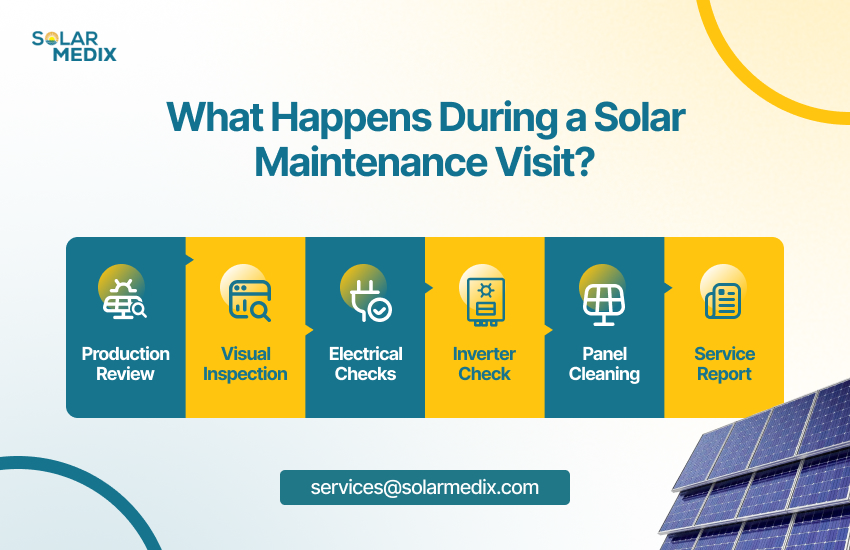
A typical visit has six stages: a production data review, a visual inspection, electrical checks, an inverter check, panel cleaning, and a closing review with a written report. Depth varies with system size and plan, but this is the sequence a good solar maintenance checklist follows.
It Starts With a Production Data Review
The technician looks at your production history before touching anything. A production data review shows whether output has slipped over the months, whether one string is lagging, and whether a drop lines up with a storm or a fault code. That tells them where to look on the roof and saves time chasing problems the numbers already point to. Having your monitoring login ready helps.
The Visual Inspection Covers Panels, Racking, and Wiring
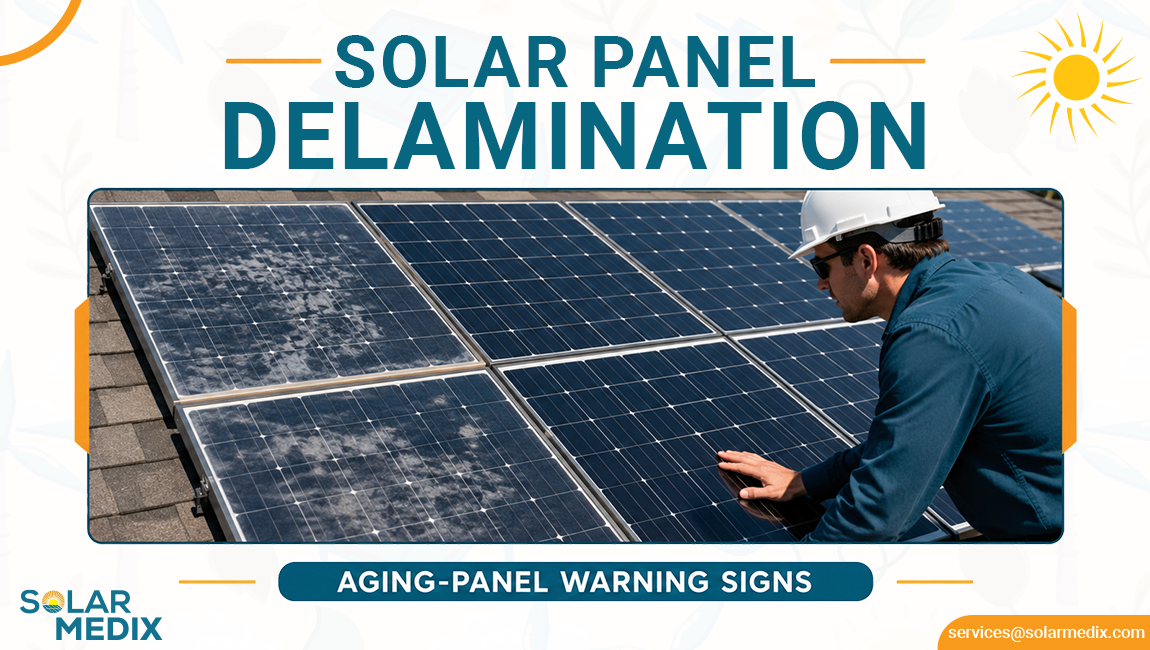
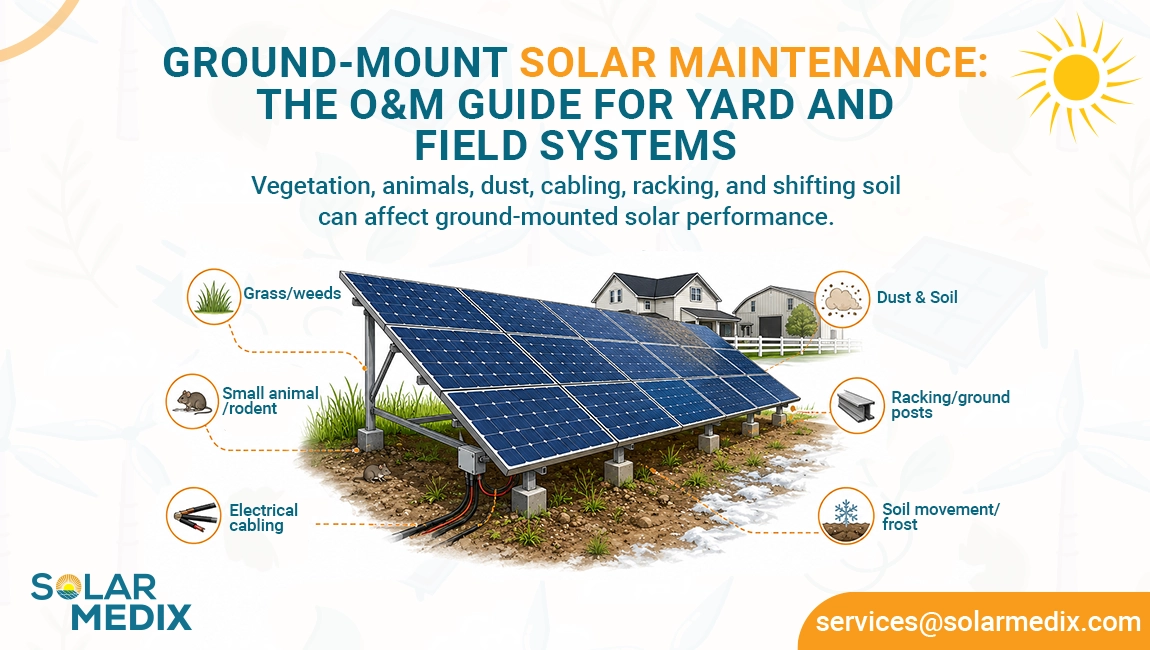
A visual inspection is the core of the visit. The technician looks over each panel for cracks, chips, discoloration, and delamination, then checks the racking and mounting hardware for loose bolts, shifted rails, and corrosion. Wiring gets the same attention, including cable runs, conduit, and any sign of rodent or bird damage. They also note what has changed since installation, such as a tree that has grown enough to shade a row.
The Electrical Connection Check and Safety Check
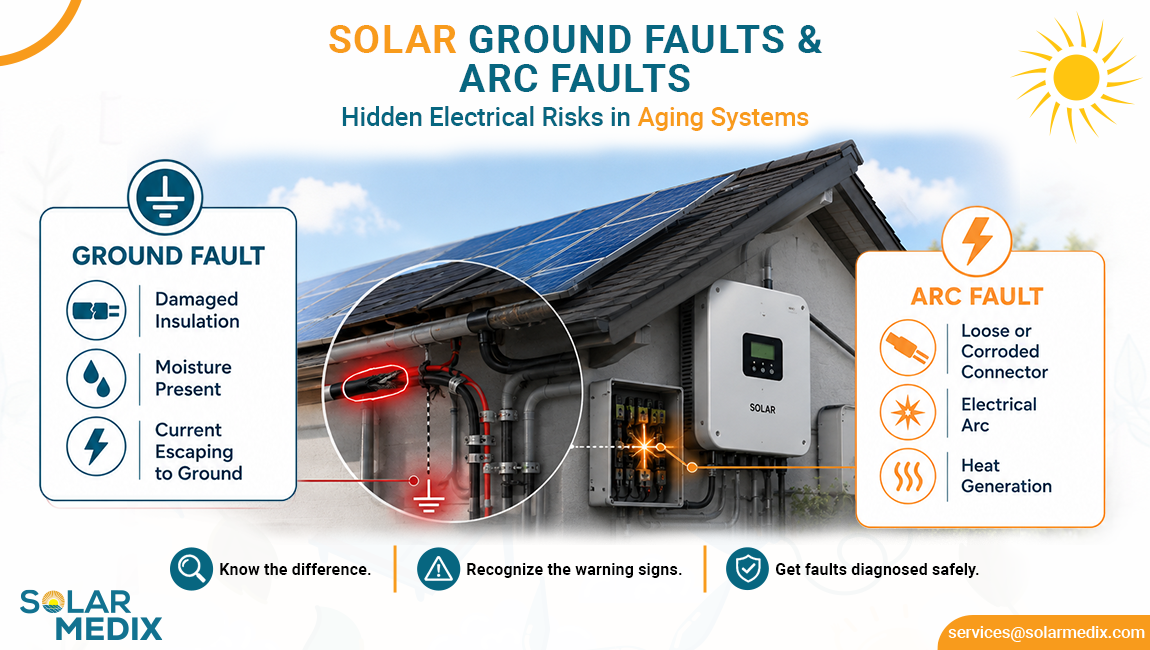
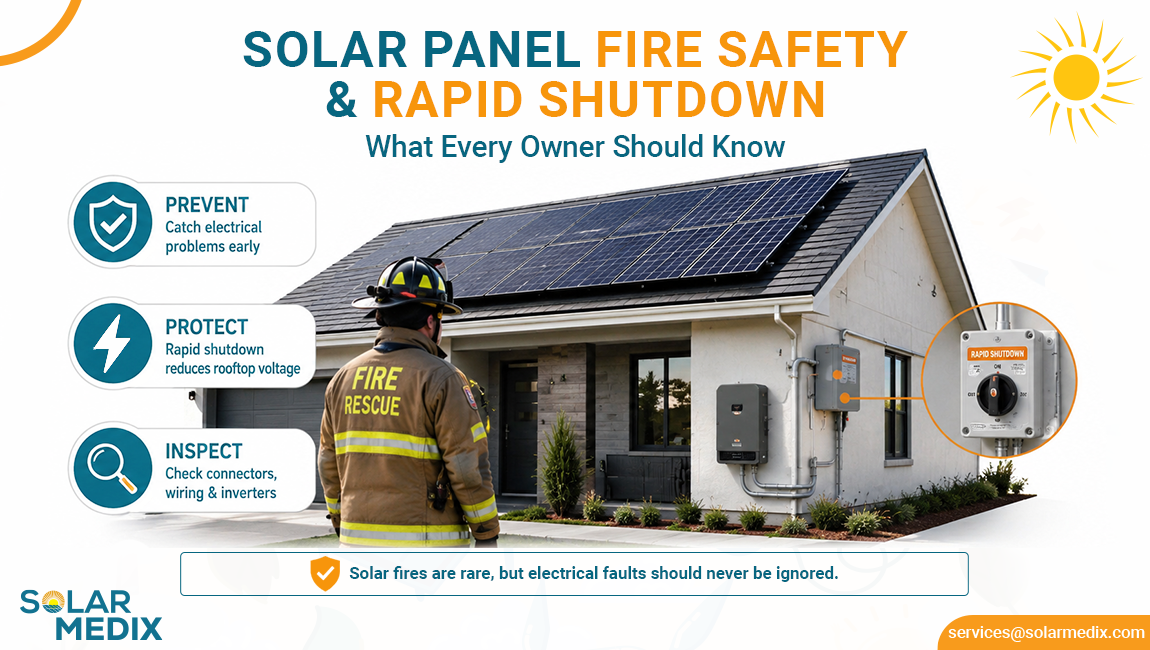
Many faults start at a connection, so the electrical connection check is done carefully. The technician inspects connectors, junction boxes, and terminations for corrosion, heat damage, and loose fits, and confirms the grounding is intact. The safety check then looks at disconnects and labeling and watches for anything that could become a fire or shock risk. Solar arrays produce DC voltage whenever there is light, which is why this step belongs to a trained technician.
The Inverter Check Goes Beyond the Green Light
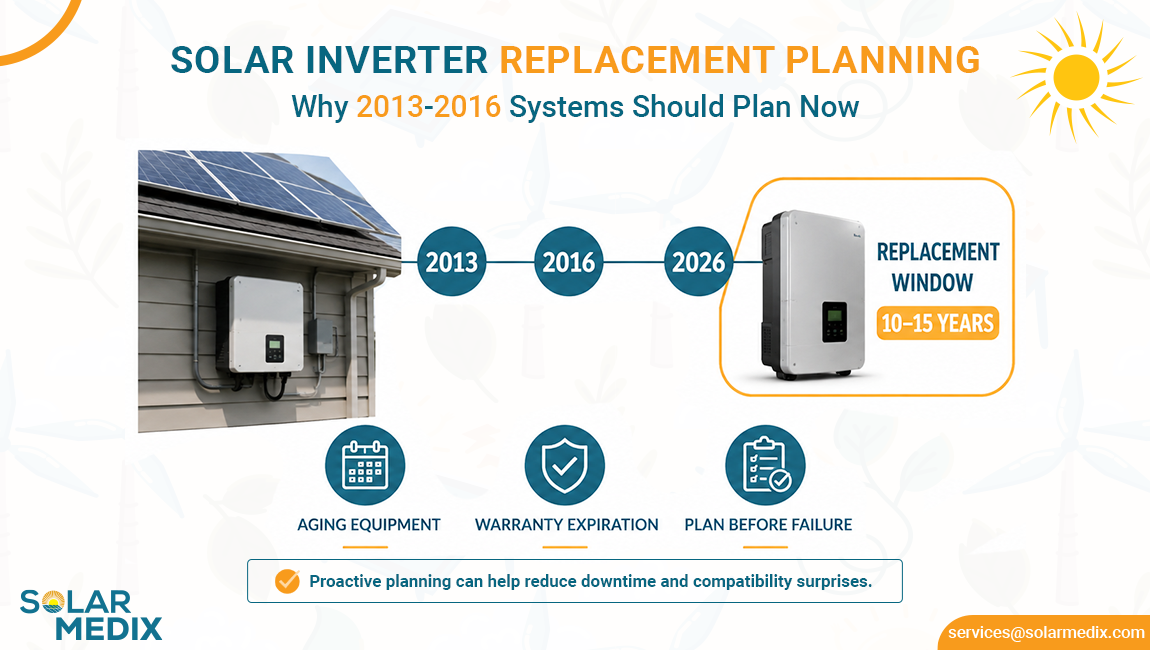
The inverter is usually the first major component to wear out, so the inverter check goes deeper than a glance at the display. The technician reads fault codes and event history, confirms the unit is delivering the output it should, and checks ventilation and mounting. They also note the inverter’s age and warranty status, which matters if a replacement is coming.
Panel Cleaning Removes What Rain Leaves Behind
Panel cleaning is the most visible part of the visit, and rain does not do the job fully. NREL, now the National Laboratory of the Rockies, found that pollen cut the performance of utility-scale plants in the southeastern United States by as much as 15% at peak, and rainfall did not wash it all away. Technicians remove dust, pollen, bird droppings, and grime using methods that will not scratch the glass, so the array can produce what it was built to.
The Visit Ends With a Monitoring System Review and a Service Report
Last, the technician completes a monitoring system review to confirm the system is reporting, alerts are switched on, and the app matches what the inverter shows. The service report follows, recording what was inspected, what was found, and what is recommended. Keep it. It is a dated record of your system’s condition, which can help if you file a warranty claim or sell the home.
Why Does a Professional Solar Inspection Find Problems Your App Cannot?

Your app reports how much power you made, not why you made less, so a professional solar inspection finds causes that a dashboard can only hint at. A loose connector, a cracked cell, or a chewed cable usually appears as a small dip in total output, and small dips are easy to overlook. Panels also lose output slowly on their own. NREL’s review of nearly 2,000 measured degradation rates found a median of about 0.5% per year, so a bigger drop deserves a closer look. Finding the physical cause takes a person on site, and roof work around live DC wiring carries real risk, so the hands-on checks belong with a trained technician.
What Happens if the Technician Finds a Problem?

If the technician finds a problem, they document it in the service report, explain what needs attention, and recommend the next step. Minor issues, such as a loose fitting or an offline monitoring gateway, may be fixed during the same visit, while larger repairs involving parts, such as a faulty inverter, cracked panel, or damaged wiring, are usually scheduled separately. If an issue is found during inspection, the report also provides useful documentation for warranty claims or repair quotes.
What Costs Extra Beyond a Standard Maintenance Visit
Repairs, replacement parts, and specialty testing are typically billed on top of the base visit, though what counts as included varies by plan.
Repairs and Replacement Parts
Any fix that needs new equipment is quoted separately from the visit itself. That covers parts such as connectors, panels, and inverters, plus the labor to install them.
Add-On Testing and Protective Work
Some providers offer deeper diagnostics and protective work as add-ons. Examples include infrared thermal imaging to spot overheating cells, curve tracing to test individual panels, and critter guards to keep animals away from wiring. Ask what your plan covers before the visit so nothing comes as a surprise.
How to Prepare for Your Technician Visit
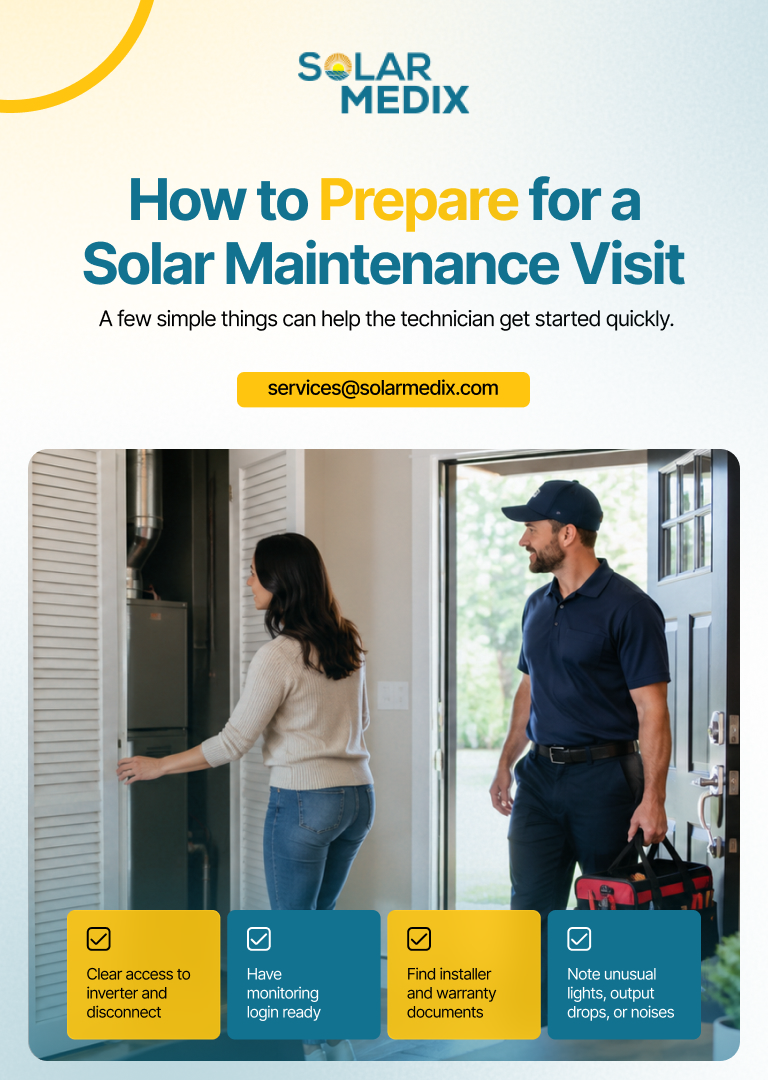
You need very little: clear access, your monitoring login, and a note of anything you have noticed. This short solar maintenance checklist covers it.
- Clear access to the inverter, the main disconnect, and any gate or ladder point
- Your monitoring app login, or the account email if you are unsure of the password
- Installer paperwork and warranty documents, if you can find them
- A note of anything unusual, such as fault lights, output drops, or noises from the inverter
You do not need to go on the roof or open any equipment, and you do not need to be home for the whole visit if access is arranged.
Get a Written Report on What Your System Is Really Doing
A solar panel maintenance visit is simple once you know the steps. The numbers get reviewed, the hardware gets inspected and tested, the panels get cleaned, and you leave with a report that replaces guesswork with a clear picture of your system’s condition.
Solar Medix services systems from any installer, and our technicians tell you plainly what they find. Learn more about our O&M services, or schedule a maintenance visit and put a dated service report on record for your system.
FAQs
How long does a solar maintenance visit take?
Most visits take a few hours, depending on system size and whether any issues are found during the inspection. A shorter visit usually means the technician found nothing unusual, and a longer one usually means they were tracing a problem.
What’s included in a standard solar maintenance visit?
A standard visit includes a visual inspection of panels, wiring, and mounting hardware, a check of electrical connections, a review of inverter and monitoring performance, and typically a cleaning. Exact inclusions can vary by plan.
How often should I schedule a maintenance visit?
Most residential systems benefit from at least one professional visit a year, with commercial systems sometimes needing more frequent visits depending on size and location.
Will a technician catch every possible issue in one visit?
No, but a routine visit catches most visible and performance-related issues. Some problems only surface over time or under specific conditions, which is part of why ongoing monitoring matters between visits.
Does Solar Medix service systems installed by another company?
Yes. Solar Medix provides maintenance and repair regardless of who originally installed the system.