
A solar consultation is when an expert looks at the technical side of things, like your roof’s shape and past power bills, to find the best setup for you. So, you do not just buy panels. You make sure the system actually works for your lifestyle.
By the time the consultation is over, you’ll have a clear answer on whether solar is right for you. You will know the costs and the technical steps. Also, how each part of the system, from the panels to the battery, will work together, giving you peace of mind and a solid plan for cheaper, cleaner energy.
Transitioning to solar energy or maintaining an existing system requires expert guidance. That’s why solar consultation exists. It is a professional roadmap that shows you exactly how much energy you can produce and how much money you can save. Instead of guessing, you get a clear plan tailored precisely to your roof and your budget.
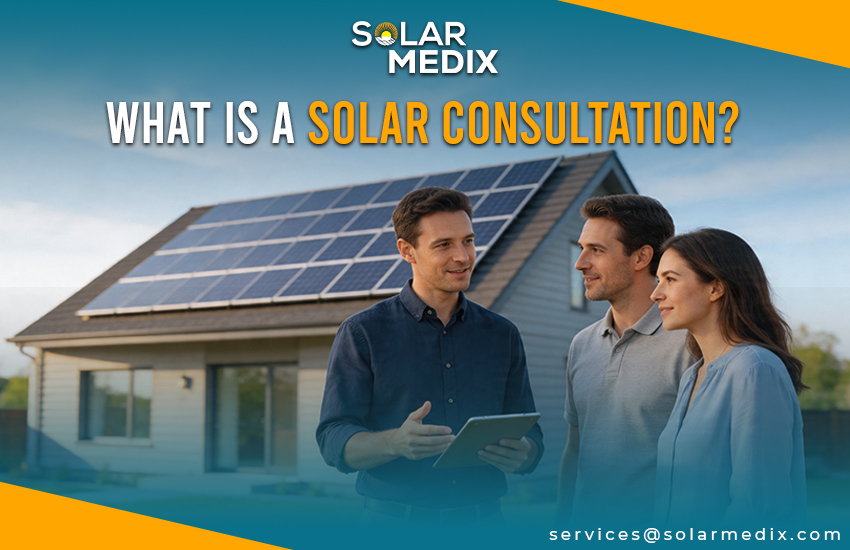
What Is a Solar Consultation?
A solar consultation is a professional “check-up” for your home’s energy potential. It isn’t just a sales pitch; it’s a deep dive into how solar power will actually perform on your specific property. The goal is to see if solar is a good fit and how to get the most “bang for your buck.”
During the process, experts perform a system assessment and performance analysis to see how much power you can realistically generate. They also do a site evaluation to check for things like shade from trees or roof issues, eventually giving you recommendations for improvements to ensure everything runs perfectly for years to come.
Who Needs a Solar Consultation?
Whether you are brand new to solar or have had panels for years, a consultation helps you stay in control of your energy costs. It is perfect for anyone who wants to stop guessing about their electricity bills.
- Homeowners considering solar installation
- Solar system owners facing performance issues
- Businesses evaluating solar ROI
- Property owners with orphan solar systems
- Homeowners planning upgrades or expansions
What Happens Before the Consultation
A little bit of preparation goes a long way in making sure you get the most out of your meeting.
- Collecting basic property information: We look at the age of your roof. Also, what it’s made of to ensure it can hold the panels.
- Reviewing energy usage data: Looking at your old power bills helps us see how much energy you actually use each month.
- Understanding customer goals: We talk about what you want most, whether it’s lower bills, helping the planet, or being totally independent from the grid.
- Scheduling site visit or virtual consultation: We pick a time that works for you to look at your home in person or via high-tech satellite images.
Steps During a Solar Consultation
The consultation is a simple, step-by-step process to build your custom energy plan.
- Step 1: Understanding Your Energy Needs: Our consultant discusses your current and future energy goals, such as plans for home additions.
- Step 2: Site or System Assessment: This involves a physical inspection of the roof, electrical panel, and surrounding environment to identify any physical constraints.
- Step 3: System Performance Evaluation: For existing systems, we check monitoring data to see if the panels are producing energy at their rated capacity.
- Step 4: Equipment and Component Review: A close look at the inverters, racking, and wiring ensures that all hardware is up to date and functioning safely.
- Step 5: Recommendations and Solutions: The process concludes with a tailored report outlining necessary repairs, potential upgrades, or a customized design for a new installation.
Solar Consultation vs Solar Inspection | What’s the Difference?
| Feature | Solar Consultation | Solar Inspection |
| Primary Goal | Planning and saving money | Safety and following rules |
| When it happens | Before installation or when considering upgrades | After installation or following a major weather event |
| Focus Area | Energy goals and system optimization | Structural integrity and electrical safety. |
| Outcome | A roadmap for performance and savings | A certification of safety or a list of required repairs |
When Should You Schedule a Solar Consultation?
It is always better to be proactive than to wait for something to stop working.
- Before installing solar panels, so you don’t end up with a system that is too small or too big.
- When experiencing performance issues, and your power bill suddenly goes up for no reason.
- After purchasing a home with solar, in order to learn how your new system works and check its health.
- When planning system upgrades, like when you want to add a battery (like a Tesla Powerwall) or more panels.
- If the installer is no longer available, solar orphan home/business owners need a trustworthy team to take care of their system.
Contact Solar Medix & Schedule Your Solar Consultation Today!
At Solar Medix, we make solar easy to understand. We don’t believe in high-pressure sales; we believe in high-quality data. Our team is here to help you understand your energy options and make sure your system—new or old—is performing at its absolute best.
- Complete roof and system check-ups.
- Help for “solar orphan” systems (we fix what others won’t).
- Adding batteries and upgrading old equipment.
- Clear reports that show your actual savings.
Ready to take control of your power? Schedule your Solar Consultation with Solar Medix today and get the expert help you deserve.
Frequently Asked Questions
What does a solar consultant do?
Solar consultants educate, advise, and guide residential, commercial, or industrial clients, helping them evaluate, design, and purchase solar energy systems.
What are the three types of consultation?
- Client-centered
- Consultee-centered
- Program-centered
What are the 7 steps of consultation?
- Preparation
- The first few minutes
- Exploration
- Evaluation
- Plan
- Closure
- Final reflection
What are the 5 C’s of consultation?
- Contact (identifying the consultant)
- Communicate (sharing patient details)
- Core Question (stating the purpose)
- Collaborate (working together on a plan)
- Close the Loop (confirming understanding and timing)