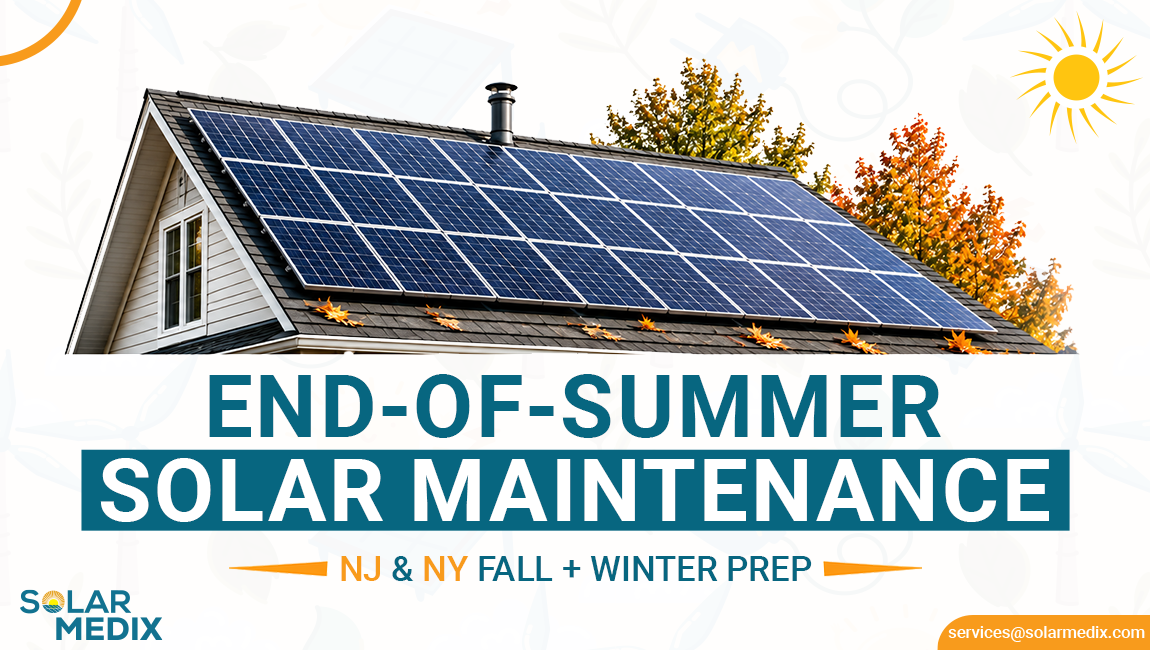
This End-of-Summer Solar Maintenance Checklist gives NJ and NY homeowners a chance to check for summer wear, production changes, debris, loose hardware, and winter-readiness before fall and winter conditions arrive. Late August is a useful time to catch small issues before shorter days, falling leaves, storms, snow, and ice make them harder to address.
The peak summer heat and production period is ending, while a different set of conditions is approaching. Panels and connectors can show signs of heat-related wear, production may have quietly dropped from the summer baseline, and early leaf or debris buildup can become a bigger problem later. Winter preparation also means checking roof-mounted hardware and snow guards before the first major storm. This checklist covers the key end-of-summer checks for NJ and NY solar systems and what to address before winter.
Why Is the End of Summer a Good Time for a Solar Checkup?
Late summer is a natural turning point: the system has just finished its hardest-working months, and the season ahead brings leaves, storms, and eventually snow. A late summer solar inspection can catch heat-related wear while it’s still minor and give homeowners a head start on winter prep instead of scrambling once the first cold snap hits.
A home solar system doesn’t stop working in the fall and winter, but it does start operating under different conditions. Production naturally dips as days get shorter, and in the Northeast that shift happens alongside the first real storms of the season. Doing an audit now means any issues from the summer, like heat-stressed connectors or a monitoring app that’s been quietly under-reporting, get caught while the weather is still mild enough for a technician to comfortably get up on the roof and take a proper look. For a broader sense of what a full-year maintenance rhythm looks like, Solar Medix’s guide to solar system maintenance across every season covers the bigger picture; this audit is specifically the late-summer bridge between two of the more demanding stretches of the year.
What’s on an End-of-Summer Solar Maintenance Checklist?
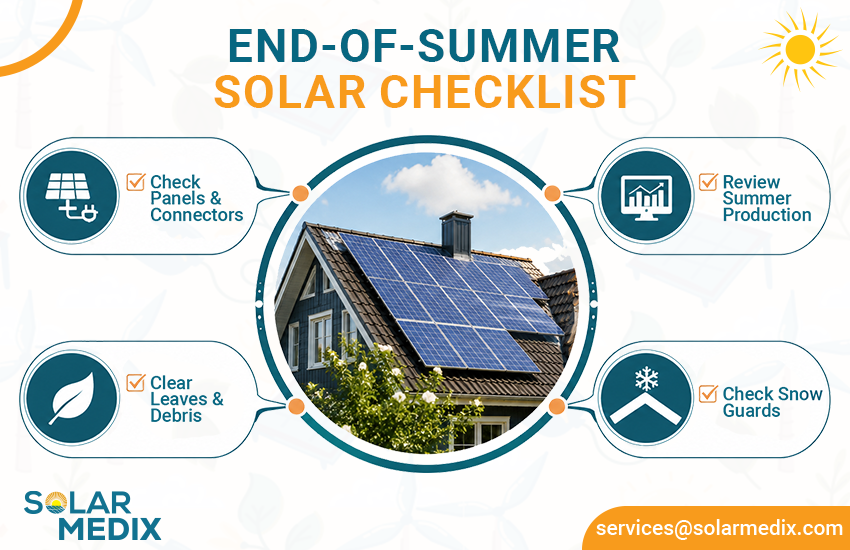
A proper end-of-summer solar maintenance checklist covers four things: a post-heat inspection of panels and connectors, a review of production against the summer baseline, a check for early leaf and debris buildup, and a look ahead at winter-specific needs like snow guards. Each piece catches a different kind of drift that tends to show up this time of year.
Post-Heat Panel and Connector Check
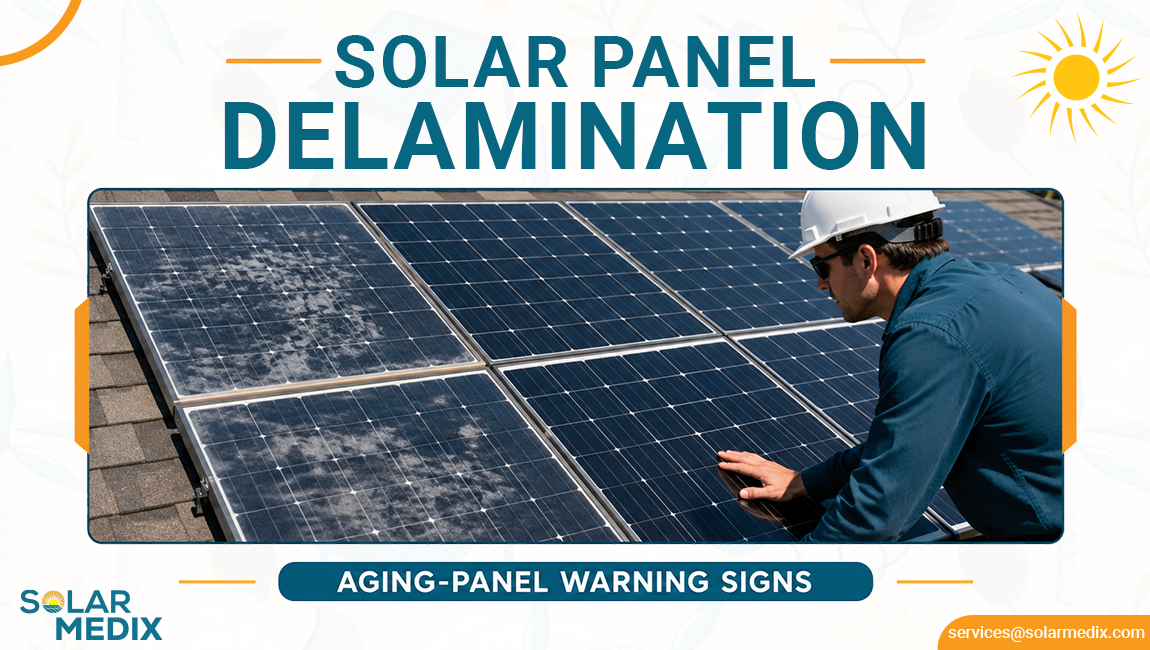
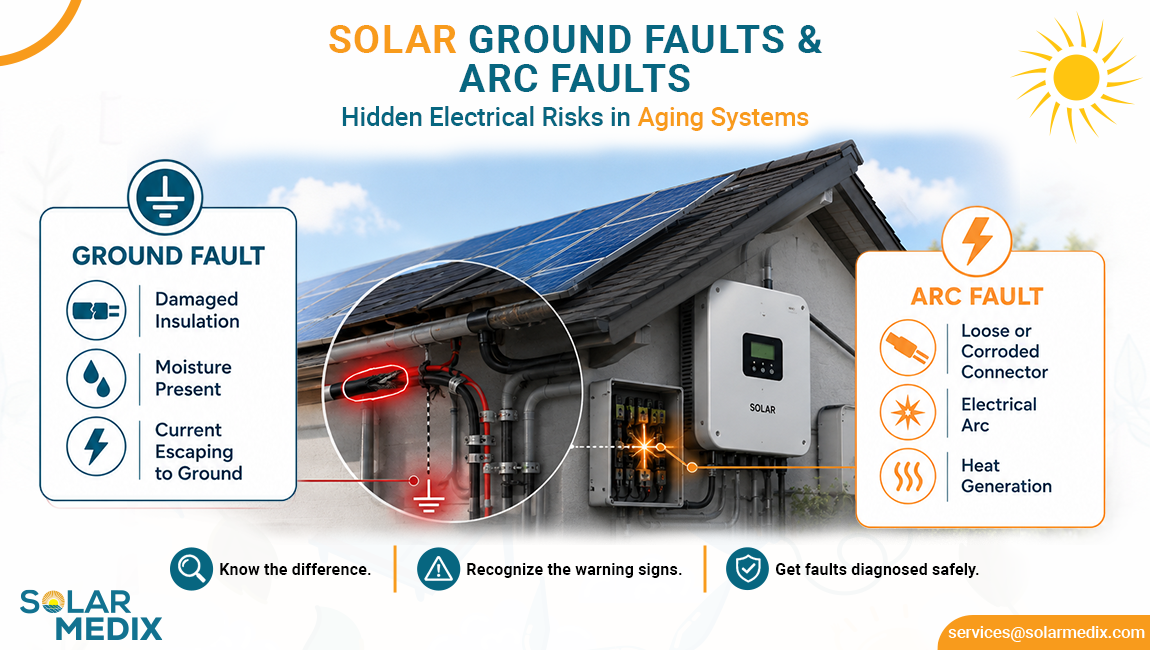
Months of sustained summer heat put real stress on the physical parts of a solar system, even though the panels themselves keep producing power the whole time. A visual and thermal check after the hottest stretch of the year confirms connectors are still seated properly, seals haven’t started to degrade, and there’s no early sign of a hot spot forming on any individual panel.
Production vs. Summer Baseline
Comparing current output against what the system produced earlier in the summer is one of the simplest ways to catch a problem before it becomes obvious. A small, gradual drop can be easy to miss month to month on a monitoring app, but stacked against a summer baseline, it stands out. The Department of Energy notes that a production drop of more than 10% year over year is generally a sign of a maintenance issue worth looking into, which is exactly the kind of thing a late-summer review is built to catch.
Clearing Leaf and Debris Buildup
Late August is early for full leaf drop, but it’s not too early to check gutters, roof valleys, and the underside edge of the array for the first bits of debris. Left alone, that buildup compounds through fall, and by the time it’s obviously blocking sunlight or clogging drainage near the mounting hardware, it’s a bigger job to clear than it would have been in September.
A Look Ahead at Snow Guards and Winter Protection
This is a heads-up check, not a full winterization. Confirming snow guards are present and properly secured, and that mounting hardware shows no summer-related loosening, means the system is ready before the first storm rather than after it. As temperatures drop, keeping solar panels winter-ready becomes more important, particularly for systems facing snow, ice, and freezing conditions.
Does Summer Heat Actually Wear Down Solar Equipment?
Yes. Sustained heat stresses connectors, seals, and the inverter even while the panels themselves keep producing power through the season. The cumulative effect of a hot summer isn’t usually a dramatic failure, it’s a slow accumulation of small stress points that add up over years if nobody checks on them.
Panels are engineered to handle heat, but the components around them, the wiring, the connectors, the sealants holding everything together, age faster under sustained high temperatures. Solar output can also be affected by heat-related wear that develops gradually rather than showing up as an obvious problem. Summer heat can affect solar output through issues that may only become noticeable later, such as a failing connector or production that has been quietly declining for months. An end-of-summer check helps identify that slow drift before it turns into a service call.
Preparing NJ and NY Solar Systems for Fall and Winter
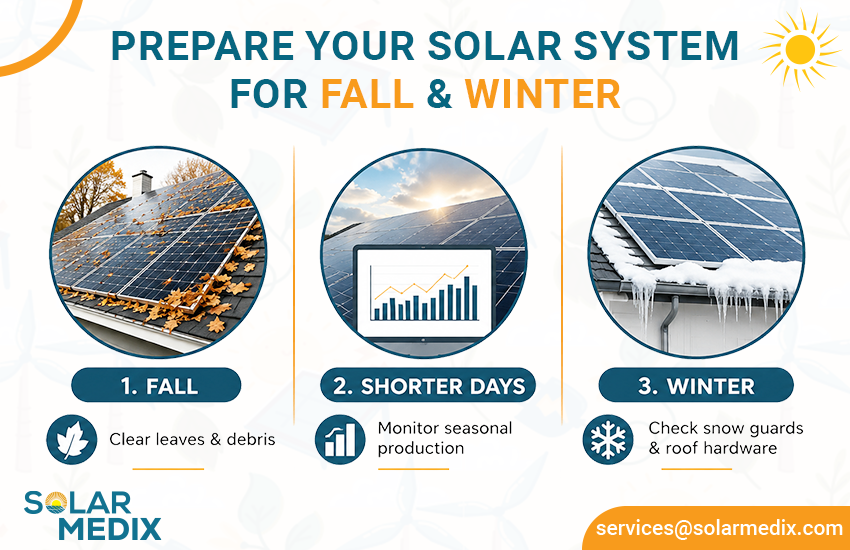
Preparing a Northeast solar system for the season ahead means addressing three things directly: the leaf and debris buildup that fall brings, the shorter days that naturally reduce production, and the snow and ice that winter will eventually bring to the roof.
Falling Leaves and Gutter Debris
As fall progresses, gutters and roof valleys near the array fill up faster than most homeowners expect. Regular clearing through the season keeps water moving properly and keeps debris from settling against the lower edge of the panels, where it can shade cells and slowly reduce output.
Shorter Days and Production Expectations
Production dropping in October and November is normal, not a sign something is wrong, but it’s worth knowing what a reasonable seasonal dip looks like for a specific system so a genuine problem doesn’t get mistaken for expected seasonal variation, or the other way around.
Snow Guards and Roof Load
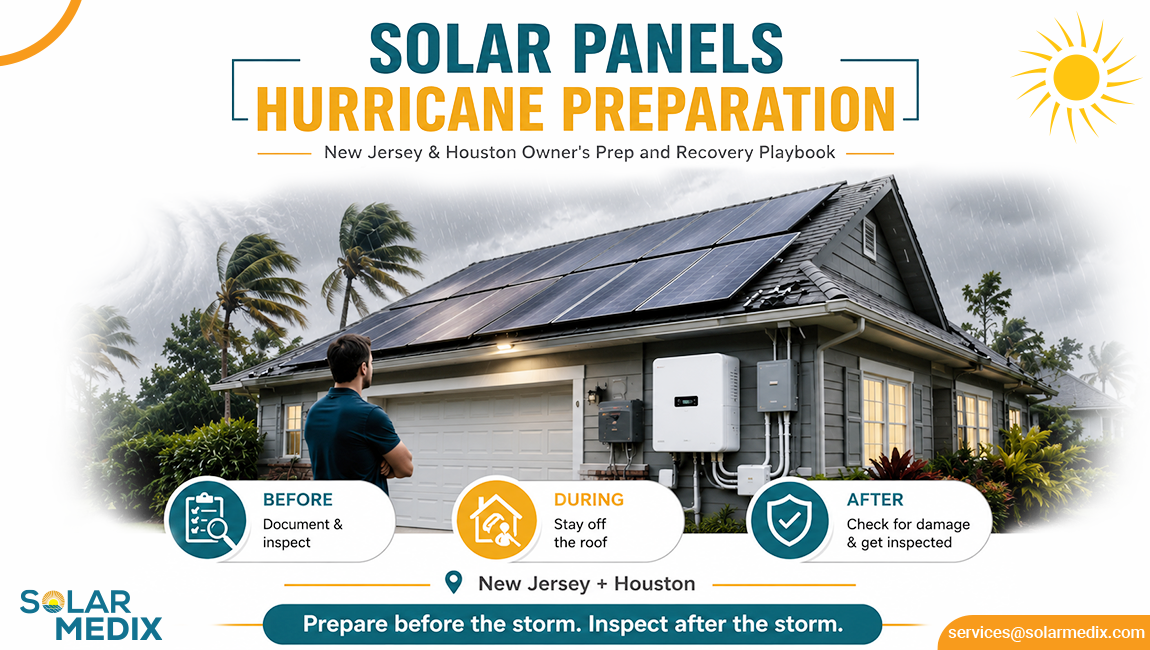
Once real winter weather arrives, snow guards keep accumulated snow from sliding off the array all at once, which protects both the roof below and anyone walking near the house. NOAA’s National Weather Service recommends clearing gutters and checking roof-mounted hardware before winter storms hit, which lines up directly with what a late-summer solar audit is meant to confirm ahead of time.
Servicing the Whole System, Not Just the Panels
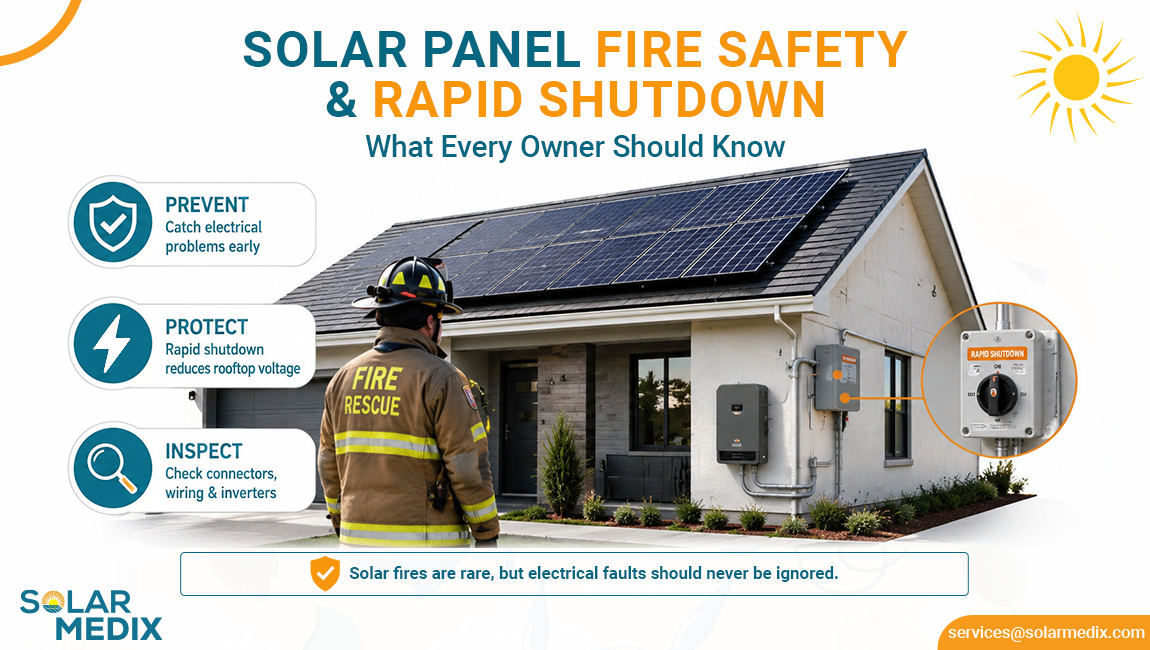
An end-of-summer audit works best when it looks at the system as a whole rather than treating the panels as the only thing worth checking. That means the inverter, the wiring, the mounting hardware, and the monitoring setup all get a look, alongside the panels themselves. A professional check is most useful when it catches small issues before they become larger repairs. Residential solar maintenance is most effective when scheduled regularly, and pairing an annual inspection with a late-summer check gives the system a chance to enter fall and winter in good condition rather than waiting for a December service call.
Get Your System Reset Before the Leaves Start Falling
A connector that’s drifted, a production number that’s quietly slipped, or a gutter that’s about to start filling with leaves may not be an emergency on its own, but caught in late August, each is a quick fix rather than a winter headache. Solar Medix’s end-of-summer solar maintenance checklist covers the panels, connectors, production data, and winter-readiness items together in one visit, so NJ and NY homeowners can head into fall with the system ready for the season ahead. If it’s been a while since the last professional inspection, or production has felt a little off this summer, now is the right time to have it looked at before the weather turns.
End-of-Summer Solar Audit FAQs
Why is the end of summer a good time to service my solar system?
It’s a natural turning point after the hardest-working months of the year and before leaves, storms, and snow arrive. An end-of-summer check catches heat-related wear from the summer while also getting the system ready for what’s ahead, rather than treating those two seasons as separate problems.
What should an end-of-summer solar checkup include?
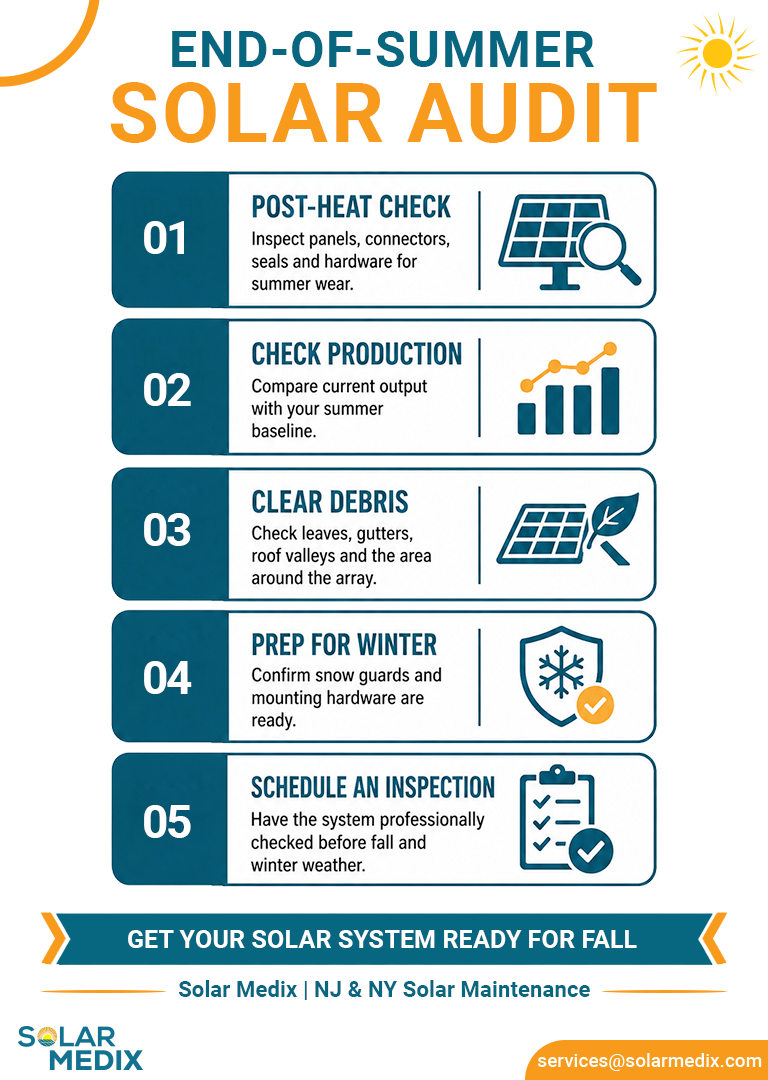
A post-heat inspection of panels and connectors, a review of current production against the summer baseline, a check for early debris buildup around the array and gutters, and a look ahead at winter needs like snow guards. Together these cover the physical equipment, the performance data, and the seasonal transition.
Does summer heat damage solar panels over time?
Sustained heat stresses connectors, seals, and the inverter, and can accelerate wear even as the panels themselves keep producing power. It’s rarely a sudden failure, more a gradual accumulation of stress that’s worth catching with a periodic check.
How do I prepare my solar panels for fall and winter?
Address leaf and debris buildup before it accumulates, confirm production is tracking where it should be as days get shorter, and address winter-specific protection like snow guards before the first storms roll through. Each of these is easier to handle proactively than reactively.
How often should I have my solar system professionally checked?
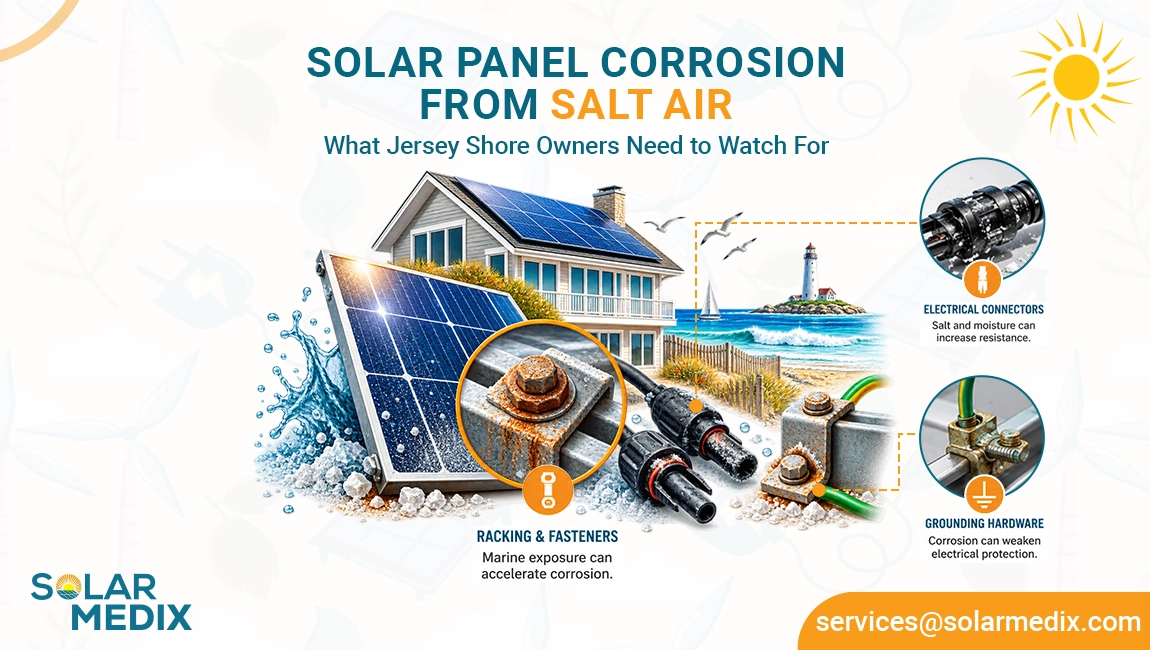
At least once a year for most homeowners, and late summer is an ideal time since it doubles as both a post-heat inspection and pre-winter prep in a single visit. Older systems, coastal installations, or systems without active monitoring may benefit from checking in more often.