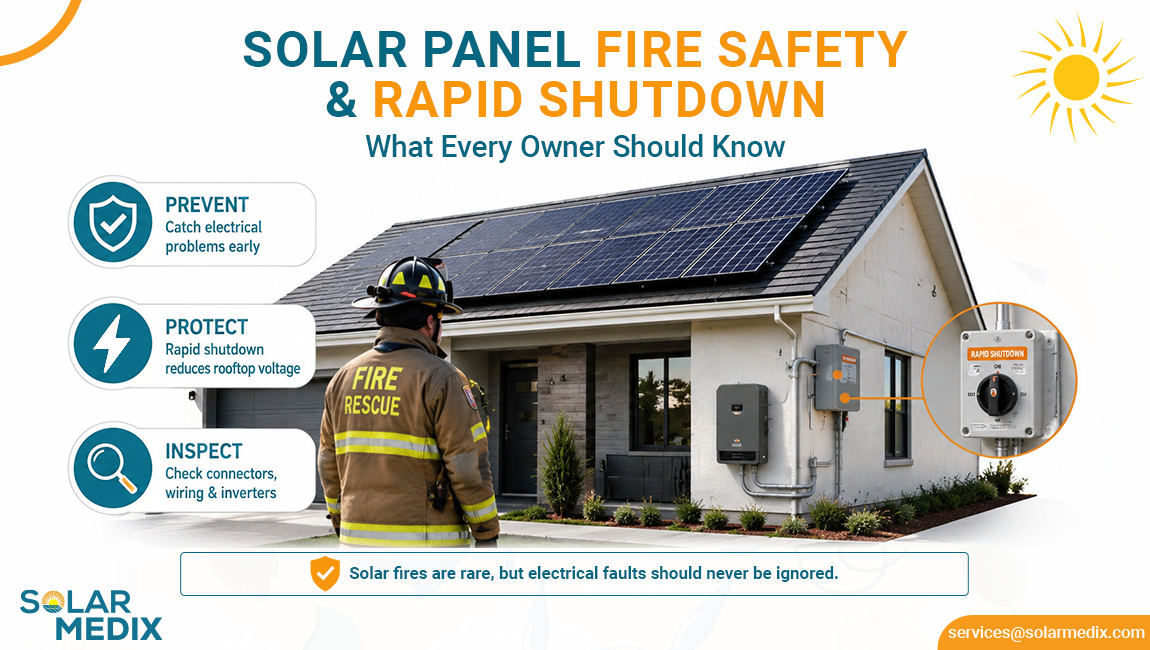
Solar panel fire safety is mainly about preventing electrical faults in wiring, connectors, and inverters, recognizing warning signs early, and ensuring required safety equipment such as rapid shutdown is working correctly. Solar fires are rare, and a properly installed and maintained system is generally safe, but damaged or aging components can increase the risk over time.
Most solar fires trace back to electrical faults rather than the panels themselves. Warning signs include a burning or plastic smell, scorch marks around connectors or the inverter, buzzing or crackling sounds, and repeatedly tripping breakers. Grid-tied rooftop systems built to code also include rapid shutdown under NEC 690.12, which reduces voltage in rooftop wiring during an emergency. Homeowners should not test the system themselves because it involves live electrical equipment. This guide covers what causes solar fires, how rapid shutdown helps protect people near the array, and which warning signs require immediate attention.
Solar Panel Fire Safety: Understanding the Actual Risk
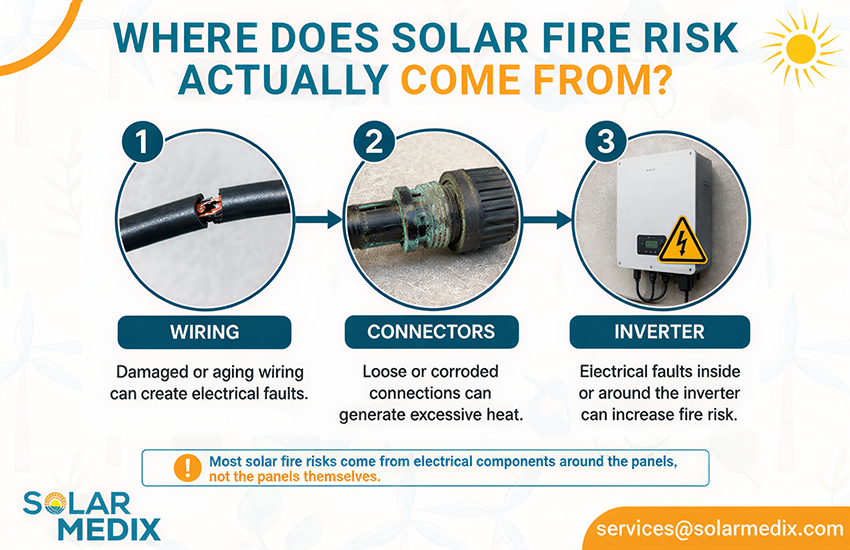
Solar panel fire safety starts with an accurate picture of where risk actually comes from: not the panels themselves, but the electrical components around them. The Department of Energy’s guide to fire safety with solar systems says that while properly installed systems built to current codes are designed with safety in mind, solar fires do happen, and they’re almost always traced to faults in wiring, connectors, or inverters rather than defects in the panels themselves. That distinction matters, because it points directly at what protects you: catching corroded connections, chafed wiring, and aging components before they generate enough heat to matter.
What Is Rapid Shutdown and How Does It Work?
Rapid shutdown is a solar safety feature that reduces voltage in the system. It works by quickly shutting down or reducing the flow of electricity when the system needs to be made safe during an emergency.
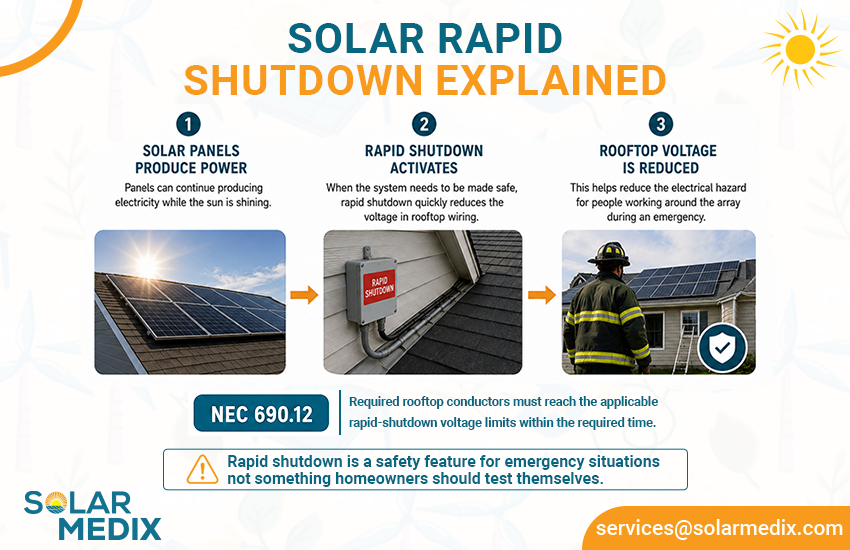
Solar Rapid Shutdown Explained
Rapid shutdown was written into the National Electrical Code specifically for firefighter solar safety. Even when an inverter is switched off, the DC wiring running from the panels themselves can stay energized as long as the sun is up, which creates a real shock hazard for first responders who may need to cut into a roof during a fire. Under NEC 690.12, conductors outside the immediate array area must drop to 30 volts or less within 30 seconds of shutdown, and conductors within the array boundary must drop to 80 volts or less in that same window.
How Module-Level Shutdown Actually Works
Module-level shutdown works through a device attached to each solar panel, such as a microinverter or power optimizer, which quickly reduces or stops that panel’s electrical output when the shutdown signal is activated. In modern systems, this works alongside the main DC disconnect to bring the voltage in the array down to a safer level quickly. Older systems may use different equipment, so an assessment can help confirm how your system handles rapid shutdown.
How Do I Test My Solar Rapid Shutdown?
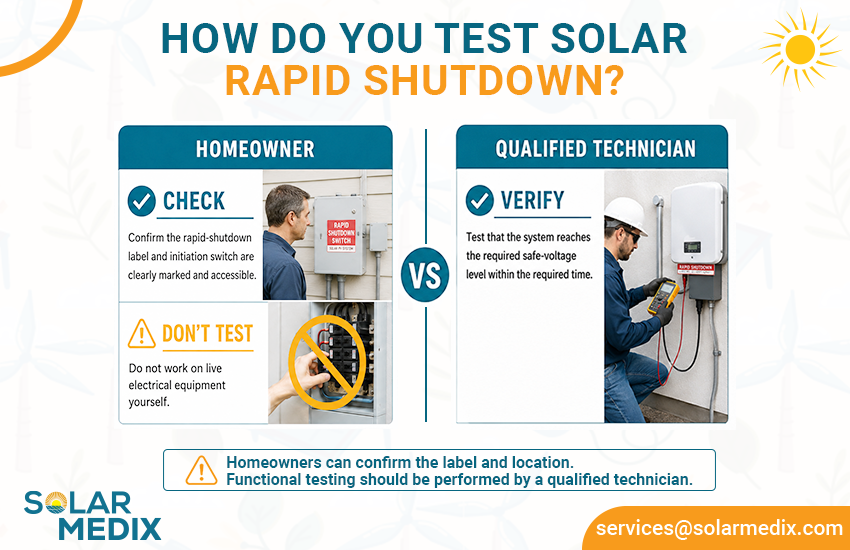
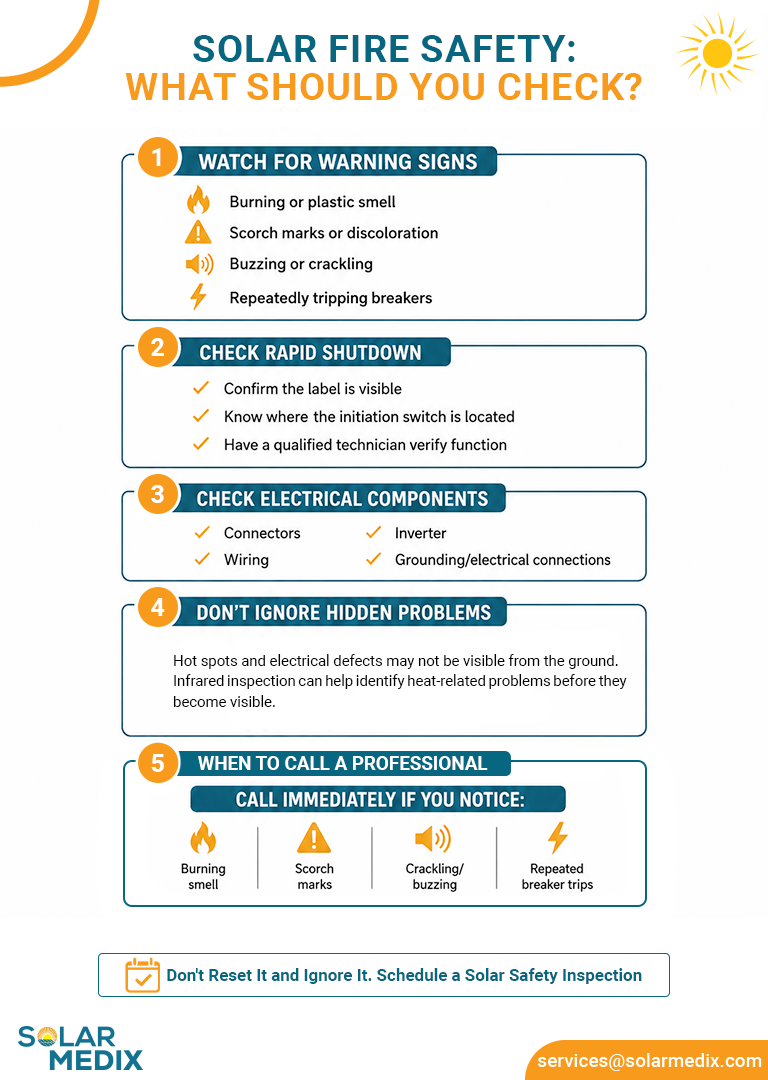
You generally shouldn’t test rapid shutdown yourself, because verifying it involves working with live electrical equipment. What a homeowner can reasonably do is confirm the rapid shutdown label and initiation switch are clearly marked and accessible, since that’s required by code and useful information for first responders on its own. Actual functional testing, confirming the system drops to safe voltage within the required time, is something a qualified technician verifies with the right equipment, and it’s worth including as part of a periodic safety inspection rather than assuming it still works correctly years after installation.
What Increases Solar System Fire Risk
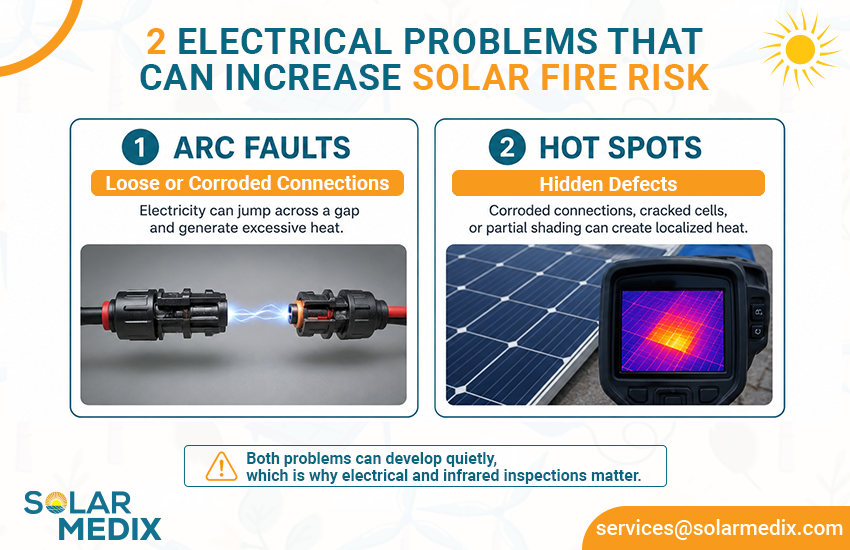
Solar system fire risk climbs with two specific electrical conditions: arc faults and hot spots, both of which tend to develop quietly in aging systems rather than announcing themselves outright.
Arc Faults and Loose Connections
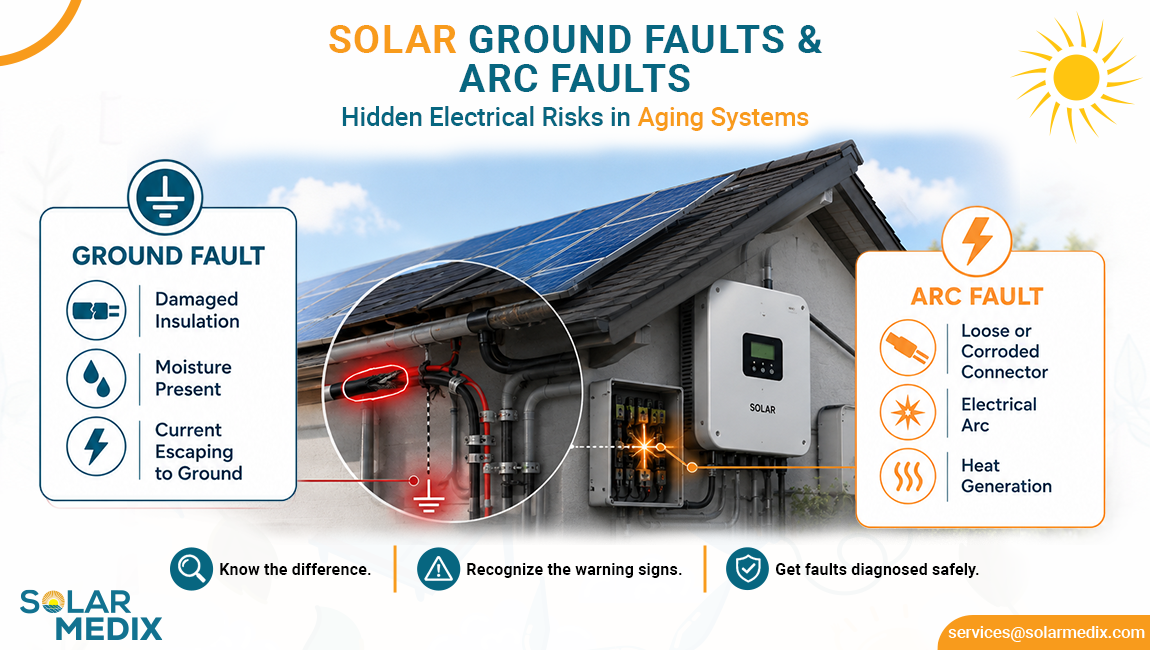
An arc fault happens when electricity jumps across a gap, typically at a loose or corroded connector, generating heat well beyond what that connection was designed to handle. It’s more common in older systems where connectors have had years to loosen or corrode, and it’s specifically why modern inverters include arc-fault detection that shuts the circuit down when one is suspected.
Hot Spots From Hidden Defects
Hot spot fire risk develops when a cell or connection point is forced to carry more current or resistance than it should, whether from a corroded connector, a cracked cell, or debris shading part of an array. These often aren’t visible from the ground, which is why infrared inspections can reveal defects before they become a real hazard, while solar issues that remain invisible to the naked eye can still be identified through thermal imaging even when the system looks fine.
Signs That Shouldn’t Wait for a Scheduled Inspection
Certain signs call for stopping and calling a professional immediately rather than waiting for your next routine visit: a burning or plastic smell near equipment, visible scorch marks or discoloration at connectors or the inverter, buzzing or crackling sounds, and breakers that trip repeatedly. None of these should be reset and ignored. Fire-related warning signs deserve particular attention, alongside the broader symptoms covered by common solar system failure symptoms and signs that your solar panels need immediate repair.
Get Your Fire Safety Confirmed
Most solar systems never come close to a fire risk, and that’s exactly the point: it’s the systems that get regular attention that stay that way. Solar Medix’s solar panel fire safety inspections check the things that actually matter here: rapid shutdown function and labeling, connector and wiring condition, and infrared scans that catch hot spots long before they’re visible to the eye. If your system is a few years old, has never had a dedicated electrical safety check, or you’ve noticed anything on the warning-sign list above, that’s worth a call before it becomes an emergency instead of a routine visit.
Solar Fire Safety FAQs
Can solar panels catch fire?
It’s rare, but solar fires do happen, almost always from faults in the surrounding electrical components (connectors, wiring, and inverters) rather than the panels themselves. Corroded or loose connections, damaged wiring, and undetected hot spots are the usual causes, and nearly all are preventable with inspection and maintenance.
What is rapid shutdown, and why does my system have it?
Rapid shutdown is a safety feature required by electrical code that quickly de-energizes the solar wiring on your roof when the system is shut off, for example, so firefighters can work safely during an emergency. It dramatically reduces the shock and fire risk from live DC wiring on the roof.
How do I know if my rapid shutdown is working?
You generally shouldn’t test it yourself, because it involves live electrical equipment. Rapid-shutdown function, along with the initiator device and labeling, is something a qualified technician verifies during a safety inspection, and it’s worth confirming on older systems where components may have aged.
What are the warning signs of an unsafe solar system?
Take seriously any burning or plastic smell near equipment, scorch marks or discoloration at connectors or the inverter, buzzing or crackling (arcing) sounds, or breakers that repeatedly trip. Shut the system down if it’s safe to do so and call a professional immediately, since these can precede a fire.
Does an older solar system pose more fire risk?
It can. Connectors loosen, seals degrade, wiring insulation ages, and hot spots develop over years, especially with heat and weather exposure. Older systems benefit from periodic electrical-safety and infrared inspection to catch these issues before they escalate.