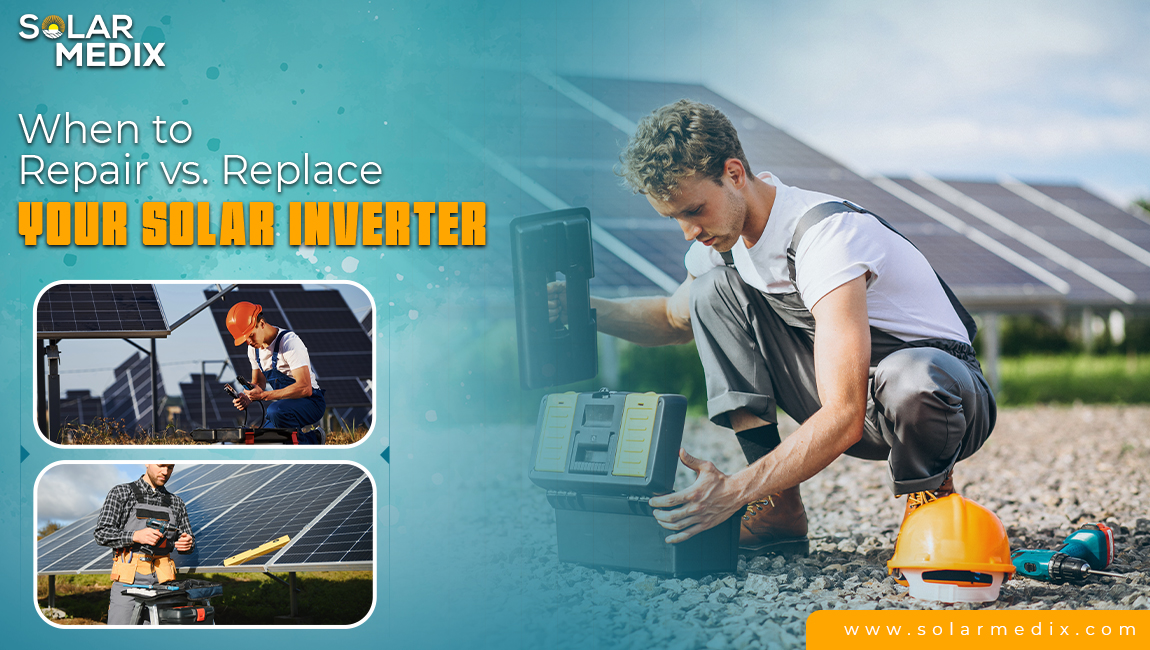
Your solar panels sit on the roof soaking up the sun, but they are essentially just expensive glass sheets without the inverter. This crucial box acts as the translator for your entire energy setup. Suddenly, you verify your monitoring app, and the production numbers read zero. Panic often follows. You have to decide if a quick fix will suffice or if you need to purchase a whole new unit.
According to a report, inverters usually have shorter lifetimes than the panels themselves, between 10 and 12 years, and even shorter warranties, typically 5 years.
Making the correct choice impacts your wallet immediately. You might pay for a temporary patch on a dying machine. Alternatively, you could accidentally trash a device that simply needed a software update. Resources like EnergySage suggest weighing the cost of service against the efficiency gains of modern technology.
Let’s figure out the smartest path for your home. So, you don’t waste money on unnecessary hardware or lose savings due to downtime.
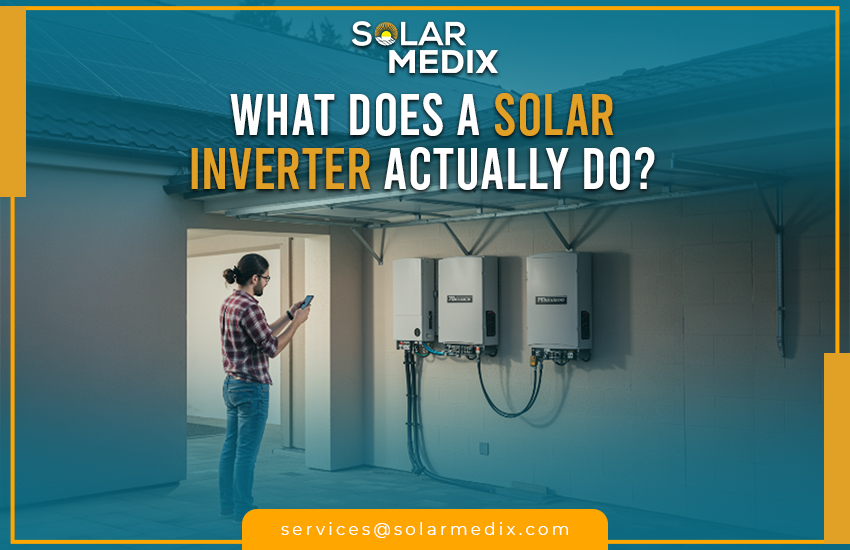
What Does a Solar Inverter Actually Do?
Panels generate Direct Current (DC) electricity. Your home, however, runs on Alternating Current (AC). The inverter bridges this gap. It takes the raw energy from the roof and modifies it to power your refrigerator, television, and lights. But its job involves more than just swapping currents. The device actively manages voltage levels to ensure safety. If the utility grid experiences a surge or goes down, the inverter acts as a gatekeeper. It shuts off the flow to protect the utility workers fixing the lines and to keep your home’s wiring from frying.
Think of it as the brain of the operation. Through connections to monitoring platforms, it reports exactly how much energy you generate in real-time. When the brain gets sick, the body stops functioning. An inverter issue doesn’t just mean slightly less power; it usually means the entire array goes dormant. That is why keeping this component healthy is critical for your return on investment. Without it, you are just a homeowner with ornaments on your shingles.
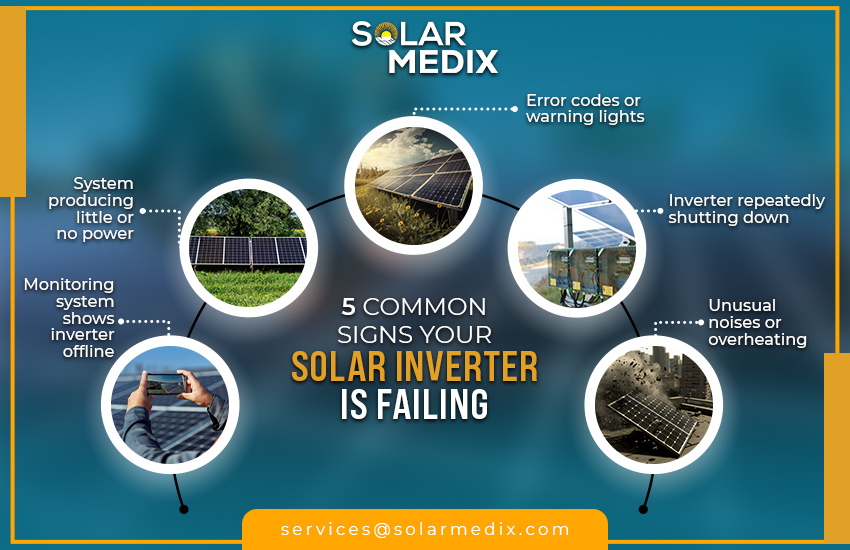
5 Common Signs Your Solar Inverter Is Failing
You typically don’t need an engineering degree to spot trouble. The machinery has specific ways of crying for help. Sometimes the signs are subtle, like a small drop in daily output. Other times, the indicators are flashing right in your face. Keep a close watch for these red flags:
- Error codes or warning lights
- System producing little or no power
- The inverter is repeatedly shutting down
- The monitoring system shows the inverter offline
- Unusual noises or overheating
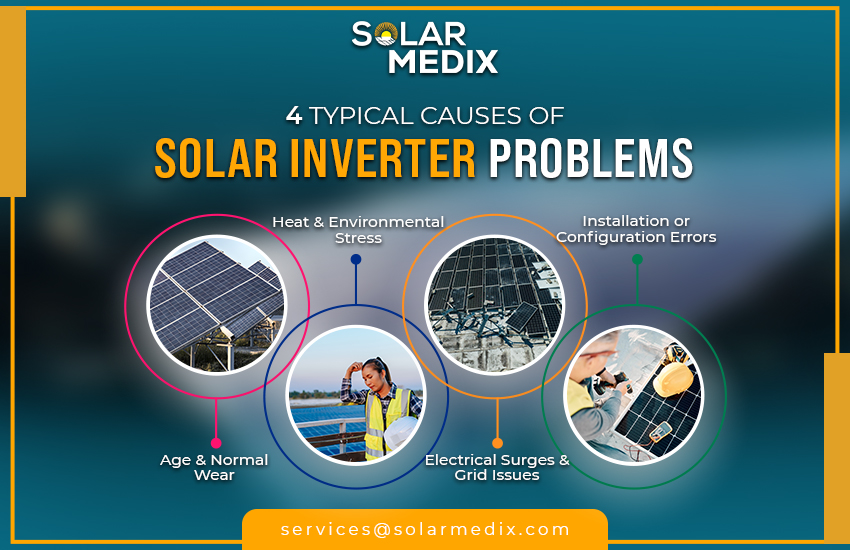
4 Typical Causes of Solar Inverter Problems
Why do these sturdy boxes break? Electronics despise heat. They also hate moisture. Your inverter lives a hard life converting high-voltage electricity every single day. Several factors conspire to wear it down over time, like
- Age & Normal Wear
- Heat & Environmental Stress
- Electrical Surges & Grid Issues
- Installation or Configuration Errors
1. Age & Normal Wear
Nothing lasts forever. Capacitors inside the unit eventually dry out. Solder joints experience fatigue from years of heating up during the day and cooling down at night.
- Electrolytic capacitors degrade over 10+ years
- Internal component fatigue from thermal cycling
2. Heat & Environmental Stress
Ideally, equipment hangs out in a cool garage. Often, installers place them on the side of a house exposed to the elements. Excessive warmth is the enemy of efficiency.
- Direct sunlight raises internal temperatures
- Humidity or salt air corroding contacts
3. Electrical Surges & Grid Issues
The utility grid isn’t always stable. Lightning strikes nearby, or simple voltage spikes slam into the inverter’s protection circuits. It takes the hit so your house wiring remains safe.
- Voltage spikes from nearby lightning events
- Unstable grid frequency is causing shutdowns
4. Installation or Configuration Errors
Sometimes the trouble starts on day one. If the sizing was incorrect or the wires weren’t torqued properly, failure is inevitable. This usually manifests early in the system’s life.
- Undersized wiring is causing resistance
- Improper grounding leading to faults
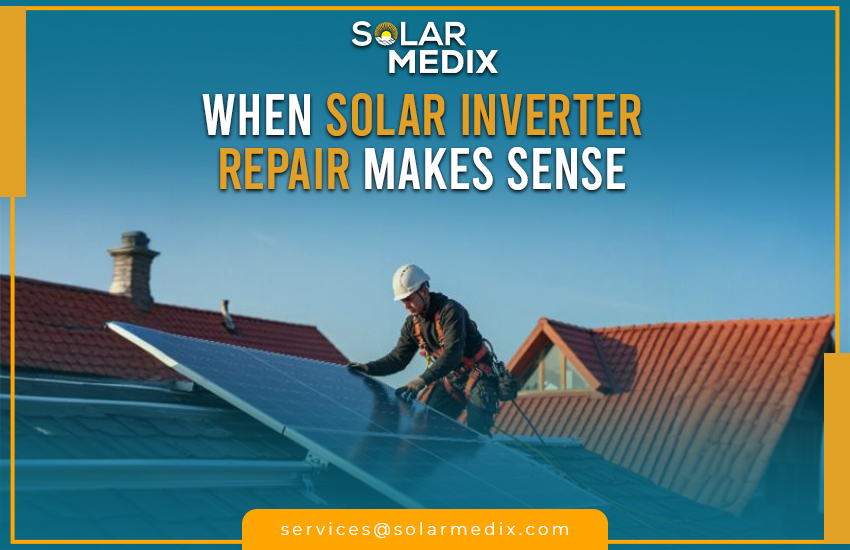
When Solar Inverter Repair Makes Sense
Don’t rush to throw the unit in the trash. Sometimes a repair is the smart financial move. If the device still has life left in it, fixing the specific bug saves cash. Our solar inverter repairs frequently handle these exact scenarios effectively.
- The inverter is relatively new
- The issue is firmware-related
- Minor component failure
- Under the manufacturer’s warranty
- Replacement parts are available
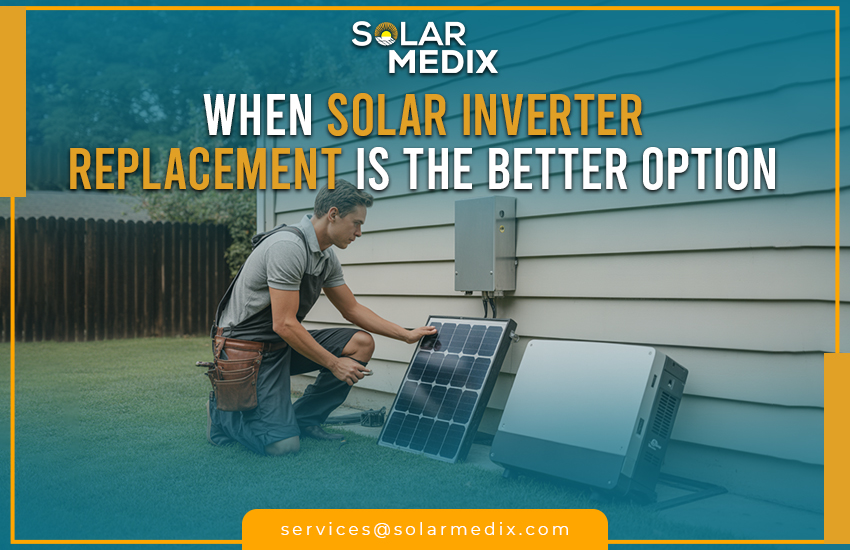
When Solar Inverter Replacement Is the Better Option
Putting money into an old machine is often a bad bet. Technology improves quickly. A new unit might offer higher efficiency plus a fresh warranty. If you are constantly calling for service, swap it out.
- The inverter is near or past its expected lifespan
- Multiple failures have occurred
- Parts are obsolete or unavailable
- Downtime is costing a significant amount of energy loss
- The manufacturer no longer supports the model

Contact Solar Medix & Get a Professional Inverter Assessment Today!
Guessing games are dangerous when dealing with high voltage. You need a clear answer regarding the state of your system. Solar Medix provides honest diagnostics to homeowners across New Jersey and New York. We look at the whole picture to give you the truth.
- Comprehensive system diagnostics
- Transparent repair vs. replace cost analysis
- Expert removal and reinstallation services
Don’t let your investment sit idle on the roof. Every day offline is money wasted on utility bills. Reach out to us to get your clean energy flowing again.
Frequently Asked Questions (FAQs)
Q1: How to tell if a solar inverter is bad?
A solar inverter is likely bad if you:
- See red error lights
- Receive zero power output data on your monitoring app, or
- Hear strange clicking sounds coming from the unit.
Q2: What happens when a solar inverter fails?
When an inverter fails, solar energy conversion stops completely. That means your home draws all required power from the grid, and your electric bill increases immediately.
Q3: How do you know when to replace a solar inverter?
Replace a solar inverter when:
- The repair cost exceeds 50% of the price of a new unit,
- The device is over 10 years old, or
- The manufacturer’s warranty has expired.
Q4: What is the average lifespan of a solar inverter?
String inverters typically last 10 to 15 years. On the other hand, microinverters generally last 20 to 25 years.