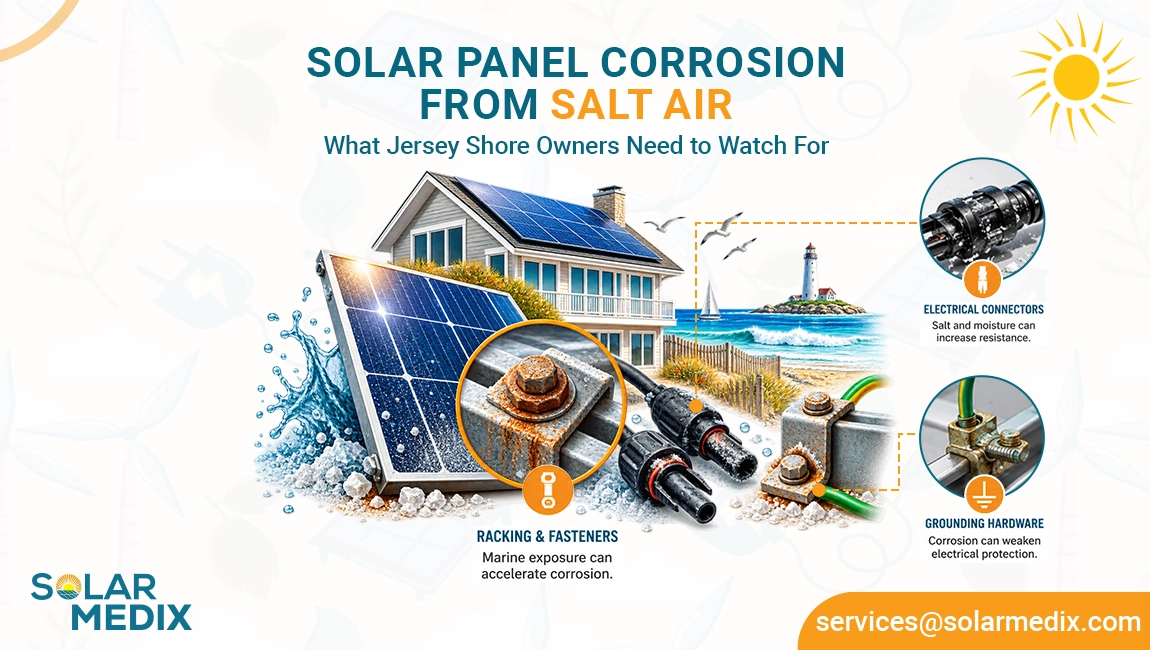
Solar panel corrosion from salt air can damage racking, fasteners, grounding connections, and panel connectors on Jersey Shore systems, causing faults and production losses even when the panels themselves look fine. Systems near Monmouth, Ocean, Atlantic, and Cape May counties should generally receive a coastal-focused inspection at least once a year, with closer attention for properties near the water.
If you own solar in Long Branch, Point Pleasant, Toms River, Ocean City, or elsewhere along the New Jersey coastline, salt-laden air and humidity can accelerate corrosion year-round. White or greenish residue, pitting, and discoloration can be early warning signs, while more advanced corrosion may lead to hot spots, intermittent faults, or unexplained production dips. Much of the damage can remain hidden beneath panels or inside connectors, making professional inspection important. This guide covers what corrodes first, the warning signs to watch for, and when coastal solar systems should be inspected.
Solar Panel Corrosion From Salt Air: Why the Jersey Shore Is Different
Airborne salt carries chloride, and chloride is one of the most aggressive accelerants of metal corrosion there is. Research on coastal exposure sites, including long-running corrosion monitoring at NASA’s Kennedy Space Center, has repeatedly shown that metal components near open water corrode at multiples of the rate seen even a few miles inland. A solar system installed in Toms River or Cape May sits in exactly that zone. The panels themselves are built to handle sun, rain, and temperature swings, but the racking, fasteners, and electrical connections around them were not necessarily specified for constant salt exposure unless the installer planned for it.
What Corrodes First on a Shore-Area Solar System
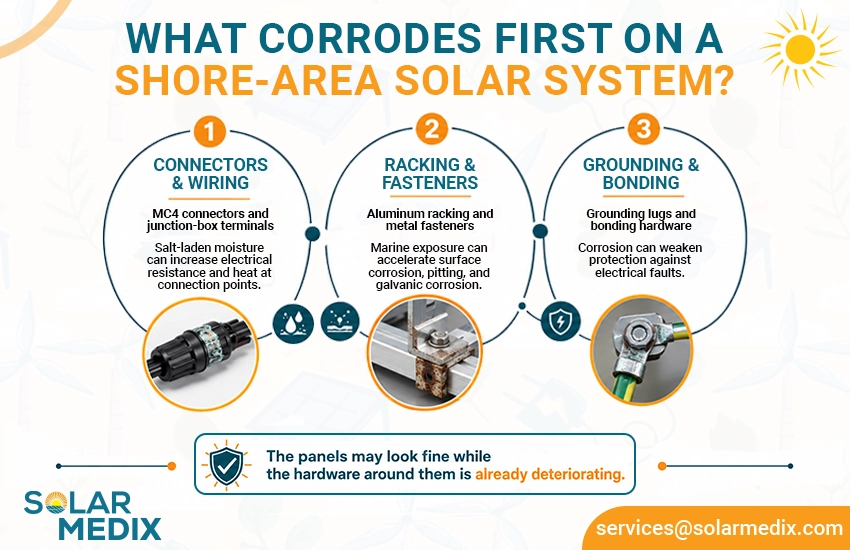
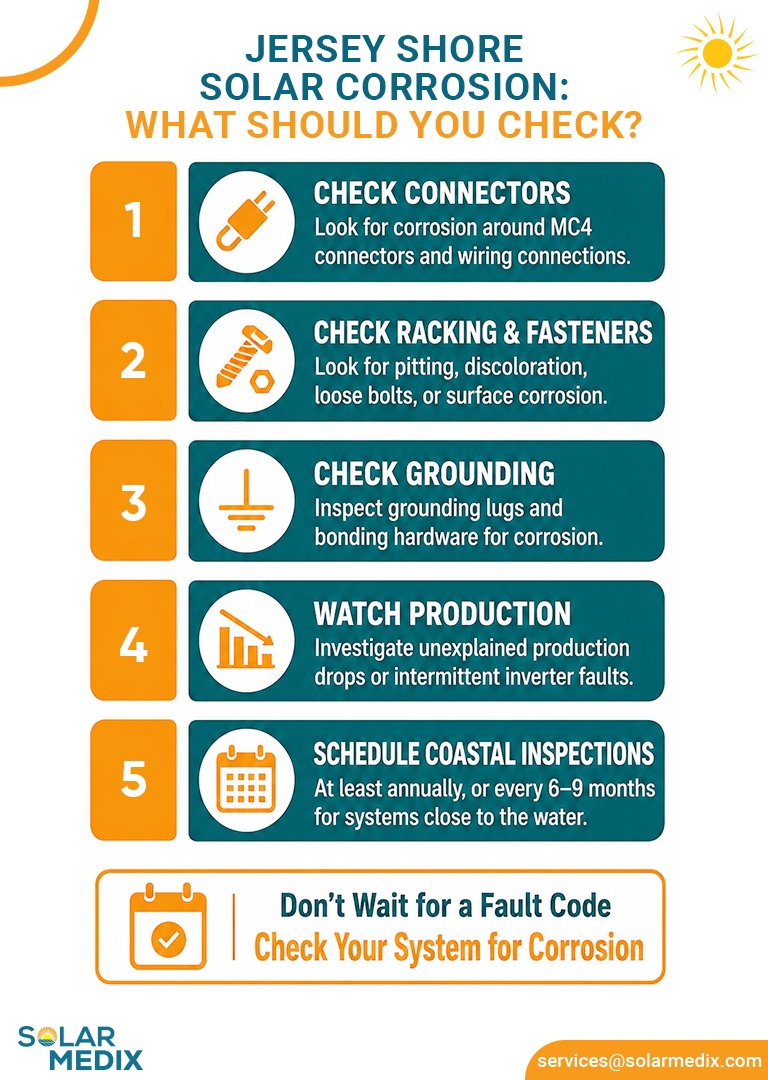
Corrosion doesn’t hit every part of a system equally. Three areas typically show damage well before anything else: the electrical connectors, the racking and fasteners, and the grounding hardware.
Connectors and Wiring
Solar connector corrosion usually starts at the MC4 connectors that link panels together, along with the terminals inside the junction box. Salt-laden moisture gets into these connections and increases electrical resistance, which raises heat at the connection point and can eventually trigger inverter fault codes or an unexplained drop in output. Because these connectors sit tucked behind and under panels, corrosion here is rarely visible during a casual walk-around, which is exactly why it tends to go unnoticed until output has already dropped.
Racking and Fasteners
Aluminum racking and stainless fasteners are the standard for a reason, but even good hardware degrades faster in a marine environment, particularly where dissimilar metals are in contact and galvanic corrosion sets in. Stainless fastener pitting, loosened bolts, and surface rust on racking edges are the visible clues. A federal report on siting solar systems in severe weather specifically flags salt-water exposure as a driver of corrosion in PV racking, electrical cabinets, and fasteners near coastal and marine areas, which lines up with what shows up on Shore inspections year after year.
Grounding and Bonding
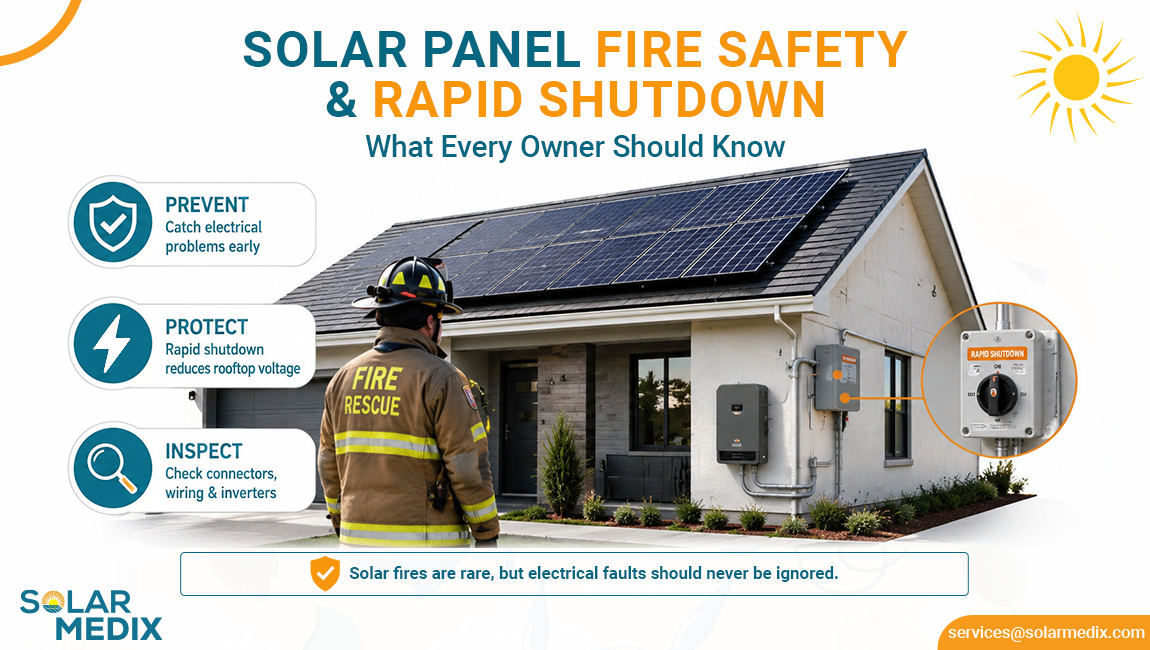
Grounding degradation is easy to overlook because a compromised ground connection doesn’t necessarily change how the system looks or performs day to day. It matters anyway. Corroded grounding lugs and bonding hardware weaken the system’s protection against electrical faults, which is a safety issue as much as a performance one, and it’s a component inspectors specifically check on coastal systems for that reason.
What Are the Warning Signs of Salt-Air Corrosion on Your System?
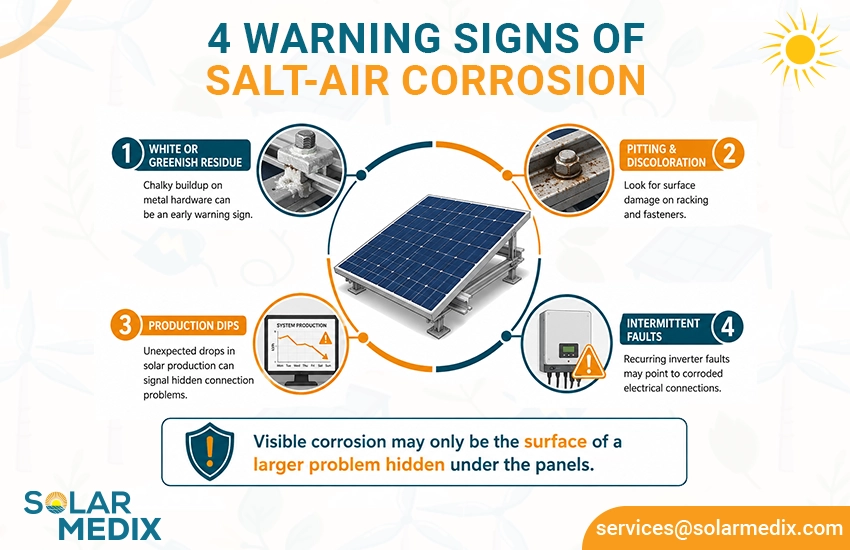
The clearest signs of solar panel corrosion from salt air are white or greenish residue on metal parts, visible discoloration or pitting on racking and fasteners, and an unexplained dip in production or intermittent inverter faults that don’t have an obvious cause. Homeowners sometimes notice a faint chalky buildup on hardware near the array before they notice anything on their monitoring app. Because a lot of the actual damage happens underneath panels and inside connector housings, these visible signs are often just the surface of a larger issue, which is why they’re worth acting on rather than waiting to see if they get worse.
How Corrosion Turns Into Hot Spots and Faults
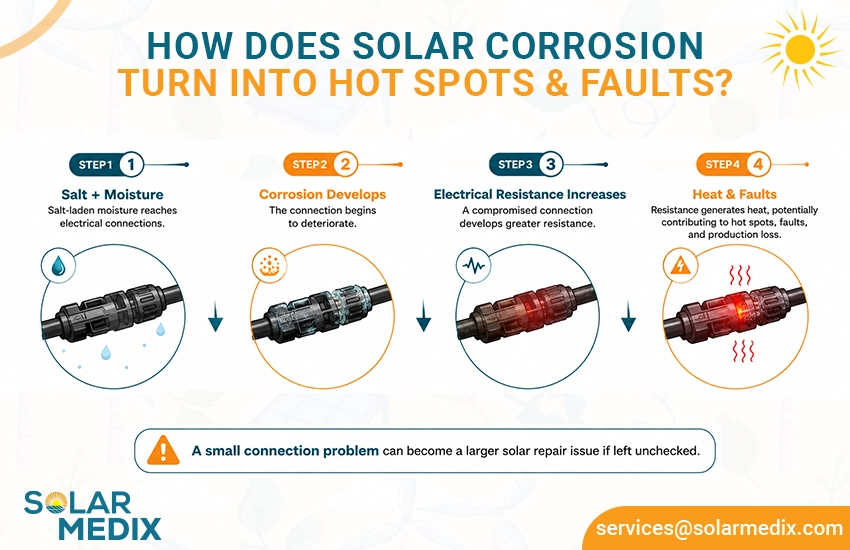
A corroded connection doesn’t fail cleanly. It develops resistance, and resistance generates heat at exactly the point where two components meet, which is the same mechanism behind many of the hot spots and micro-cracks technicians find during infrared and visual inspections. Left alone, that heat cycling can stress the surrounding cell and connector material further, turning a corrosion issue into a repair issue. Corroded connections can also develop alongside other forms of panel damage, including microcracks that may require solar repair or replacement. In some cases, connection issues are also behind problems covered by common solar panel repairs, even when the original symptoms point elsewhere.
How Often Should Jersey Shore Solar Systems Be Inspected?
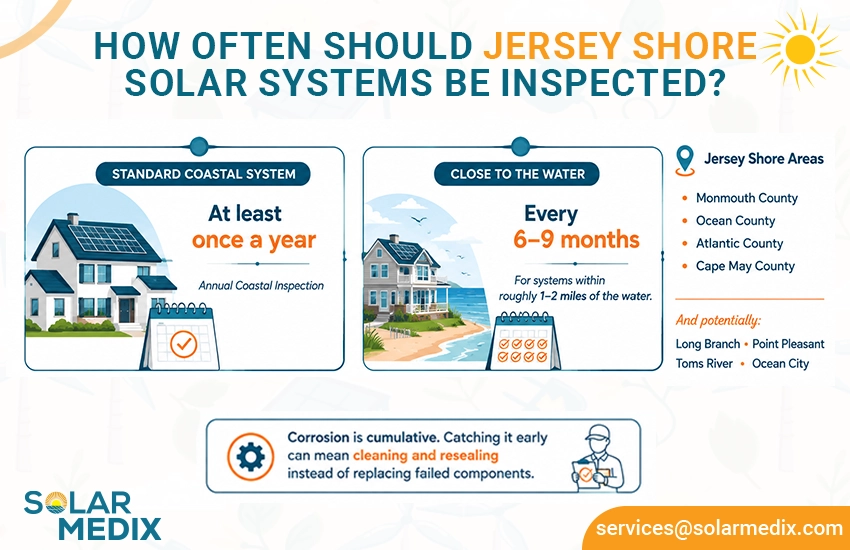
Coastal solar maintenance in New Jersey should happen at least once a year, and systems within a mile or two of the water often benefit from a check every six to nine months instead. Corrosion is a cumulative process, so the value of an inspection is catching it while a connector clean and reseal is still enough, rather than after a connector, fastener, or grounding lug has failed outright. If it’s been a while since your system was checked for anything beyond production numbers, knowing what to look for between professional visits can help with solar operations and maintenance and signs that your solar panels need immediate repair.
Book Jersey Shore Solar Panel Care Before Corrosion Costs You Output
Solar panel corrosion from salt air works quietly on the hardware holding your system together, and by the time it shows up as a production drop or a fault code, the corrosion has usually been building for a season or two already. Solar Medix inspects Jersey Shore systems specifically for connector condition, racking and fastener corrosion, and grounding integrity, alongside standard performance checks. If your system sits anywhere near Monmouth, Ocean, Atlantic, or Cape May County and hasn’t had a corrosion-focused inspection in the last year, that’s the visit worth scheduling next.
Jersey Shore Solar Corrosion FAQs
Does salt air really damage solar panels?
The glass itself resists it, but the surrounding hardware doesn’t. Near the coast, salt in the air accelerates corrosion of aluminum racking, metal fasteners, grounding connections, and the wiring connectors between panels, and corroded connections are a leading cause of hot spots, output loss, and fault risk.
Which parts of a shore-area solar system corrode first?
Usually the electrical connectors like MC4s, grounding lugs and bonding hardware, fasteners, and racking edges. These are also the parts most responsible for safe, efficient operation, which is why coastal systems benefit from more frequent inspection.
How often should Jersey Shore solar systems be inspected?
Coastal exposure generally warrants more frequent checks than inland systems, often annually at minimum. Catching corrosion early is far cheaper than replacing failed components or chasing an intermittent fault.
What are the warning signs of corrosion on my solar system?
Look for white or greenish residue on metal parts, discoloration or pitting on racking and fasteners, and unexplained production dips or intermittent faults. Much of it hides under panels, so a professional inspection is the reliable way to catch it.
Can corrosion be repaired, or do parts need replacing?
It depends on severity. Early corrosion can often be cleaned, treated, and re-protected. Advanced corrosion of connectors, grounding, or racking usually means targeted replacement, and a coastal inspection tells you which before it becomes a safety issue.