Seeing a massive electric bill arrive in the mail when you expected a credit is a stomach-churning moment. You invested in clean energy to save money. Now, the system sits on your roof doing absolutely nothing. It is frustrating. Solar energy systems are complex pieces of technology. While generally reliable, they are not immune to faults.
According to a study, ignoring performance drops can lead to long-term efficiency loss. You need to know if the grid is down or if your equipment failed. Diagnosing the specific root cause usually requires a professional touch from our Solar Medix experts.
We understand the panic that sets in. Your ROI depends on those panels soaking up the sun. When production hits zero, your financial plans take a hit too. Let’s look at why this happens and how to get your energy flowing again.
When Your Solar Panels Suddenly Stop Working
Solar setups are incredibly durable pieces of hardware. They do not typically quit without a cause. Usually, a silent electrical gremlin is at work behind the scenes. It could be a physical break in a wire. Perhaps a component simply reached the end of its life. The system is trying to tell you something is wrong.
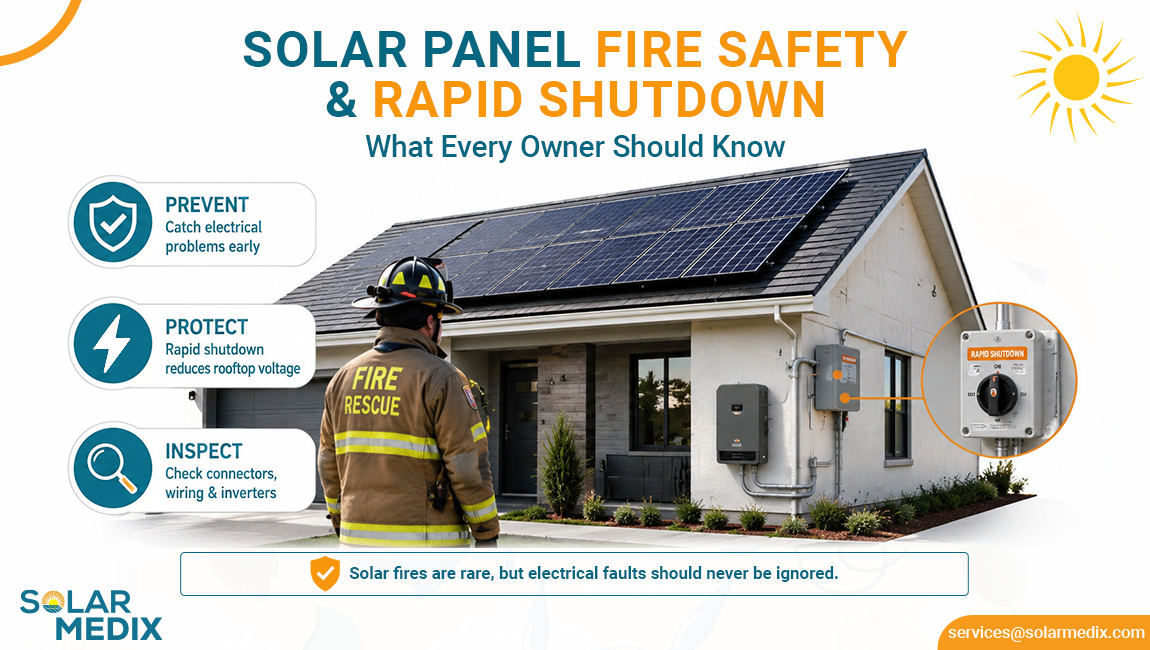
Every day the system sits idle, you lose money. Those savings you counted on evaporate instantly. Ignoring the problem is dangerous. Small glitches turn into expensive fires or total system failures if left alone. Many solar issues remain hidden to the naked eye. They fester. What starts as a minor drop in efficiency can spiral into a total shutdown. You need to act fast.
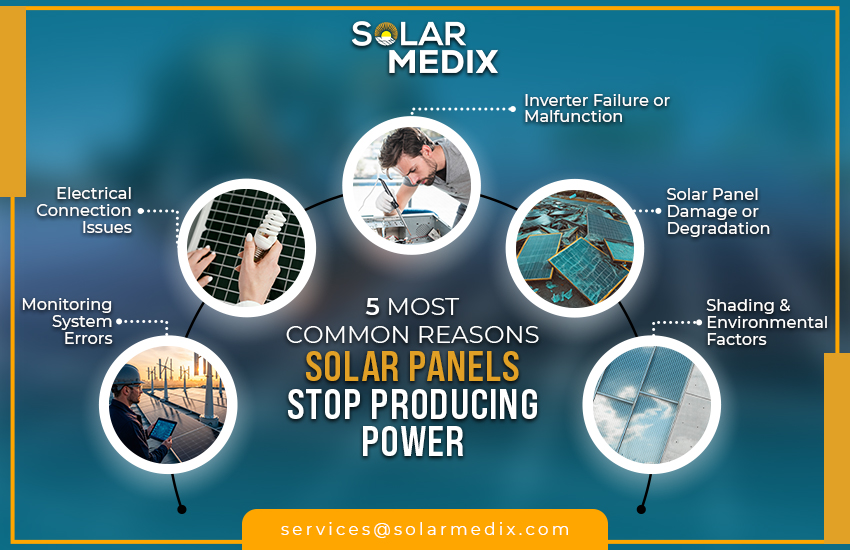
5 Most Common Reasons Solar Panels Stop Producing Power
Pinpointing the exact failure point requires troubleshooting. Several usual suspects tend to crop up more often than others. Here are the main culprits we see in the field,
- Inverter Failure or Malfunction
- Electrical Connection Issues
- Solar Panel Damage or Degradation
- Monitoring System Errors
- Shading & Environmental Factors
1. Inverter Failure or Malfunction
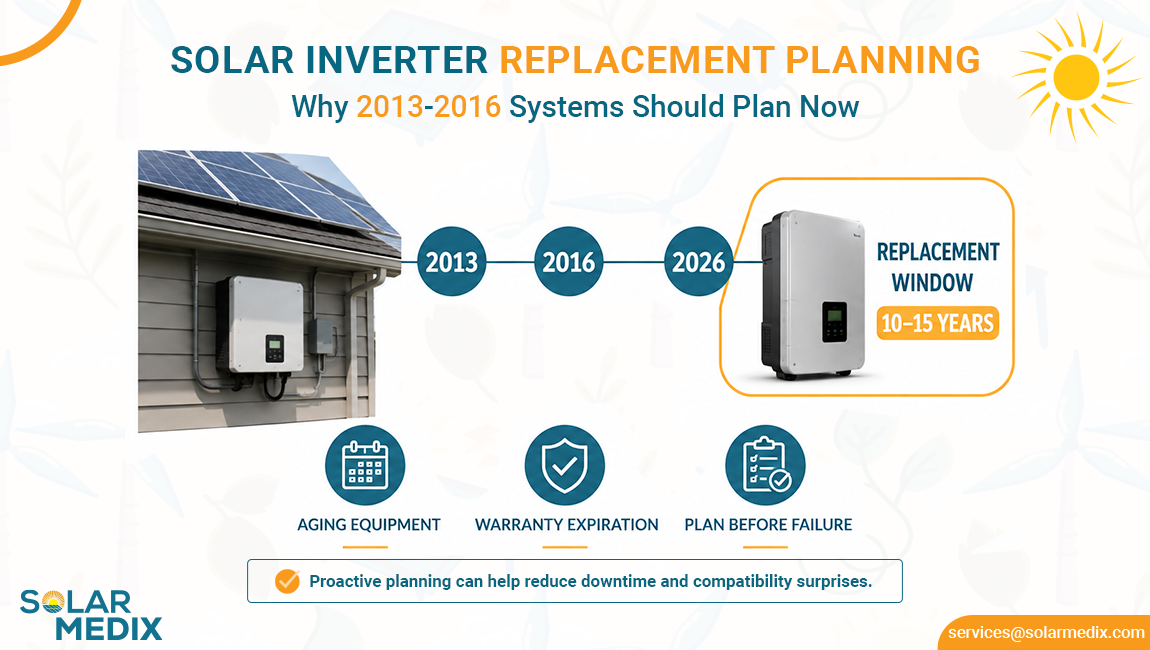
Think of the inverter as the brain of your solar array. It translates the raw DC energy from the sun into the AC electricity your home uses. If the brain shuts down, the body stops moving. Inverters often have a shorter lifespan than the panels themselves. They work hard. They manage high voltage daily. A simple blown fuse or a software error code can knock the whole system offline.
- Red or flashing indicator lights on the inverter box
- Error messages on the display screen indicate a fault
2. Electrical Connection Issues
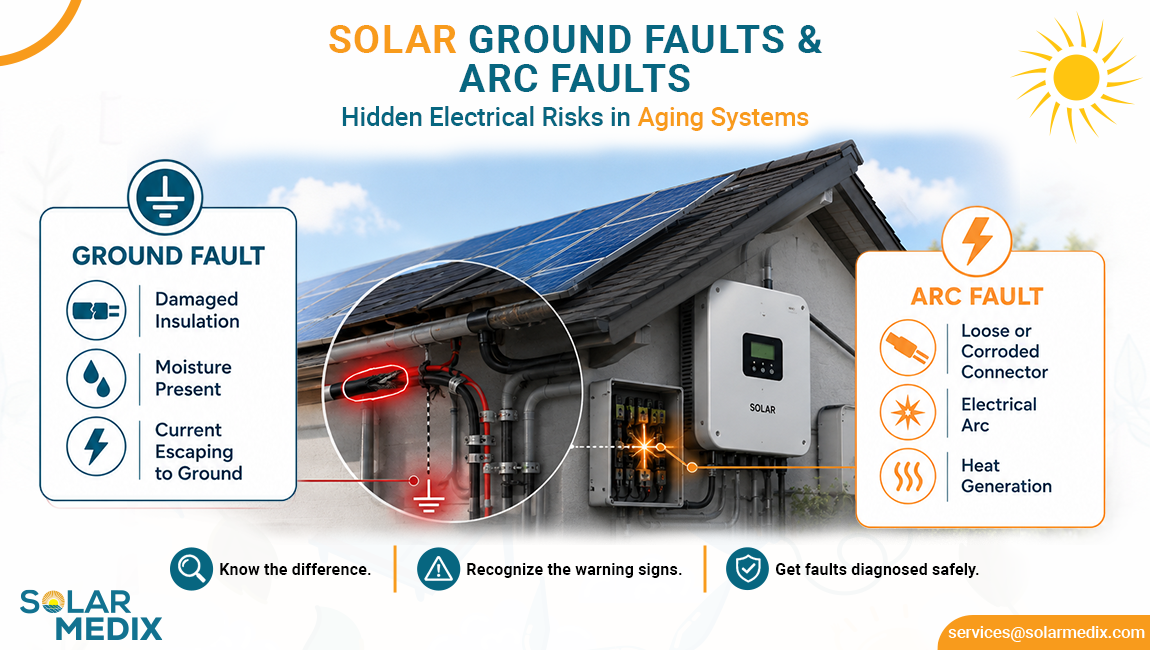
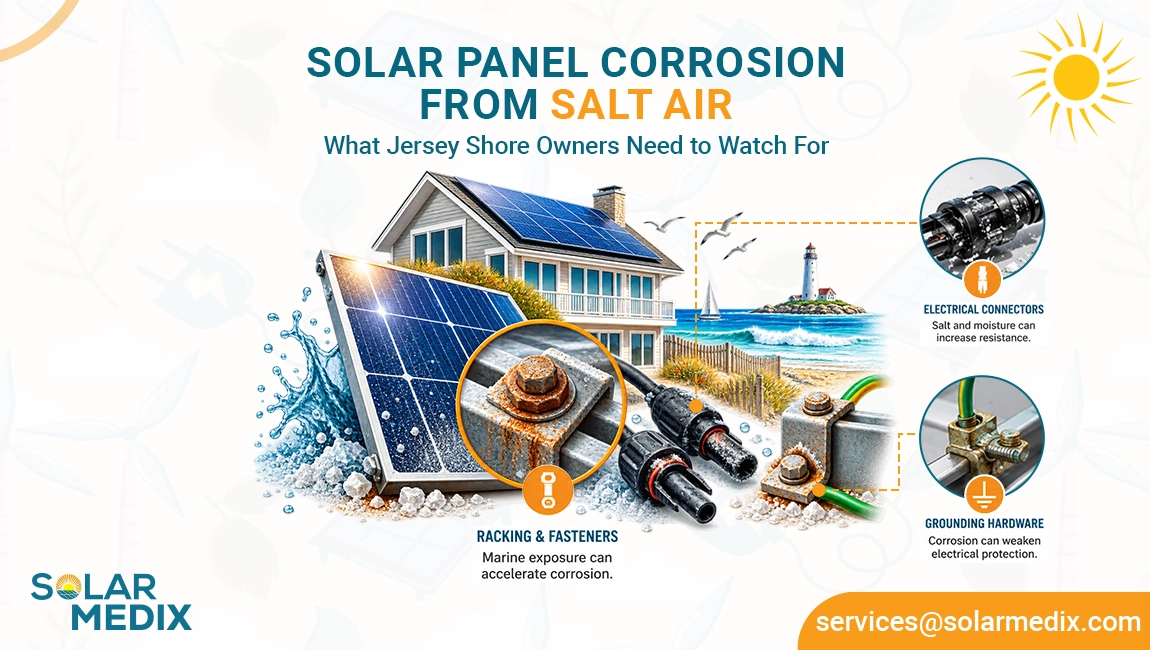
Wires expand and contract with the heat. Over time, connections loosen. Sometimes, nature gets involved. Squirrels and birds love to nest under arrays. They often chew through insulation. This cuts the flow of power. Corrosion is another enemy. If water gets into a connector, it creates resistance. Eventually, the connection fails entirely. This is a common reason for a solar repair call.
- Loose or corroded wiring terminals
- Physical damage to cables from pests or rodents
3. Solar Panel Damage or Degradation
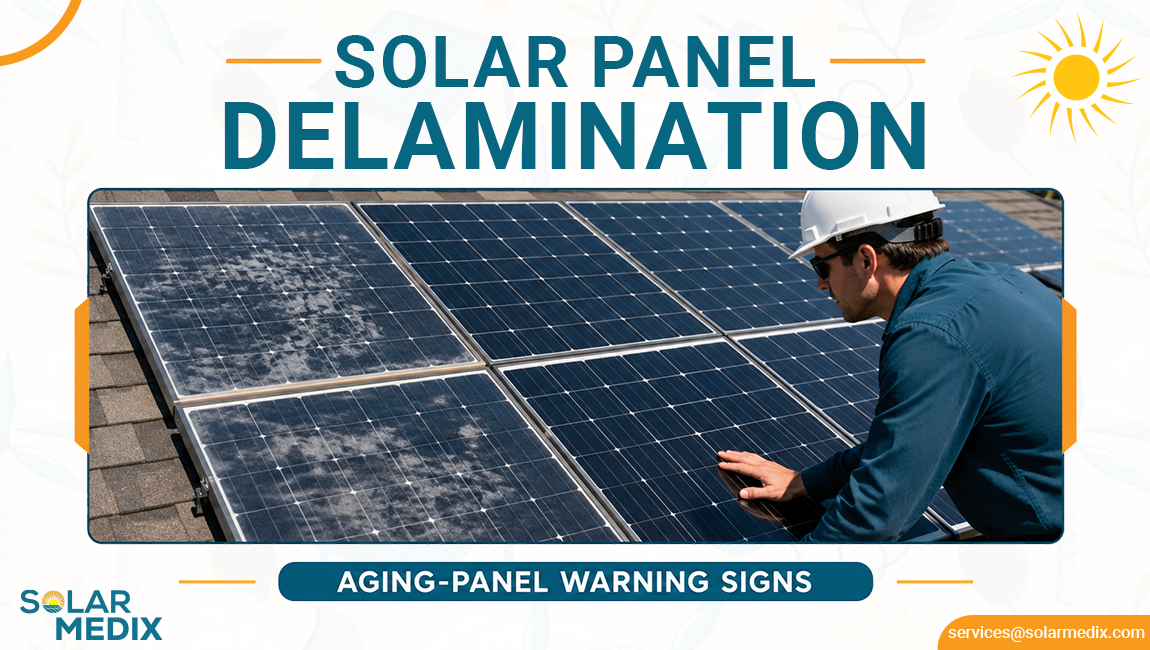
Panels are tough, but they aren’t invincible. A heavy hailstorm can leave micro-cracks in the glass. These cracks allow moisture to seep in. That kills the cells inside. Sometimes, a specific panel develops a “hotspot.” This is an area of high resistance that burns out. When one panel in a string fails, it can drag down the performance of the others connected to it.
- Visible cracks or snail trails on the glass surface
- Discoloration or burn marks on the panel backing
4. Monitoring System Errors
Sometimes the solar panels work perfectly fine. The problem might be the messenger. Your monitoring app needs an internet connection to report data. If your Wi-Fi password changes, the system goes offline. The equipment is producing power. You just can’t see it. This is the “best-case” scenario. It requires IT support rather than electrical work.
- Loss of Wi-Fi connection to the gateway
- Software glitches in the reporting application
5. Shading & Environmental Factors
Did a neighbor build a second story? Did that sapling in the yard turn into a giant oak tree? Shadows are the enemy of solar panels. If a significant portion of the array gets covered in shade, the voltage drops. Dirt and pollen accumulation also play a role. A thick layer of grime blocks the sunlight. The electrons can’t move if the sun can’t reach them.
- New construction or vegetation blocking direct sunlight
- Heavy accumulation of dust, pollen, or bird droppings
Also read: How to Prevent Shading on Solar Panels?
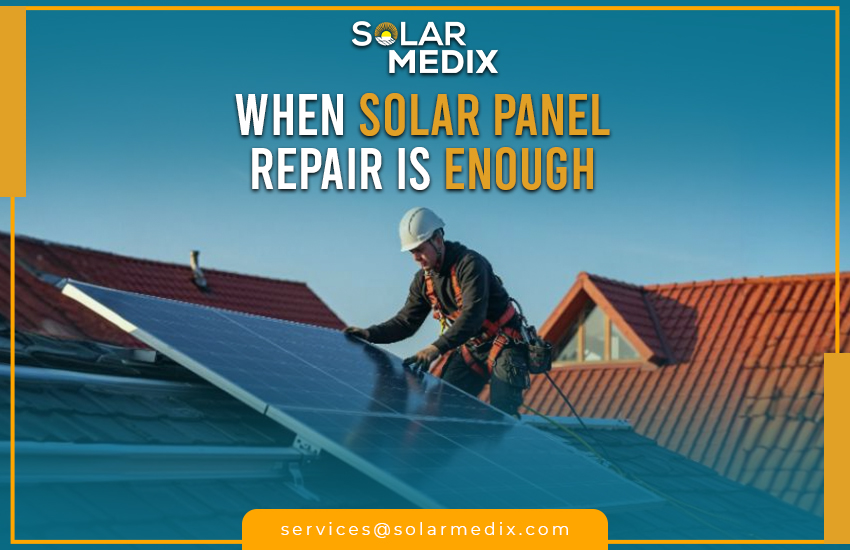
When Solar Panel Repair Is Enough
Not every breakdown requires a demolition crew. Often, we can surgically fix the issue. Our technicians assess the damage to see if a component swap will do the trick. If the core infrastructure is sound, we focus on the specific broken part. This saves you money. It gets your lights back on faster.
- Inverter replacement
- Wiring or connector repairs
- Monitoring recalibration
- Isolated panel replacement
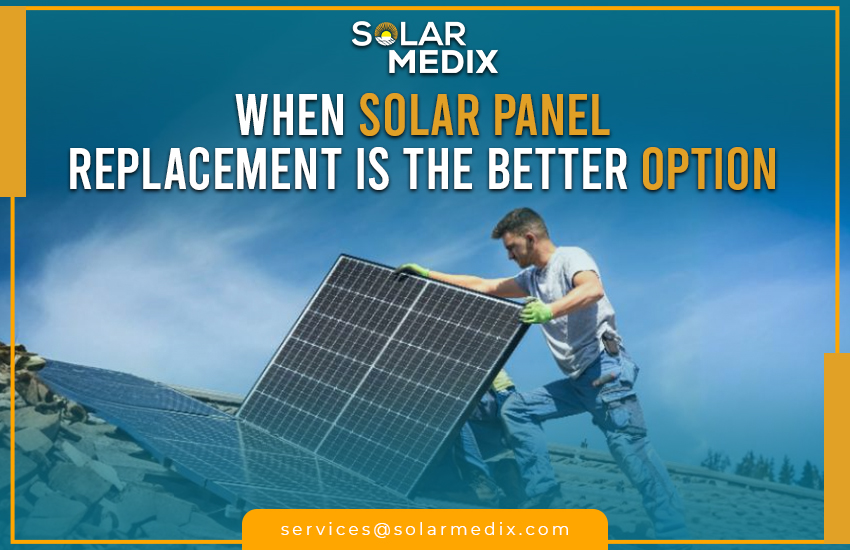
When Solar Panel Replacement Is the Better Option
Sometimes Band-Aids don’t work. If the system is relatively new, professional solar repair saves money. If it is old, throwing money at repairs is wasteful. Newer technology is far more efficient. Upgrading might yield better production numbers than the old system ever did. Severe damage often necessitates a fresh start. We will be honest with you about the cost-benefit analysis.
- The system is beyond its useful lifespan
- Multiple failing components
- Obsolete or unsupported equipment
- Severe storm or structural damage
Contact Solar Medix & Restore Your Solar Power Safely and Efficiently
Don’t let a dead system drain your wallet. You deserve the energy savings you paid for. Solar Medix specializes in diagnosing tricky faults. We operate across New Jersey, New York, and also Houston, TX, & Boston, MA. Our team moves quickly to identify the problem. We provide clear options. We get your green energy flowing again.
- Schedule a diagnostic
- Get a clear estimate
- Restore your production
Ready to fix your system? Contact Solar Medix for a consultation today.
Frequently Asked Questions (FAQs)
Q1: Why did my solar panels suddenly stop working?
The most common cause for a sudden stop is a tripped breaker or a failed inverter. Since the inverter converts power for your home, its failure results in zero production. Grid outages also automatically shut down most residential solar systems for safety reasons.
Q2: What is the average lifespan of a solar panel?
Solar panels typically last between 25 and 30 years. In many cases, they can continue producing power after this period. However, their efficiency usually drops significantly. Most manufacturers offer performance warranties covering this timeframe.
Q3: Do solar panels eventually stop working?
Yes, solar panels eventually stop producing usable amounts of power. Photovoltaic cells degrade naturally over time. They usually lose about 0.5% efficiency per year. Eventually, the output becomes too low to be practical.
Q4: What are the signs of a faulty solar panel?
A sudden spike in your electric bill is the most obvious sign. You might also see red fault lights on your inverter. Visible damage like cracked glass or water intrusion inside the panel also indicates failure.