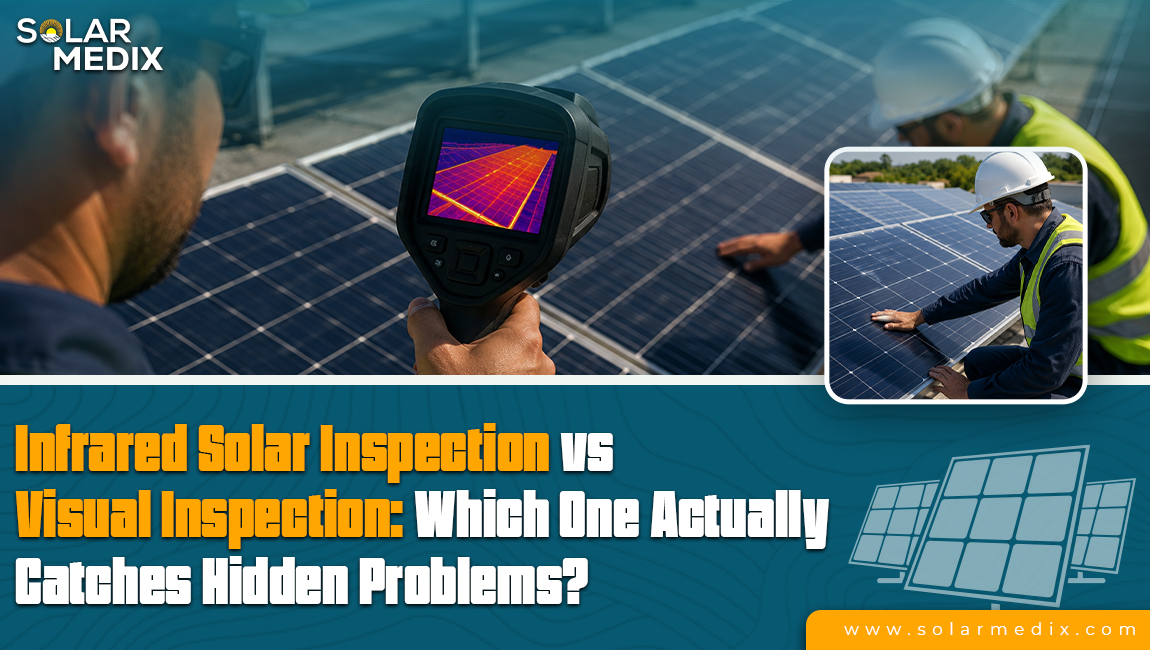
A visual inspection only catches problems you can see, like cracks or dirt, while an infrared solar inspection can detect hidden issues like hot spots, microcracks, and electrical faults inside the system. So if you want to find deeper, hidden problems, infrared inspection is more effective.
Your solar panels can look fine from the ground.
Clean glass. Straight rows. No obvious cracks. No loose panels. Nothing hanging off the roof.
But that does not always mean the system is healthy.
Some solar problems are easy to see.
Others hide inside the panel or inside the electrical side of the system. You may not see them with your eyes, but they can still reduce production, create heat, damage the panel over time, or lead to bigger repairs later.
That is where infrared solar inspections help.
At Solar Medix, we use visual checks and thermal imaging for different reasons. A visual inspection tells us what we can see. An infrared inspection helps us find what the system is showing through heat.
That matters because heat often gives away problems before they become obvious.
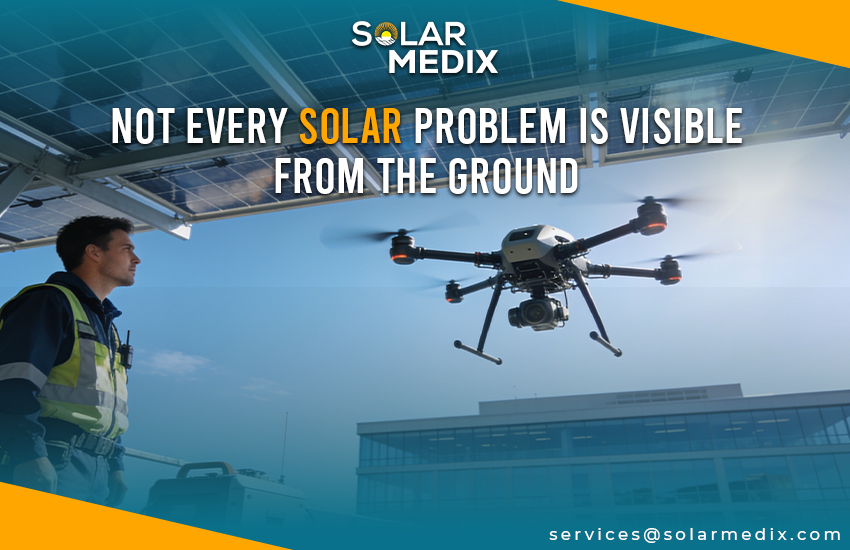
Not Every Solar Problem Is Visible From The Ground
A lot of solar issues start quietly.
The system still runs. The app still shows production. The panels still look normal.
But one section may be hotter than it should be. One cell may be failing. One panel may be underperforming. Moisture may be getting inside the module. A connection may be creating extra heat.
You may not see that from the driveway. That is why the type of inspection matters.
What Is A Solar Panel Inspection?
A solar panel inspection is a check of your solar system to see whether it is safe, clean, connected, and producing properly. Depending on the inspection, a technician may check:
- Panel condition
- Mounting hardware
- Wiring and connections
- Inverter status
- Monitoring data
- Roof area around the panels
- Signs of critter activity
- Debris, shading or dirt build-up
- Production problems
- Visible damage
- Thermal patterns, if infrared imaging is included
A good inspection does not just ask, “Do the panels look okay?”
It asks, “Is the system actually performing the way it should?”
Why Solar Inspections Matter
Solar panels are built to last, but they still sit outside every day.
They deal with heat, cold, rain, wind, dust, pollen, leaves, birds, storms, roof movement, and ageing equipment.
Over time, small issues can show up.
If those issues are found early, they are often easier to manage.
If they are missed, they can turn into production loss, repair costs, warranty problems or safety concerns.
NREL’s PV operations and maintenance guidance explains that O&M helps improve PV system reliability, availability and safety. That is the bigger goal behind inspections: keeping the system productive and safe over time.
How Does A Visual Solar Inspection Work?
A visual solar inspection is exactly what it sounds like. A technician checks the system with their eyes, tools, and experience.
A visual inspection can find obvious problems like:
- Cracked glass
- Broken panels
- Loose wiring
- Damaged conduit
- Dirt build-up
- Bird droppings
- Leaves or debris
- Loose mounting
- Roof damage near the array
- Burn marks
- Water intrusion signs
- Critter nests or chewing damage
Visual inspections are very useful. We do them for a reason. But they have limits. They cannot always show what is happening inside the panel.
What Is An Infrared Solar Inspection?
An infrared solar inspection uses thermal imaging to look at heat patterns across the panels and related equipment. Instead of only seeing the surface, the camera shows temperature differences.
Those temperature differences can point to issues like:
- Hot spots
- Failing cells
- Damaged bypass diodes
- Microcrack-related performance problems
- Mismatch issues
- Electrical faults
- Overheated connections
- Underperforming modules
- Sections of a panel not working properly
Infrared imaging can detect many PV module failures, including hot spots, mismatch losses, and installation failures, and it can scan installed modules during normal operation.
That is why infrared inspections are so useful. They help us see problems that a normal visual check may miss.
Why Hidden Solar Panel Problems Often Go Undetected
Hidden problems are missed because the panel can look normal from the outside.
A panel can have internal damage and still look clean.
A system can still produce some power while one section is underperforming.
A panel can start developing a hot spot before the glass cracks or the backsheet shows damage.
That is why homeowners sometimes say:
“But the panels look fine.”
And they may be right.
They look fine.
But looking fine and performing properly are not always the same thing.
Can Healthy-Looking Solar Panels Still Have Internal Damage?
Yes. A panel can look healthy and still have internal problems. Some issues, like microcracks, cell damage, hot spots, or delamination, may not be obvious during a simple ground-level visual check.
PV module failure types, including hot spots, burn marks, and other degradation signs that can affect performance or safety over time.
This is why thermal imaging can be helpful after storms, unexplained production drops, roof work, or long periods without inspection.
How Thermal Imaging Helps Protect Your Solar System
Thermal imaging helps because it gives the technician another layer of information.
A visual inspection may say, “This panel looks okay.”
A thermal inspection may say, “This section is running hotter than the rest.”
That difference matters.
Heat can point to a problem early.
And early is where you usually have more options.
At Solar Medix, we use thermal inspection as part of the decision-making process. It helps us work out whether the system needs repair, monitoring review, warranty support, panel replacement, or further testing.
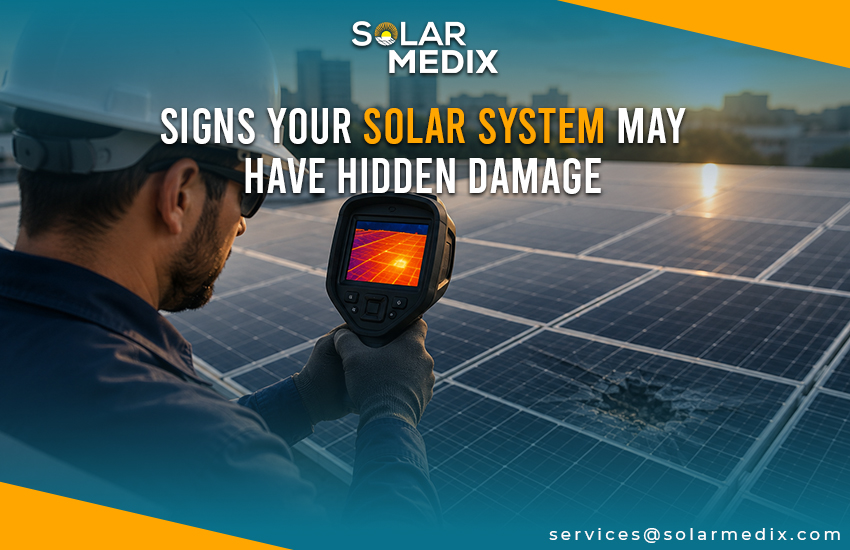
Signs Your Solar System May Have Hidden Damage
Hidden damage does not always announce itself. There may be no loud bang. No broken panel on the ground. No huge warning sign.
Sometimes the first clue is just a system that is not producing like it used to.
Why Is Your Solar System Producing Less Power Than Before?
There are many reasons solar production can drop.
It may be caused by:
- Shade
- Dirt or soiling
- Inverter issues
- Monitoring problems
- Wiring faults
- Critter damage
- Hot spots
- Panel ageing
- Microcracks
- Storm damage
- Loose connections
Some of these are visible.
Some are not.
That is why we do not guess from the bill alone. We inspect the system and compare what we see with what the system data is showing.
Your Solar Panels Look Fine, So Why Is Output Dropping?
This is one of the most common situations. The homeowner looks at the roof, and everything seems fine.
But the utility bill has changed. The app shows less production.
Or the system has slowly dropped over time.
If the panels look fine but output is falling, the issue may be inside the panel, behind the panel, or on the electrical side of the system.
Our residential solar inspection includes visual panel analysis, roof attachment checks, wiring tests, inverter performance tracking and system diagnostics.
A visual check from the ground is not enough in that situation.
Can Storms Cause Hidden Solar Panel Damage?
Yes. Hail, high winds, flying debris, falling branches and severe weather can damage panels in ways that are not always easy to see.
Sometimes the damage is obvious, like broken glass.
Sometimes it is smaller, like microcracks or stress inside the module.
After a major storm, it is smart to have the system checked, especially if production drops or monitoring shows odd behaviour.
A visual inspection can catch obvious storm damage. Thermal imaging can help catch heat patterns that suggest hidden damage.
How Heat, Moisture And Ageing Affect Solar Panels
Solar panels live outside. Heat, moisture and time all matter. Over the years, panels may experience:
- Seal wear
- Cell stress
- Moisture entry
- Delamination
- Hot spots
- Microcracks
- Connector wear
- Backsheet ageing
- Reduced output
None of this means every older panel is bad.
It means older systems deserve proper checks.
If your system has not been inspected in years, a thermal inspection can help show whether any section is behaving differently from the rest.
What Happens If Hot Spots Go Undetected?
A hot spot is an area of a panel that becomes hotter than surrounding areas.
That can happen when part of the panel is under stress, shaded, damaged, or not moving current properly.
Hot spots matter because they can reduce output and may lead to further damage if ignored.
NREL’s research on aerial infrared thermography discusses hot spot defects and their relationship with PV performance analysis, showing why thermal defects are important in system evaluation.
In simple terms:
A hot panel section is trying to tell us something.
We should listen before it becomes a bigger problem.
Can Birds, Debris Or Shade Create Thermal Problems?
Yes. Bird droppings, leaves, debris, or shade can create uneven performance across a panel. That uneven performance can sometimes create hotter areas.
Critter activity can also damage wiring under the panels. We have seen systems where the panel surface looked okay, but the issue was under the array.
This is where a combined inspection helps.
Visual inspection finds the obvious signs. Thermal imaging helps show whether the system is reacting to something hidden.
When Should You Schedule A Solar Panel Inspection?
You should schedule a solar inspection if:
- Production has dropped
- Your bill has increased
- Your monitoring app shows gaps
- You see warning messages
- There was hail, wind or storm damage
- Panels look cracked or stained
- You see birds or critters around the array
- The system is older
- You are buying or selling a home with solar
- The system has not been checked in years
For commercial systems, inspections should be more structured because lost production can cost more.
Solar Medix provides solar O&M solutions for residential and commercial systems, including inspections, monitoring, inverter diagnostics, and corrective maintenance.
Should Solar Panels Be Inspected Even If They Are Under Warranty?
Yes. A warranty does not monitor your system for you. It also does not automatically prove that a part has failed.
If there is a problem, you may still need inspection notes, photos, serial numbers, performance data, or thermal images to support a claim.
Solar Medix’s guide on infrared inspections for warranty investigations explains that IR inspections can help spot defects and support warranty-related documentation.
So even if your panels are under warranty, an inspection can still be valuable.
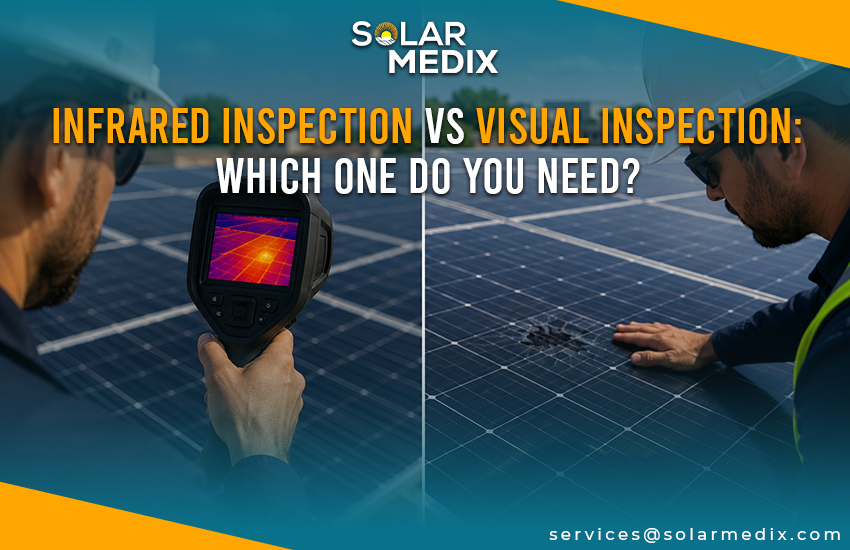
Infrared Inspection vs Visual Inspection: Which One Do You Need?
The honest answer is this: You may need both.
A visual inspection and an infrared inspection are not enemies. They look for different things.
A visual inspection is great for surface and physical issues.
An infrared inspection is better for hidden heat-related problems.
Infrared Solar Inspection vs Visual Inspection: Key Differences
Here is the simple comparison.
| Inspection Type | What It Checks Best | What It May Miss |
| Visual inspection | Cracks, dirt, debris, loose parts, visible wiring, roof issues | Internal cell faults, hot spots, hidden thermal issues |
| Infrared inspection | Heat patterns, hot spots, failing cells, hidden electrical faults | Some physical damage that needs close visual checking |
| Best approach | Good for basic condition checks | Better when production is down, storm damage is suspected or hidden issues are possible |
For many systems, the best answer is both: visual inspection first, thermal imaging when the situation calls for it.
What Can A Visual Inspection Detect?
A visual inspection can detect:
- Cracked glass
- Broken frames
- Loose panels
- Visible wiring issues
- Dirty panels
- Bird droppings
- Leaves and debris
- Roof damage
- Loose mounting
- Corrosion
- Water stains
- Visible burn marks
- Critter nests
This is useful information. We do not skip it.
But if the issue is inside the panel or showing mainly through heat, a visual inspection may not catch it.
What Can An Infrared Inspection Detect That A Visual Check May Miss?
Infrared inspection may detect:
- Hot spots
- Cell mismatch
- Failing cells
- Microcrack-related thermal changes
- Overheated connections
- Damaged bypass diodes
- Underperforming modules
- Electrical faults
- String-level issues
- Hidden storm damage
IEA PVPS notes that IR imaging can detect many PV module failures and can be used on installed modules during normal operation.
That is the value. It lets us see temperature differences that are not visible to the eye.
What Types Of Issues Can Thermal Imaging Reveal?
Thermal imaging can help reveal issues such as:
- Hot spots
- Failed cells
- Cell mismatch
- Microcrack-related defects
- Diode problems
- Loose or overheated connections
- Underperforming panels
- Electrical imbalance
- Sections of panels not producing properly
- Some signs of hidden storm or ageing damage
Thermal imaging does not replace every other test. It adds important information.
What Causes Hot Spots In Solar Panels?
Hot spots can be caused by:
- Shade
- Dirt
- Bird droppings
- Cell damage
- Microcracks
- Poor connections
- Manufacturing defects
- Failed bypass diodes
- Mismatch between cells
- Ageing or internal degradation
A hot spot is not something to ignore. It may reduce output and can lead to more panel damage over time.
How Do Microcracks Affect Solar Panel Performance?
Microcracks are tiny cracks in solar cells.
They may come from storms, hail, transport damage, poor handling, roof movement, thermal stress, or age.
Small cracks may not stop the panel completely.
But they can reduce performance or create weak points.
Our guide to microcracks explains that special cameras can show heat patterns where cells are broken, and professional testing helps decide whether repair or replacement makes more sense.
This is exactly why a normal visual check may not be enough.
What Is Solar Panel Delamination?
Delamination happens when layers inside the panel start separating. That can allow moisture in, reduce performance, and increase the chance of further damage.
Early delamination may not always be obvious from the ground. Over time, it can show as bubbles, cloudy areas, discolouration or performance issues.
Thermal imaging may help show areas behaving differently, but a technician still needs to assess the panel properly.
Handheld Thermal Camera vs Drone Thermal Inspection
Both can be useful. A handheld thermal camera is often used for smaller systems, closer checks or targeted problem areas. A drone thermal inspection can be useful for larger rooftops, commercial systems or areas where access is harder.
Drone thermal inspection may cover more panels faster.
Handheld inspection may allow closer attention to specific equipment.
The right method depends on:
- System size
- Roof access
- Safety
- Number of panels
- Type of issue
- Residential or commercial use
- Reporting needs
Which Inspection Is Better After Hail, Storms Or High Winds?
After hail, storms, or high winds, infrared inspection can be very helpful.
A visual inspection may find broken glass or obvious impact marks.
Thermal imaging may help identify panels that look okay but are behaving differently.
If insurance, warranty, or repair decisions are involved, the inspection report can also help document what was found.
Is Thermal Imaging Worth The Extra Cost?
In many cases, yes.
Especially if:
- Production has dropped
- The system looks fine, but output is low
- There was hail or storm damage
- The system is older
- You suspect hidden panel damage
- You are dealing with warranty or insurance
- It is a commercial system
- Downtime or lost production costs money
If the issue is obvious, a visual inspection may be enough.
If the issue is hidden, thermal imaging can save a lot of guessing.
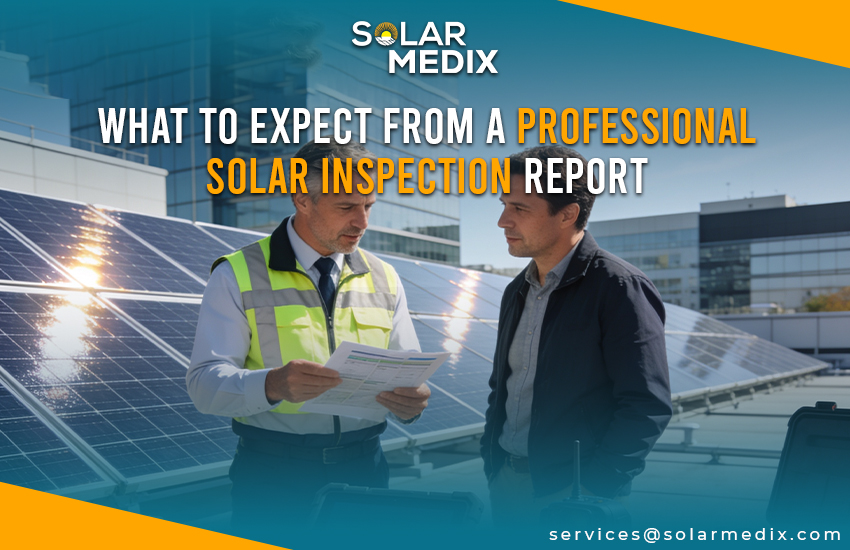
What To Expect From A Professional Solar Inspection Report
A good inspection should leave you with answers.
Not just, “Something might be wrong.”
You should understand what was checked, what was found, and what should happen next.
What Does A Professional Solar Inspection Include?
A professional inspection may include:
- Panel inspection
- Roof and mounting check
- Wiring and conduit review
- Inverter check
- Monitoring review
- Production review
- Thermal imaging where needed
- Photos
- Fault notes
- Repair recommendations
- Warranty or insurance guidance
Solar Medix provides solar inspection and repair support for both residential and commercial systems, including diagnostic work that helps find the real cause of performance issues.
What Should Be Included In A Thermal Inspection Report?
A thermal inspection report may include:
- Thermal images
- Visual images
- Location of affected panels
- Temperature differences
- Notes on suspected defects
- Production concerns
- Repair recommendations
- Replacement recommendations
- Safety concerns
- Warranty or insurance notes
A report should be clear enough for the property owner to understand.
You should not need to decode it alone.
How Thermal Images Help Identify Solar Panel Faults
Thermal images show heat differences.
That helps technicians see which panels or cells are behaving differently from the rest of the array.
For example, one panel may show a hot section while the nearby panels look normal.
That does not automatically tell the whole story.
But it tells us where to look.
From there, we can compare thermal images with production data, visual findings, inverter data, and system history.
How Inspection Reports Help With Repairs, Warranty Claims Or Insurance
Inspection reports can help support:
- Repair decisions
- Warranty claims
- Manufacturer conversations
- Insurance claims
- Replacement planning
- Maintenance planning
- Commercial asset records
They do not guarantee warranty or insurance approval.
But they make the situation clearer.
When everyone can see the problem, the next step is usually easier.
Questions To Ask Before Hiring A Solar Inspection Company
Before hiring someone for a solar inspection, ask:
- Do you inspect systems you did not install?
- Do you offer thermal imaging?
- Do you provide photos or reports?
- Can you check inverter and monitoring data?
- Can you help with repairs if faults are found?
- Can you support warranty or insurance documentation?
- Do you work on residential and commercial systems?
- Which areas do you service?
- What happens after the inspection?
Whether you need a routine inspection, a fault investigation, or help with a warranty claim, our team will explain the process, discuss your options, and let you know what happens next. If any issues are found, Solar Medix can also help with the repairs, making it easy to go from inspection to a working, reliable solar system without dealing with multiple companies.
How Often Should Residential And Commercial Solar Systems Be Inspected?
Many homes benefit from a yearly inspection.
Commercial systems may need more frequent inspections depending on size, site exposure, monitoring, warranty requirements, and performance goals.
We recommend a yearly inspection for most homes. Commercial solar systems may need inspections twice a year or more, depending on the size of the system, site conditions, and performance needs. The right inspection schedule depends on your system.
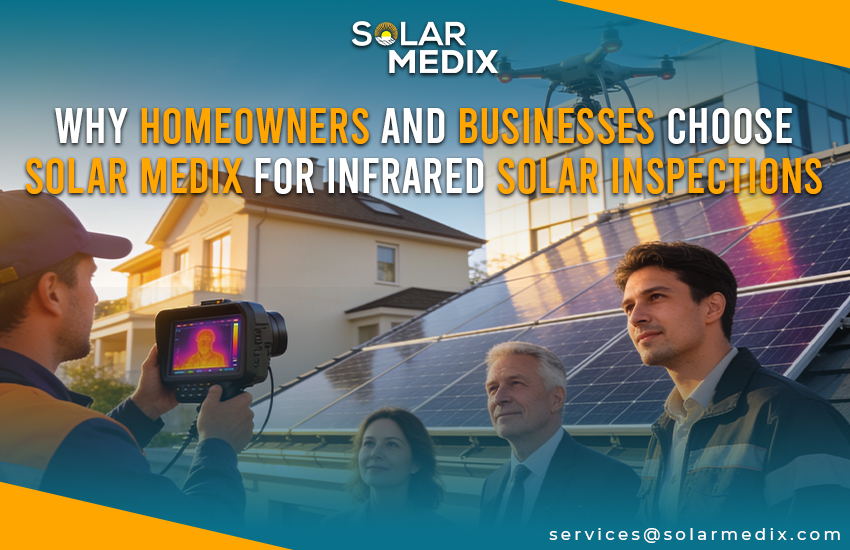
Why Homeowners And Businesses Choose Solar Medix For Infrared Solar Inspections
If your panels look fine but production is dropping, you need more than a quick glance from the ground.
You need a proper inspection. That is where Solar Medix can help.
Why Choose Solar Medix For Infrared Solar Inspections?
Solar Medix works on the service side of solar.
That means inspections, repair, monitoring, O&M, warranty support, inverter issues, critter damage, and system recovery.
We are not just looking at whether the panels are still sitting on the roof. We are looking at how the system is actually performing.
Solar Medix provides support across solar O&M, residential inspections, repairs, and commercial servicing, so hidden faults can be assessed as part of the bigger system picture.
Our Thermal Inspection Process Explained
Our process is simple from the customer’s side.
- We check the system visually.
- We review performance concerns.
- We use thermal imaging where needed.
- We compare what we see with system behaviour.
- Then we explain what we found.
That may lead to repair, replacement, warranty support, monitoring review, or ongoing O&M.
No guessing.
No making it more complicated than it needs to be.
We Inspect Solar Systems Installed By Any Company
You do not need to have installed your solar system with Solar Medix. We inspect and repair systems installed by other companies.
Sometimes the original installer is gone.
Sometimes they are too slow to respond.
Sometimes the system was never properly checked after a storm or performance drop.
That is fine. We can inspect the system and explain the next step.
Certified Technicians Using Professional Thermal Imaging Equipment
Thermal inspection is only useful if the person reading the images knows what they are looking at.
A hot area does not always mean the same thing. It may be a panel issue, shading, connection problem, bypass diode issue, mismatch, or something else.
That is why technician experience matters. At Solar Medix, thermal images are part of the diagnosis, not the whole diagnosis.
Detailed Inspection Reports With Thermal Images
When hidden faults are found, clear reporting matters. A detailed report can help you understand:
- Which panels are affected
- What the thermal images show
- Whether the issue looks urgent
- Whether repair or replacement is recommended
- Whether warranty or insurance may be involved
- What should happen next
For commercial systems, reports also help with asset management and long-term maintenance planning.
What Happens After Hidden Faults Are Found?
If we find hidden faults, we explain the options.
That may include:
- Monitoring correction
- Panel repair
- Panel replacement
- Inverter or wiring checks
- Warranty support
- Insurance documentation
- Further testing
- O&M plan recommendation
- Commercial maintenance planning
The aim is not to scare you.
The aim is to stop small problems from becoming expensive repairs.
Infrared Solar Inspection Support Across New Jersey, New York And Texas
Solar Medix provides solar inspections, thermal inspection support, solar repair, and O&M services across New Jersey, New York, Texas, and Massachusetts.
If your system is losing production, has been through storm damage, or has not been inspected in years, now is a good time to check what is happening.
Find Hidden Solar Problems Before They Become Expensive Repairs
Not every solar problem can be seen from the ground.
A visual inspection is useful. It can catch obvious damage, dirt, loose parts, and roof-level problems.
But infrared inspection goes deeper.
It can help show heat patterns that point to hidden faults inside the system, including hot spots, failing cells, microcrack-related issues, and electrical problems.
At Solar Medix, we use the right inspection approach for the system, not a one-size answer.
If your panels look fine but production is dropping, or if your system has been through hail, high winds, or years without a proper inspection, let’s take a closer look.
FAQs
What is an infrared solar panel inspection?
An infrared solar panel inspection uses thermal imaging to find heat patterns across the panels and equipment. These patterns can help identify hidden issues such as hot spots, failing cells, microcracks, electrical faults, or underperforming modules.
What is the difference between a thermal inspection and a visual inspection?
A visual inspection checks what can be seen, such as cracked panels, dirt, debris, loose mounting, or visible wiring damage. A thermal inspection uses infrared imaging to detect heat differences that may point to hidden panel or electrical problems.
Can infrared cameras detect damaged solar cells?
Yes, infrared cameras can help identify heat patterns linked to damaged or underperforming cells. Further testing may still be needed to confirm the exact cause.
What causes hot spots on solar panels?
Hot spots can be caused by shading, dirt, bird droppings, microcracks, cell damage, poor connections, failed bypass diodes, mismatch or ageing panel components.
How do microcracks reduce solar panel efficiency?
Microcracks can interrupt the flow of electricity inside the panel. A panel with microcracks may still work, but it may produce less power or develop hot areas over time.
Can thermal imaging detect solar panel delamination?
Thermal imaging may help identify unusual heat patterns linked to panel defects, including areas that need further checking for delamination. A technician still needs to inspect the panel properly before making a final call.
How often should I schedule an infrared solar inspection?
Many residential systems benefit from an annual inspection, with thermal imaging used when there is a production drop, storm damage, older equipment, or suspected hidden faults. Commercial systems may need more regular checks.
Is a thermal inspection worth the cost?
It can be worth it if your system is underperforming, has been through storm damage, is older, has hidden faults, or needs documentation for repair, warranty, or insurance decisions.
Can drone inspections detect hidden solar panel problems?
Yes, drone thermal inspections can help scan larger rooftops or commercial systems and detect heat patterns across many panels quickly. Handheld thermal cameras may still be useful for closer checks.
Do insurance companies require thermal inspections after storms?
It depends on the insurer and policy. Some claims may benefit from thermal images and inspection reports, but the insurer decides what documentation is required.
Will a thermal inspection improve my solar system’s performance?
The inspection itself does not increase production. But it can identify hidden problems. Once those faults are repaired, the system may perform better if the issue was reducing output.
Can Solar Medix inspect a system installed by another company?
Yes. Solar Medix inspects and repairs systems installed by other companies, including systems where the original installer is no longer available or not responding.
Does Solar Medix provide infrared inspections in New Jersey, New York and Texas?
Yes. Solar Medix provides solar inspection, repair and O&M support across New Jersey, New York, Texas and Massachusetts.
How long does a professional infrared solar inspection take?
It depends on the system size, roof access, number of panels, and reporting needs. A small residential system may be quicker, while larger commercial systems take longer.
What happens after hidden faults are found?
Solar Medix explains what was found and recommends the next step. That may include repair, replacement, warranty support, monitoring checks, insurance documentation, or an O&M plan.