Solar Maintenance

What Does Solar-Plus-Storage O&M Cover

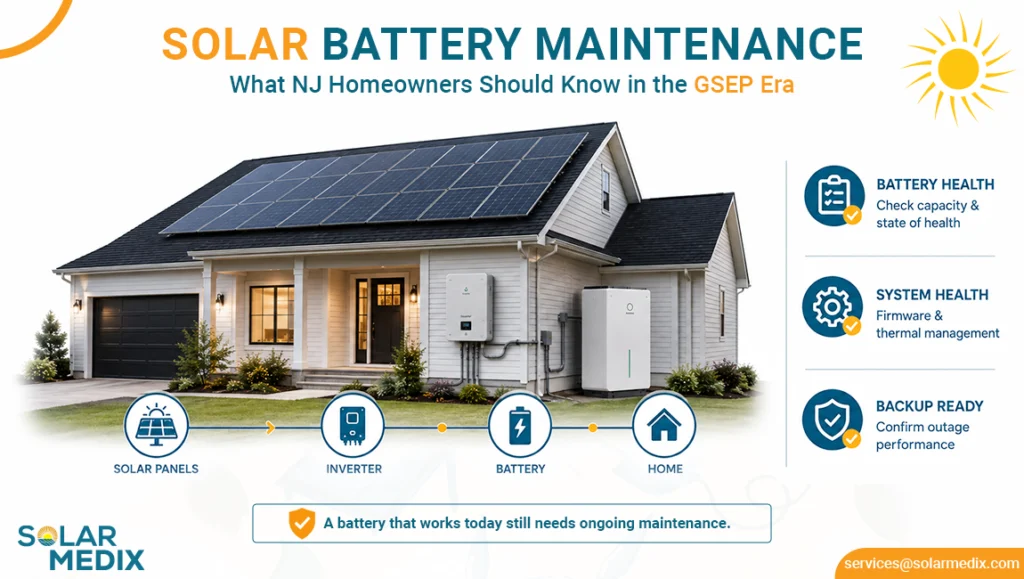
Solar Battery Maintenance: Is Your Home Battery Actually Being Maintained in New Jersey’s GSEP Era?

Yes, a home battery needs ongoing maintenance in New Jersey’s GSEP era, including checks of battery health, capacity, firmware, thermal management, settings, and backup performance. As more New Jersey homes add battery storage, confirming that the battery is actually being maintained is important for reliability, capacity, and outage readiness.  Home batteries often receive plenty of […]
Solar Battery Maintenance: Is Your Home Battery Actually Being Maintained in New Jersey’s GSEP Era? Read More »

Solar Inverter Replacement Planning

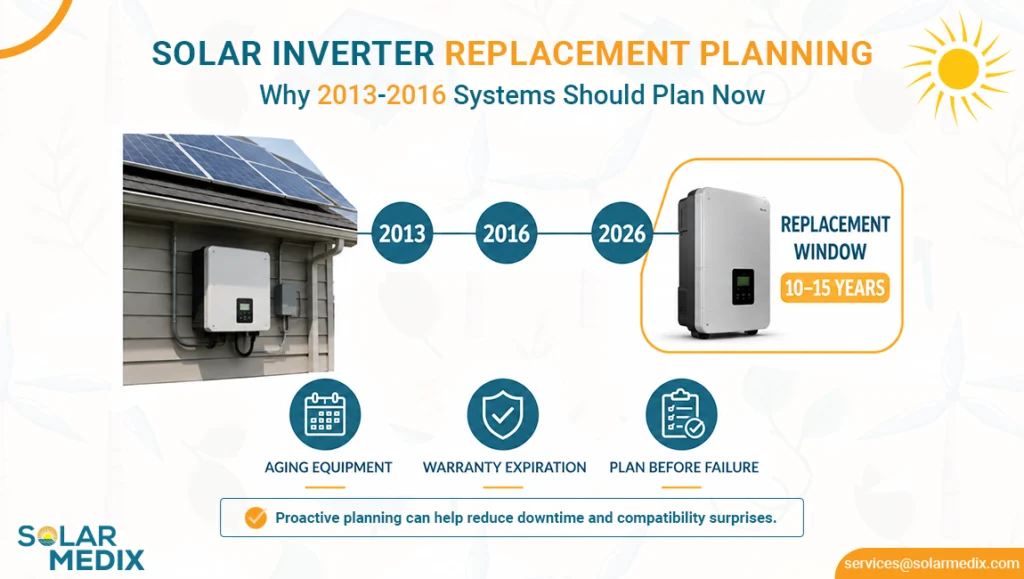
Solar Inverter Replacement Planning: Why 2013 to 2016 Systems Should Plan Now

Solar inverter replacement planning matters now because many New Jersey systems installed from 2013 to 2016 have 10-to-13-year-old inverters entering the typical 10-to-15-year replacement window, making proactive replacement worthwhile before failure causes downtime, compatibility problems, or an emergency parts search. New Jersey’s 2013-to-2016 solar boom created a large group of systems now reaching this replacement

Solar Inverter Replacement Planning: Why 2013 to 2016 Systems Should Plan Now Read More »

Ground-Mount Solar Maintenance Checklist

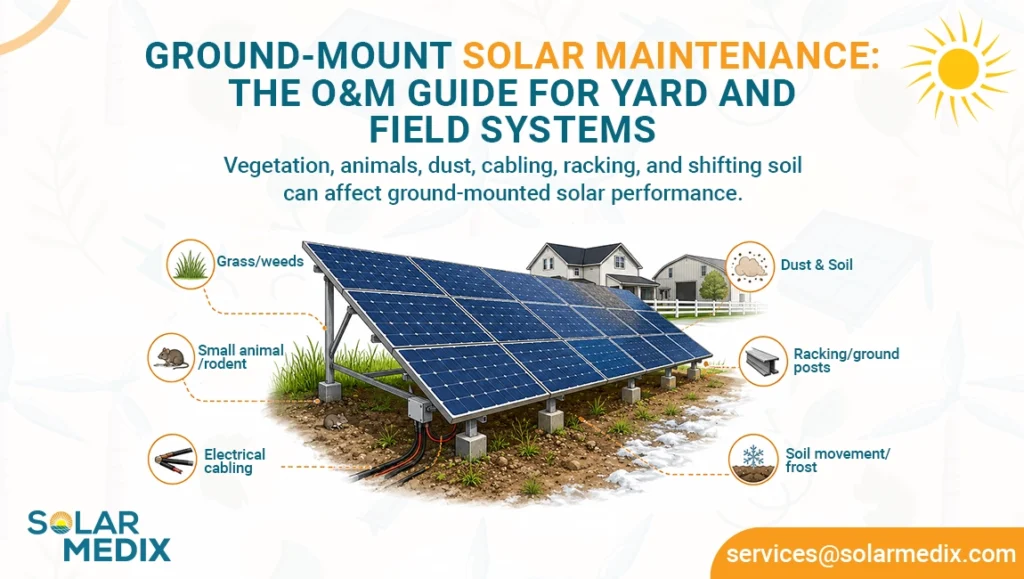
Ground-Mount Solar Maintenance: The O&M Guide for Yard and Field Systems

Ground-mount solar maintenance requires specific attention to vegetation, animals, dust, cabling, racking, and shifting soil, so ground-mounted systems need a different O&M approach than rooftop solar. These factors can reduce production, damage equipment, or affect mounting stability if they are not checked regularly. Rooftop solar dominates the online conversation, but larger properties, farms, and commercial

Ground-Mount Solar Maintenance: The O&M Guide for Yard and Field Systems Read More »

Solar Electrical Faults What Should You Do

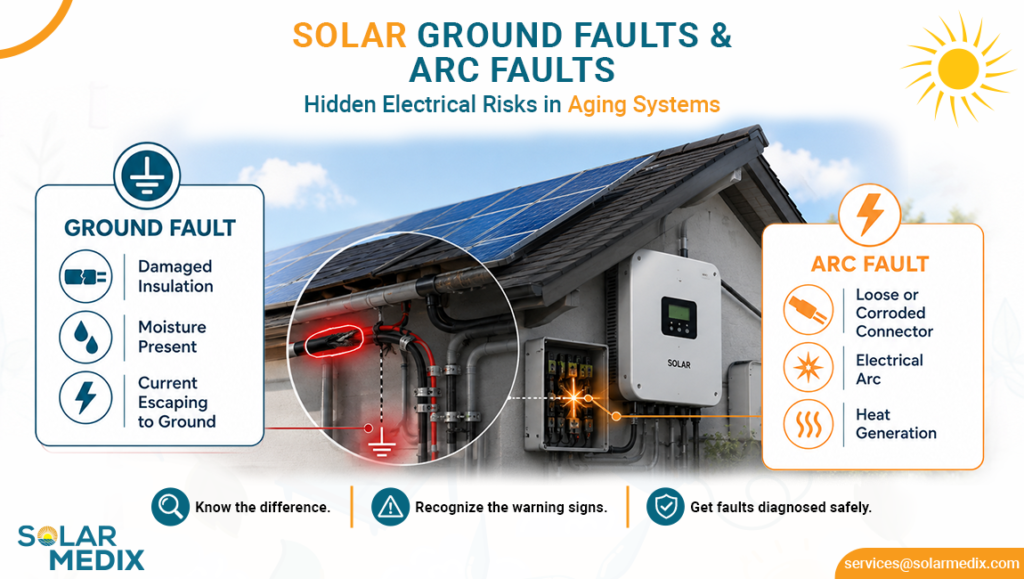
Solar Ground Fault and Arc Faults: The Hidden Electrical Risks in Aging Systems

A solar ground fault lets current escape through damaged insulation or moisture, while an arc fault occurs when electricity jumps across a gap, usually at a loose or corroded connection, creating heat and potential fire risk. Both can become more likely as systems age, and warning signs include inverter fault codes, nuisance tripping, and unexplained

Solar Ground Fault and Arc Faults: The Hidden Electrical Risks in Aging Systems Read More »

Your Solar App Says Zero Before You Panic, Here's What It Might Mean

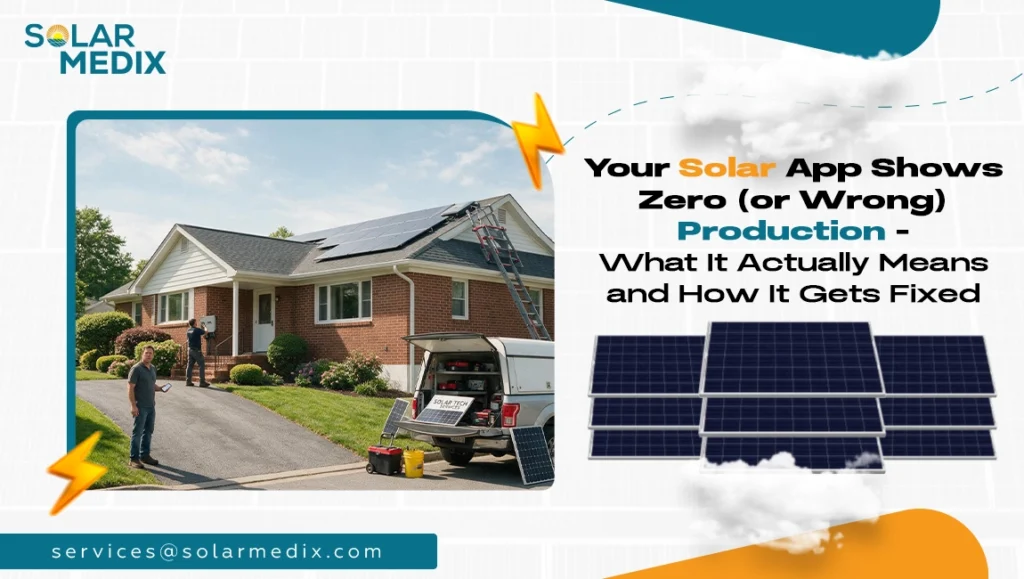
Your Solar App Showing Zero Production: What It Actually Means and How It Gets Fixed

A solar app showing zero production can mean two very different things: your system genuinely isn’t generating power (due to an inverter fault, a tripped breaker, or a wiring issue)—or your system is producing fine, but the monitoring lost its connection (due to a Wi-Fi dropout, a failed gateway, or a discontinued app after your

Your Solar App Showing Zero Production: What It Actually Means and How It Gets Fixed Read More »

Solar Panel Roof Leaks Why They Leak Years After Install

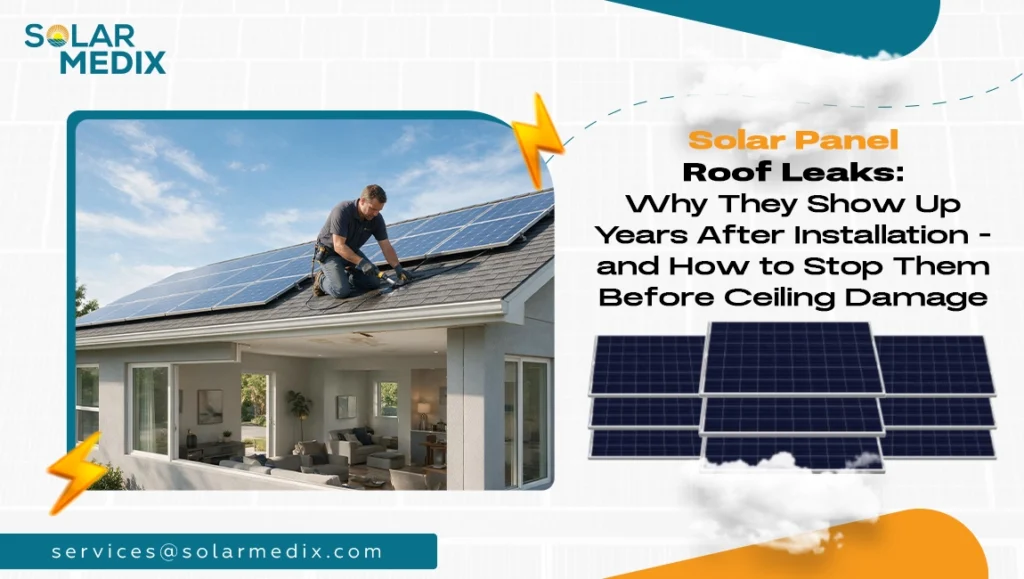
Solar Panel Roof Leaks: Why They Show Up Years After Installation and How to Stop Them Before Ceiling Damage

Solar panels themselves almost never leak — the risk comes from mounting points, roof penetrations, and flashing that anchor the array. These seals degrade over time from UV exposure, temperature swings, and freeze-thaw cycles, which is why leaks so often surface 5–10 years after installation, frequently right after a summer storm. If you see a

Solar Panel Roof Leaks: Why They Show Up Years After Installation and How to Stop Them Before Ceiling Damage Read More »

How Summer Heat Is Silently Killing Your Solar Output And What To Do About It

How Summer Heat Is Silently Killing Your Solar Output And What To Do About It

Summer heat can reduce solar output. Hot panels, dust, humidity, dirt and inverter stress make your system work harder. A pre-summer inspection helps confirm whether lower production is just normal heat or a fault that needs repair. Most people think solar panels should perform their best when the sun is strongest. That makes sense. It

How Summer Heat Is Silently Killing Your Solar Output And What To Do About It Read More »

Solar O&M vs. Basic Maintenance - What’s the Real Difference And Which One Does Your System Actually Need?

Solar O&M vs. Basic Maintenance – What’s the Real Difference And Which One Does Your System Actually Need?

Solar O&M is full care for your system, including monitoring, repairs, and performance checks. Basic maintenance is simpler, like cleaning and basic inspections. New systems may only need maintenance, but older or bigger systems usually need O&M. A lot of people think solar panels are completely hands-off once they are installed. We get why. The

Solar O&M vs. Basic Maintenance – What’s the Real Difference And Which One Does Your System Actually Need? Read More »

What Happens To Your Solar Warranty When Your Installer Goes Out Of Business?

What Happens To Your Solar Warranty When Your Installer Goes Out Of Business?

If your solar installer goes out of business, your solar warranty is not automatically void. Manufacturer warranties may still cover your panels and inverter, but installer workmanship and labour warranties may no longer apply.  You were told your solar system came with a warranty. Then the installer closed. Now the system is sitting on your

What Happens To Your Solar Warranty When Your Installer Goes Out Of Business? Read More »

Scroll to Top