The clearest sign of solar panel storm damage is a sudden or sustained drop in system production after a severe weather event. Visible damage such as shattered glass, shifted panels, or dented mounting rails is easy to spot, but microcracks in the solar cells can remain hidden and cause electrical losses and hot spots over time. If your system shows a production drop after hail, high winds, or another storm, a professional solar inspection with thermal imaging can help identify damage that is not visible from the ground.
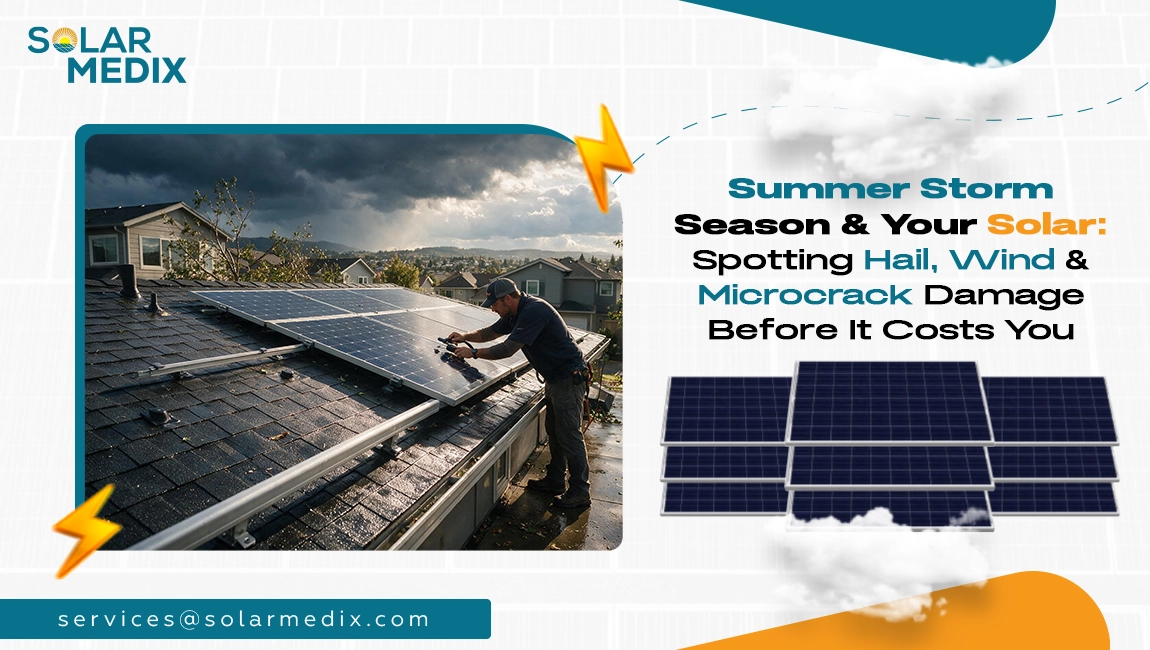
Summer in the Northeast and Southern Plains brings some of the most volatile weather of the year. When a severe thunderstorm rolls through, your immediate focus is naturally on your roof, windows, and basement.
If your solar array is still in place after the storm, it is easy to assume everything is fine. But solar panel storm damage is not always visible from the ground. Hail, high winds, and debris can cause hidden microcracks, electrical damage, or mounting issues that may worsen over time.
Left unaddressed, these minor structural shifts and microscopic cell fractures grow worse with every heating and cooling cycle.
To safeguard your clean energy investment, you need to understand how storms interact with your solar system and why relying solely on a ground-level visual check can be a costly mistake.
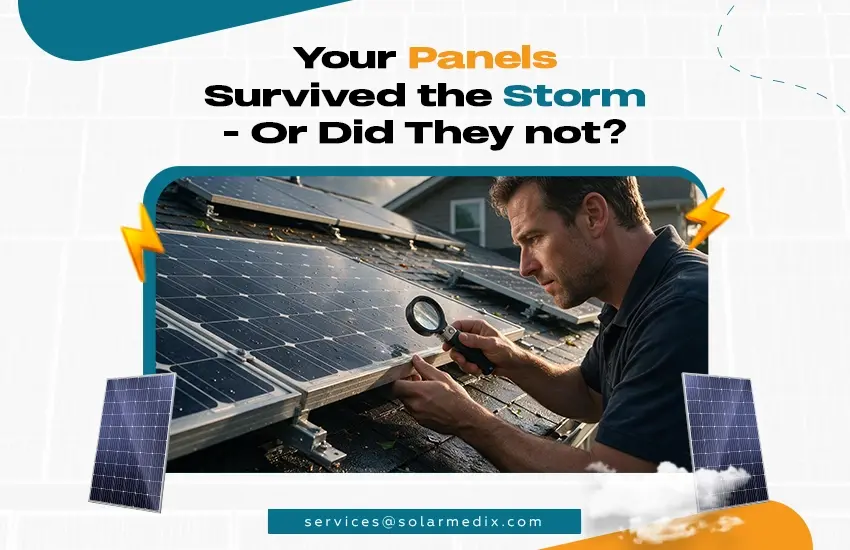
Did Your Solar System Survive the Storm — Or Is There Hidden Solar Panel Storm Damage
Yes, your system can look intact after a storm while still having hidden damage that affects its performance. High winds, hail, and rapid temperature changes can cause microcracks, mounting issues, or internal electrical damage that a standard visual inspection may not detect.
Can Solar Panels Be Damaged by Hail, Wind & Summer Storms?
Yes, absolutely. While protective tempered glass is incredibly tough, it is not invincible. Hailstones exceeding one inch in diameter, flying storm debris, and sustained wind gusts can easily crack glass, bend aluminum frames, and loosen vital mounting components.
More importantly, even if the outer glass remains fully intact, the violent vibrations caused by high winds or the concussive force of hail impacts can crack the ultra-thin silicon wafers sealed beneath the glass.
What Is a Solar Panel Microcrack — And Why Is It So Hard to Detect?
A solar panel microcrack is a microscopic fracture that develops in the internal silicon solar cells. These fractures are completely invisible to the human eye because they occur beneath the protective glass and laminate layers.
Because you cannot see them from your yard, you would never know they exist without specialized diagnostic testing. Over time, as the panels expand in the sun and contract at night, these tiny fractures expand, eventually snapping the internal electrical connections within the cell.
Why “Panels Still On” Doesn’t Mean “Panels Undamaged”
A common trap for homeowners is assuming that if the panels are still securely bolted to the roof and the green light on the inverter is on, the system has escaped unscathed. In reality, a panel with severe internal microcrack damage can continue to pass electricity and show up as “active” in the short term.
However, the damaged cells are restricted. They will slowly bottleneck your daily production, run dangerously hot, and cause premature system degradation over the coming months.
How Storm Damage Affects Solar Output — Even When You Can’t See It
When silicon cells fracture, they create physical gaps in the electrical pathway. The electrical current generated by the healthy parts of the panel has to fight to jump across these micro-fractures, creating intense electrical resistance. This resistance does two things:
- Reduces Total Output: It instantly lowers the amount of clean electricity the panel can send to your home.
- Generates Wasted Heat: The restricted energy converts into heat, causing the damaged area to run at extreme temperatures.
What Types of Storms Pose the Biggest Risk to NJ & NY Solar Systems?
Severe thunderstorms, hail, tropical systems, and Nor’easters pose some of the biggest risks for solar panel storm damage in NJ and NY. These events can expose solar systems to high winds, heavy rain, hail impacts, and prolonged uplift forces that may damage mounting hardware, electrical components, or the roof.
How Summer Hail and Wind Events Differ in Their Damage Patterns
Hail typically causes concentrated impact damage, while high winds create broader structural stress across the system. Hail can cause cracked glass and hidden microcracks, while strong winds can loosen mounting hardware, stress racking components, or shift the array. Both can result in solar panel storm damage that is not immediately visible.
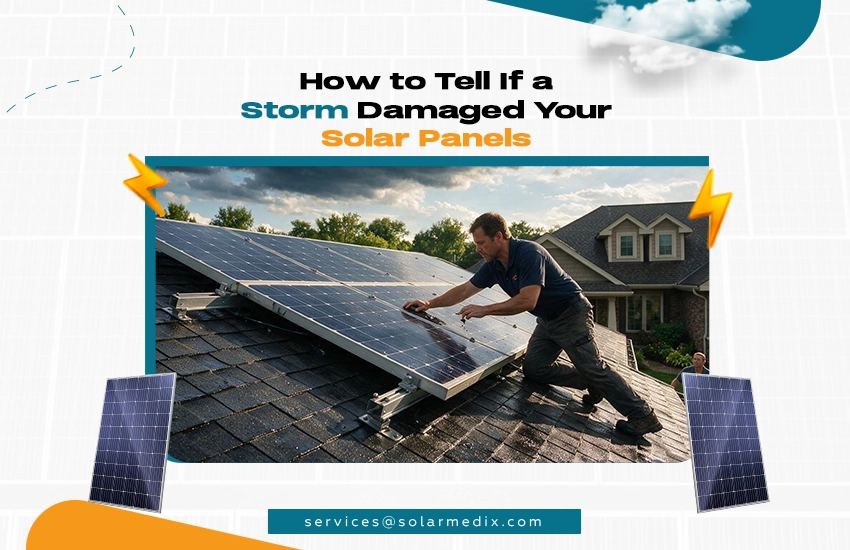
How to Tell If a Storm Damaged Your Solar Panels
Recognizing early signs of solar panel storm damage can help prevent minor issues from becoming costly repairs. After a storm, check for visible changes such as shifted equipment or physical damage, then review your monitoring data for unexpected drops in production. Combining a safe visual check with performance data can help identify problems that may not be obvious from the ground.
Visible Signs of Hail Damage to Solar Panels
If your neighborhood experienced a severe hail event, safely inspect your roof from the ground with binoculars. Look for “spiderweb” fractures, which appear as circular cracks radiating through the tempered glass; chipped or pitted glass, which can show as small impact marks; and dented or bent metal trim along the panel frames. These can indicate solar panel storm damage that may require a professional inspection.
Visible Signs of Wind Damage to Solar Mounting & Racking
Visible signs of wind damage include loose or hanging wires, exposed or scraped metal, and rows of solar equipment that appear shifted or misaligned. Strong winds can place significant stress on mounting hardware and racking, so if anything looks out of position after a storm, avoid touching the system and have it professionally inspected.
What Shifted or Tilted Solar Panels Mean for Your Roof and System
If you notice that your solar array looks slightly crooked or tilted after a storm, this is a serious structural concern. It indicates that the mounting clamps have slipped or, worse, that the lag bolts securing the racking to your roof rafters have pulled loose.
This compromise not only threatens the electrical safety of your array but also breaks the watertight seal of your roof, putting you at immediate risk for a major roof leak.
How to Read Your Monitoring App for Post-Storm Output Drops
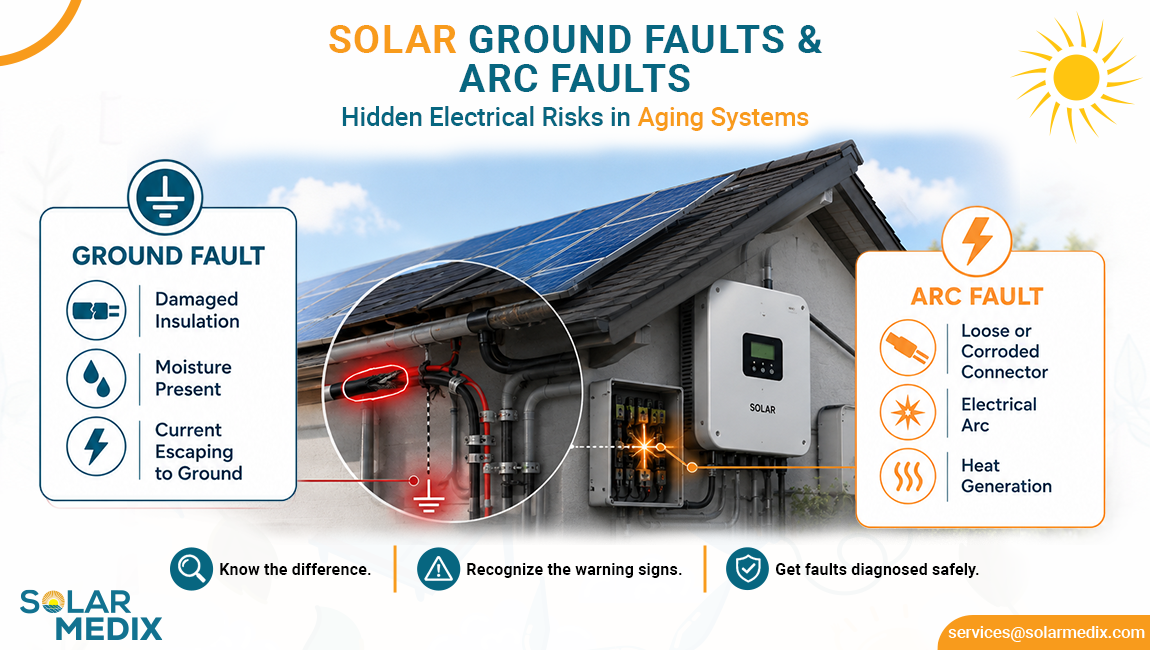
Your monitoring app can help identify solar panel storm damage by showing sudden production drops or system fault alerts after a severe weather event. Compare current generation with previous sunny days and look for a persistent drop in output from an individual panel or string. Alerts such as ground faults or arc faults can also indicate possible water intrusion or electrical damage that requires professional inspection.
What Is a “Hot Spot” in a Solar Panel — And How Do You Find One?
A hot spot is an area of localized high temperature on a solar panel. When internal microcracks block the natural flow of electricity, the trapped energy has nowhere to go, transforming into heat.
These hot spots can regularly exceed 200°F, quickly melting the backsheet of the panel, destroying adjacent healthy cells, and creating a potential fire hazard. Because they occur on a microscopic level, hot spots can only be reliably detected using specialized thermal imaging cameras.
Infrared thermal imaging reveals hidden hot spots and cell damage that are invisible to the naked eye.
Is Cracked Panel Glass Always a Problem — Or Sometimes Just Cosmetic?
Cracked glass is always a serious problem. Some homeowners believe that as long as the panel is still producing power, cracked glass can be ignored. This is a dangerous misconception. The glass layer is the only barrier protecting your high-voltage electrical circuits from rain, snow, and humidity.
Once the glass is cracked, moisture will seep inside, causing rapid corrosion, system ground faults, and irreversible electrical shorts.
What Post-Storm Signs Warrant a Professional Inspection vs. Wait-and-See?
While a minor drop in weekly production might warrant a week of close monitoring, certain signs require immediate, professional attention. Use this quick-reference guide to determine your next steps:
| Observed Post-Storm Sign | Risk Level | Recommended Action |
| Visible spiderweb glass fractures | High | Immediate Professional Inspection |
| Ground fault or arc fault app alerts | High | Immediate Shutdown & Professional Inspection |
| Shifted, crooked, or tilted panels | High | Immediate Professional Structural Inspection |
| Slightly lower production on clear days | Medium | Monitor for 5–7 days; schedule service if unresolved |
| Hanging or dragging wires under the array | High | Professional Inspection (Do not touch live wires) |
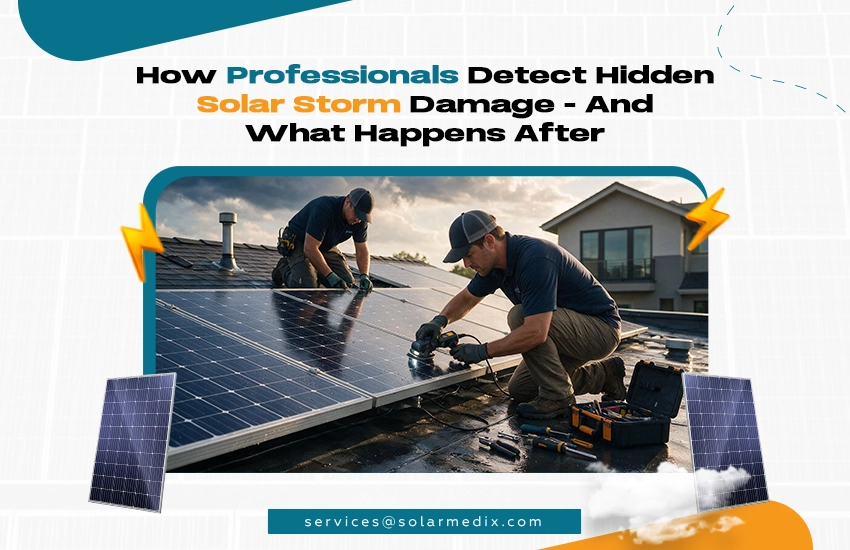
How Professionals Detect Hidden Solar Storm Damage — And What Happens After
Pinpointing hidden cell fractures and structural compromises requires specialized diagnostic equipment and a clear understanding of insurance and warranty standards.
When a storm impacts your roof, resolving the issue involves more than just swapping out a broken piece of glass. It requires a precise, documented diagnosis to ensure your system is restored safely, your warranties are preserved, and your insurance claims are fully approved.
What Does a Post-Storm Solar Inspection Actually Include?
A professional post-storm solar inspection checks the system for physical, electrical, thermal, and roof-related damage. Solar Medix technicians inspect panels, frames, clamps, and flashing for impact or wind damage, test system voltage to identify electrical issues, use thermal imaging to detect hidden microcracks and hot spots, and check the roof and attic beneath the array for compromised seals or water intrusion.
How Infrared (Thermal) Imaging Finds Damage the Eye Can’t See
Infrared (IR) thermography is the gold standard for post-storm solar diagnostics. Because damaged silicon cells run significantly hotter than healthy cells, they glow brightly under an infrared camera.
By scanning your array during peak sunlight, our technicians can visually “see” microcracks, failed bypass diodes, and developing hot spots that look perfectly normal under standard light.
Production Data + Visual + Thermal: Why All Three Matter Together
Production data, visual evidence, and thermal imaging together provide a stronger picture of solar panel storm damage for an insurance claim. Production data can show a decline in system performance, visual evidence can document physical damage such as chipped glass or bent frames, and thermal imaging can help identify hidden electrical or cell issues that may not be visible during a standard inspection.
Solar Panel Repair vs. Replacement After Storm Damage — How Technicians Decide
Technicians repair storm damage when the issue is limited to components such as mounting clamps, racking, or wire clips, but damaged panels usually require replacement. A shifted rail or loose clamp can often be repaired and secured, while cracked glass, internal microcracks, or severe hot spots typically mean the affected module must be safely removed and replaced with a compatible panel.
What Is an RMA Claim — And Can Storm Damage Be Covered?
An RMA (Return Merchandise Authorization) is a manufacturer warranty claim. While tier-one manufacturers guarantee their panels against defects for 25+ years, warranties do not cover “acts of God” or environmental storm damage.
However, if our inspection reveals that a component failed during a storm due to a manufacturing defect (such as a faulty junction box seal or premature corrosion), we can initiate and manage the solar warranty RMA process on your behalf to secure free replacement parts.
Will Homeowner’s Insurance Cover Solar Panel Storm Damage in NJ & NY?
In the vast majority of cases, yes. Most standard homeowners insurance policies treat rooftop solar panels as permanent structural fixtures of the home, meaning they are covered under your primary dwelling policy. If your system suffers sudden damage from wind, hail, or falling tree limbs, your insurance policy should pay for the diagnostic inspection, panel removal, replacement equipment, and reinstallation costs, minus your standard deductible.
What Documentation Does an Insurer Need for a Solar Damage Claim?
Insurance companies require highly specific, objective proof before they will approve a solar claim. To ensure a smooth approval process, you must provide:
- A professional diagnostic report detailing the exact cause of system failure.
- High-resolution, dated photographs of the physical damage and roof-level impacts.
- Thermal imaging scans proving internal cell compromise and hot spot hazards.
- An itemized, professional estimate for the parts and labor required to restore the system to peak operating safety.
Can Solar Medix Inspect and Document Damage for Insurance Purposes?
Yes, this is our specialty. We work directly with homeowners and insurance adjusters across New Jersey, New York, and Texas. We provide detailed, insurance-ready diagnostic packages complete with high-resolution photos, thermal imaging heat maps, and itemized structural estimates, making it simple for your insurer to approve your claim and get your system restored quickly.
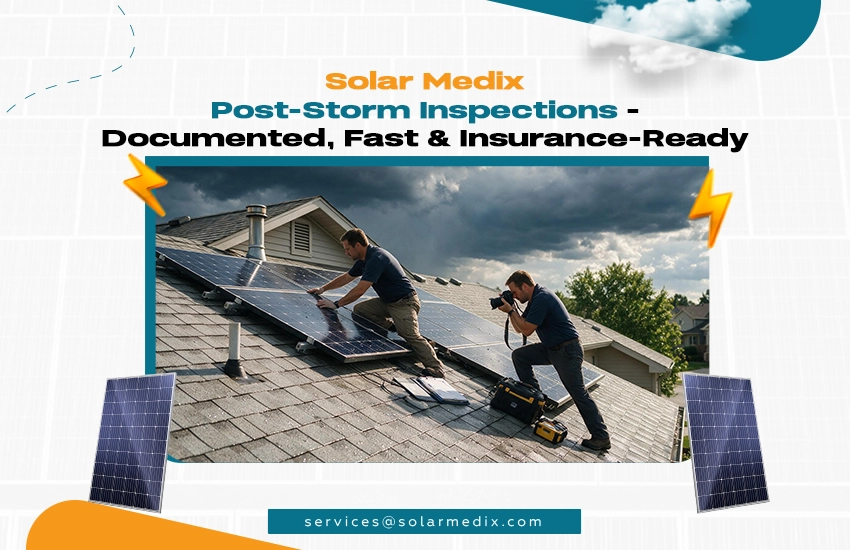
Solar Medix Post-Storm Inspections — Documented, Fast & Insurance-Ready
We provide the specialized diagnostic tools, certified expertise, and fast response times needed to defend your home and your investment.
When a major storm strikes your community, you don’t have to navigate the complex world of insurance adjusters, solar hardware warranties, and high-voltage electrical safety alone. At Solar Medix, we offer specialized, full-service solar O&M care to get your system back to 100% safety and performance.
What Solar Medix’s Post-Storm Solar Inspection Covers
Our complete diagnostic service includes a comprehensive visual, thermal, and electrical assessment of your entire system. We inspect the structural integrity of your roof penetrations, the physical condition of your racking, and the internal health of every individual solar cell to ensure there are no hidden risks lurking on your roof.
How We Document Damage With Dated Images and Thermal Reports
We compile our findings into a comprehensive, easy-to-read Digital Damage Report. This report includes side-by-side visual and thermal photographs, voltage test results, and clear explanations of every identified issue. This institutional-grade documentation is designed to integrate seamlessly into your homeowners insurance claim, preventing delays and disputes.
Repair, Replace, or RMA — How Solar Medix Guides the Decision
We believe in honest, transparent solutions. Once our inspection is complete, we walk you through your options. If a module can be replaced under a manufacturer RMA, we will file the paperwork. If it requires a full insurance-backed replacement, we will coordinate directly with your adjuster to ensure the work is fully covered and expertly completed.
How Quickly Can Solar Medix Respond After a NJ or NY Storm?
Because storm damage can compromise your home’s electrical and structural safety, we prioritize post-storm diagnostic calls. Our regional crews across New Jersey and New York are equipped to deploy quickly after major weather events, securing your system and preventing secondary damage to your home.
Protecting Your Output and Your Insurance Claim in One Visit
You do not have to coordinate between an independent roofer, an electrician, and an insurance inspector. Our cross-trained, certified solar specialists handle the entire diagnostic, documentation, and repair process in a single, streamlined service.

Protect Your Investment Before the Next Storm
An invisible microcrack today can become a complete system failure tomorrow. Don’t leave your solar energy production and home safety to chance. Let Solar Medix run a professional post-storm visual, thermal, and electrical diagnostic to keep your system safe and your power flowing.
FAQs
How do I know if a storm damaged my solar panels?
The most reliable indicator is a sudden drop in your daily energy production after a storm. You should also look for visible signs like shattered glass, crooked panels, loose wires, or system fault alerts on your monitoring app.
What is a solar panel microcrack and why does it matter?
A microcrack is a microscopic fracture in an internal silicon solar cell. It is invisible to the eye but acts as an electrical bottleneck, reducing your total energy production and creating dangerous, overheating hot spots.
My panels still work after the storm — do I still need an inspection?
Yes. Microcracks and wind damage can exist for months without causing a total system shutdown. However, these issues slowly worsen over time, eventually leading to permanent electrical failure, water intrusion, or hot spot fire hazards.
What are the visible signs of hail damage to solar panels?
Common visible indicators include spiderweb-patterned cracks across the protective glass surface, small chipped or pitted spots in the glass, and physical dents along the aluminum outer frames.
What are the visible signs of wind damage to solar mounting?
Look for crooked or misaligned rows of panels, loose or hanging high-voltage wires dragging on your shingles, and bright, raw aluminum showing where mounting components have scraped against one another.
What is thermal (infrared) imaging and how does it find hidden damage?
Thermal imaging uses infrared cameras to detect heat. Because fractured solar cells struggle to pass current, they generate intense resistance and run significantly hotter than healthy cells, showing up as bright “hot spots” on a thermal scan.
What is a hot spot in a solar panel?
A hot spot is an area of extreme localized heat caused by restricted electrical flow. Hot spots can regular exceed 200°F, destroying adjacent solar cells, melting the protective backing of the panel, and presenting a serious electrical fire risk.