
If you’ve inherited a solar lease or PPA after your installer changed hands, start by reviewing the contract carefully. Check who now manages the agreement, how long the contract runs, your payment terms, maintenance responsibilities, warranty coverage, and any buyout or transfer options so you understand your rights and obligations moving forward.
When you signed your solar agreement, you expected one company to install your system and support it for years to come. Then that company disappeared, was acquired, or transferred your account to another provider. Now you’re managing an inherited solar lease without knowing whether it still applies, who owns your system, who is responsible for servicing it, and whether your warranty is still valid.
These are common questions, and the answers aren’t always obvious. At Solar Medix, we help homeowners make sense of an inherited solar lease or PPA after an installer changes hands. We’ll explain what your contract means today, identify who is responsible for your system, and help you understand your options moving forward.

Your Solar Payments Are Going to a Company You’ve Never Heard Of. Here’s Why
Your payments may now be going to a different company because your original solar provider transferred or sold your contract to another company. This does not necessarily mean your agreement has changed. The new company may simply be responsible for collecting payments and managing the existing contract.
What Is a Solar Lease vs. a PPA vs. a Solar Loan? The Essential Difference
The key difference is ownership and how you pay for your solar system: a lease lets you use equipment owned by a solar company, a PPA charges you for the electricity it produces, while a solar loan lets you own the system while paying it off over time.
Before reviewing your contract, it is important to know which type of agreement you actually have, as this affects who owns the equipment, who handles repairs and what happens if your solar provider goes out of business.
Solar Lease
With an inherited solar lease, you continue making monthly payments to the company that now manages your agreement. The contract should state who owns the equipment and who is responsible for maintenance and repairs.
Power Purchase Agreement (PPA)
With a PPA, you are not paying for the solar equipment itself. Instead, you purchase the electricity your system generates at an agreed rate, usually per kilowatt-hour. Some PPAs also include annual escalator clauses that gradually increase the electricity rate over time.
Solar Loan
A solar loan works differently because you generally own the solar equipment from the beginning while repaying the financing company over an agreed period. If the original installer later goes out of business, the loan agreement will generally remain in force because the financing is separate from the installer’s ongoing operations.
Knowing whether you have a lease, PPA or solar loan can help you understand who owns your system, who can authorize repairs and what options you may have if your original solar company is no longer operating.
Why Solar Leases and PPAs Get Sold to New Servicers
Solar leases and PPAs are transferred when the company that owns or services the agreement changes, not because your contract has been cancelled.
This can happen because of an acquisition, financial restructuring, bankruptcy, portfolio sale, or outsourced servicing arrangement. Your payments may go to a different company, but your contract generally continues under its original terms.
What Happened to Sunnova, SunPower, Titan & Freedom Forever Customers?
Their companies may have closed or changed, but customers can still have active solar systems, contracts and payment obligations. If your solar provider is no longer operating, your agreement does not necessarily disappear. Another company may now handle servicing, billing or warranties. What matters is finding out who owns your system, who manages your contract and who is responsible for repairs.
Who Is SunStrong Management? What Former Sunnova Customers Should Know
SunStrong Management is an independent solar asset management company that took over management responsibilities for 400,000+ former Sunnova customers and assets following Sunnova’s bankruptcy and sale process. Sunnova has ceased independent operations, while SunStrong now manages many of the existing customer accounts.
For former Sunnova customers, this generally means the company managing your inherited solar lease or PPA has changed, but the underlying agreement does not automatically disappear. SunStrong says it administers existing customer agreements, including leases, loans and PPAs, and handles services such as billing, maintenance, customer support and account transfers.
The exact services available to you can depend on the type of agreement you have and whether your system was included in the transferred portfolio. SunStrong specifically provides separate account and payment information for former Sunnova customers with leases, PPAs and loans.
Does a Servicer Change Mean Your Contract Terms Changed Too?
No. A new servicer usually takes over administration while your original contract remains the same. Your payment obligations, ownership structure, contract length, and transfer terms generally continue as originally signed. If you’re unsure whether anything has changed, reviewing your agreement can help you avoid confusion.
Who Owns Your Solar System? And Why It Matters for Service and Incentives
Your contract determines who owns your solar system, and ownership affects your rights and responsibilities. It decides who can authorise repairs, claim available incentives, approve equipment replacements, and whether upgrades or a future home sale require approval. If you’re unsure who owns your system, reviewing your agreement is the quickest way to understand where responsibility lies.

Your Installer Changed Hands. What Does That Actually Change for You?
For many homeowners, the paperwork isn’t the difficult part. Knowing who to call is. We’ve spoken with homeowners who spent weeks bouncing between manufacturers, finance companies, and former installers without anyone taking responsibility. Here’s what usually changes when your installer disappears.
Did My Contract Terms Change When My Solar Company Was Sold?
No. The purchasing company normally takes over the agreement under the terms of your original contract. Your payment schedule, contract duration, ownership arrangements and buyout provisions typically remain unchanged.
Who Do I Call for Service Now. The New Servicer or the Manufacturer?
It depends on the issue. Your servicer manages the agreement, while the manufacturer usually handles eligible equipment warranties. In many cases, neither company performs repairs directly, leaving homeowners to coordinate multiple parties. Independent service providers like Solar Medix can diagnose faults, restore monitoring, identify warranty issues, and complete repairs regardless of who installed the system.
Where Does Workmanship Coverage Go When the Installer Disappears?
Workmanship coverage may end if the original installer is no longer operating. Manufacturer warranties usually remain with the equipment, but workmanship warranties are typically provided by the installer. If that company has closed, another provider is not automatically required to honour the workmanship warranty. Solar Medix can also help homeowners coordinate eligible manufacturer warranty claims where applicable.
The Gap Nobody Talks About. When the Servicer and Manufacturer Both Say “Not Our Problem”
Homeowners can be left without support when responsibility falls between the servicer and the manufacturer. The manufacturer may confirm the equipment is working, while the servicer may say installation issues aren’t their responsibility. Instead of focusing on who’s at fault, Solar Medix identifies the actual problem and advises whether it falls under a manufacturer warranty, servicing obligation, or independent repair.
What If My New Servicer Isn’t Responding to Service Requests?
If you’ve repeatedly contacted your new servicing company without receiving meaningful assistance, waiting longer rarely improves the situation. An independent inspection gives you a clear understanding of your system’s condition and provides documentation you can use when speaking with manufacturers, servicers, or legal advisers if required.
I Have a Solar Loan and the Installer Is Gone. Do I Still Owe It?
In most cases, yes. A loan agreement is separate from the installation company. Even if your installer has ceased operating, your repayment obligations generally continue according to your finance agreement. If you have concerns about your rights as a consumer, the Federal Trade Commission offers guidance on consumer protections and financing agreements. The U.S. Department of Energy’s Homeowner’s Guide to Going Solar also provides helpful information about ownership structures, financing arrangements, and consumer considerations.

How to Read Your Inherited Solar Lease: The 5 Contract Sections That Matter Most
An inherited solar lease can look intimidating, especially if you’ve never needed to read it closely before. The good news is you don’t need to understand every legal clause. Instead, focus on the sections that directly affect your payments, your service rights, and your options if something goes wrong. Here’s what we recommend reviewing first.
Section 1. Payment Amount & Annual Escalator Clause
Check your current payment, any annual escalator, when it applies, and how much your payments can increase over time. Understanding these details helps you plan ahead and assess future buyout options.
Section 2. Service & Maintenance Obligations
This section explains who is responsible for maintenance, covered repairs, labour, response times, and exclusions. If those responsibilities aren’t clear, an independent inspection can identify the problem before you spend money on unnecessary repairs.
Section 3. Buyout Terms
Review whether you can purchase the system, when you’re eligible, how the buyout price is calculated, and whether additional fees apply. These details become especially important if you plan to stay in your home long term or sell it later.
Section 4. Transfer-on-Sale Clause
Your contract explains what happens if you sell your home. It should outline whether the buyer must assume the agreement, whether you can buy out the system before settlement, and whether approval or transfer fees apply.
Section 5. Default & Termination Provisions
Review what counts as a default, what happens if payments are missed, whether termination is possible, and what occurs if another company takes over servicing in the future. Understanding these clauses helps you avoid surprises if your agreement changes again.
What Is the FTC Holder Rule? And Does It Apply to Your Solar Loan?
The FTC Holder Rule is a U.S. consumer protection law that may allow you to raise claims against a lender if your financing was directly connected to the original solar sale.
Whether it applies depends on how your system was financed and the terms of your agreement. If your loan includes the required FTC Holder Rule notice, you may have additional rights if the installer misrepresented the sale or failed to meet its obligations. Because every situation is different, legal questions are best discussed with a qualified consumer protection attorney.
When Should You Consult a Consumer Protection Attorney?
Most transferred solar contracts do not require legal action, but legal guidance may be worth considering if the servicing company is not honoring the obligations in your contract, you are receiving conflicting information from different parties, you believe the original installation involved fraud or misrepresentation, you are facing collection activity despite unresolved system or installation issues, or you are unsure about your rights under the financing agreement.
While we do not provide legal advice, we regularly provide homeowners with detailed inspection reports, production analysis, and technical documentation that can help support discussions with qualified legal professionals when needed.
What Role Does an Independent O&M Provider Play When Servicers Change?
When solar servicers change or the original installer is no longer available, an independent O&M provider can step in to provide the technical support your system needs.
This includes diagnosing system faults, restoring monitoring platforms, carrying out preventative maintenance, assisting with manufacturer warranty claims where applicable, performing independent system inspections, identifying potential workmanship issues, and preparing technical documentation for insurance, warranty, or legal purposes.
Whether your original installer is still operating or not, your solar system still requires ongoing care and experienced technical support to maintain reliable performance.

Solar Medix Fills the Gap. Whatever Your Contract Says, We Keep Your System Running
At Solar Medix, we specialize in helping homeowners whose original installer has closed, whose servicing company has changed, or who simply can’t get the support they need. Whether you’re dealing with an inherited solar lease, an agreement transferred to another servicer, or a system that has become what many refer to as a “solar orphan,” we’ll help you understand your options and keep your system producing the energy it’s designed to generate.
What Our System & Service Review Covers
We inspect your panels, inverter, and other system components, review performance and energy production, diagnose faults, and check whether your monitoring system is reporting accurately. Where available, we also review your service history and help identify which issues may fall under warranty and which may require independent repairs.
You’ll receive practical recommendations based on your system’s needs, without unnecessary upselling.
How We Assess Your System’s Real Condition Regardless of Who Your Servicer Is
When homeowners call us, they are often frustrated after being passed between finance companies, manufacturers, and servicing providers. Rather than focusing on who is responsible first, we focus on understanding what is actually happening with your system.
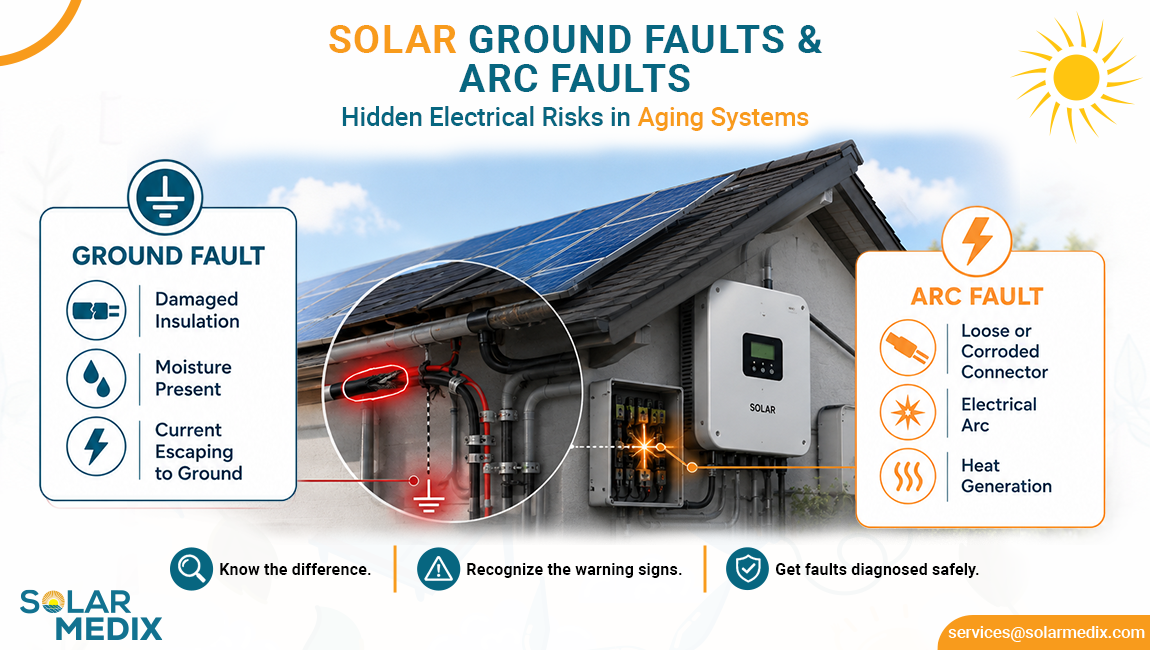
Our technicians investigate issues such as low solar production, inverter faults, offline monitoring, communication failures, installation defects, premature equipment failure, and safety concerns.
Once we identify the root cause, we explain our findings in plain English and outline the most practical path forward. That may involve a manufacturer warranty claim, an independent repair, preventative maintenance, or ongoing operations and maintenance support.
Restoring Monitoring, Verifying Warranty Coverage & Taking Over O&M
Many homeowners don’t realize there’s a problem until they notice a higher electricity bill. In reality, their monitoring may have stopped working months earlier.
We regularly help homeowners:
- Restore online monitoring platforms.
- Troubleshoot inverter communications.
- Verify manufacturer warranty eligibility.
- Coordinate warranty claims where appropriate.
- Perform preventative maintenance.
- Provide ongoing Operations & Maintenance (O&M) services for residential systems.
Even if your installer no longer exists, your solar system still deserves regular professional attention.
We Give You the System Documentation You Need
If you’re dealing with a servicing company, equipment manufacturer, insurance provider, or legal representative, having an independent inspection can make discussions far more productive. Our reports can document your system condition, equipment faults, safety concerns, production issues, monitoring failures, visible workmanship defects, and recommended repairs.
Having independent documentation helps you understand your system today while providing valuable information if further discussions with your servicer become necessary.
Serving Customers of Sunnova, SunPower, Titan & Other Transferred Accounts Across NJ, NY & TX
We’ve worked with homeowners whose systems were originally installed by many of the industry’s largest providers. Whether your agreement began with Sunnova, SunPower, Titan, Freedom Forever, or another installer, our approach remains the same.
We focus on the condition of your solar system today, not the logo on your paperwork. Our experienced technicians proudly support homeowners throughout New Jersey, New York, and Texas. If you’re unsure who now services your agreement, or you’re struggling to get answers after your contract changed hands, we’re here to help.
Frequently Asked Questions
What happened to Sunnova, SunPower and Titan solar customers?
Several major solar companies have experienced restructuring, bankruptcy, or servicing changes, resulting in many customers being transferred to new servicing companies or seeking independent support.
Who is SunStrong Management and what does the Sunnova transfer mean?
SunStrong Management now services many former Sunnova customer accounts. In most cases, the transfer changes who administers your contract, not the original terms of the agreement.
Did my contract terms change when my solar company was sold?
Generally, no. Your payment schedule, contract length, ownership terms, and buyout provisions typically remain unchanged after the servicing rights are transferred.
Who services my system now, the new servicer or the manufacturer?
It depends on your agreement. Servicers often administer contracts, while manufacturers cover eligible product warranties. Independent providers like Solar Medix can diagnose issues and perform repairs regardless of who services your contract.
What happens to my workmanship warranty when the installer disappears?
Manufacturer warranties often remain valid, but workmanship warranties are usually tied to the original installer. If that company has closed, workmanship coverage may no longer be available.
What are the most important sections to review in a transferred solar contract?
Pay close attention to your payment amount, annual escalator clause, maintenance responsibilities, buyout terms, transfer-on-sale provisions, and default clauses.