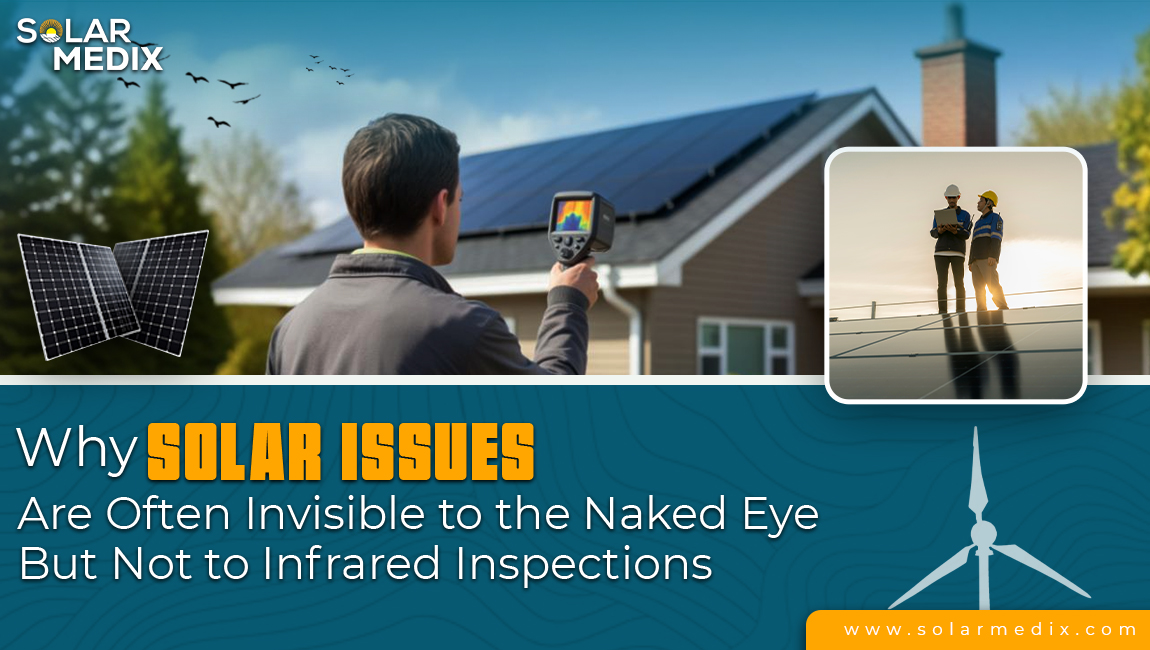
Look at your roof. Everything likely appears functional because the glass remains shiny and the racking seems solid. Inside those modules, however, a silent struggle might be occurring. Infrared inspections find hidden solar defects by identifying heat anomalies—basically, spots that are too hot—revealing electrical bottlenecks that human eyes miss completely. These scans provide a literal map of where energy is getting stuck or leaking.
You can learn about solar reliability from NREL or review basic PV tech at the DOE. These resources explain why silicon health matters for long-term output. This specialized diagnostic approach helps homeowners identify defects before they cause system failure.
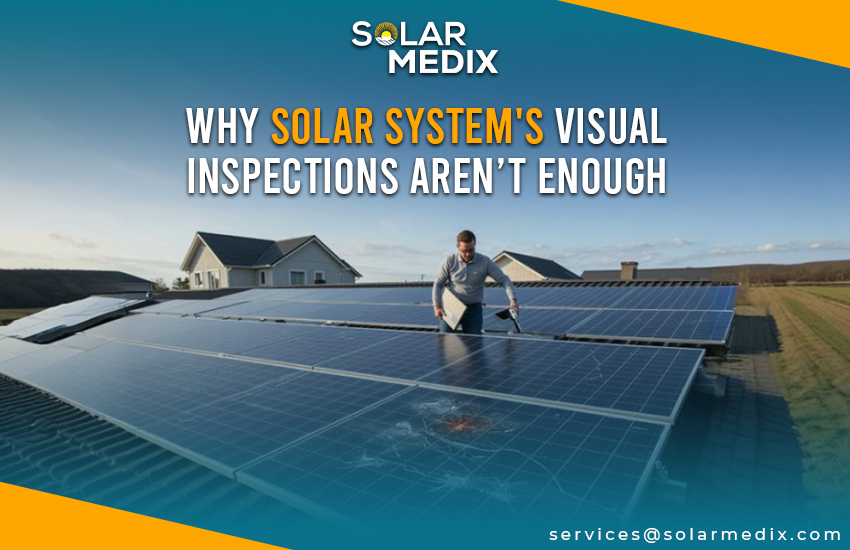
Why Solar System’s Visual Inspections Aren’t Enough
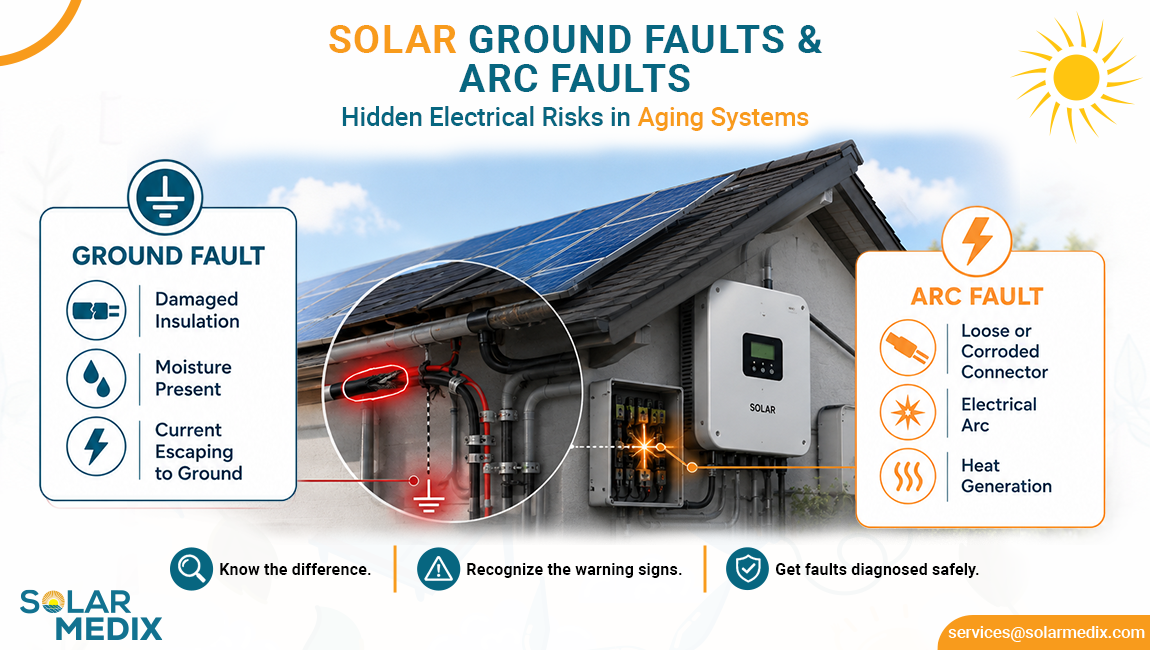
Your eyes see a sleek glass surface reflecting the sky. That view is deceiving. Silicon wafers inside can develop micro-cracks from thermal expansion or heavy hail without shattering the top layer of protective glass. These internal breaks act like bottlenecks for electricity. Copper connections tucked behind the backsheet might be corroding right now. You won’t spot a frayed wire or a loose lug nut from the ground with a pair of binoculars.
Monitoring apps sometimes show a slight dip in production. They won’t tell you the specific cause. Is it a cloud? Perhaps a bypass diode is failing? Visual checks simply cannot penetrate the physical materials to see the electrical flow. You might think everything is fine while a fire hazard develops underneath the glass. Reliance on sight alone leaves your investment vulnerable to invisible decay.
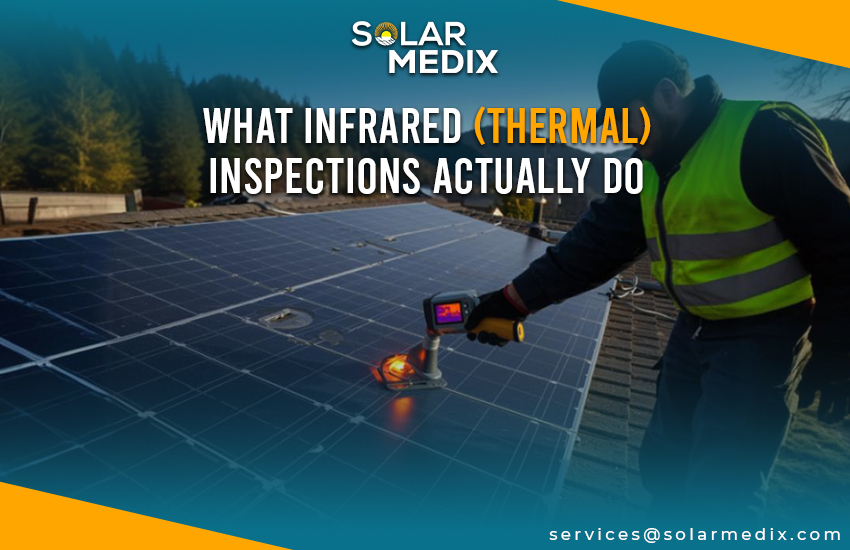
What Infrared (Thermal) Inspections Actually Do
Imagine seeing the pulse of your solar array through a heat-sensitive lens. Infrared cameras translate heat into a visual spectrum. They highlight areas where energy isn’t moving correctly. When electricity hits a point of high resistance, it generates heat. A healthy panel stays relatively uniform in temperature. A faulty one glows bright white on a thermal screen. These temperature deltas act as a roadmap for technicians.
We can pinpoint a single malfunctioning cell in a sea of hundreds. By mapping these heat signatures, we catch components that are literally cooking themselves. It’s about finding the thermal signature of failure. The camera captures radiation that human eyes aren’t evolved to perceive. This technology turns heat into data. We use that data to stop small glitches from becoming total system shutdowns.
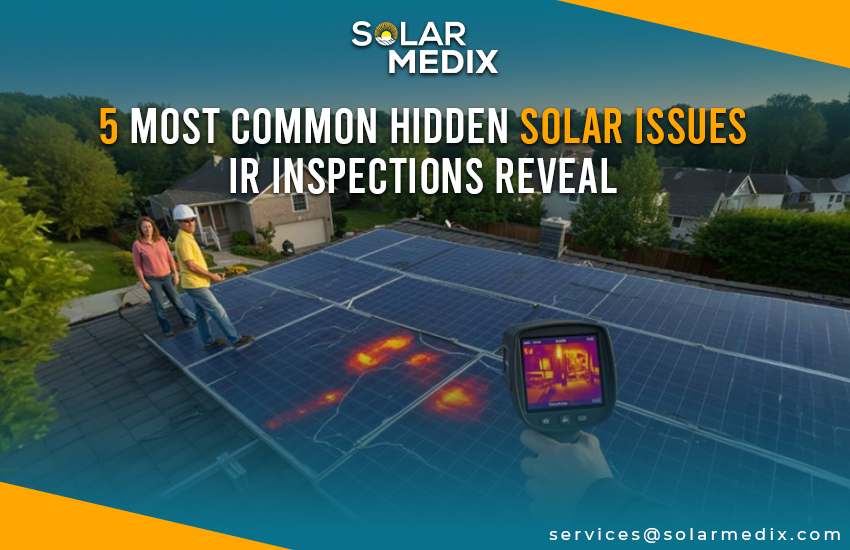
5 Most Common Hidden Solar Issues IR Inspections Reveal
Thermal imaging acts as a lie detector for your roof. Many solar issues hide behind the sleek aesthetics of modern modules.
IR inspections often uncover:
- Hot Spots
- Faulty Connections.
- Microcracks in Cells
- Failing Bypass Diodes
- Strong Imbalance
Why DIY or Basic Technicians Miss These Issues
Owning a thermal camera doesn’t make someone an expert in solar diagnostics. Interpreting the data requires a deep grasp of emissivity. Weather conditions change how heat appears on a screen. A reflection of the sun might look like a hot spot to an untrained eye. That leads to a false alarm. Conversely, a real defect might be masked by wind cooling the panel surface at the wrong time.
Professional thermographers know how to filter out environmental noise. It isn’t just about clicking a shutter button. We look for specific patterns that indicate specific types of failure. A basic tech might see heat and assume the panel is just “working hard.” We know better. Misreading these patterns leads to wrong conclusions. You need a specialist who knows the difference between a glare and a fire risk.
Choose Solar Medix for Infrared Solar Inspections & See What Your Eyes Can’t
Keep your investment safe with the Solar Medix team that looks deeper than the surface. We provide detailed reports that give you the evidence needed for warranty claims. Stop guessing about your system’s health.
Reach out to us today. We bring the invisible into focus for you. Our team treats your roof with the care it deserves. Why wait for a failure to happen? Catch the heat before it burns your ROI. We are ready to help you see the light.
Frequently Asked Questions (FAQs)
Q1. How do infrared inspections support warranty claims?
Infrared (IR) inspections support warranty claims by providing objective, non-destructive, and visual data that documents, maps, and quantifies structural or electrical defects.
Q2. Can solar panels absorb infrared?
Yes. Solar panels can absorb infrared (IR) light, specifically near-infrared. But their primary function is to convert visible light into electricity.
Q3. What are the limitations of visual inspection?
Visual inspections cannot detect internal semiconductor degradation, micro-cracks, or electrical resistance within the wiring. Because solar components are encapsulated in glass and plastic, most electrical faults occur where they are physically hidden from view. A visual check only identifies obvious physical damage like broken glass, heavy soiling, or bird nests.
Q4. How accurate is infrared thermography?
Infrared thermography is highly accurate when performed by trained professionals using high-resolution cameras. These tools can detect temperature differences as small as 0.1 degrees Celsius. This precision allows technicians to identify the exact location of a failing component within a large array with nearly 100% certainty.