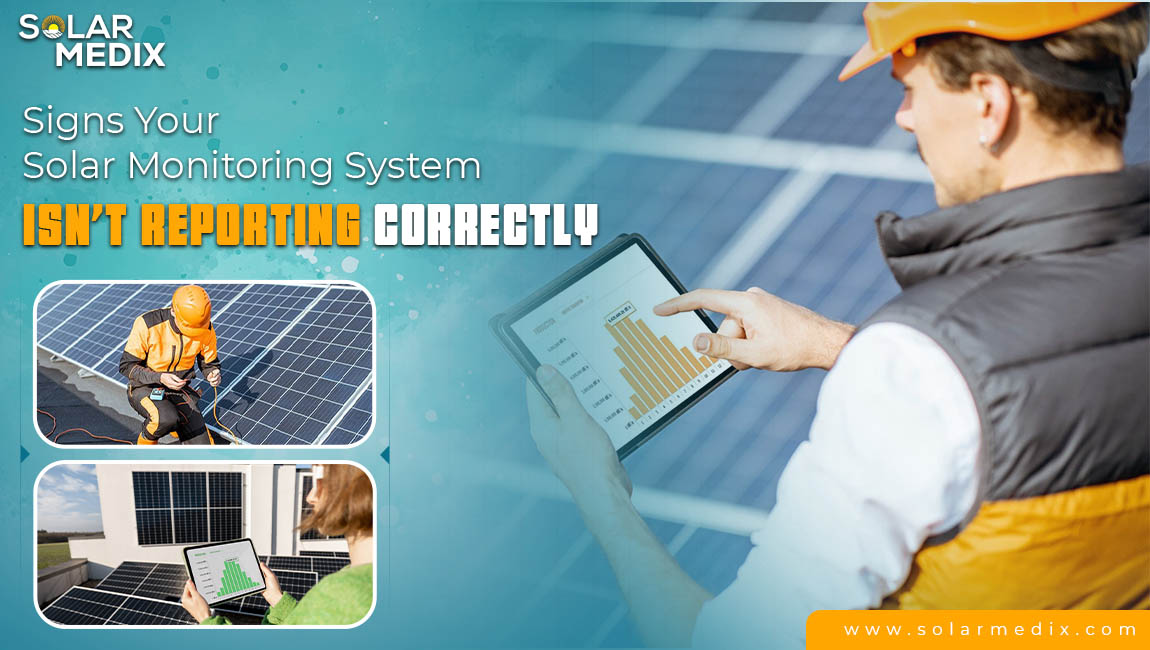
You rely on your solar panels every day. You check that monitoring app, expecting to see clean, green production numbers. But what happens when those figures look totally off? It is frustrating when your system is not giving you an accurate picture of its performance. It can also quietly cost you money by hiding a technical problem.
A proper solar monitoring system is your energy dashboard. It tells you if everything is working exactly right. When the monitoring system fails, you lose valuable performance data. You might miss a costly, underlying problem like a broken panel, a faulty inverter, or even a disconnected component. If you suspect your monitoring is failing, it may be time to get it checked by a professional right away. You can learn more about solar monitoring repair and how professionals diagnose these issues before they affect your savings
According to the U.S. Department of Energy, regular monitoring system maintenance can help identify underperformance early and prevent avoidable repair costs. Don’t let a simple reporting error put your return on investment at risk. Knowing the warning signs is the first step to protecting your savings. Let’s look at the key indicators that your data isn’t truthful.
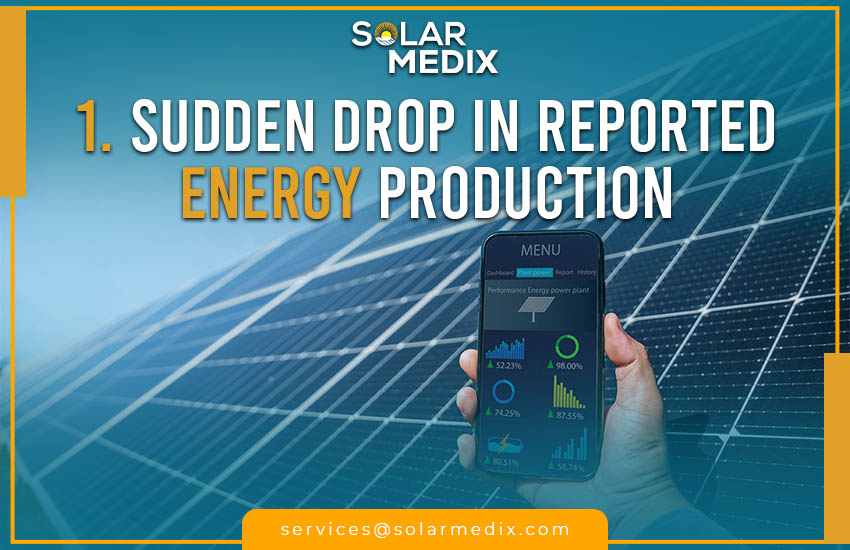
1. Sudden Drop in Reported Energy Production
One of the clearest signs of trouble is a big, sudden drop in the kilowatt-hour readings. Solar power usage and the solar panel monitoring system must align. Maybe yesterday your system produced 30 kWh. Today it only shows 5 kWh, but the weather is clear and sunny. This usually indicates something has gone wrong with the data itself. It is not always a physical panel failure.
These production numbers are how you track system health. Regular solar system maintenance can prevent these drops. A huge, unexplained change means the communication chain has broken down somewhere. It could be a simple software issue. It may also be a sign of something more serious happening within the system’s physical components.
Here are some common solar panel performance problems that cause drops like these:
- A complete loss of connection between the inverter and the monitoring device.
- A physical defect with a current sensor or another measuring wire.
- An internal software malfunction in the online dashboard or mobile application.
2. Data Stops Updating
Have you noticed your monitoring app showing the exact same production number for the last three days? That is a huge red flag. Your solar system is constantly producing power during the day. Therefore, the data of solar energy monitoring should be updated frequently, sometimes every five minutes. When the data freezes, it means the entire data pipeline is blocked.
This situation is often caused by a connectivity issue. The system has the data. But it can’t send it out to the internet. This might be a quick fix with your router. However, it could be a sign that a key piece of monitoring hardware has failed completely and requires replacement.
- The modem or router connecting the solar equipment to the internet is offline.
- The main device that sends the data, often called a gateway or logger, has stopped working.
- A critical data connection wire has become loose or disconnected at the inverter.
3. No Alerts When Issues Occur
A properly configured monitoring system does more than just show you numbers on a screen. It’s supposed to be proactive on your behalf. It should automatically flag potential problems that need your attention. For example, if one of your string inverters stops producing power, you should get an immediate email or a notification on your phone.
If you see a dip in production (one of the other signs) but received absolutely no alert, your notification settings are likely broken. This means the system is silently failing to do its job. You are missing important updates about downtime or failures that need attention right now.
Here are the most likely reasons why your essential alerts are not getting through:
- The system fails to send an email when an inverter reports a severe error code.
- Notification settings were accidentally disabled by a user or during a recent software update.
- System data is logging correctly, but the underlying alert trigger mechanism is faulty.
4. Inconsistent or Erratic Power Readings
Look closely at your power production graphs over time. Do the lines jump wildly up and down? Are the numbers showing 500 Watts one second and 5,000 Watts the next, even when the sun is steady? This jittery or shaky data is highly suspicious. Production should always follow a smooth, predictable curve based on the angle and intensity of the sunshine.
Erratic readings usually point to a technical issue inside the hardware responsible for measuring. The sensor is receiving corrupted or noisy electrical signals. This kind of flawed reporting makes it impossible to know your actual production figures. If you see data like this, take action immediately. Our post on “how to act quickly on solar system failures“ explains exactly what to do. It requires a brief technical check to fix the source of the noise.
- A temporary malfunction in the system’s core operating software or firmware.
- The physical energy measuring device is out of sync or requires recalibration.
- The communication link carrying data from the main inverter is damaged or shorting out.
5. Your Utility Bill Doesn’t Match Reported Output
This is the ultimate, non-digital proof of a problem. Your monitoring system says you generated 1,000 kWh this month. But your electric bill shows a usage or offset amount that aligns with only 500 kWh. Something is clearly wrong with one of the measurements. The financial proof does not align with the digital data.
This major discrepancy is a strong sign that one of the meters is inaccurate. Either your monitoring system is counting energy that was never actually sent to the grid, or the utility’s meter is reporting incorrectly. This critical issue requires a physical inspection to calibrate the two measurement tools against each other. The need for professional solar panel repair is clear when you compare these discrepancies to your bill.
This discrepancy requires investigation into which measuring device is reporting incorrectly, often involving these possibilities:
- The consumption meter is inaccurately double-counting energy usage inside the home.
- The solar monitoring system is counting production that isn’t actually flowing to the utility grid.
- A faulty physical net meter or utility meter is incorrectly reporting total energy exchanged.
6. Device Offline or “Not Communicating” Messages
This is the most direct warning sign you will ever see. Your monitoring app gives you a clear message: Device Offline or Not Communicating. It means the gateway or logger, the central hub of the monitoring system, has completely checked out. The system has stopped reporting altogether and cannot be reached.
The first step should always be checking your local internet connection. Is the Wi-Fi down? Are other devices in your home working fine? If your internet is working, the problem lies with the solar equipment itself. It needs a manual reboot. If a reboot doesn’t work, a critical component may have failed and must be replaced.
- The physical display or logging device is not receiving any power or current.
- An expired or disabled network IP address is preventing the system from connecting online.
- A server issue on the monitoring provider’s end is temporarily affecting all users.
Get Your Solar Monitoring Working Again — Contact Us Today!
Don’t wait for a broken system to destroy your energy savings. Ignoring a faulty monitoring system is the same as ignoring a slow, leaky roof. The small issue only gets bigger and more expensive over time. The sooner you diagnose the reporting problem, the less money you will lose in missed production and undetected faults.
At Solar Medix, we specialize in fixing common solar issues and getting your production reports back on track. We diagnose communication breakdowns, fix faulty components, and ensure your system is accurately reporting every single watt it generates. You deserve confidence in your solar investment. Call or message us today to schedule your monitoring system repair.
Frequently Asked Questions (FAQs)
Q1: How can I check that my solar is working properly?
Check your solar monitoring app or online dashboard daily to ensure production numbers are consistent and match sunny weather expectations. Also, look for a green or normal operating light on your inverter (the box near your panels or utility meter).
Q2: Why did my solar panels suddenly stop working?
A common reason is a tripped breaker switch or a temporary grid power outage. It could also be a failure of the inverter, which is the critical component that converts the energy the panels create into usable household electricity.
Q3: Why does my solar output not match my electric bill?
This often happens because your monitoring system is calculating one thing (gross production) and your utility meter is measuring another (net energy imported/exported). There may also be an issue with a faulty meter or a reporting delay.
Q4: How can I tell what is draining my electricity?
You can use a home energy monitoring device to track power use by appliance or circuit. Also, check your largest appliances like the HVAC, electric water heater, or older refrigerators, as they are usually the biggest energy users.