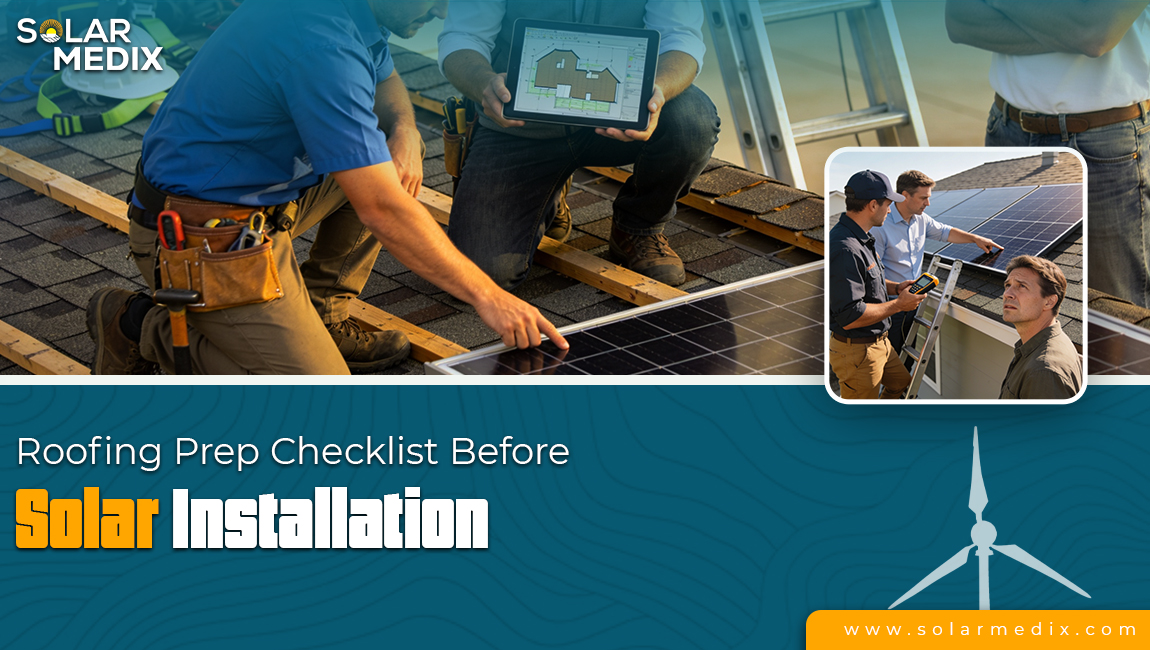
The success of your solar energy system is fundamentally tied to the surface it sits upon: your roof. Before the first panel is ever bolted down, ensuring that your roofing system is healthy and prepared is the most critical step in the entire installation process.
A solar array is designed to last 25 to 30 years, which means your roof needs to be capable of supporting it for that same duration. If you neglect the state of your shingles, decking, or support structures, then be ready to face complicated logistical headaches and unforeseen expenses down the road. That showcases that assessing your roof’s condition early is a primary requirement if you are planning a solar system.
By following a comprehensive preparation strategy, you can avoid the “install now, regret later” scenario. This checklist helps you evaluate your roof’s current health and determine if any corrective actions are necessary before your solar installers arrive. Take these steps now and ensure transition to clean energy—seamless, safe, and cost-effective for decades to come.
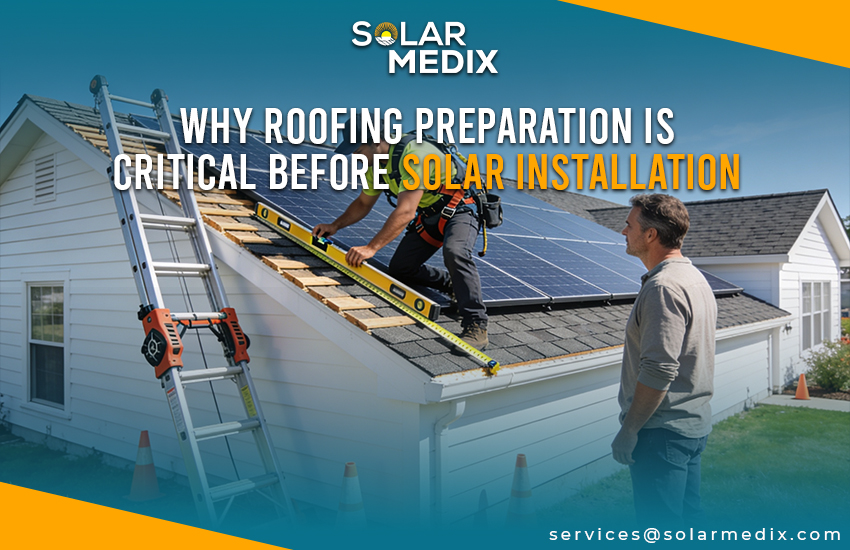
Why Roofing Preparation Is Critical Before Solar Installation
Skipping the roofing assessment phase leads to a financial nightmare known as solar removal and reinstallation. If your roof fails five years into the life of your solar system, you will be forced to pay a crew to decommission the panels, store them, replace the roof, and then reinstall the entire array. These labor costs can often run into the thousands, effectively wiping out several years of your solar energy savings.
Beyond the financial aspect, structural integrity is a major safety concern. Solar panels and their mounting hardware add significant “dead load” to your home. If there are underlying structural issues (rotting rafters or weakened decking), the added weight could cause sagging or even catastrophic failure. Proactive preparation allows you to identify these weaknesses and reinforce the structure, and ensure your home remains safe under the weight of the new technology.
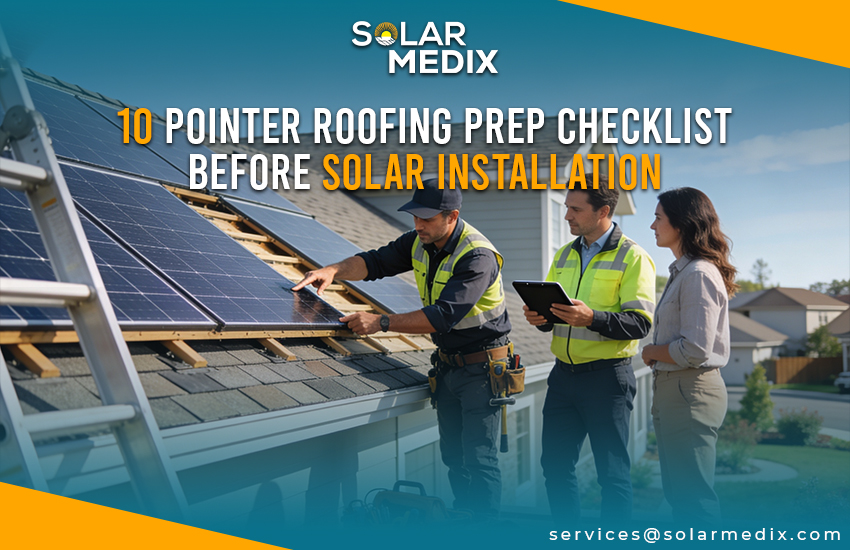
10 Pointer Roofing Prep Checklist Before Solar Installation
Before moving forward with a solar contract, walk through these ten essential checkpoints to make certain your home is ready for a high-performance energy system.
- Check #1. Assess Roof Age and Lifespan: Determine if your roof has at least 20 years of viable life remaining to match the lifespan of the solar panels.
- Check #2. Inspect Roof Condition: Look for signs of wear, such as curling shingles, missing granules, or cracked tiles that could compromise the installation.
- Check #3. Evaluate Roof Structure and Load Capacity: Ensure the internal rafters and trusses are strong enough to support the additional weight of the solar racking and panels.
- Check #4. Identify Roof Type and Material Compatibility: Confirm that your specific roofing material, whether asphalt shingle, metal, or tile, is compatible with standard solar mounting hardware.
- Check #5. Check for Roof Leaks or Moisture Issues: Investigate the attic for water stains or mold that indicate existing leaks, which must be sealed before panels are installed.
- Check #6. Evaluate Roof Orientation and Sun Exposure: Analyze which roof planes receive the most direct sunlight to maximize the energy production of your future system.
- Check #7. Identify Obstructions on the Roof: Map out the location of chimneys, vents, and skylights that might limit the available “usable” space for panel placement.
- Check #8. Plan for Future Roof Repairs or Replacement: Decide if it is more cost-effective to perform a full roof replacement now rather than waiting until after the panels are mounted.
- Check #9. Ensure Proper Drainage and Gutter Condition: Check that gutters and downspouts are clear and functional to prevent water backup under the solar array during heavy rain.
- Check #10. Schedule a Professional Roof & Solar Assessment: Hire a specialist to provide a detailed report on both the roofing health and the solar feasibility of your property.
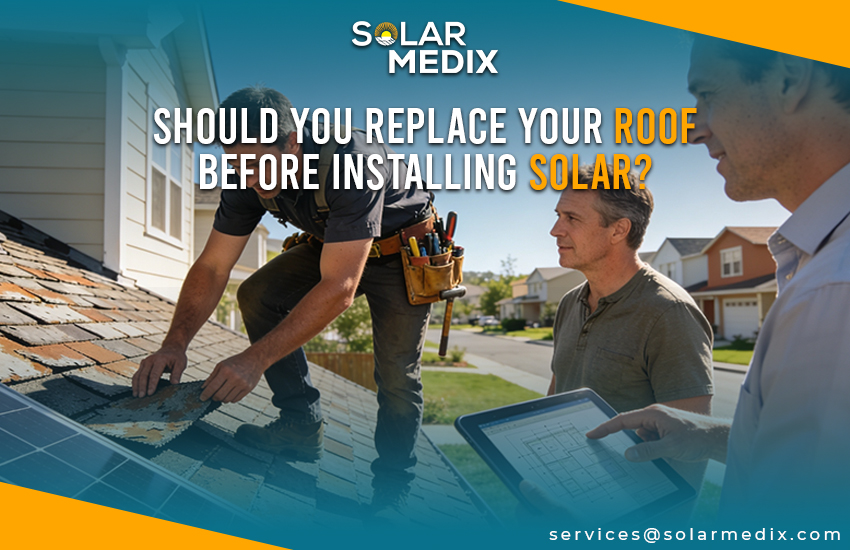
Should You Replace Your Roof Before Installing Solar?
The most common indicator that you need a roof replacement before going solar is age. If your asphalt shingle roof is 15–20+ years old, it is nearing the end of its functional life. Even if it looks “fine” from the ground, the shingles are likely brittle. Installing solar on an aging roof is a gamble that usually ends with a premature and expensive removal process when the roof inevitably fails a few years later.
You should also prioritize replacement if there is visible damage or if you have been performing frequent, localized repairs. Constant patching is a sign that the roof’s integrity is failing across the board. By syncing your roof replacement with your solar installation, you often benefit from a “dry” installation where the solar mounts can be integrated perfectly with new flashing, providing the highest level of leak protection possible.
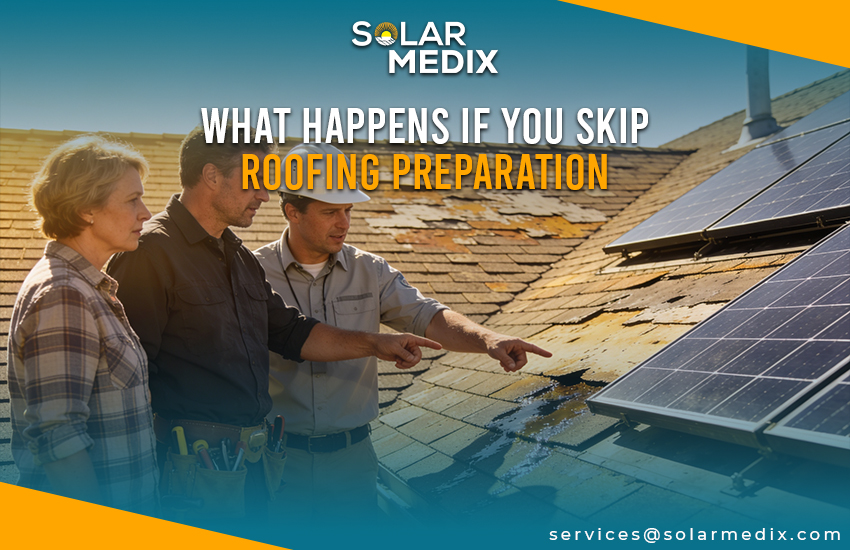
What Happens If You Skip Roofing Preparation
The most immediate consequence of skipping preparation is the high risk of roof leaks. If panels are installed over damaged or weak shingles, walking on the roof and drilling mounting points worsen existing cracks. Once the panels are in place, finding and fixing a leak becomes significantly more difficult and expensive, as specific sections of the array must be dismantled to reach the source.
Ignoring the roof is basically equal to reduced system efficiency and structural risks. If the roof sags due to unaddressed structural issues, the panels may no longer be aligned at the optimal angle for sun exposure. In extreme cases, the structural stress causes interior ceiling damage. Ultimately, the lack of preparation leads to the very thing solar owners want to avoid: unnecessary overhead costs and a system that underperforms.
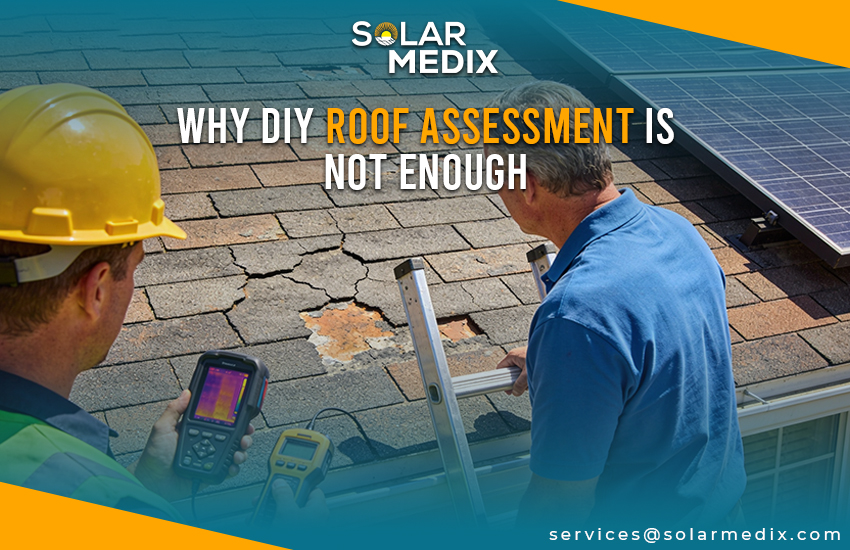
Why DIY Roof Assessment Is Not Enough
While a homeowner can spot a missing shingle, a DIY assessment often misses hidden damage that only a trained eye can see. Moisture trapped beneath the underlayment or “soft spots” in the plywood decking are often invisible from the surface. Without professional tools and experience, you might assume your roof is solar-ready when it is actually harboring rot that will worsen once it is covered by panels and shielded from the drying effects of the sun.
Most homeowners lack the structural expertise to calculate load-bearing capacities. An inaccurate evaluation paves the way for choosing a solar system that is too heavy for the existing frame, leading to long-term warping. Professional inspectors use specialized knowledge. They ensure that the marriage between your roof and your solar system is technically sound. So, it protects both your home’s value and your warranty.
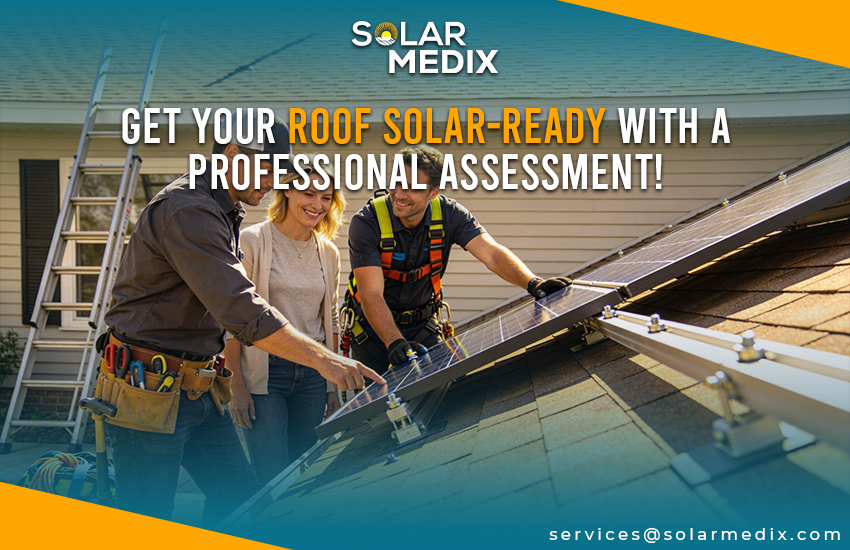
Get Your Roof Solar-Ready with a Professional Assessment!
A solar system is only as good as the roof beneath it. Solar Medix’s team identifies potential red flags before they become costly problems. By providing a comprehensive glance at your home’s exterior to ensure that your transition to clean energy is built on a solid, reliable foundation, we help you prepare your home for a lifetime of solar savings with our roofing solutions.
By choosing a professional assessment, you gain peace of mind knowing that every vent, shingle, and rafter has been accounted for. Our experts don’t just look at the solar potential. We look at the long-term health of your entire home. This holistic approach prevents “surprise” costs. It ensures your solar investment remains a benefit rather than a burden.
Ready to take the next step in your renewable energy journey? Contact us today to schedule your professional roof and solar readiness evaluation!
Frequently Asked Questions
Can I install solar panels on a 15-year-old roof?
Technically, yes, but it is rarely recommended. Most solar panels last 25 to 30 years. So, if your roof is already 15 years old, it will likely need replacement long before the panels do.
How much does it cost to remove and reinstall solar panels?
On average, expect to pay between $2,000 and $5,000 for “detach and reset” services. This depends on the size of the system and the complexity of the array.
Will solar panel installation cause my roof to leak?
Solar panels installed by professionals using high-quality flashing and mounting hardware do not cause leaks. In fact, they actually protect the shingles underneath from UV degradation and weather.
What is the best roofing material for solar panels?
Asphalt shingles are the most common and easiest to work with, but standing seam metal roofs are often considered the “gold standard” because panels can be clamped directly to the seams without any roof penetrations. Tile and flat roofs are also compatible but require specialized mounting systems.