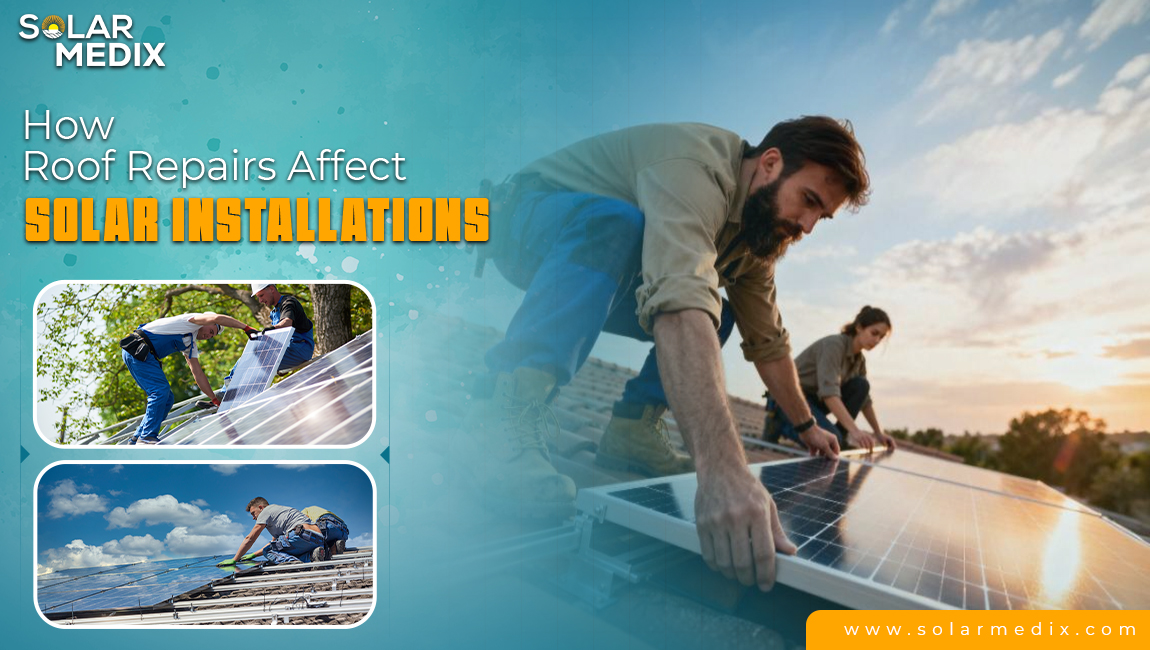
Your roof is the foundation of your solar investment, but it doesn’t last forever. When shingles start to curl or leaks appear, you might think you can just patch things up around your existing array. That is rarely a safe or viable option. Most roofing contractors will not touch a roof with panels still installed. Why? Because of the liability and the sheer physical obstruction.
Leaving panels in place while trying to fix the surface underneath is like trying to change a car’s tire while it’s still moving. It just doesn’t work. The flashing, mounting brackets, and wiring. They all integrate deeply with the roofing material. Disturbing the area around them without proper removal often leads to compromised waterproofing.
Improper handling during roof work is a leading cause of voided solar warranties, leaving homeowners with expensive bills for damages that should have been preventable.
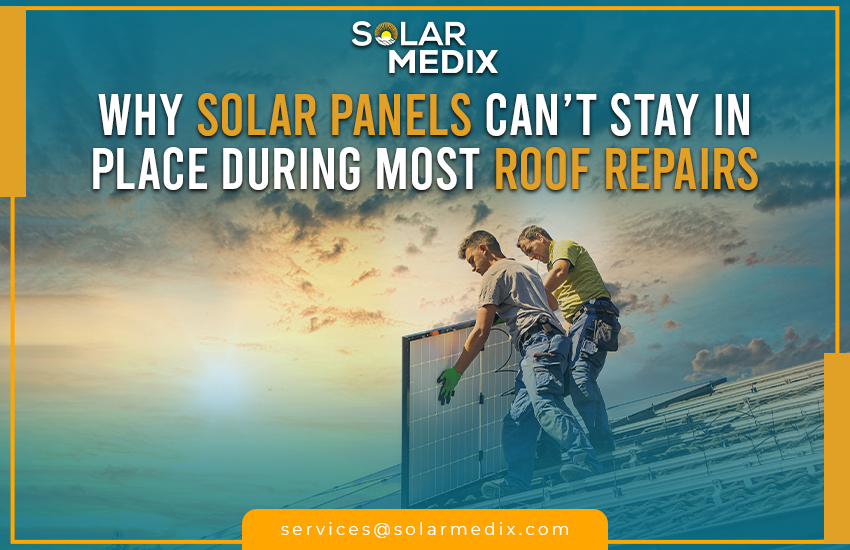
Why Solar Panels Can’t Stay in Place During Most Roof Repairs
Removing and reinstalling solar panels is not like stickers that you just peel off. They are bolted directly into your home’s structural rafters. This integration means the mounting hardware penetrates the roofing material to secure the heavy glass and metal modules against wind and weather. When a roofer needs to tear off old shingles or patch a leak, these mounts are in the way. Trying to work around them leaves gaps in the underlayment. Water loves those gaps. It will find a way in.
Work crews also need space to move safely. Navigating a steep roof is hard enough without tripping over aluminum rails or delicate glass sheets. If panels stay up, roofers cannot access the decking properly to inspect for rot or water damage. A repair job done with panels in place is almost always a band-aid solution. It limits the quality of the work. You might fix the immediate leak. But you leave the surrounding area vulnerable to future failure because the flashing wasn’t properly redone.
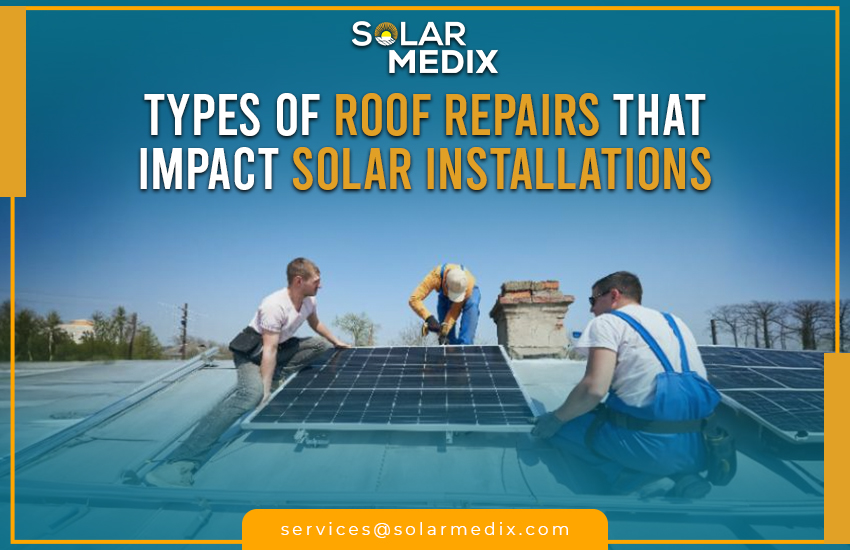
Types of Roof Repairs That Impact Solar Installations
Not every shingle issue requires a full system teardown, but most significant work does. The scope of the removal depends entirely on where the damage lies relative to your array.
Minor Roof Repairs
- Localized leaks: If a leak is inches from a mounting foot, that panel must come down to reseal the penetration.
- Shingle blow-offs: Missing shingles near the array require technicians to lift adjacent panels to slide new materials underneath.
- Flashing damage: Corroded or bent flashing around the array perimeter forces a partial removal to restore watertight integrity.
Major Roof Repairs or Replacement
- Full re-roofing: Every single piece of equipment must come off to strip the roof down to the deck.
- Structural sagging: Reinforcing rafters requires removing the heavy load of the solar system first.
- Underlayment failure: When the waterproof barrier beneath the shingles fails, the entire section covering that area needs to be cleared.
Learn more about the importance of synthetic underlayment here.
Risks of Not Removing Solar Panels Before Roof Repairs
Ignoring the need for professional removal is a gamble that rarely pays off. Roofers are experts at roofing, not electronics. Asking them to work around high-voltage DC equipment is dangerous for them. Also, it is disastrous for your hardware.
- Panel cracking or microfractures
- Mounting hardware damage
- Electrical disconnection issues
- Roof warranty voidance
- Solar warranty voidance
- Reduced system performance post-repair
Step-by-Step Process of Solar Removal & Reinstallation
We don’t just yank panels off and lean them against a tree. The removal and reinstallation (R&R) process is a precise operation designed to keep your energy production safe while your roof gets the attention it needs.
- System shutdown & safety checks: We isolate the inverter and cut the AC/DC power flow to ensure the roof is electrically safe for workers.
- Panel labeling and documentation: Every module and string is mapped out so it goes back to the exact same spot for optimal voltage balance.
- Professional panel removal: Technicians detach the wiring and racking hardware carefully to avoid scratching the backsheets or frames.
- Secure storage during roof work: Your equipment is stored in a designated safe zone (often your garage) to prevent accidental impacts from falling roofing debris.
- Post-roof inspection: Once the roofers finish, we verify the new surface is ready, and the standoffs are flashed correctly before the racking goes back up.
- Reinstallation with proper alignment: The racking is mounted with fresh waterproof seals, and the panels are secured to match the original layout.
- System testing & monitoring verification: We fire the system back up and check the monitoring app to confirm energy production is hitting the expected targets.
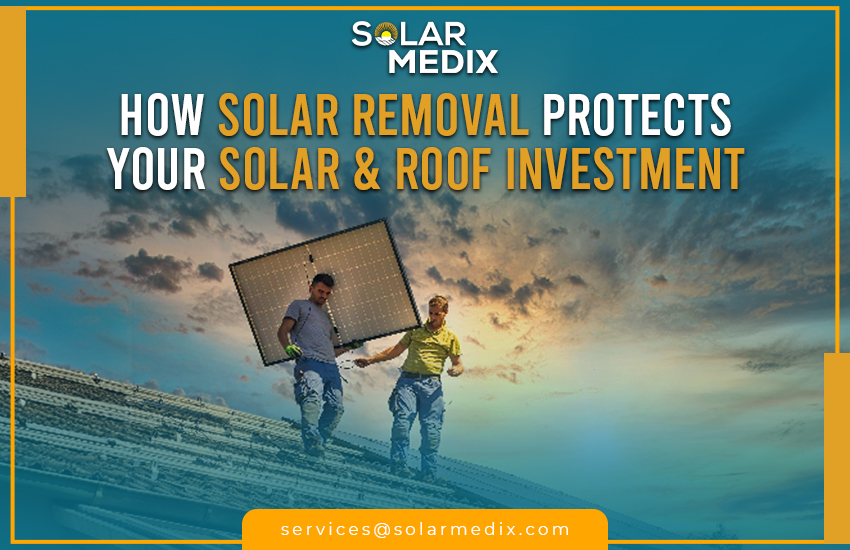
How Solar Removal Protects Your Solar & Roof Investment
Taking the panels down ensures that your roof warranty remains valid. Most roofing manufacturers will instantly void their guarantee if they see that flashings were reused or if the installation was disturbed by non-certified workers. By clearing the deck, you allow the roofers to install a continuous barrier of ice and water shield. This is the only way to promise that the roof will actually last its full 30-year lifespan.
Professional removal also serves as a health check for your solar system. We often find issues like loose wires or critter damage that you couldn’t see from the ground. Catching these problems now prevents a system failure in the middle of summer. It is cheaper to fix a chewed wire while the panel is already off than to pay for a separate service call later. This process preserves your system efficiency and ensures you aren’t paying for a “new” roof that still has old leaks hidden under the solar array.
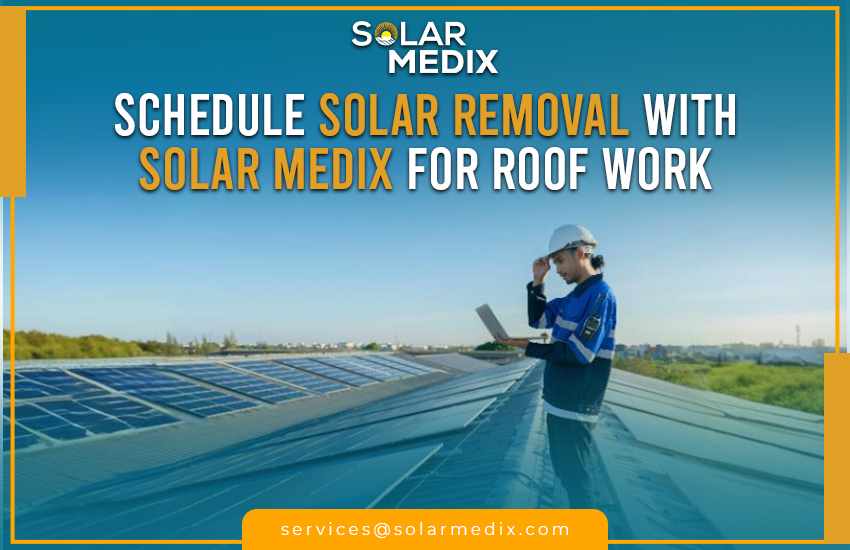
Schedule Solar Removal with Solar Medix for Roof Work
Don’t let a roofing project turn into a solar nightmare. If you have a roof date on the calendar, you need to get your removal scheduled immediately to avoid delays. Solar Medix specializes in coordinating with roofing companies to make the transition seamless.
- Zero coordination headaches: We talk directly to your roofer.
- Certified technicians: Your warranty stays safe with us.
- Fast turnaround: We get in and out so your roof project stays on track.
Protect your home and your power plant in one move. Contact us today to get a quote for your removal and reinstallation project. We serve New Jersey, New York, and beyond with the expertise your system deserves.
Frequently Asked Questions (FAQs)
Q1: What is the biggest problem with solar panels?
Heat degradation and micro-cracks often silently reduce output over time. However, the most immediate “problem” owners face is the logistical challenge of removing them for roof work without voiding warranties.
Q2: What happens to solar panels when you have to replace your roof?
They must be disconnected, unmounted, and stored safely before the old roof is torn off. Once the new roof is complete, a solar technician reinstalls the mounts with new flashings and reconnects the system.
Q3: How do you do roof repairs if you have solar panels?
You hire a solar specialist to perform a “detach and reset.” They remove the panels covering the damaged area, allowing the roofer to fix the leak. Then return to reinstall the solar equipment.
Q4: What type of roof is not good for solar panels?
Roofs with wood shake shingles or slate are difficult for solar. They are brittle and prone to breakage during installation. Old roofs with less than 5 years of life remaining are also bad candidates. They will need replacement too soon.