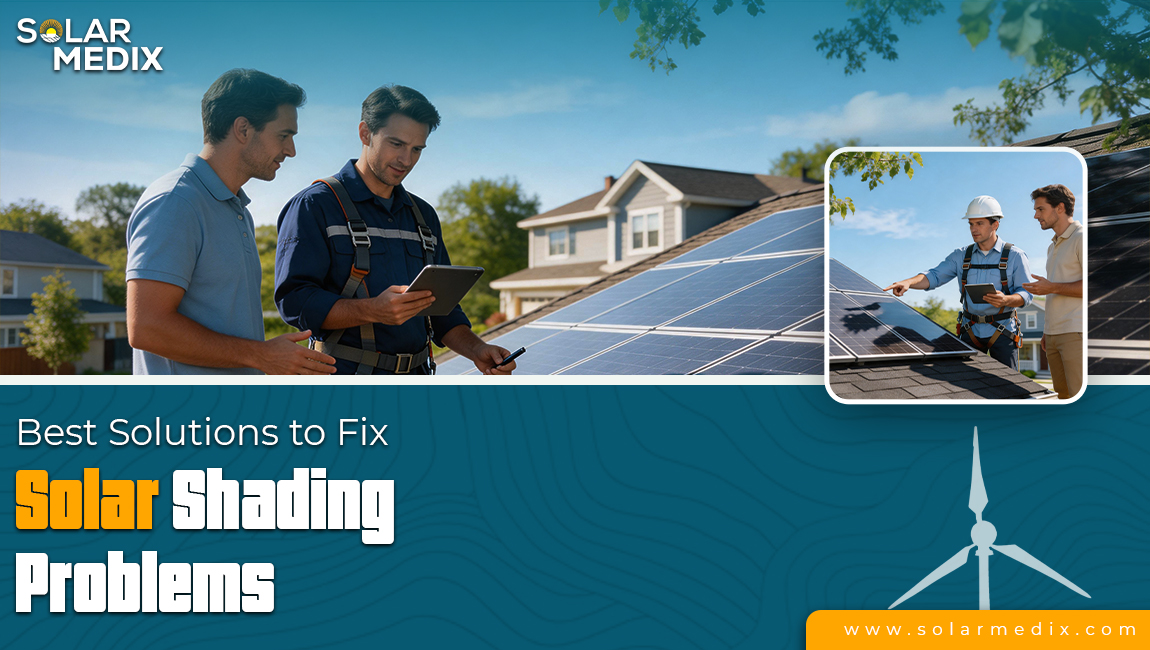
The performance of your PV system is entirely dependent on its ability to capture unobstructed sunlight throughout the day. Even a small amount of shadow cast across a single panel leads to a disproportionate drop in energy production, threatening the return on your investment.
Solar shading issues are common for homeowners. However, it is often misunderstood. Many believe that if only 10% of a panel is covered, they only lose 10% of their power. The reality is quite opposite. The physics of solar cells means that partial shading significantly throttles the output of an entire string of panels.
To ensure your system operates at peak capacity, it is important to follow industry best practices for site maintenance and hardware optimization. Research shows that, due to bird droppings, the output power of the individual PV modules decreases upto 9.96% to 3.69%. By implementing professional solutions, you protect your equipment and maximize your energy independence.
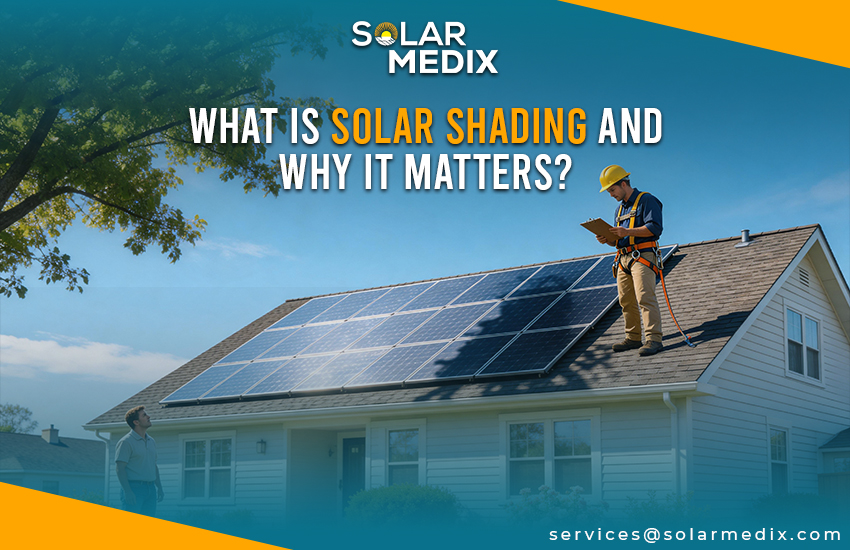
What Is Solar Shading and Why Does It Matter?
Solar shading occurs when an object, such as a tree branch, a chimney, or a neighboring building, obstructs direct sunlight from reaching the surface of a solar photovoltaic (PV) panel. Because solar panels are comprised of interconnected cells, they require a steady, uniform flow of photons to generate electricity effectively. When one part of the panel is blocked, it creates a “bottleneck” that disrupts the flow of energy through the entire module.
This matters because the impact of shading extends far beyond a simple dip in daily production. When shading is ignored, it leads to uneven panel performance, forcing some cells to work harder to compensate for others. Over time, this creates potential long-term system inefficiency and even causes physical damage to the panels. Monitoring and resolving shading issues ensures your solar transition remains financially viable for the full 25+ year lifespan of the hardware.
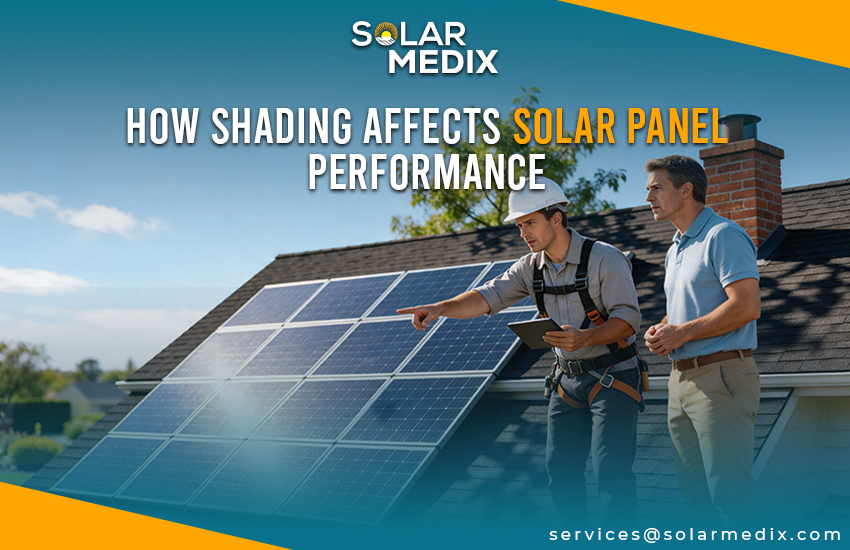
How Shading Affects Solar Panel Performance
The internal architecture of most solar arrays makes them highly sensitive to shadows. Many traditional systems utilize a “string inverter” setup, where multiple panels are connected in series, much like a string of old-fashioned holiday lights. If one panel in the string is affected by shade, the current flow for the entire string is reduced to the level of the weakest panel. This results in a system-wide efficiency loss that turns a sunny day into a low-production disappointment.
Beyond just losing power, shading causes physical “hot spots.” When a cell is shaded, it no longer produces power and instead begins to act as a resistor, consuming the energy produced by the surrounding unshaded cells. This mismatch in panel output generates intense heat in the shaded areas, which eventually results in cell degradation or cracked glass. These hot spots represent a significant decrease in overall system efficiency and are a leading cause of premature panel failure.
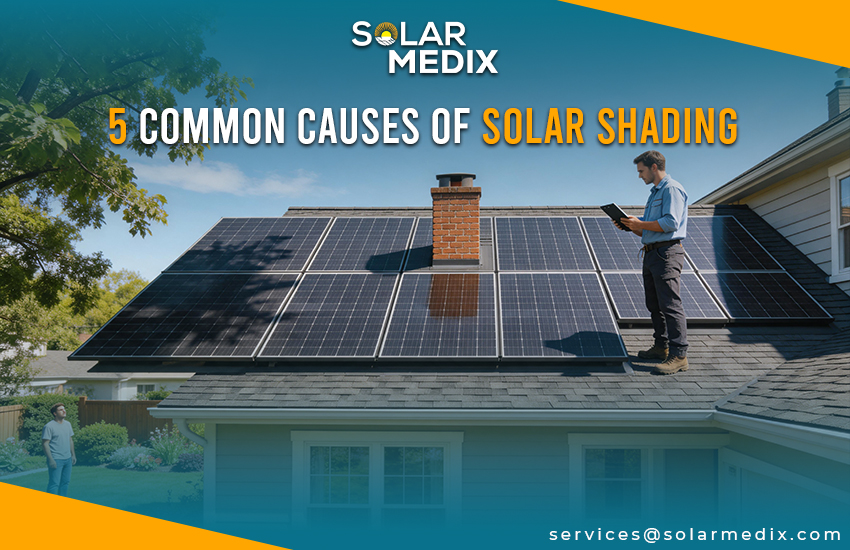
5 Common Causes of Solar Shading
Identifying the root cause of your production drop is the first step toward a solution. Shading can be caused by permanent structures, seasonal growth, or even a simple lack of maintenance.
Cause #1: Trees and Vegetation Growth
What was a small sapling during your solar installation may have grown into a massive canopy years later. Seasonal changes also bring thicker foliage that creeps into the path of the sun.
- Overhanging branches casting direct shadows.
- Leaf debris accumulating on the panel surface.
- Growth of neighbor’s trees that were not previously a factor.
Cause #2: Nearby Buildings or Structures
New construction in your neighborhood or even additions to your own home change the shading profile of your roof. As the sun’s angle changes throughout the year, buildings that weren’t a problem in the summer might cast long shadows in the winter.
- Multi-story home additions.
- New construction on adjacent lots.
- Fences or tall walls near ground-mounted systems.
Cause #3: Roof Obstructions
Many homeowners forget that the roof itself contains several necessary structures that interfere with solar production. Even small items cast significant shadows during the early morning or late afternoon.
- Chimneys and vent pipes.
- Satellite dishes or antennas.
- Dormers and gables that create self-shading.
Cause #4: Dirt, Debris, or Snow Accumulation
Shading isn’t always caused by large objects; sometimes it is a layer of “soft shading” on the glass itself. This prevents light from reaching the silicon cells just as effectively as a solid object would.
- Accumulated dust and pollen in dry climates.
- Bird droppings that create localized “hard” shading.
- Heavy snow buildup that doesn’t slide off the panels.
Cause #5: Poor Panel Placement During Installation
Sometimes the issue begins on day one due to a lack of proper site analysis. If a system was installed without a professional shading study, the panels may have been placed in areas prone to obstruction.
- Panels placed too close to the northern edge of a roof.
- Failure to account for the sun’s lower trajectory in winter.
- Ignoring the “shading radius” of vents and chimneys.
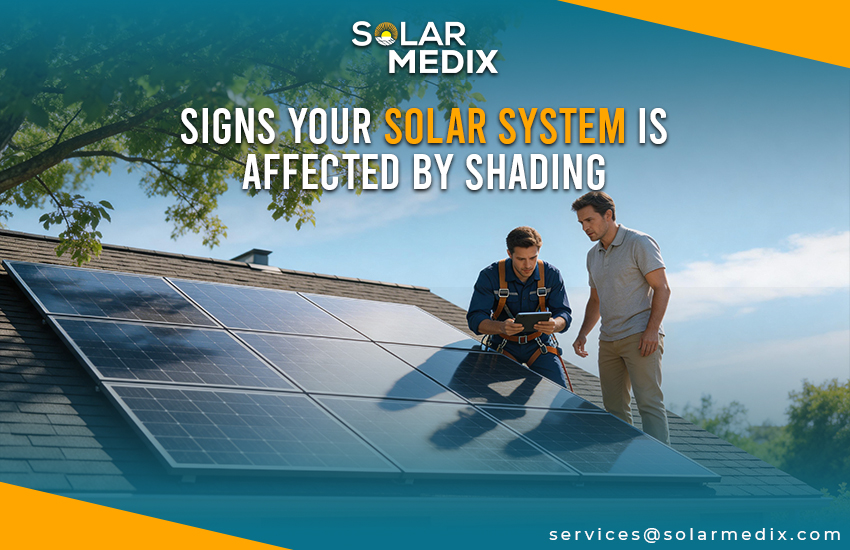
Signs Your Solar System Is Affected by Shading
If you aren’t visually inspecting your roof every day, you need to rely on data and system behavior to spot shading issues. Watch for these common red flags that indicate your array is struggling to see the sun:
- Reduced energy production
- Inconsistent output levels
- Monitoring alerts
- Noticeable seasonal performance changes
6 Solutions to Fix Solar Shading Problems
Fortunately, shading is a solvable problem. Whether through physical maintenance or technological upgrades, you can reclaim your lost energy production.
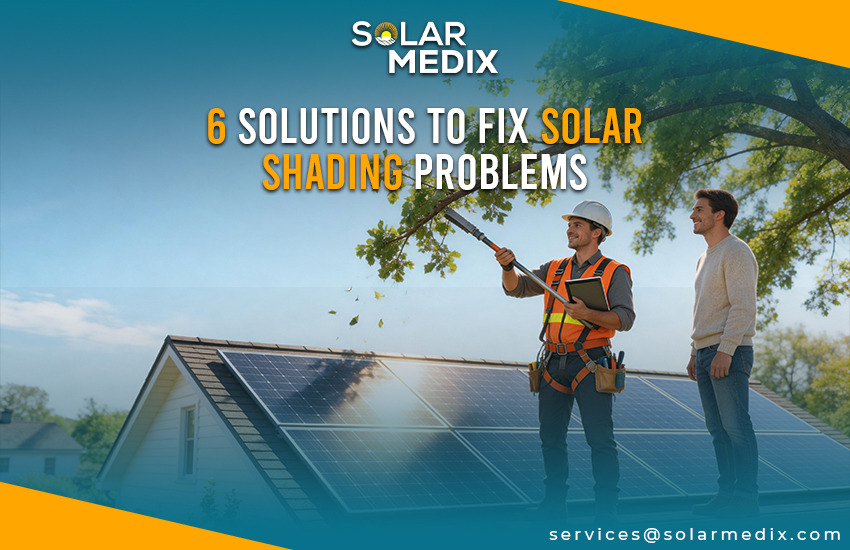
Solution #1: Tree Trimming or Removal
The most straightforward solution is often a pair of pruning shears or a professional arborist. Keeping your “solar window” clear of vegetation is a recurring maintenance task.
- Schedule annual trimming of overhanging limbs.
- Remove trees that have outgrown their space.
- Thin out dense canopies to allow dappled sunlight through.
Solution #2: Solar Panel Repositioning
If a permanent structure like a chimney is the culprit, moving the affected panels to a different part of the roof may be the best long-term fix.
- Relocating modules to a southern-facing unobstructed plane.
- Adjusting the tilt angle to avoid shading from the roof peaks.
- Consolidating strings to clearer areas of the roof.
Solution #3: Installing Microinverters or Power Optimizers
Module-Level Power Electronics (MLPE) allows each panel to operate independently. This ensures that if one panel is shaded, the rest of the system continues to produce at 100% capacity.
- Microinverters convert DC to AC at the panel level.
- Power optimizers “condition” the energy before it reaches a string inverter.
- Eliminates the “Christmas light” effect of series-connected panels.
Solution #4: Solar Monitoring Systems
You cannot fix what you cannot measure. Advanced solar monitoring allows you to see exactly which panels are underperforming and when the shading occurs.
- Real-time data at the individual panel level.
- Historical reports to identify seasonal shading patterns.
- Automated alerts for significant production drops.
Solution #5: Regular Solar Panel Cleaning
Cleaning is the easiest way to resolve “soft shading” issues caused by environmental buildup. A clear glass surface is essential for maximum photon absorption.
- Professional deionized water cleaning to avoid streaks.
- Safe removal of bird droppings and sap.
- Clearing of snow and ice during the winter months.
Solution #6: Advanced Diagnostics (Infrared Inspections)
For hidden issues like hot spots or internal cell damage caused by shading, infrared technology is required. These inspections find problems that are invisible to the naked eye.
- Thermal imaging to identify overheating cells.
- Detection of bypass diode failures.
- Validating the health of the system after a shading source is removed.
Why DIY Solutions May Not Fully Solve Shading Issues
While it might be tempting to climb a ladder and attempt to reconfigure your system or trim high-altitude branches yourself, DIY solar fixes often fall short. Solar arrays are complex electrical systems that involve high-voltage DC current; without the proper training, you risk not only electrical shock but also voiding your manufacturer’s equipment warranty. Professional technicians have the safety gear and insurance necessary to handle roof work and electrical troubleshooting.
DIYers often suffer from an inability to detect hidden inefficiencies. You might trim a branch and see a small bump in production, but without professional diagnostic tools, you could miss a failing optimizer or a bypass diode that was damaged by years of previous shading. Experts bring the tools and expertise required to ensure that every component—from the racking to the wiring—is optimized for the specific shading profile of your property.
Get in Touch with Solar Medix & Fix Your Solar Shading Issues!
Don’t let a few shadows steal your solar savings. At Solar Medix, we identify and resolve the complex issues that keep your system from reaching its full potential. Whether you need a simple cleaning or a full system optimization with microinverters, our team is ready to help.
- Comprehensive shading analysis and site audits.
- Professional panel cleaning and debris removal.
- Installation of power optimizers and microinverters.
- Expert diagnostics using infrared thermal imaging.
If you suspect your system is underperforming, it’s time for a professional check-up. Contact Solar Medix today to schedule an inspection and get your system back to peak efficiency!
Frequently Asked Questions
How to avoid shading on solar panels?
Perform a comprehensive site survey to avoid trees, chimneys, and vents. Trim nearby trees and clean panels regularly. Install panels using optimal orientation and tilt, or use Module-Level Power Electronics (MLPEs) like microinverters or DC optimizers to mitigate the impact of unavoidable shadows.
How to fix a hazy solar panel?
Clean the surface dirt with vinegar and water. If haziness persists, do not use abrasive cleaners or metal polish. Instead, it is recommended that you seek a professional inspection.
How to protect solar panels from hailstones?
By installing high-quality, certified tempered glass panels (UL 61730) and tilting them between 30–45 degrees to encourage shedding. You can also use protective covers, wire mesh, or polycarbonate sheets.
How do anti-shading solar panels work?
Anti-shading solar panels minimize power loss from partial shade by using advanced bypass diodes, cell segmentation, or microinverters to reroute electricity around shaded cells.