You buy solar to cut power bills, not to stare at a warning light and wonder what went wrong. A solar system can look fine from the ground and still lose output day after day. That’s why small faults matter. They often start quietly, then chip away at production until the drop is too big to ignore.
With service coverage across four states and more than 17 years of experience, Solar Medix has seen how small solar faults can turn into bigger system problems when ignored. So, what are the most common solar panel issues and their solutions?
Quick Answer
The most common solar panel issues are dirt buildup, inverter faults, micro-cracks, snail trails, hot spots, loose wiring, PID, pest damage, internal corrosion, poor tilt or orientation, and thermal fade. The right fix depends on the fault, but most cases call for cleaning, testing, repair, better monitoring, or replacing damaged parts before output falls further.
10 Common Solar Panel Issues and Their Solutions
Solar faults rarely arrive with a drum roll. More often, your app shows a dip, your inverter flashes a code, or your electric bill creeps up when it shouldn’t. That’s the sneaky part.
The good news is simple. Most of these issues can be spotted early when you know what to look for. And once you know the pattern, the fix feels less like a mystery and more like a checklist.
1. Dirt, Debris, and Soiling Accumulation
Dust, pollen, bird droppings, leaves, and traffic grime can cover panel glass and block sunlight. In bad cases, soiling can cut output by up to 25%, especially when grime builds along the lower edge of the panel and stays there after light rain.
- Fix: Schedule an annual professional wash.
- Avoid: Never use abrasive chemical soaps or hard water.
- Tip: If one roof section gets dirtier than another, compare panel-level data and look for a pattern.
- Example: Think of a dirty windshield at sunset. Light still gets through, but not cleanly.
2. Inverter Faults and System Disconnections
The inverter is the system’s brain. Panels make direct current, but your home uses alternating current, so when the inverter trips, shuts down, or loses grid sync, production can stall fast. Sometimes the fault is inside the inverter. Sometimes it’s a grid issue, a wiring issue, or a safety shutdown.
- Codes: You may see messages like ground fault, isolation fault, overvoltage, arc fault, or no AC output.
- Lights: A solid green light often means normal operation. Red or flashing amber usually points to a fault.
- Check: Review your app history. Did production drop all at once or fade over a week?
- Think of it this way: A car can have a full tank and still not move if the ignition fails.
3. Micro-Cracks and Snail Trails
Micro-cracks are tiny fractures in solar cells. You usually can’t see them from the ground, yet they can lower output over time. They often happen after rough handling, bad transport, repeated thermal stress, or heavy pressure during installation. Snail trails are dark lines or marks that can show up later as moisture works into damaged areas.
- Micro-Cracks: Invisible fractures caused by improper handling.
- Snail Trails: Discoloration lines showing moisture ingress.
- Risk: These faults may begin small but spread when panels heat up and cool down day after day.
- Best move: Ask for electroluminescence or advanced module testing when output looks off without a clear reason.
4. Hot Spots (Localized Overheating)
A hot spot forms when one part of a panel gets much hotter than the rest. Shading, a failed bypass diode, trapped dirt, or a damaged cell can trigger it. One weak area then resists current and heats up like a kink in a hose that keeps pressure in the wrong place.
- Step 1: Compare panel output against nearby modules at the same angle.
- Step 2: Use thermographic monitoring or an infrared inspection.
- Step 3: Check for shade from vents, branches, antennas, or debris.
- Step 4: Replace damaged modules or failed diodes before the heat spreads damage.
5. Faulty Wiring and Loose Connections
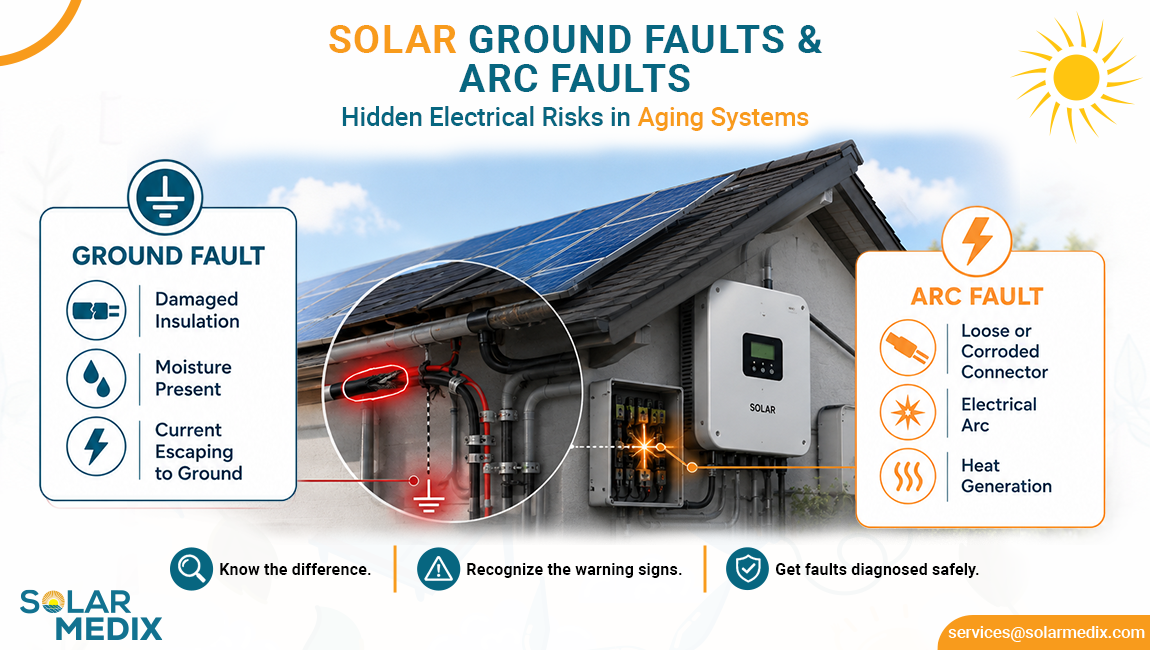
Loose MC4 connectors, poor crimps, worn insulation, corrosion, and rushed workmanship can all create unstable output. This is one of the most serious problems because the array may still run, just badly, while hidden heat builds at one weak point.
- Arc Faults: High risk of localized roof fires.
- Voltage Drops: System underperformance without an error code.
- Red flag: Output swings hard during wind, rain, or hot afternoons.
- Rule: Never open rooftop electrical parts on your own unless you are trained and the system is safely isolated.
6. Potential-Induced Degradation (PID)
PID is a slow electrical loss caused by high voltage differences between the cells and grounded system parts. Over time, ions move where they shouldn’t, which drags down performance across part or all of the array. It’s a bit like a small leak in a tyre. The air doesn’t vanish at once, but the ride keeps getting worse.
- Panels: N-type modules often resist PID better than older p-type designs.
- Builds: Glass-glass modules can offer better long-term protection in harsh conditions.
- System check: Grounding, inverter setup, and site conditions all matter.
- Clue: Output may drop across strings without obvious dirt, cracks, or shade.
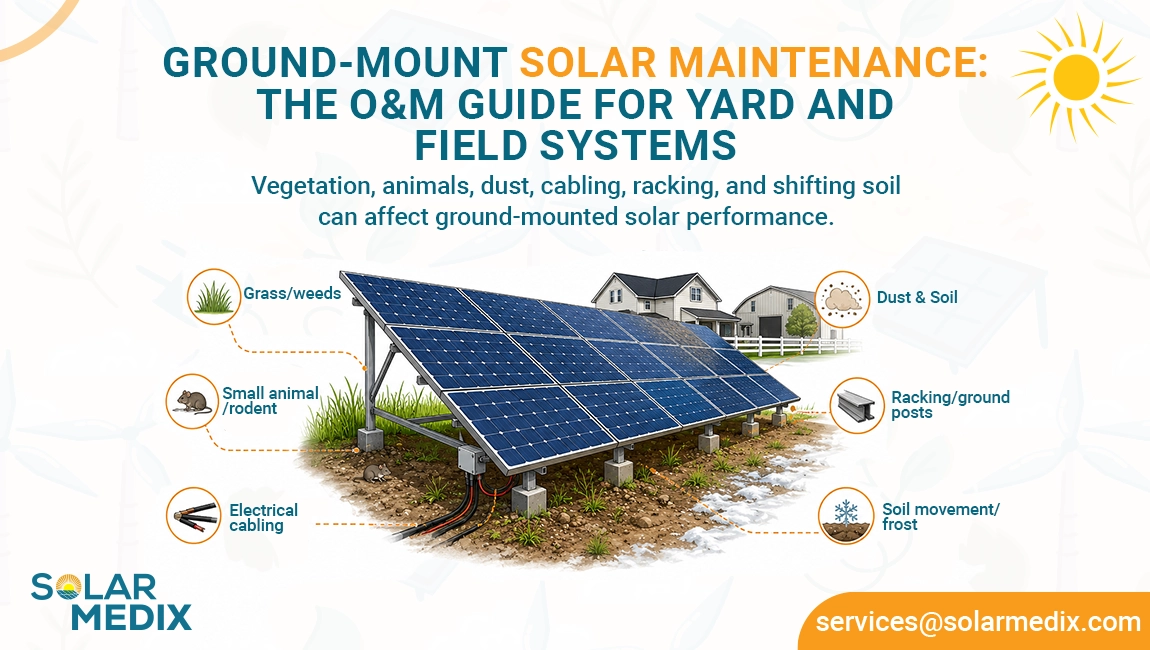
7. Pest Infestations (Birds and Rodents)
Birds love the sheltered space under panels. Squirrels and rodents do too. Once they move in, nesting material blocks airflow, droppings pile up, and wires become chew toys. One homeowner may think they have an inverter issue, then a technician lifts a panel and finds a whole mini neighbourhood underneath.
- Critter Guards: Heavy-duty wire mesh installed around the perimeter.
- Wire Splicing: Replacing chewed insulation layers immediately.
- Watch for: Scratching sounds, nests near the array, sudden ground faults, or repeat outages.
- Prevention: Act early. A small nest can become a repair bill surprisingly fast.
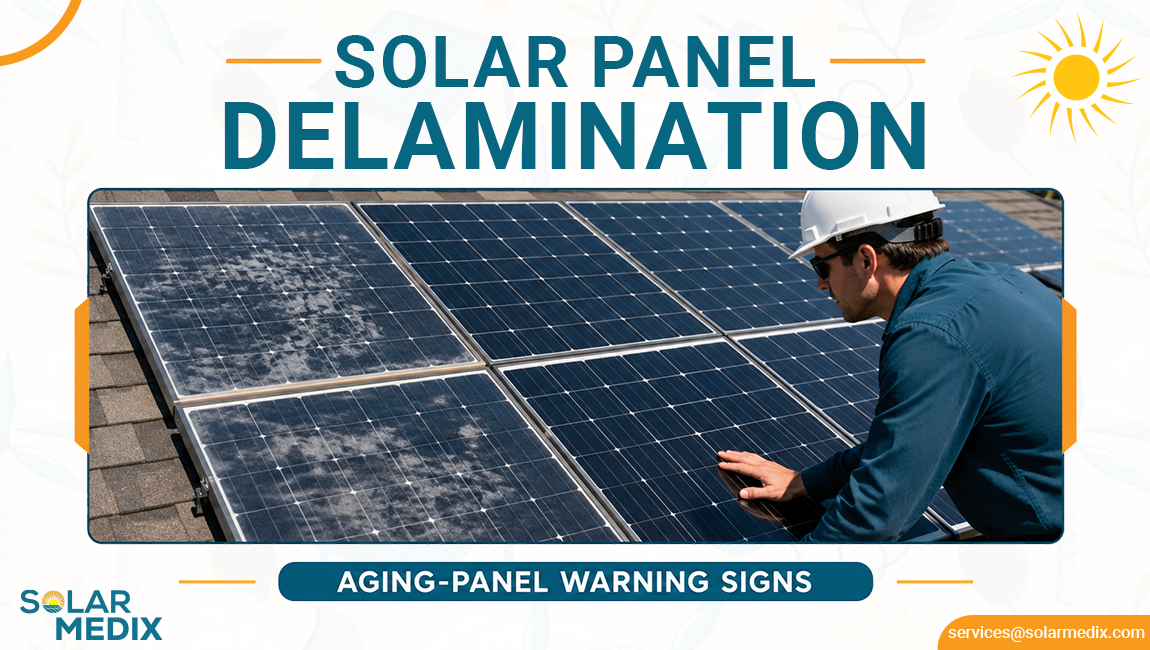
8. Internal Corrosion and Delamination
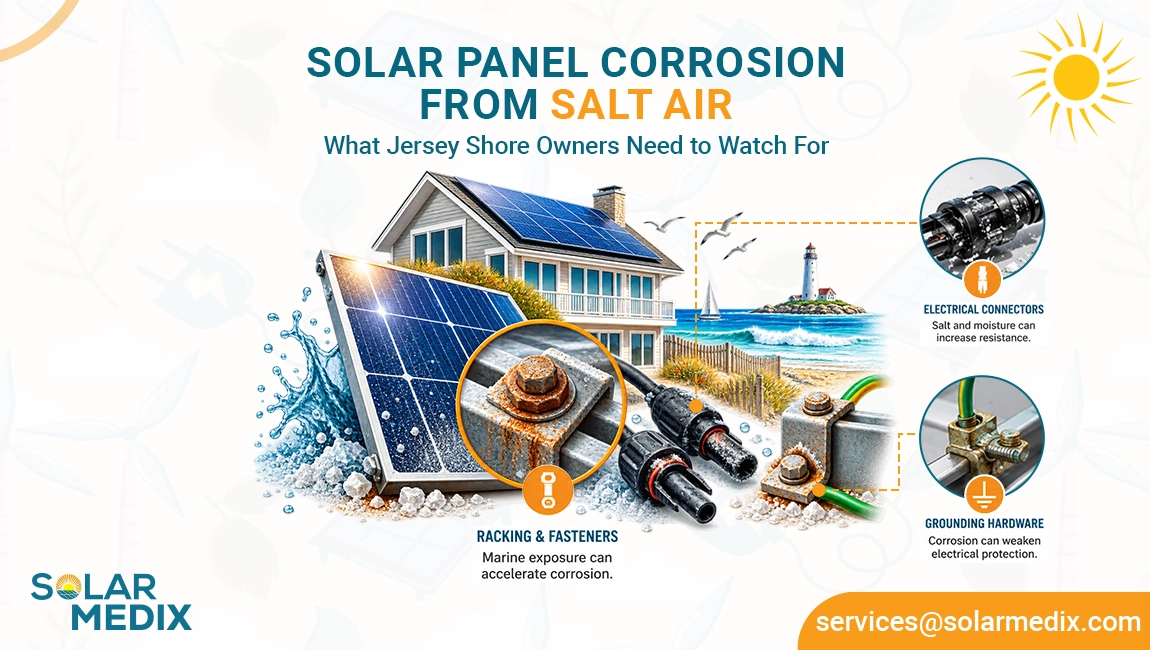
Panels are built to live outdoors, but water always looks for a way in. If seals fail or a module has a weak bond between layers, moisture can slip inside and start corrosion. Delamination happens when the panel’s internal layers begin to separate, which can create haze, bubbles, and heat stress.
- Check: Look for cloudy patches, browning, bubbling backsheet, or moisture near the junction box.
- Ask: Review product warranty terms if the panel is still within coverage.
- Cause: Age, bad sealing, salty air, freeze-thaw cycles, and factory defects can all play a part.
- Result: Output falls and the panel may become unsafe to leave in service.
9. Incorrect Tilt, Orientation, and Roof Mismatch
Sometimes the issue is not a broken part at all. The system was just placed at a poor angle, aimed the wrong way, or fitted onto a roof plane that never had a fair shot. That means lower yearly production and a longer payback period, even when every panel still works.
- New Jersey: Fixed systems often perform well around 30 to 35 degrees.
- New York: Similar ranges often work well, usually near 30 to 35 degrees.
- Texas: Lower ranges such as 20 to 30 degrees can suit many sites.
- Massachusetts: Around 30 to 35 degrees is common for fixed arrays.
- Note: Exact angles change with roof shape, shade, and your energy goals.
10. Thermal Fade (The Overheating Problem)
Solar panels need sunlight, but too much heat still hurts output. A common rule of thumb is about a 0.4% drop in power for each degree above 25 degrees Celsius. So yes, a bright summer day can still bring weaker output if the panels get too hot and airflow is poor.
- Cause: Dark roofs, low airflow, trapped heat, and weak panel spacing.
- Sign: Production dips in the hottest hours even when the sky is clear.
- Help: Check mounting height, airflow gap, and panel condition during a service visit.
- Reality: Heat loss is normal to a point. Large losses are not.
If your system is showing warning signs, read our latest blog, “What to Expect from a Solar Consultation?” to see how a professional visit can uncover issues early and guide the right next step.
The 3-Step Emergency Checklist Before You Call a Pro
When solar output drops, panic usually makes things worse. You don’t need to guess. You need a calm first look at the system data, the shutdown points, and the reset process.
This quick checklist helps you rule out the simple stuff before you book service. It won’t fix every fault, but it can save time and help you describe the problem clearly when you call.
Step 1. Audit the App Data
Open the monitoring app and compare today, yesterday, and the same date last week. Look for sudden drops, missing data, one weak string, or a flat production line. If one panel group is off while others look normal, that clue matters.
Step 2. Check the Main Breakers
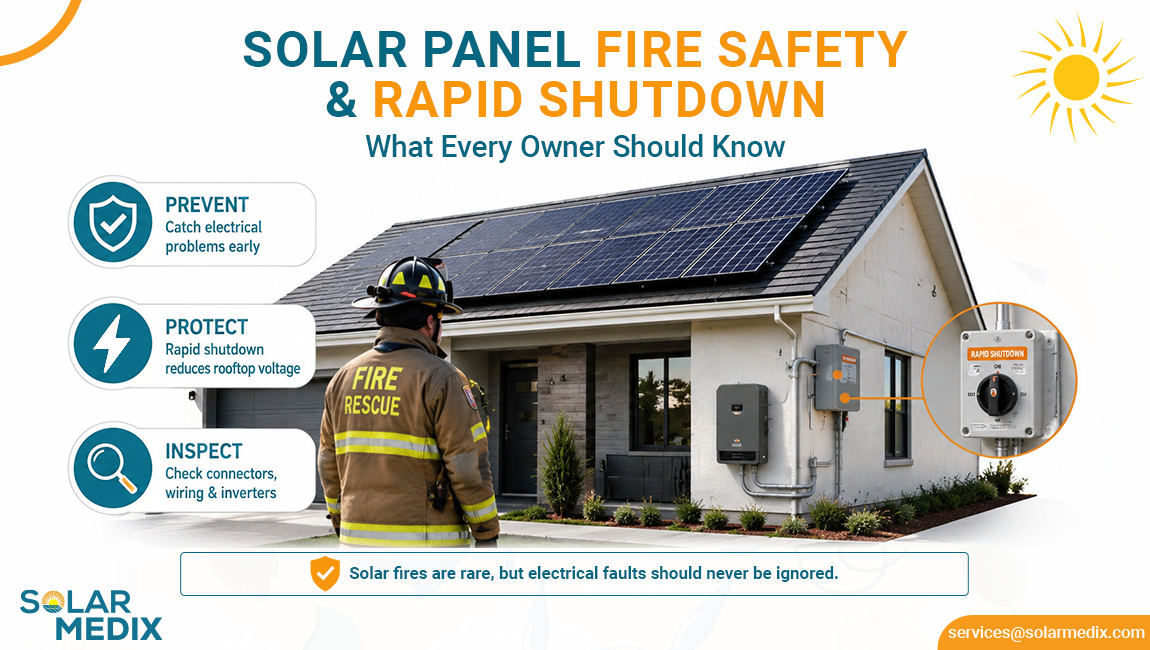
Look at the AC disconnect, main breaker, and any clearly labelled solar shutoff points. Don’t remove covers or touch internal wiring. You’re only checking whether a breaker has tripped or a disconnect has been switched off.
Step 3. Perform a Safe System Reset
If your inverter maker allows a reset, follow the posted shutdown and startup sequence exactly. Usually that means turning off AC and DC in the right order, waiting a few minutes, then restoring power step by step. If you are unsure, stop there and call a technician.
Read our latest blog, Signs Your Home Needs a Residential Solar Expert Visit, to spot early warning signs before small solar issues turn into costly repairs.

Restore Your Solar ROI with Solar Medix Today!
A faulty array doesn’t just lower output. It chips away at the value you expected when you first went solar. Solar Medix offers services that line up with many of the issues above, including monitoring installation and repair, inverter repair, critter solutions, shading help, solar consultation, and panel removal and reinstallation support.
We also lists service coverage in New Jersey, New York, Texas, and Massachusetts, along with phone and email contact options for support. If your system has warning signs, book an inspection now and deal with the fault before it grows teeth.
Frequently Asked Questions
What’s a disadvantage of solar panels?
One disadvantage is that output can drop from shade, dirt, heat, or equipment faults. Solar also needs periodic service if you want steady long-term performance.
What Are the Signs of a Faulty Solar Panel?
Common signs include lower production, warning lights, burnt smells, visible cracks, hot spots, snail trails, and repeated inverter errors. Higher electric bills can also be an early clue.
How Do I Reset a Solar Panel?
You do not reset the panel itself. You usually reset the inverter or follow the system shutdown and startup sequence listed by the equipment maker.
What Can Cause Solar Panels to Stop Working?
The usual causes are inverter failure, tripped breakers, bad wiring, severe dirt buildup, damaged panels, pest damage, corrosion, or a grid disconnection. Sometimes monitoring fails even when the panels still work.