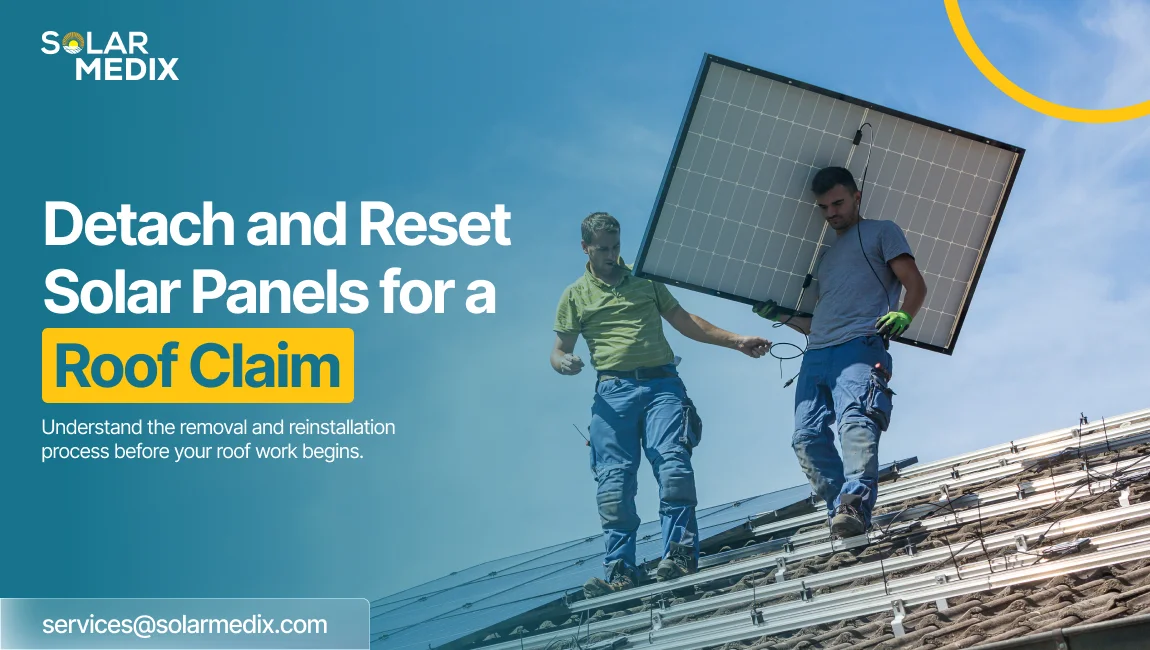
Detach and reset solar panels means a solar technician disconnects and removes your panels so the roof can be repaired or replaced, then reinstalls and tests the system afterward. In an insurance roof claim, it is often listed as its own line item, so ask your adjuster to include it before the roof work starts.
If your roofer or adjuster has just told you the solar panels have to come off, you are in good company, and it is more manageable than it sounds. The key is timing, because detach and reset needs to be written into the claim before anyone is on the roof. Below, we cover what the process involves, how it fits into a roof claim, what homeowners insurance generally covers on solar, and how to document storm damage.
What Is Detach and Reset for Solar Panels?
Detach and reset solar panels, also called solar panel removal and reinstallation, is the temporary removal of your panels and racking so the roof beneath can be repaired or replaced, followed by reinstalling and testing the system once the roof is done. The panels are disconnected and removed, stored safely, the roof work happens on a clear surface, and then the panels go back on and the system is reconnected.
Panels do not come off for every roof job, and work on sections well away from the array may not need it. But when new roofing has to go under the racking, there is no proper way to do it with the panels in place. That is the work our solar panel removal and reinstallation team does for roof claims, and in a claim it often shows up as its own line item, which is why it deserves attention early.
How Detach and Reset Works, Step by Step
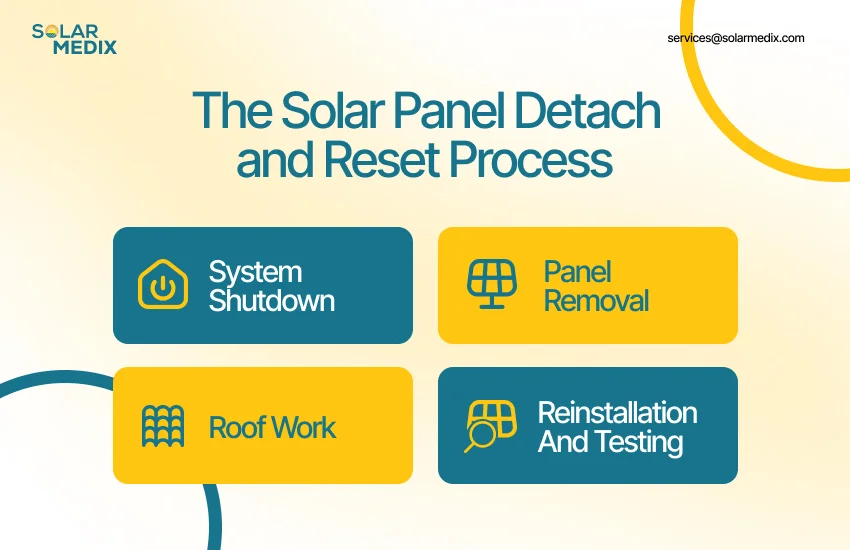
A proper detach and reset follows a set order: the system is shut down and disconnected, the panels and racking come off, the roof is repaired or replaced, and then everything goes back on and is tested. If you are wondering how the panels are handled along the way, there is a closer look at how panels are protected during detach and reset.
Removing the System
The system is powered down and disconnected, then the panels, racking and hardware are removed, with each piece labeled so it goes back where it came from. The panels are stored somewhere safe and dry while the roof is open.
During the Roof Work
The roofers repair or replace the roof on a clear surface. Your system is offline for this stretch, and how long it lasts depends on the roof and the weather, so the roofer and solar company should agree on dates early.
Reinstalling and Testing the System
Once the roof is finished, the racking and panels are reinstalled with each roof attachment properly flashed and sealed, the wiring is reconnected, and the system is tested before it goes back online.
Why a Qualified Solar Company, Not the Roofer, Should Do It
Roofers know roofs, and solar wiring is a different trade. Detaching and resetting an array means safely disconnecting solar circuits, handling panels without cracking them, flashing each attachment correctly, and testing the system afterward. A solar company does that as routine work and documents it, which also helps if a warranty question comes up later. If your system is leased or on a PPA, the lease holder owns the equipment, so get their approval before anyone touches it.
How Detach and Reset Appears in an Insurance Roof Claim
Detach and reset can be requested as a separate line item in the adjuster’s scope when it is necessary for covered roof work. Ask your adjuster to review the solar company’s written estimate before the roof work starts. Whether the cost is covered depends on your policy and the circumstances of the claim.
Ask the Adjuster to Include It Before Work Starts
Ask your adjuster to list removal and reinstallation, often called detach and reset, as a separate line item, and raise it before the roofers are scheduled. Sorting it out early avoids a gap between the new roof going on and your panels coming back.
Get a Written Estimate From the Solar Company
A written detach and reset estimate gives the adjuster something specific to review, and gives you something to compare against the claim scope. If the scope leaves the work out, that estimate is what you bring back to the conversation.
Check Before the Panels Come Off
Ask your adjuster whether the panels can come off before the inspection, and photograph the array first. Removing them too early can raise questions about the claim that are easy to avoid.
Does Homeowners Insurance Cover Solar Panels?
Usually, yes, for rooftop panels. Insurers often treat them as part of the home, so they are typically covered for the same perils as the roof, such as hail, wind, fire and falling trees, while ground-mount arrays may fall under other structures coverage instead. Coverage depends on your policy, so confirm the details with your insurer or agent.
What is usually not covered is normal wear, gradual output loss, manufacturing defects and installation problems. Defects generally fall under the manufacturer’s warranty, and installation issues under the installer’s workmanship warranty. Leased and PPA systems are usually insured by the system owner, so check your contract. And if you have never told your insurer you have solar, do it now, since solar can raise your home’s replacement cost and your coverage limit may need updating.
A home warranty is a service contract and not insurance, so it works differently, and we cover it separately.
How to Document Storm Damage Before Work Starts
Take photos from the ground, save your monitoring data from before and after the storm, and get a professional inspection report. Both the Texas Department of Insurance and New Jersey’s Department of Banking and Insurance advise photographing damage and holding off on permanent repairs until the adjuster has looked at it.
Photos From the Ground
Photograph the array and the roof from the ground, and keep the dates. Never climb up for a better angle, and stay away from any damaged wiring. If you are not sure what you are looking at, this rundown on spotting hail and storm damage shows what to check.
Monitoring Data Before and After
Screenshots from your monitoring app showing production before the storm and after it help show a drop that lines up with the event, which is the kind of evidence an adjuster can use.
A Professional Inspection Report
A solar technician can inspect the system and document cracked glass, bent frames or damaged wiring, and can catch problems you cannot see from the ground, such as a failed microinverter.
Hail in Texas, Nor’easters in New Jersey and New York
Texas homeowners deal with hail that can damage a roof and an array in the same storm, while New Jersey and New York homeowners are more likely to see nor’easters, with high winds, heavy rain and falling limbs. The lesson is the same either way: document first and plan the work before the roofers arrive. For more on getting ready for the next one, there is a guide to storm prep and recovery.
Roof Claim Open and Panels in the Way? Let Solar Medix Handle the Detach and Reset
If your roofer or adjuster says the panels have to come off, contact Solar Medix before the roof work is scheduled. We inspect the system, document what we find, and handle the detach and reset, including repairs and system testing once the new roof is on, so the claim and the roof job stay on track.
Detach and Reset and Roof Claims: Your Questions Answered
What Is Detach and Reset for Solar Panels?
Detach and reset, also called removal and reinstallation, means a solar technician disconnects and removes the panels so the roof can be repaired or replaced, then reinstalls and tests the system afterward. It is often listed as its own line item in a roof claim. Confirm coverage with your insurer.
Who Pays to Remove and Reinstall Solar Panels During an Insurance Roof Replacement?
Detach and reset can be submitted as a separate estimate or line item when it is needed for roof work. Ask your solar company for a written estimate and have your adjuster confirm whether the cost is covered under your policy.
Does Homeowners Insurance Cover Solar Panels?
Rooftop panels are often treated as part of the home, so they are typically covered for the same perils as the roof, such as hail, wind and fire. Coverage depends on your policy, so confirm with your insurer.
Does Insurance Cover Hail Damage to Solar Panels?
Hail is a commonly covered peril, but your deductible applies and the adjuster will need evidence. Photos, monitoring data showing a production drop and a professional inspection report all help.
What Does Homeowners Insurance Usually Not Cover on Solar Panels?
Normal wear, gradual output loss, manufacturing defects and installation problems are usually excluded. Defects generally fall under the manufacturer’s warranty, and installation issues under the installer’s workmanship warranty.
When Should I Book a Solar Company for Detach and Reset?
Before the roof work is scheduled. The panels have to come off before the roofers start and be reinstalled and tested afterward, so get the work and the claim line item sorted early.