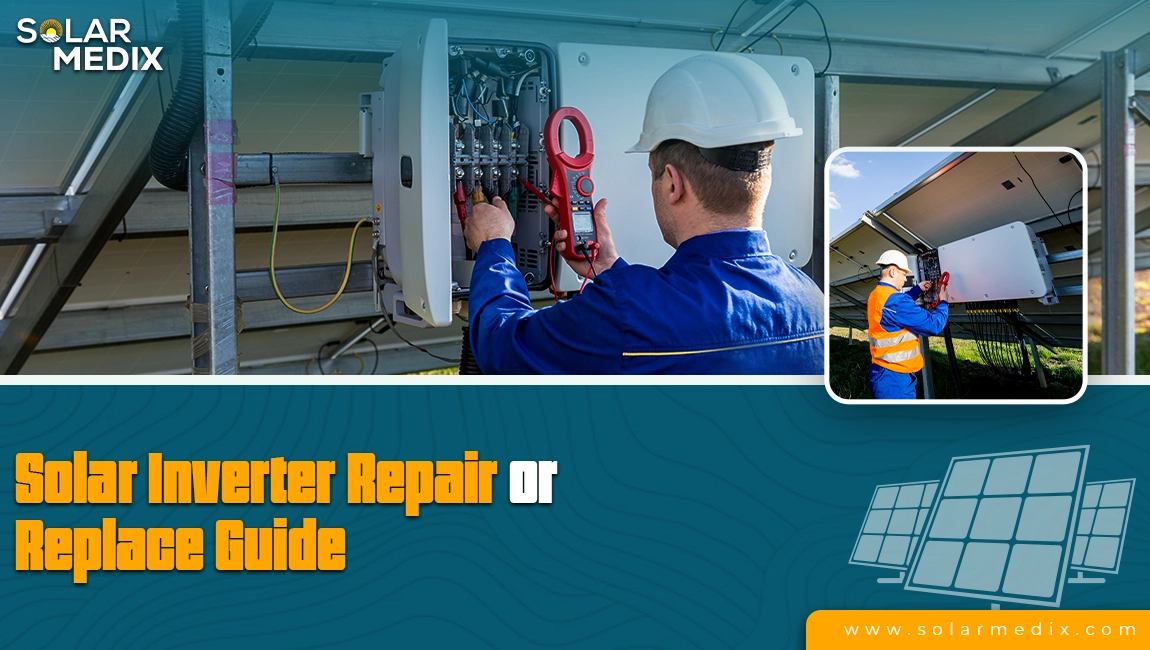
Your solar panels capture the sun, but your inverter does the heavy lifting by converting that raw power into usable electricity. Yet, data across the industry shows that inverters account for roughly 80% of all solar system failures over a ten-year cycle. But when your monitoring application starts flashing error warnings or your clean energy production hits a wall, you are forced to make a critical financial decision. Should you put money into fixing a degraded unit, or is it time to pull the plug and upgrade to a brand-new setup?
| Quick Answer
Minor inverter issues like loose wiring, grid communication drops, and simple firmware glitches are inexpensive and should be repaired. However, if your string inverter is over 10 to 12 years old and suffers from core hardware failures—such as a blown capacitor or burnt internal circuitry—a total replacement is the smarter, more cost-effective choice. Upgrading gives you a fresh manufacturer’s warranty and immediately restores your daily solar generation. |
To figure out where your own breakdown fits, let us walk through how long these devices are designed to last in real‑world field conditions.
Typical Lifespan of Solar Inverters
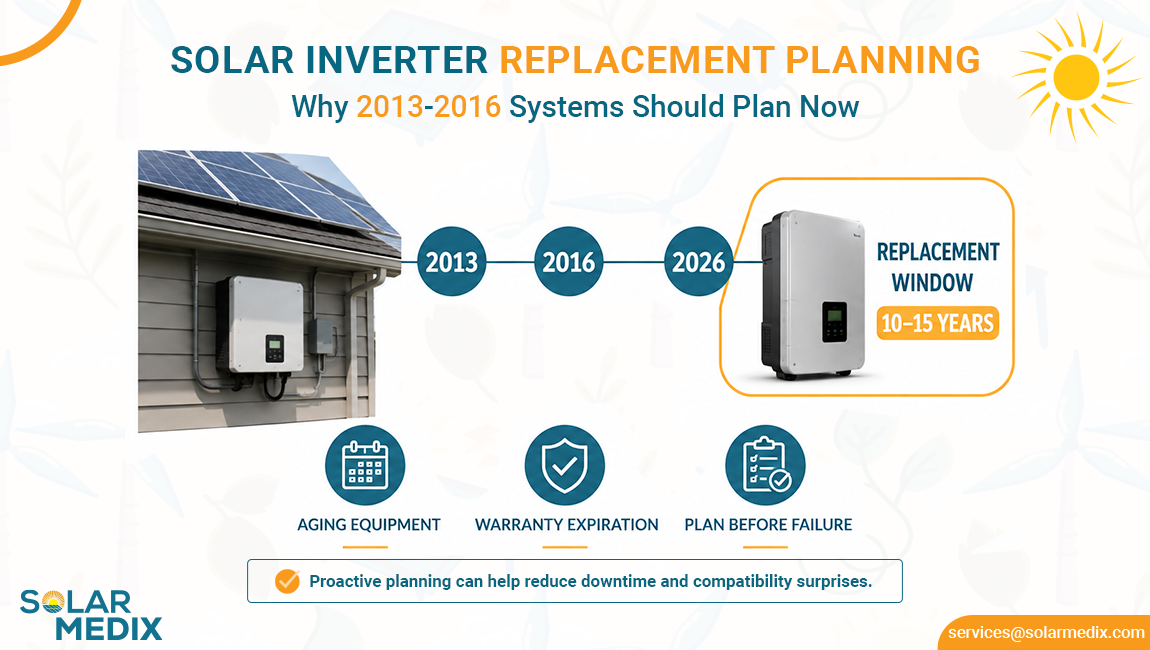
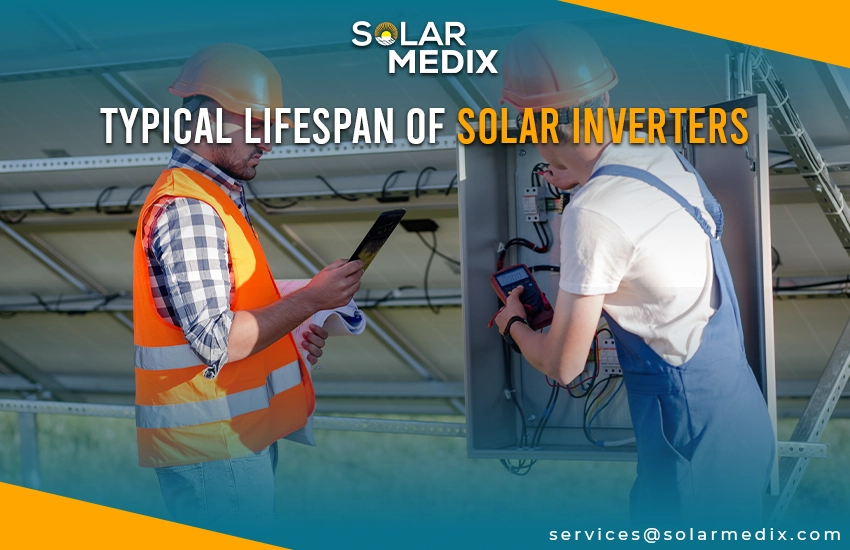
Most string inverters in residential and light commercial setups last around 10 to 15 years before wear and tear catches up. They face constant thermal cycling as they warm in the day and cool at night, and that slow strain ages sensitive parts like capacitors.
By contrast, microinverters mounted behind each panel are often designed for 20 to 25 years, and their warranties frequently match panel life. They work at lower individual stress levels, so they tend to keep going longer, although you have more units in the system overall.
Poor placement cuts into those numbers fast. An inverter mounted in direct afternoon sun, inside a cramped, unventilated closet, or above a dryer vent will run hotter, which dries out electrolytic capacitors and shortens inverter lifespan. Even a box that looked fine on day one can lose years of life if it bakes in trapped heat.
On the other hand, a shaded, well‑ventilated wall can keep internal temperatures more stable. That simple choice during installation often means the difference between one replacement during system life and multiple expensive solar inverter repair events.
Also Read: The Role of Solar O&M in Extending System Lifespan
Common Signs of Solar Inverter Problems
Most solar systems do not fail overnight. Your inverter usually sends out clear warning signs before production drops for good. If you spot these early, you can protect both your energy output and repair budget.
Here are the signs you should watch closely:
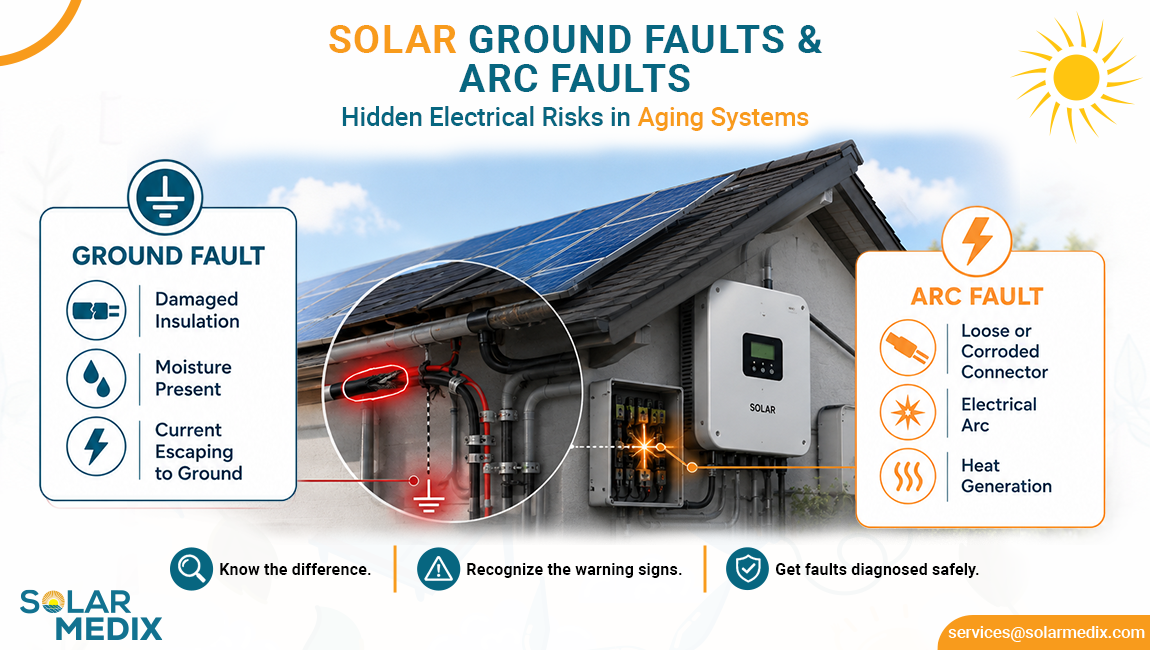
- Warning Lights and Error Codes: A steady green light usually means normal operation, while yellow or red lights point to trouble. Fault codes such as “Ground Fault” or “Isolation Error” are your cue to call a trained solar technician for a proper check.
- Sudden Drops in Energy Production: When your monitoring app shows a big dip on a clear, sunny day, the inverter may have shut down a string or even the whole system.
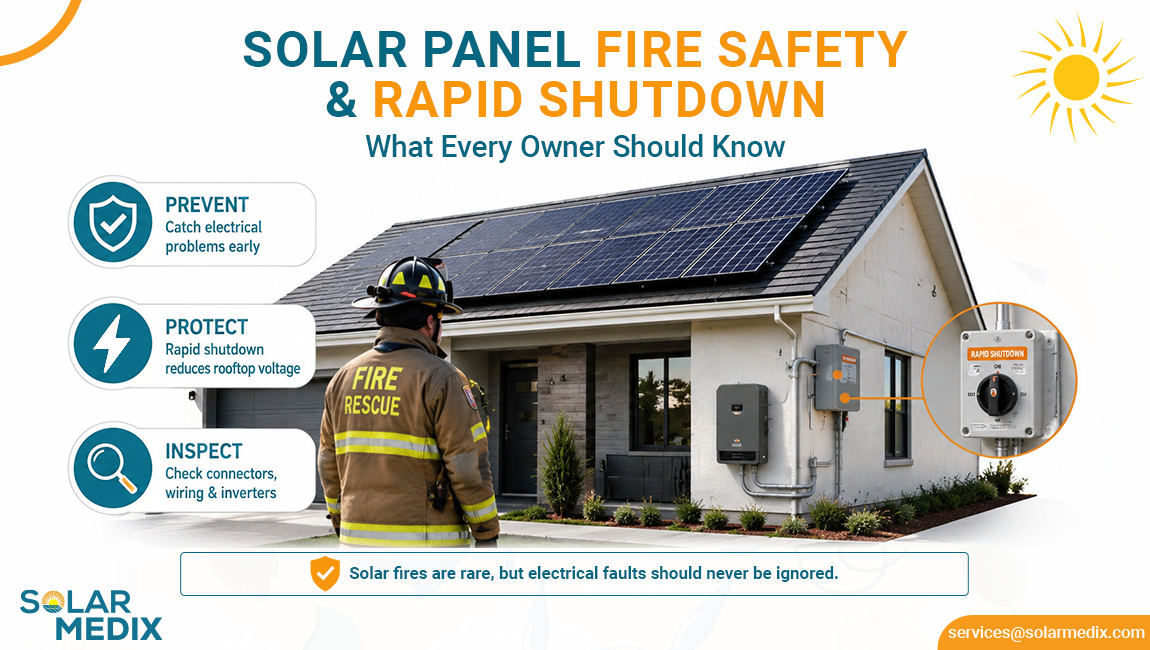
- Strange Sounds or Burning Smell: Loud humming, grinding fan noise, or a sharp burnt‑plastic smell suggest overheating or internal damage and should never be ignored.
- Repeated Shutdowns or “Offline” Status: Constant restarts, or a portal that often shows “No Data” or “Device Offline,” can signal deeper grid, hardware, or communication faults that need expert diagnosis.
Step-By-Step Solar Inverter Troubleshooting Guide
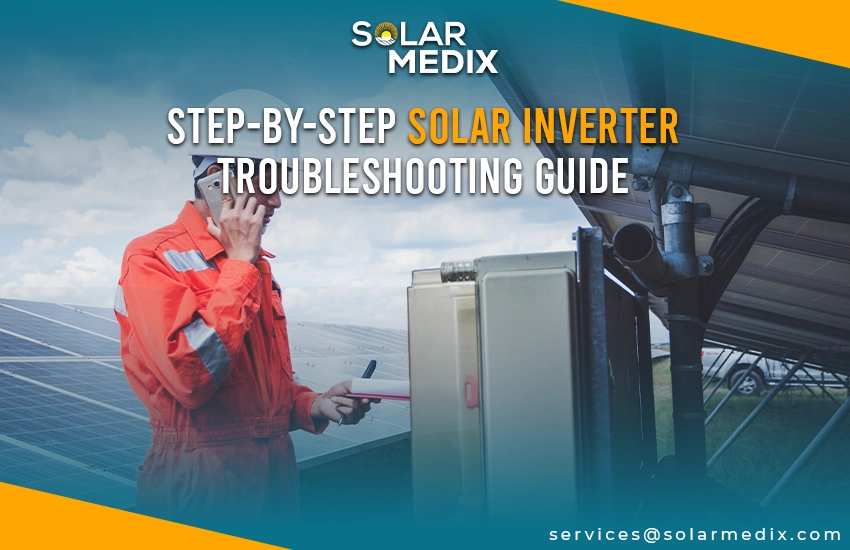
Before rushing to call a field technician, you can run through this basic operational checklist to see if the issue is a temporary glitch or a permanent hardware failure:
Step 1: Perform Basic Safety Checks
Examine the exterior casing of your unit. Look for any visible signs of physical damage, water entry, or severe insect nesting around the ventilation grates. Never attempt to open the main physical enclosure or touch bare internal wires yourself—the DC lines coming down from your roof carry high, life-threatening currents even when the main home power is completely turned off.
Step 2: Inspect the Display or Monitoring App
Check your monitoring app’s log history. Did your solar production vanish all at once, or has it been gradually fading over several weeks? Write down any alphanumeric error codes shown on the display, as this tells repair crews exactly which internal circuit board is acting up.
Also Read: Solar Power Usage and Solar Panel Monitoring System
Step 3: Check Power Connections
Walk over to your main electrical service panel. Make sure that the dedicated breaker labeled “Solar PV” or “Inverter” is flipped entirely to the “ON” position. Next, verify that your external AC disconnect switch (the safety lever mounted near your utility meter) is firmly closed.
Step 4: Examine Environmental Factors
Look closely at where your inverter is mounted. Has a nearby bush grown over the unit and completely blocked its airflow? Is a clogged roof gutter spilling rainwater directly onto the electrical conduit pipes? Clearing away physical blockages and dropping ambient temperatures can instantly resolve persistent overheating faults.
Step 5: Restart the Inverter
A clean reboot can clear out frozen internal firmware. Flip your solar AC breaker to the “OFF” position, then turn off the physical DC switch located directly underneath your inverter casing. Leave the entire system completely dark for five full minutes so internal capacitors can drain. Switch the units back on in reverse order and watch the display light transitions.
Step 6: Compare Current vs. Historical Performance
Pull up your solar energy records from the previous year. If your system is generating noticeably fewer kilowatt-hours (kWh) during an identical, sunny month, your inverter components are likely degrading under thermal stress.
Common Solar Inverter Issues And Their Causes
When an inverter starts acting up, there is almost always a clear reason behind it. Once you know the usual troublemakers, it becomes much easier to stop repeat failures and protect your production.
Here is what usually goes wrong:
- Overheating and poor airflow: When an inverter sits in a cramped, hot, or closed‑off space, the inside runs hotter than it should. Over time, sensitive parts cook, so the unit cuts power or shuts down to protect itself.
- Grid swings and unstable voltage: Sudden changes in grid voltage or frequency push the inverter outside its safe window. To avoid damage, it disconnects, which shows up as random errors and lost production on clear sunny days.
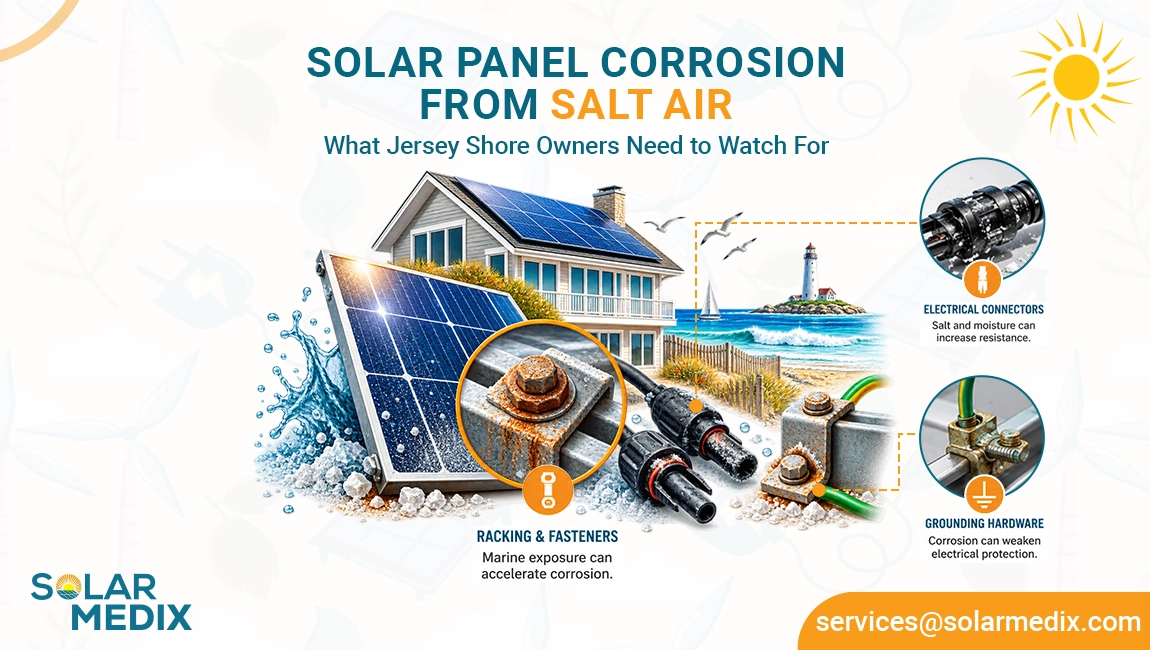
- Moisture and corrosion inside the box: Weak sealing, cracked plastic, or sloppy conduit work lets rain and damp air creep in. Once moisture reaches metal terminals and boards, rust and ground faults follow very quickly.
- Aging parts, especially capacitors: After years of heat, electrolytic capacitors dry out and lose strength. When they fade, the inverter struggles to turn DC into clean AC and eventually fails completely.
When a Solar Inverter Can Be Repaired
There are plenty of situations where solar inverter repair is the smart move. In these cases, we treat the unit like a hardworking truck that needs a new belt and fresh fluids, not a full replacement.
Here is when repair usually makes strong sense.
- Act When Under Warranty: If the unit still sits inside the manufacturer’s warranty, repair or replacement parts are often covered.
- Target External Components: Faults limited to fans, wiring harnesses, fuses, or simple relays are good repair candidates.
- Patch Firmware And Software: Many modern inverters bounce back after a clean firmware update and grid‑code patch.
- Call the Solar Medix Maintenance Crew: Our Solar Medix maintenance crew can often clear faults, correct settings, and restore solar inverter performance in a single visit.
Signs It May Be Time to Replace the Inverter
Sometimes, putting money into repairs is simply throwing good money after bad. You should opt for a full replacement if:
- The unit is 10 to 15 years old: If your centralized inverter is pushing past its design life, fixing one broken internal board will not stop the neighboring aged circuits from failing next.
- The core circuit board or IGBT has fried: If a major lightning surge or severe overheating event chars your main internal circuit architecture, the cost of specialized manual labor and replacement parts will easily approach the price of a modern system upgrade.
- Your original installer went out of business and parts are dead: If your system uses an obsolete, discontinued brand, finding matching replacement parts becomes nearly impossible, making a universal system retrofit mandatory.

Ready to Restore Your Solar Power? Let Solar Medix Handle It
A failing inverter does not have to turn into a long-term financial disaster. Sometimes the solution is a simple repair, such as correcting a loose connection or shifting the unit to improve baseline passive airflow. Other times, upgrading to a modern, high-efficiency replacement is the smarter move to protect your energy production and lower your utility bills. When your inverter starts flashing error codes, getting a professional evaluation makes all the difference.
That is exactly where Solar Medix comes in. From comprehensive inverter diagnostics and precision troubleshooting to full structural replacements and array optimization, we help homeowners restore absolute confidence in their solar systems. We proudly service residential and commercial systems across New Jersey, New York, Texas, and Massachusetts.
Don’t let a faulty inverter drain your solar profits. Schedule an Advanced Inverter Diagnostic Checkup with our certified field technicians today.
FAQ
How Do You Troubleshoot a Solar Inverter?
Start with safe visual checks, then read the display or app for error codes. Verify breakers and disconnects, look for heat or vent issues, restart correctly, and compare current output against your historic production.
What Are the Common Faults in Inverters?
Frequent faults include grid‑sync errors, ground faults, overheating, fan failures, and DC overvoltage events. Many trace back to high heat, poor installation, or aging capacitors that can no longer handle daily thermal stress.
How to Diagnose a Faulty Inverter?
Watch warning lights, listen for new noises, and check for burnt smells. Combine those clues with monitoring data and error logs, then have a qualified technician open the unit and run full electrical tests on internal boards.
What Is the Most Common Cause for an Inverter to Stop Working?
The most common root causes are overheating and age‑related component failure, especially in string inverters past 10 years. Once key capacitors or power modules break down, the device can no longer safely convert DC to AC.