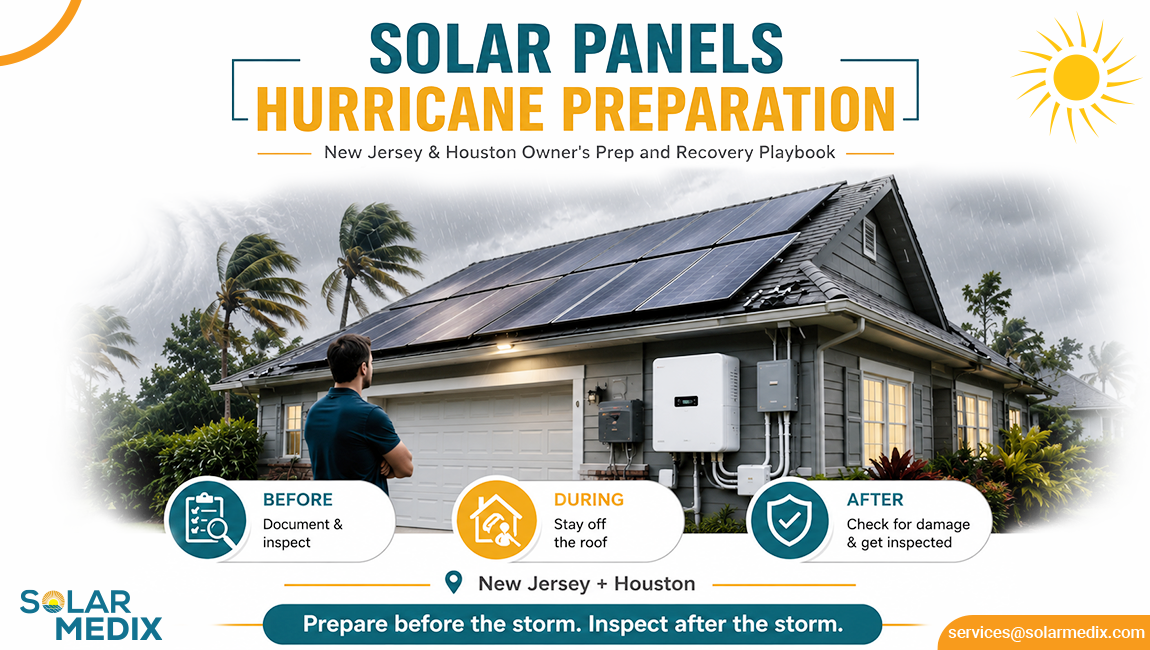
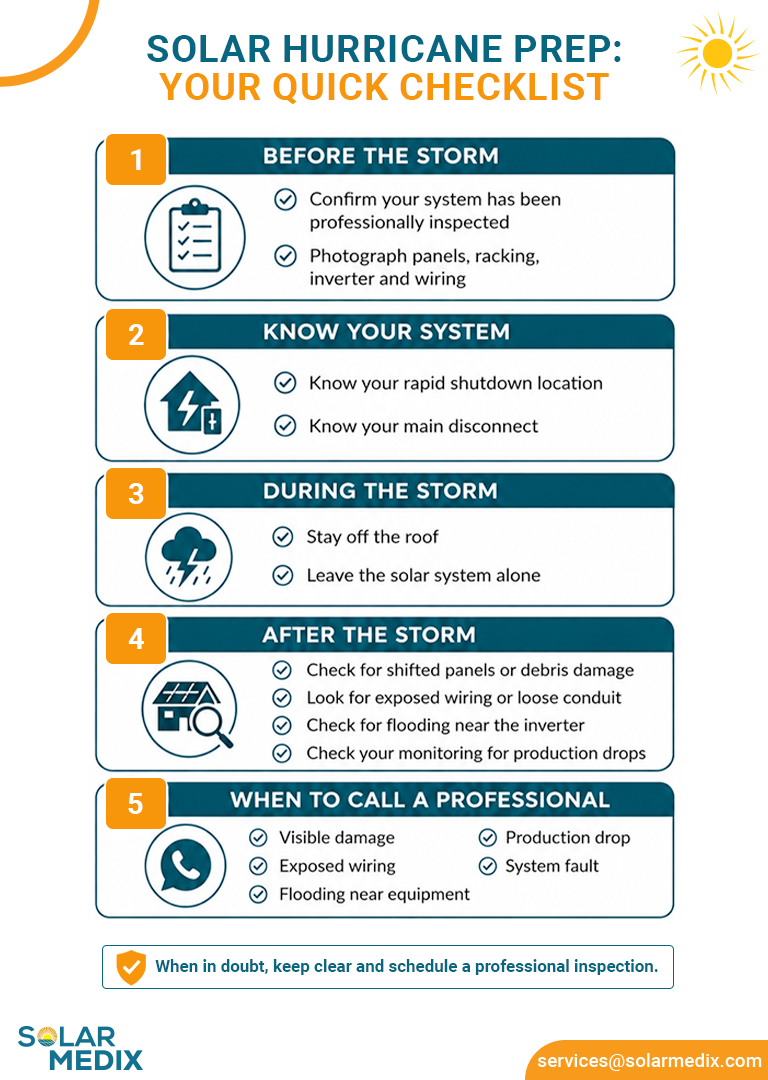
Solar panels hurricane preparation means documenting the system, checking its mounting and safety controls before a storm, leaving it alone during high winds, and arranging a professional inspection afterward if damage is suspected. Before a storm, photograph the system, confirm it has been recently inspected, and know the location of the rapid shutdown and main disconnect. During the storm, stay off the roof and leave the system alone. Afterward, check for visible damage from the ground, look for flooding near the inverter, and check system production before assuming everything is fine.
Hurricane season runs June through November, with Atlantic activity typically peaking from mid-August through October. NOAA’s most recent 2026 outlook points to a below-normal season overall, but that does not mean New Jersey or Houston systems are immune to storm damage. This playbook covers what matters before, during, and after a hurricane, including documentation, safety, visible damage checks, and professional post-storm inspections. Systems already carrying wear from a long, hot summer are also worth an extra look, particularly when summer heat is affecting solar output.
Solar Panels Hurricane Preparation: What to Do Before the Storm Arrives
Solar panel hurricane preparation comes down to two things before a storm arrives: confirming the system is ready and having the paperwork in place if it isn’t. Ready.gov’s hurricane preparedness guidance applies to your home generally, and the same before-during-after mindset applies specifically to your solar system.
Confirm Your System Is Storm-Ready
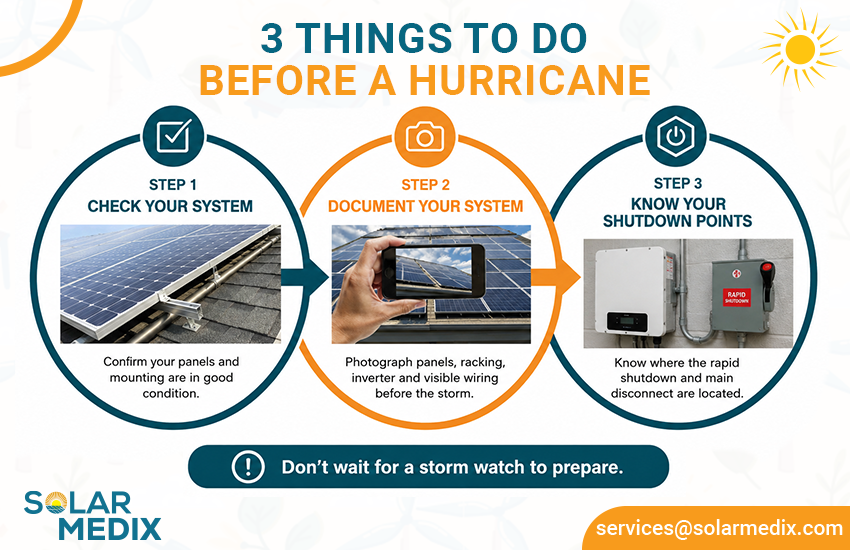
Panels and racking are engineered to withstand high winds well beyond typical hurricane-force gusts, but that rating depends on the mounting having been installed correctly and maintained since. Wind uplift, the force that can loosen or lift panels and racking during sustained high winds, is far more likely on a system with a mounting issue that was never caught than on one that’s been recently inspected. If it’s been more than a year since your last professional check, or you’ve never had one, that’s worth scheduling before storm season peaks rather than during an active watch.
Document Everything Before Weather Moves In
Insurance documentation for solar is far more useful when collected before damage happens than when reconstructed after the fact. Photograph your panels, racking, inverter, and any visible wiring from multiple angles, and keep those photos somewhere accessible outside the house, such as cloud storage or email. If a claim becomes necessary later, dated before photos are the clearest way to establish what changed.
Is It Safe to Use My Solar System During and Right After a Storm?
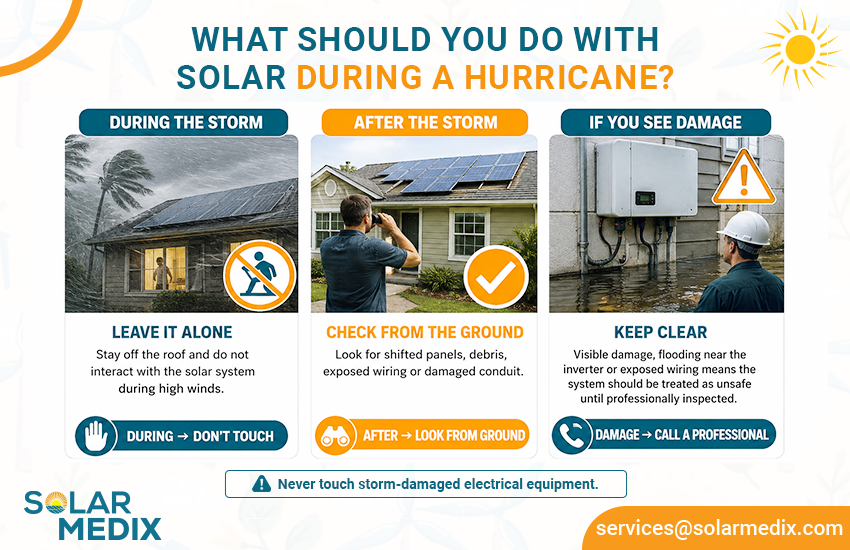
During a storm, leave your solar system exactly as it is and stay off the roof, since there’s no safe or useful reason to be up there in high winds. Rapid shutdown, the code-required feature that de-energizes rooftop wiring, activates automatically when the system or the grid goes down, so there’s no post-storm shutdown procedure homeowners need to perform manually. Once the storm passes, the caution shifts from wind to water and wiring: if there’s visible damage, standing water near the inverter, or exposed wiring, keep clear and treat the system as unsafe until a professional confirms otherwise, even if panels still appear to be producing power.
What to Check on Your Solar System After the Storm Passes
A useful post-storm check has two parts: what you can safely see from the ground, and what needs a monitoring app or a professional to confirm. Neither substitutes for the other.
Start With a Ground-Level Visual Check
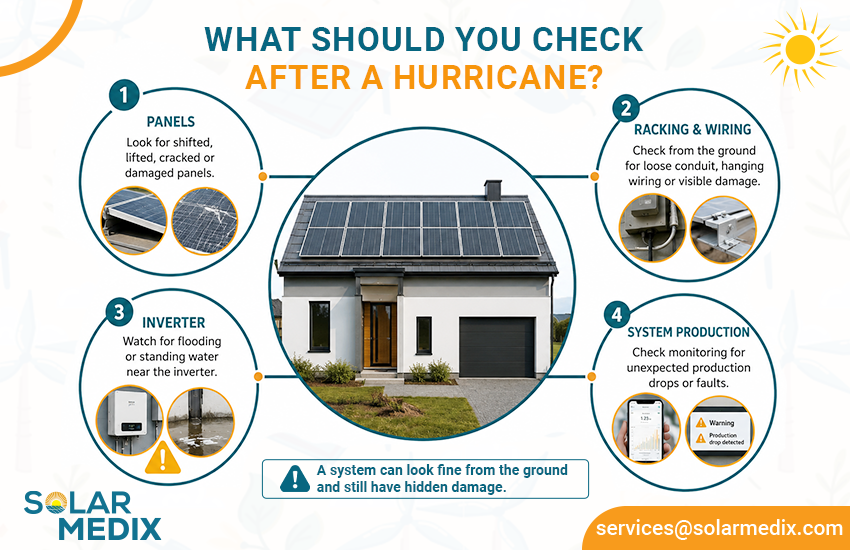
From the ground, look for panels that appear shifted, lifted, or misaligned, debris impact on the array, and any conduit or wiring that’s come loose or is hanging where it shouldn’t be. Debris impact is one of the more common sources of hurricane-related damage in both New Jersey and the Houston area, and it isn’t always obvious unless you’re specifically looking for cracked glass or dented framing. Storm damage is not the only cause of trouble, so solar system failure symptoms are also worth knowing when production or system behaviour changes unexpectedly.
Watch for Flooding Near the Inverter
A flooded inverter is a serious safety issue, not just a performance one, since inverters house exposed electrical components that were never designed to sit in standing water. If there’s been any flooding near ground-level equipment, don’t touch it and don’t try to restart anything. Heavy rain can also drive water where it shouldn’t be able to reach, so it’s worth checking our guide on whether solar panels can cause roof leaks if you notice any interior water intrusion after a storm. Either way, this is a professional inspection before power, not after.
Will Insurance Cover Hurricane Damage to My Solar Panels?
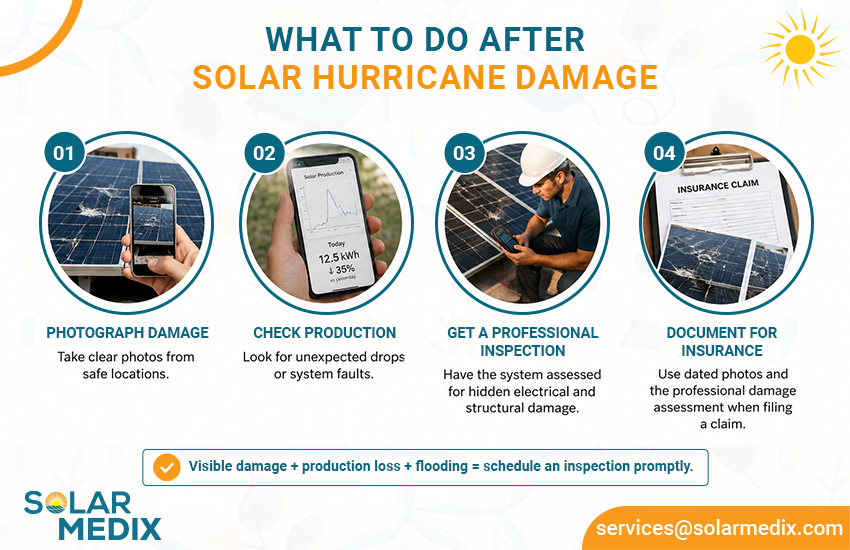
Yes, rooftop solar is typically covered under a standard homeowner’s policy for wind and storm events, though coverage specifics vary by insurer and by state. If you’re dealing with solar hurricane damage, what to do next usually starts with your documentation: dated, annotated photos from before the storm, paired with a professional damage assessment afterward, give an insurer what they need to process a claim quickly. Confirm the specifics of wind and named-storm coverage with your own insurer, since policies and deductibles for named storms can differ meaningfully between New Jersey and Texas.
When Should You Schedule a Solar System After-Storm Inspection?
As soon as possible after any storm that produced visible damage, a production drop, or flooding near your equipment, a professional inspection should follow within days, not weeks. Water intrusion and compromised wiring tend to get worse with time rather than better, and an early inspection both protects your safety and strengthens any insurance claim you may need to file. This applies whether the storm was a direct hurricane landfall or a tropical system that passed through without making headlines, since wind and debris damage don’t require a named storm to reach your roof. It also helps to know the signs that indicate your solar panels need immediate repair so potential problems can be flagged before the next scheduled visit.
Protect Your Solar Panels Before the Next Tropical Storm
Whether you’re on the Jersey Shore or in the Houston area, the systems that come through hurricane season cleanest are usually the ones that were already in good shape before the first watch was issued. Solar Medix handles both sides of this playbook: pre-season inspections that support solar panels’ hurricane preparation by catching mounting and wiring issues before wind ever tests them, and post-storm assessments that document damage properly for insurance while getting your system safely back online. If your system hasn’t had a professional look this season, or you’re dealing with storm damage right now, that’s the call worth making before the next system forms.
Hurricane Prep for Solar FAQs
How do I prepare my solar system for a hurricane?
Most preparation is documentation and safety, not physical change: confirm your system is professionally mounted and recently inspected, photograph its pre-storm condition, know where your rapid shutdown and disconnect are, and avoid climbing on the roof as weather approaches. Panels are engineered for high winds, so the priority is readiness, not last-minute alterations.
Is it safe to use my solar system during and after a storm?
During a storm, leave the system as-is and stay off the roof. Afterward, if there’s visible damage, flooding near the inverter, or exposed wiring, keep clear and have it professionally inspected before relying on it, since storm-damaged electrical components can be a shock or fire hazard even if the system appears to work.
What should I check on my solar panels after a hurricane?
Look, from the ground, for shifted or lifted panels, debris impact, and damaged conduit, then check your monitoring for a production drop. A lot of storm damage, including microcracks, loosened mounts, and water intrusion, isn’t visible from below, so a post-storm inspection is the reliable way to confirm the system is safe and fully producing.
Will insurance cover hurricane damage to my solar panels?
Rooftop solar is often covered under a homeowner’s policy for wind and storm events, though coverage varies. Good documentation is decisive: dated, annotated inspection photos and a professional damage report give your insurer what they need. Always confirm the specifics with your insurer.
How soon after a storm should I get my system inspected?
Promptly, especially if you see damage, notice a production drop, or had flooding near equipment. Water intrusion and compromised wiring worsen over time and raise safety risks, so an early inspection both protects you and strengthens any insurance claim.