Operational risks stemming from poor commercial solar maintenance primarily include massive revenue loss, physical safety hazards, and the premature death of expensive hardware. When systems are neglected, small issues like loose wiring or dust accumulation transform into fire risks or total system failures. It voids manufacturer warranties.
Business owners face significant financial exposure if they lack a proactive strategy to address these avoidable technical glitches. You may think ignoring maintenance saves money, but it leads to energy losses of up to 25%.
Protecting your investment requires more than just a glance at the utility bill. Reliable performance depends on technical oversight. It identifies thermal anomalies or communication errors before they stop energy production entirely. Failure to maintain these assets leads to an unpredictable energy supply, which complicates corporate budgeting and long-term financial forecasting.
What “Poor Solar Maintenance” Actually Means
Many facility managers believe the lights are on. So, the solar panels are working perfectly. This assumption is dangerous. Photovoltaic systems often fail silently or degrade so slowly. The loss remains unnoticed for months. Poor maintenance is the absence of a structured plan to verify that every component, from the silicon cells to the mounting hardware, is functioning within its intended specifications.
True neglect looks like a system that hasn’t been touched since the day the installers left the site. It involves a “reactive-only” mindset where technicians are only summoned after a total blackout occurs.
- No performance monitoring
- Ignored system alerts
- Infrequent inspections
- No thermal/IR inspections
- Inverter issues left unchecked
- Wiring and connections not evaluated
- No cleaning schedule
- No professional O&M partner
7 Risks of Not Maintaining Commercial Solar
Ignoring your solar array invites a host of operational headaches. It can cripple a company’s sustainability goals. Each of these risks compounds over time. Thus leading to a situation where the cost of neglect far outweighs the price of a service contract.
Risk #1 — Hidden Energy Loss That Eats Into ROI
Energy production drops due to invisible factors. For example, PID (Potential Induced Degradation) or simple soiling. This slow bleed of power means you are paying for a system that isn’t paying you back.
- Soiling blocks sunlight.
- Internal resistance increases.
- ROI timelines stretch longer.
Risk #2 — Unexpected System Downtime
Without constant oversight, an inverter might trip. It stays offline for weeks without anyone noticing. This sudden halt in green energy production forces the building back onto the expensive local grid.
- Production stops completely.
- Grid fees spike instantly.
- Business operations may suffer.
Risk #3 — Warranty Claims Getting Denied
Manufacturers typically require proof of regular upkeep to honor their 25-year performance guarantees. If you can’t produce maintenance logs, you might be stuck paying full price for replacement parts.
- Records must be kept.
- Negligence voids legal coverage.
- Owners bear the costs.
Risk #4 — Safety Hazards on Commercial Properties
Thermal events are the most frightening outcome of poor upkeep. Loose electrical connections can arc. It creates intense heat that might lead to a rooftop fire.
- Arc faults cause fires.
- Personnel safety is threatened.
- Liability insurance may spike.
Risk #5 — Accelerated Equipment Degradation
Harsh weather and heat cycles take a toll on hardware. Systems that aren’t inspected frequently see their components wear out years before they should.
- Plastic components become brittle.
- Cells crack under stress.
- System value drops fast.
Risk #6 — No Data = No Business Visibility
When monitoring software is ignored, leadership loses the ability to report on ESG goals or energy savings. You cannot manage what you do not measure.
- Reporting becomes inaccurate.
- Forecasting is just guesswork.
- Stakeholders lose confidence.
Risk #7 — Small Issues Turning Into Expensive Repairs
A tiny crack in a module or a clogged fan in an inverter is cheap to fix today. Leaving these problems alone ensures they will eventually cause a catastrophic failure.
- Minor fixes save thousands.
- Emergency labor is expensive.
- Collateral damage occurs often.
How Professional Commercial Solar Maintenance Reduces These Risks
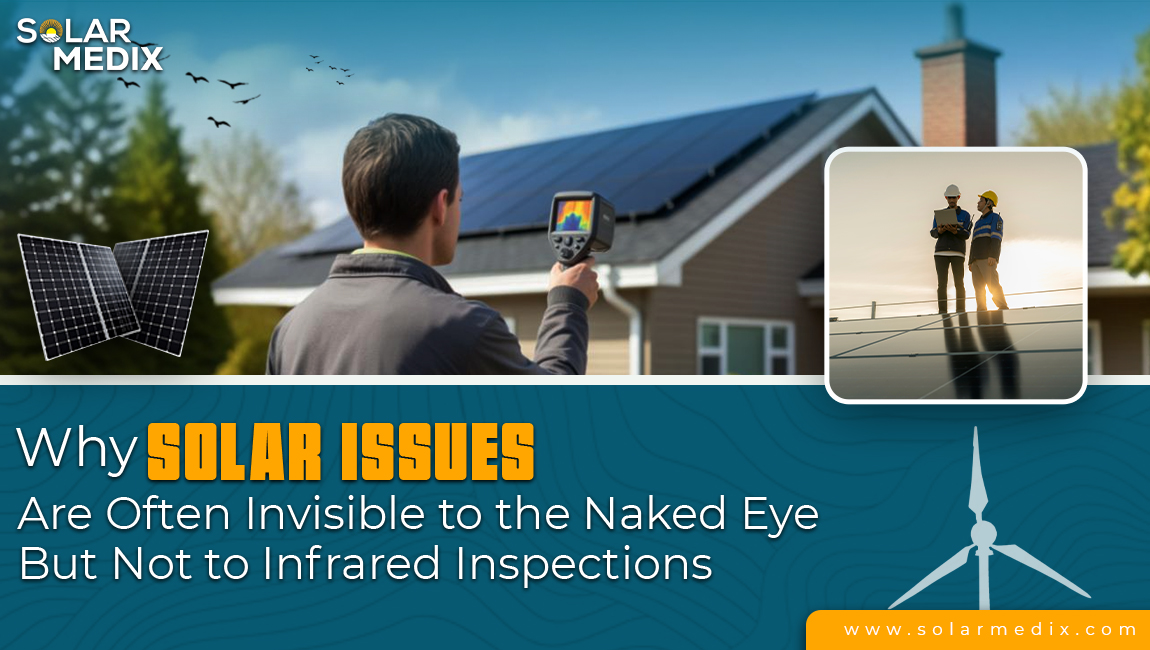
A dedicated partner ensures your system remains an asset. Expert technicians use infrared cameras to spot “hot spots” that represent failing cells or bad connections before they spark. This proactive stance keeps your facility safe and your energy production at its peak.
Solar Medix provides the technical expertise needed to manage these large-scale energy plants. Regular servicing includes checking torque marks on bolts plus testing the grounding system to ensure electrical safety remains uncompromised.
Don’t Let Poor Maintenance Become an Expensive Business Problem
Your commercial solar array is a high-voltage power plant on your roof. Treating it with the respect it deserves ensures that your business reaps the financial rewards for decades. Our team at Solar Medix offers comprehensive O&M services to keep your uptime high.
Stop worrying about your energy production. Contact us today to secure a maintenance plan that fits your specific operational needs and protects your bottom line.
Frequently Asked Questions (FAQs)
Q1: How often do panels and batteries require maintenance?
Panels generally need a professional inspection once a year. Cleaning should occur twice annually. Batteries require more frequent checkups. Typically, every six months. It ensures that cell balancing and thermal management systems are working correctly.
Q2: Does a commercial solar system require a lot of maintenance?
No. Solar systems are remarkably durable because they lack moving parts. However, the maintenance required is high-stakes. That is because it involves electrical safety and specialized diagnostic tools.
Q3: Can poor maintenance void warranties?
Yes. Most manufacturers explicitly state that their warranties are contingent upon regular professional servicing. Suppose you fail to document annual inspections. In that case, it will likely lead to a denied claim when expensive components fail.
Q4: How do I know if my system needs maintenance?
The clearest sign is a sudden or gradual drop in energy production compared to the same month in previous years. Physical indicators are visible debris, “string failure” alerts on your monitoring dashboard, or burnt smells near the inverters. They all signals for an immediate need for service.