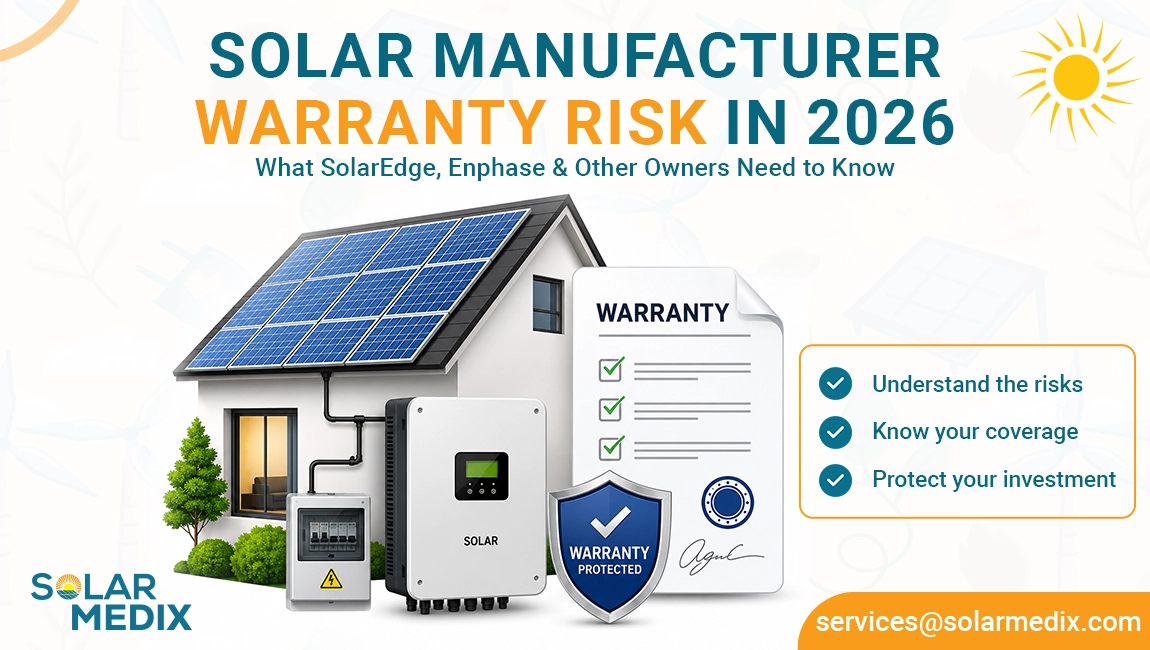
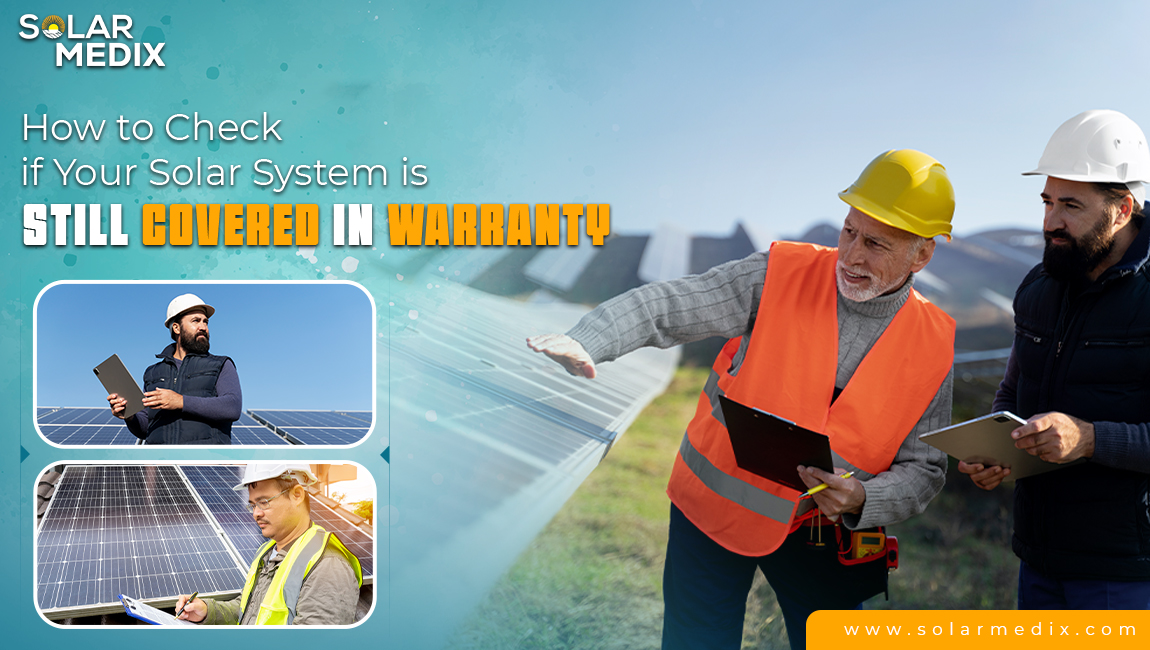
Like any major investment, a solar energy system comes with several levels of protection known as warranties. Knowing how long you are covered is really important, especially as your system gets older. This knowledge offers valuable peace of mind. However, solar panel warranty problems can arise if you’re unsure which company is responsible or if coverage terms aren’t clearly understood.
The great news is that most systems are protected for decades. However, a warranty is only helpful if you know how to access it. If you’ve noticed a dip in production or a blinking error light, you might need help figuring out the next steps. That’s where Solar Medix comes in, offering solar warranty replacement assistance (RMA). We can help take the headache out of a claim.
Tracking down the original paperwork can be tough after a few years. Don’t panic if you can’t find it. The solar industry is backed by strong consumer protections and reliable product guarantees. For general information on consumer rights regarding warranties, check resources like the Federal Trade Commission. Let’s look at the best methods for confirming your system’s remaining coverage.

Types of Solar Warranties in the USA
The United States solar industry has developed a dependable system of guarantees to protect homeowners. These assurances typically break down into a few distinct types. They cover different parts of your system: the physical components, the energy production, how the system was put together, and its connectivity. Recognizing these distinctions helps you file the right claim with the right company.
1. Equipment Warranty
This is sometimes called the product warranty. It covers the actual physical components of your system and protects you against manufacturing defects, material failures, or poor quality control, including the solar panels themselves, the inverter, as well as any optimizers or microinverters. A panel physically fails, or your inverter quits working prematurely? This guarantee is your safety net.
- Manufacturing Flaws: Protection if a solar panel or inverter was defective straight from the factory.
- Component Failure: Coverage for parts that break down before their expected lifespan ends.
- Physical Integrity: Ensures the components won’t crack, delaminate, or suffer structural issues.
2. Performance Warranty
The performance guarantee protects the output of your solar panels. Solar panels naturally degrade. They produce slightly less power over time. This assurance guarantees that your panels will still generate a certain percentage of their original rated power after a specified period, typically 20 or 25 years. This is one of the most important coverages for long-term savings.
- Output Guarantee: A promise that the panel will still produce, for example, at least 92% of its original rating after ten years.
- Degradation Rate: Defines the maximum allowable decrease in energy production year after year.
- Long-Term Security: Assurance that your investment will continue to generate expected energy for two decades or more.
For more details on the system’s longevity, check our guide on the Lifespan of Solar Panels: When to Repair vs When to Replace?
3. Workmanship Warranty
This coverage is specifically from your installer or the company that put the system on your roof. It covers the actual installation quality. This includes things like the mounting hardware, roof penetrations, wiring methods, and compliance with local building codes. If your roof leaks because of a faulty installation or a connection comes loose, the workmanship warranty is what you need.
- Proper Installation: Protection against mistakes in the mounting, wiring, or physical placement of equipment.
- Roof Integrity: Coverage if the installation causes damage to your home’s structure, especially the roof.
- Labor Coverage: Pays for the installer’s team to return and fix installation errors at no cost to you.
If you suspect an issue, our post on Top 5 Reasons for Roof Leak from Solar Panel Installations might be helpful.
4. Monitoring / Communication Warranty
Modern solar systems rely on the internet to report energy production data. This guarantee covers the hardware and software related to that monitoring system. This includes the small communication device installed near your inverter or the portal software itself. If your system stops sending data to the cloud, this is the policy that helps get you back online. To learn more about how this works, read How Does the Solar Power Monitoring System Work?
- Data Transmission Hardware: Covers the small physical device that sends production data to your online portal.
- Software Connectivity: Ensures the online monitoring service remains operational for the stated period.
- Connectivity Issues: Protection, if the system’s ability to communicate production data fails due to a defect.
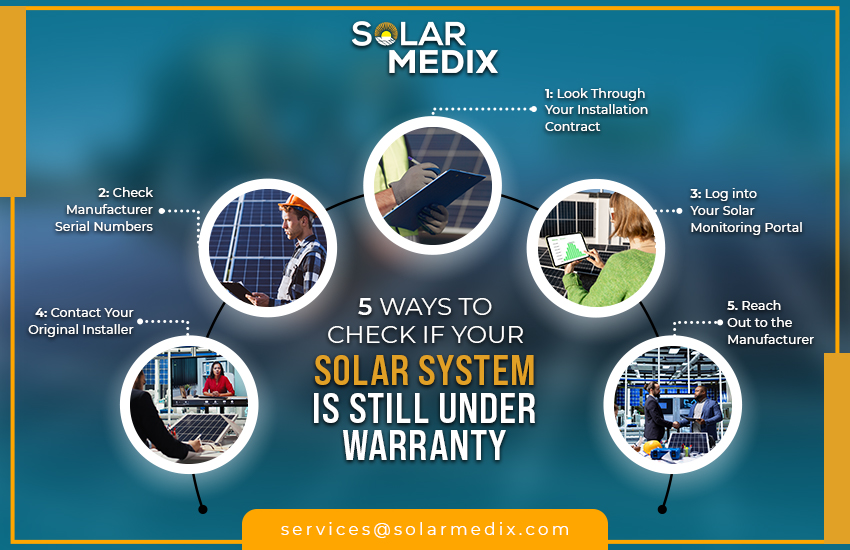
5 Ways to Check if Your Solar System is Still Under Warranty
Many homeowners struggle to find the exact warranty details for their solar setup. This is completely normal. Keeping track of paperwork for a system that lasts 25 years or more can be difficult. The good news is that you have a few ways to confirm your coverage without hours of searching.
You do not need to check all five methods. Just try the options that are easiest for you. The goal is to find one solid source of information that tells you what is covered and for how long. Starting with digital sources or your existing paperwork is usually the fastest.
- Look Through Your Installation Contract: This single document usually contains a summary of all equipment and workmanship warranties.
- Check Manufacturer Serial Numbers: Locate the serial number on your panels or inverter and enter it on the manufacturer’s website to see the activation date and expiration.
- Log in to Your Solar Monitoring Portal: This platform often displays your system components and their expected warranty duration.
- Contact Your Original Installer: The installation company keeps records of the equipment they used and the workmanship period they guaranteed.
- Reach Out to the Manufacturer: If the installer is out of business, the component manufacturer can confirm coverage based on the product serial number.
Common Signs Your System May Need a Warranty Claim
Being proactive is the best way to keep your solar investment healthy. It is a strong indication that you should check your warranty status right away if you notice any of these issues:
- Inverter errors or failure
- Panels producing low/no power
- Optimizer issues
- Monitoring offline for long periods
- Sudden drop in energy production
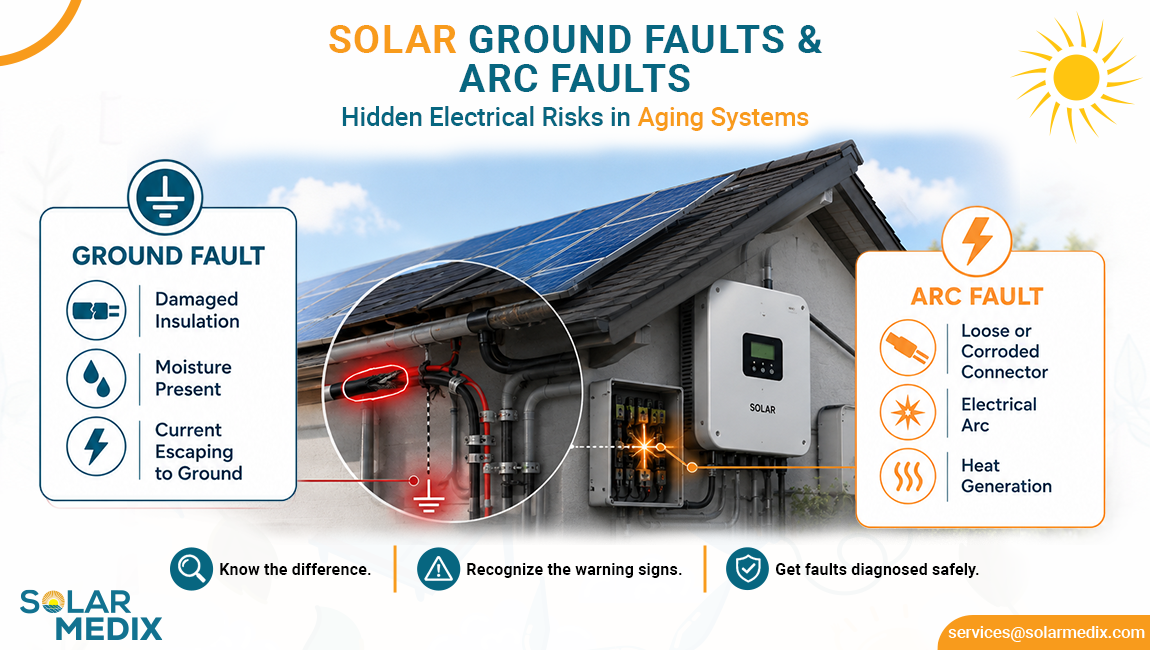
- Electrical smell or burn marks near components
When investigating issues like the last one, specialized tools are often needed. See how this works in our article on the Role of Infrared Inspections in Solar Warranty Investigation.
Need Help Verifying Your Warranty? Get in Touch with Solar Medix!
You’ve gone through these steps. You still feel unsure. That is okay. Warranty claims can confuse you. Also, dealing with different manufacturers, installers, or paperwork is often time-consuming.
Solar Medix specializes in helping homeowners like you figure out exactly where they stand. We can help track down the paperwork and speak to manufacturers. We process necessary claims to get your system repaired or replaced under warranty.
Don’t let a coverage issue or a complex claim cost you money. Contact us today to ensure your system is protected and producing at its peak!
Frequently Asked Questions (FAQs)
Q1: How long are solar panels under warranty?
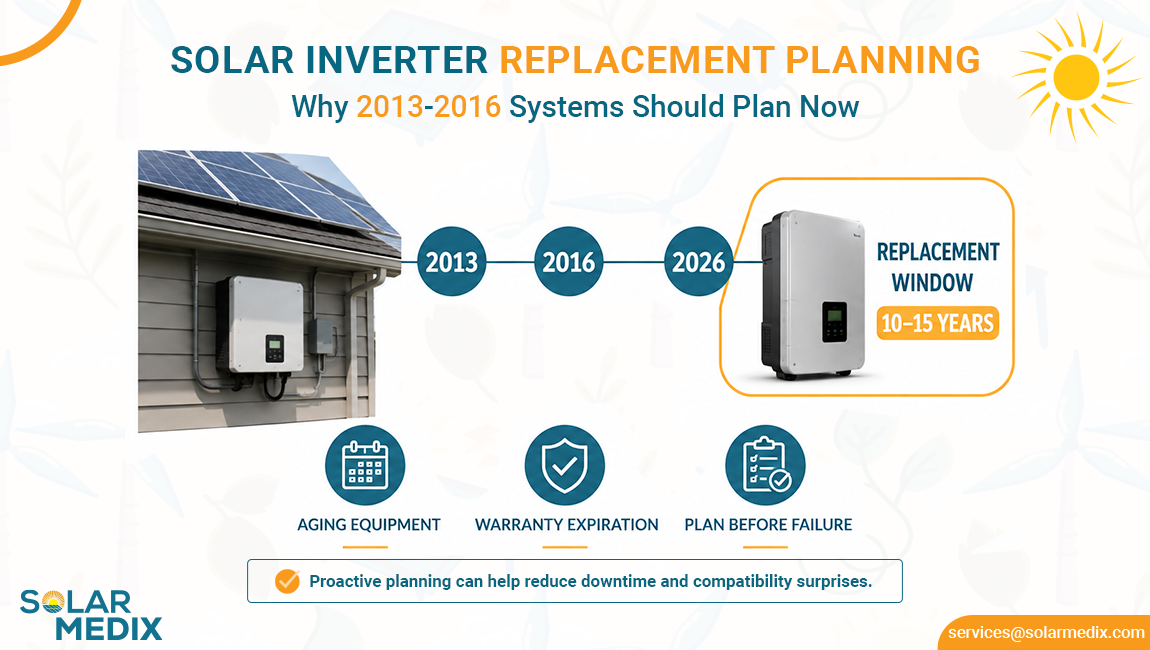
The equipment warranty for panels usually survives 10 to 12 years. But the performance warranty is much longer, often guaranteeing output for 25 years. Inverter warranties are typically shorter, around 5 to 15 years.
Q2: What happens to the warranty if a solar company goes out of business after?
Your equipment warranties from the panel or inverter makers usually remain valid because they are separate companies.
Q3: Can I look up my warranty with my VIN?
You generally cannot look up your solar warranty using a Vehicle Identification Number. Rather, you need to use the serial number found on the equipment itself, like the inverter or the panel sticker.
Q4: How can I check if my warranty is still valid?
The easiest way is to find your original installation contract to see the dates and coverage terms. You can also enter the equipment’s serial number on the manufacturer’s website to check the expiration date.