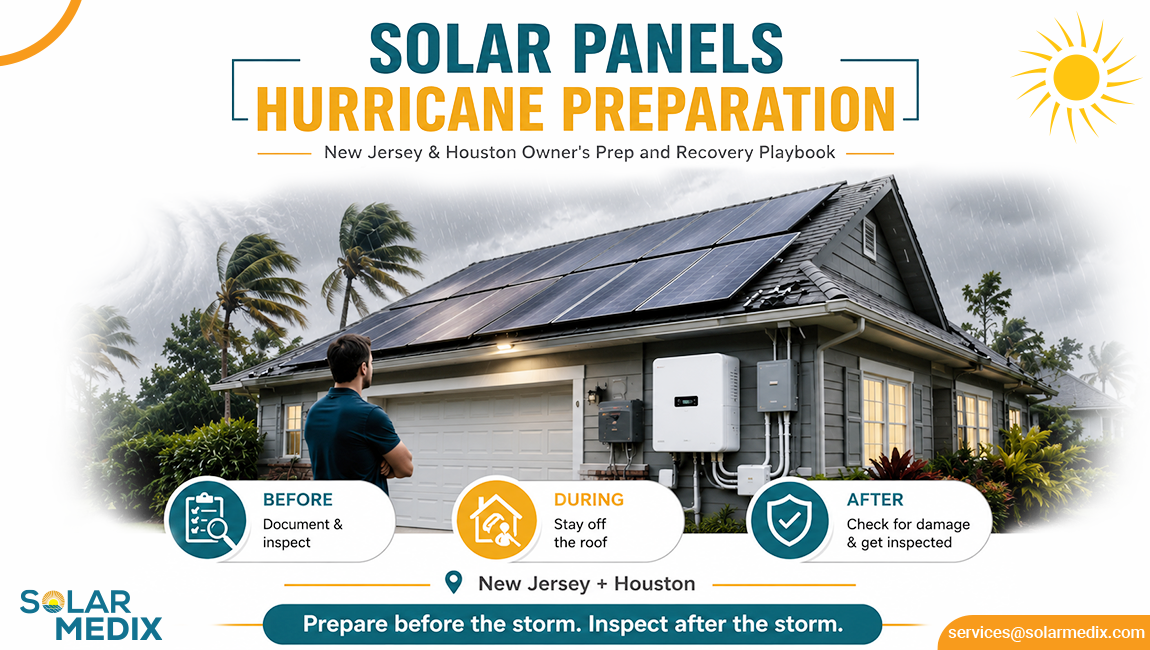
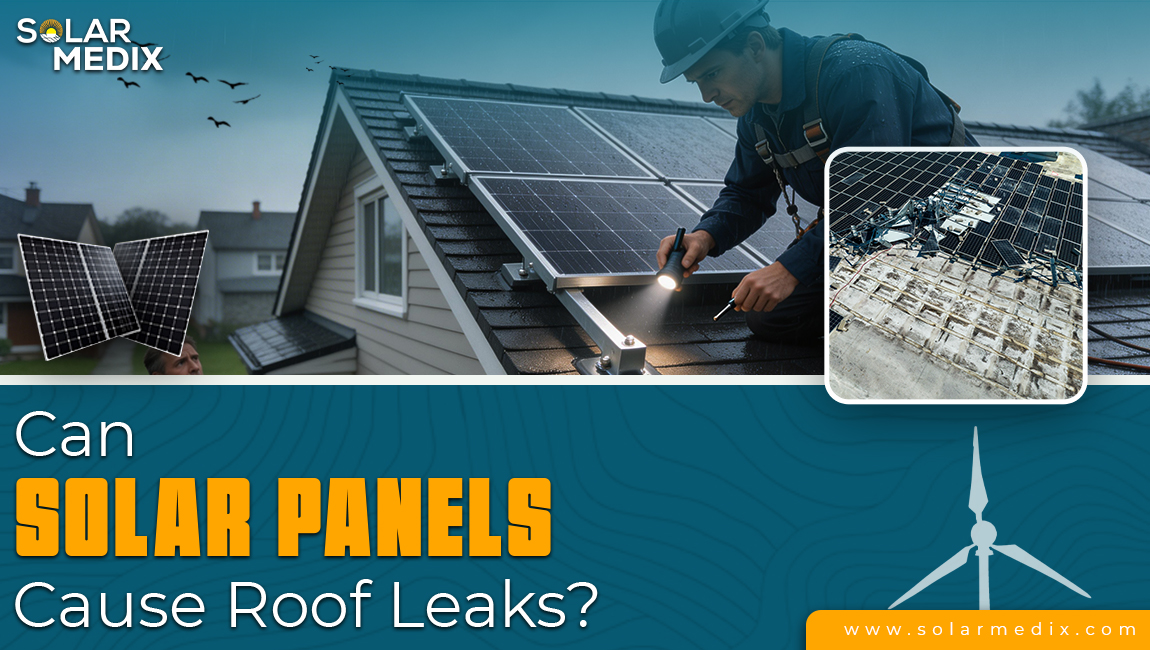
The idea of drilling holes into a perfectly good roof feels counterintuitive to many homeowners. You spent thousands of dollars ensuring your home stays dry. So, why would you let a solar crew compromise that barrier? It is a stressful thought that can keep you from making the switch to renewable energy.
The truth is that your roof exists to shield your family. Adding any structure on top of it introduces new variables. While the hardware is heavy, the real concern usually centers on the installation points where the system meets the shingles. You can learn more about general roof health from the National Roofing Contractors Association to see how different penetrations affect longevity.
While the risk exists, it doesn’t have to be your reality. If you choose the right team, like Solar Medix, those panels actually protect the surface of your roof from harsh UV rays and direct weather impact. Most issues arise from poor choices during the setup phase rather than the solar technology itself.
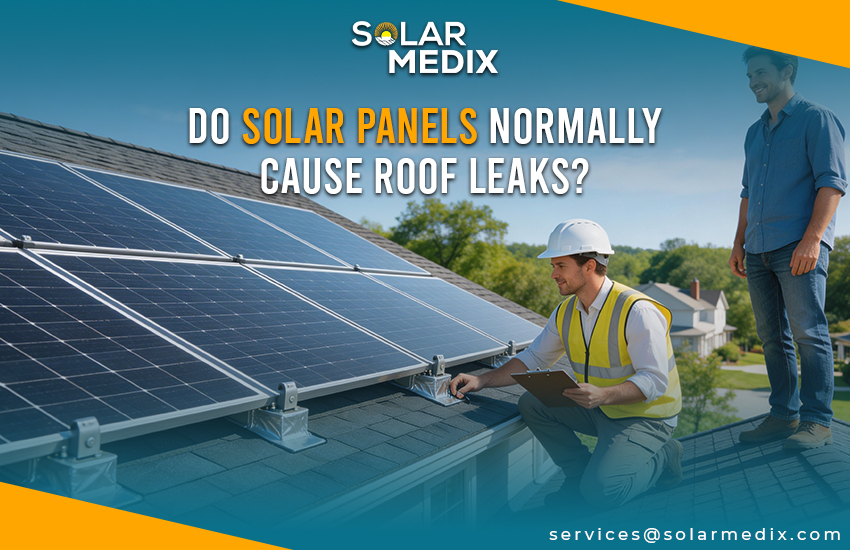
Do Solar Panels Normally Cause Roof Leaks?
No. Standard solar installations should never result in a leak. Most systems actually help by protecting shingles from the sun and hail damage. When a crew does the job right, the roof remains completely watertight.
Installers use specific hardware to maintain your home’s integrity. Teams use mounting brackets. They also use sealed roof penetrations together with flashing systems. Waterproof barriers provide an extra layer of safety to ensure no liquid passes through the attachment points.
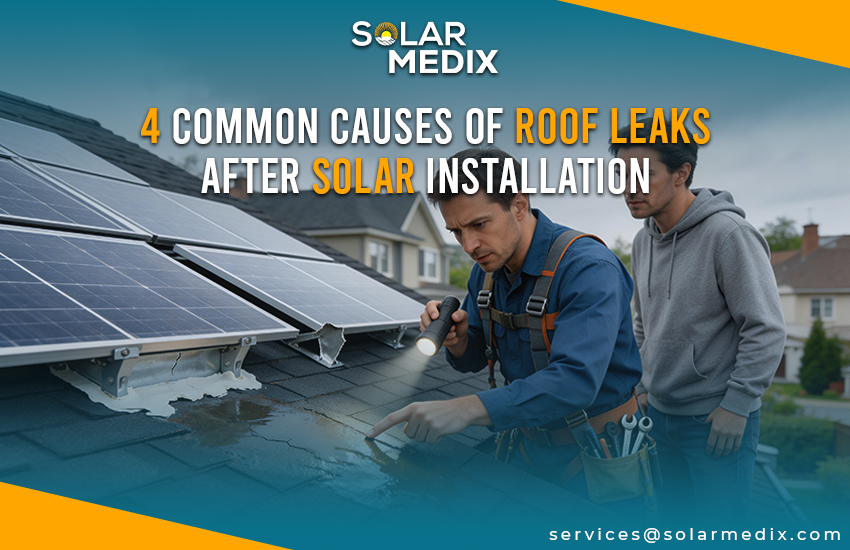
4 Common Causes of Roof Leaks After Solar Installation
Even though the technology is sound, problems can occur when human error or environmental factors interfere with the setup.
Cause #1: Improper Solar Panel Installation
If a crew rushes the job, they might miss the rafters or fail to secure the mounts correctly. This creates gaps where water pools during heavy storms.
- Missing the structural beams during drilling.
- Using low-quality sealants that crack in the sun.
- Forgetting to tighten the lag bolts completely.
Cause #2: Damaged or Aging Roofing Materials
Sometimes the roof was already on its last legs before the panels arrived. Solar panels should only go on a roof that has at least 10 to 15 years of life remaining.
- Brittle shingles that crack under a technician’s weight.
- Pre-existing wood rot in the decking.
- Old underlayment that has lost its flexibility.
Cause #3: Failed Flashing Around Mounting Hardware
Flashing is the metal shield that directs water away from the holes. If this piece is installed upside down or doesn’t tuck deep enough under the shingles, gravity works against you.
- Metal plates that aren’t properly integrated into the shingle line.
- Rust forming on cheap, non-galvanized components.
- Poorly applied caulking that peels away over time.
Cause #4: Storm Damage or Roof Movement
Extreme weather can put immense pressure on your solar array. If the wind catches the panels like a sail, it can tug on the mounts and create tiny openings.
- High-speed winds cause vibration in the hardware.
- Heavy debris or branches hitting the mounting points.
- Natural house settling that shifts the alignment of the brackets.
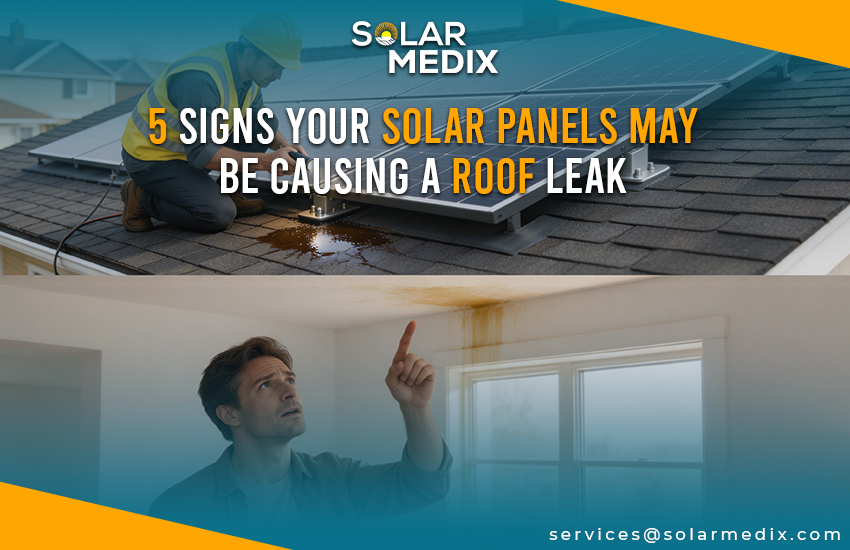
5 Signs Your Solar Panels May Be Causing a Roof Leak
Catching a leak early is the difference between a quick seal and a massive repair bill for your drywall. Keep a close eye on these specific indicators after a rainy season.
- Water stains on ceilings: The primary indicator of a roof leak.
- Moisture in the attic: It means that water is entering through mounting holes.
- Mold near roof penetrations: Fuzzy growth or dark spots around the rafters point to a slow, persistent moisture problem.
- Dripping during rainstorms: A direct sign that the sealant or flashing around the solar panels has failed.
- Visible roof damage around solar mounts: A clear signal of poor installation or excessive stress.
When Homeowners Should Schedule a Solar Roof Inspection
- After noticing water stains or leaks: Do not wait for the spot to grow; moisture spreads quickly through wooden structures.
- After major storms: Hail or hurricane-force winds can shift the panels and compromise the waterproof seals.
- When installing a new roof: If you are replacing your shingles, you need a solar expert to safely remove and reinstall the array.
- If the solar system is several years old: Maintenance is required to check that the seals haven’t dried out from heat exposure.
- If panels appear loose or shifted: Any change in the physical alignment of the panels suggests the hardware is no longer secure.

Schedule a Solar Roof Leak Inspection Today!
Your home is likely your biggest investment. You shouldn’t have to choose between lower energy bills and a dry living room. Our team focuses on identifying the root cause of moisture issues. So, you can enjoy your solar energy without the stress of water damage.
- Fast response times for leak detection.
- Professional assessment of your mounting hardware.
- Expert repairs that protect your warranty.
We are ready to help you secure your roof and keep your solar system running smoothly. If you suspect your panels are the culprit behind a new leak, reach out to us for a thorough evaluation.
Frequently Asked Questions (FAQs)
Q1. Are solar installers responsible for roof leaks?
Yes. If the leak is a direct result of their installation methods, they should handle the repairs at no cost to you.
Q2. How common are roof leaks with solar panels?
Roof leaks are quite rare when a professional, licensed contractor performs the work. Statistics show that the vast majority of solar owners never experience a leak. Most problems stem from unlicensed “fly-by-night” installers or putting panels on an extremely old roof.
Q3. What should homeowners do if their roof leaks after solar installation?
You should immediately contact your solar provider to document the issue. Place a bucket under the leak to prevent floor damage. Avoid climbing on the roof yourself. Because this can void your warranties and is dangerous near electrical components.
Q4. Can roof leaks damage solar panels?
No, they do not.