
If your solar installer has ceased operations, you must immediately secure the data and legal standing of your system. First, locate your original contract to identify the manufacturer of your panels and inverter. Second, contact the manufacturer to confirm your hardware warranty status. Finally, hire a third-party O&M provider like Solar Medix to perform a system inspection and take over the monitoring account. Once you have secured those basics, you can take a breath.
You invested in solar to save money and gain independence. But then the phone lines went dead. You called your installer for a routine check-up or a repair, and nobody picked up. The website is down. The office is closed. You are not alone in this frustration. Thousands of homeowners across the country are realizing their original installer has shut its doors. They left them with expensive equipment and zero support.
This situation is stressful, but it isn’t a dead end. The solar industry has seen a wave of closures recently, with major players filing for bankruptcy. (Read more about recent solar bankruptcies here). While the original company might be gone, your system is still there. Your panels are still on the roof. You just need a new partner to take over the reins. Industry groups like the Solar Energy Industries Association (SEIA) offer resources, but finding a local expert is often the fastest way to get your energy production back on track.
What Is a Solar Orphan and Why Is This a Growing Problem?
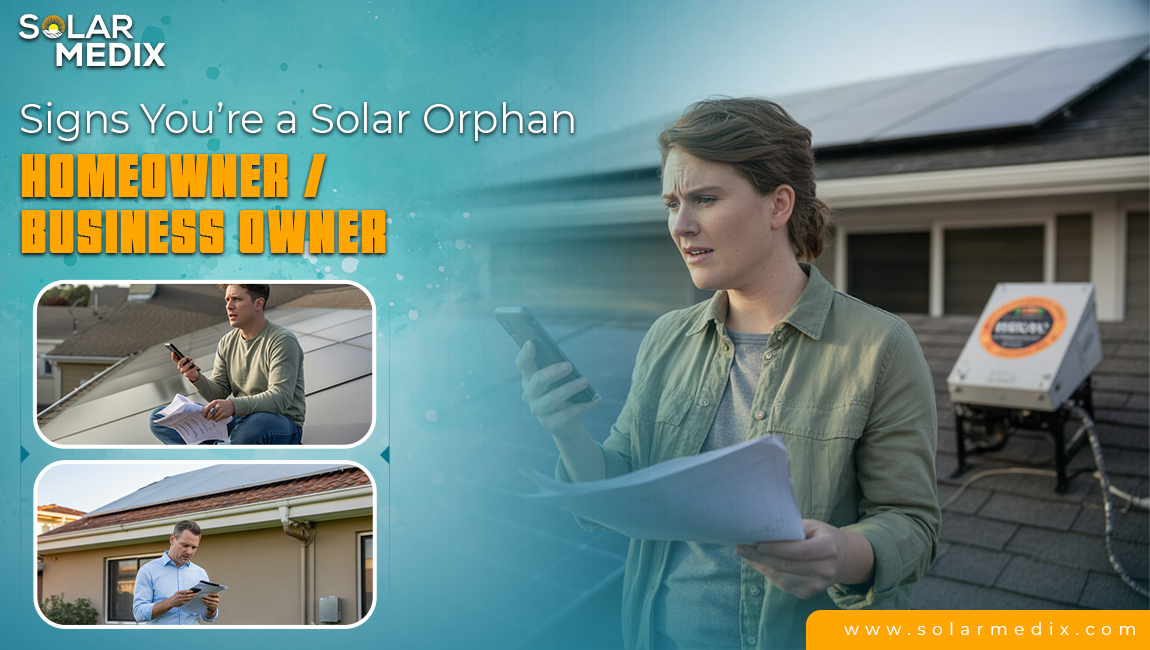
A “solar orphan” is exactly what it sounds like. It is a homeowner with a fully installed photovoltaic system who has lost all contact with their original installation company. The panels might work perfectly, or they might be completely offline. The defining factor is that the entity responsible for servicing, monitoring, and honoring the labor warranty no longer exists. You have the hardware, but the support network has vanished.
This problem is surging right now. The solar “gold rush” brought in thousands of new companies. Many were great at sales but terrible at managing long-term finances. As interest rates shifted and policies changed, these businesses folded. Some were acquired by larger firms that didn’t take on the service contracts. Others simply declared bankruptcy and walked away. This leaves homeowners in a tough spot, holding the bag for maintenance on complex electrical systems they don’t know how to fix.
What Happens When Your Solar Company Goes Out of Business?
The immediate aftermath is usually silence. You might not even notice for months. The first sign is often a red light on an inverter or a bill that is higher than usual. When you try to call for help, you get a disconnected number. The biggest hit is usually to your monitoring portal. Many solar installers host these portals themselves. When they stop paying the server bills, your visibility into your energy production disappears.
Without that data, you are flying blind. You can’t tell if a panel is down or if the whole system has tripped. Worse, the labor warranty you counted on is likely void. Manufacturer warranties on the hardware (the panels and inverters themselves) usually survive, but claiming them becomes a paperwork nightmare without a certified installer to process the RMA.
- No access to original installer support
- Monitoring portals shut down
- Warranty confusion (manufacturer vs installer)
- Difficulty getting repairs, parts, or inspections
- Utility or inspection issues if the system fails
Signs You’re a Solar Orphan (And May Not Know It Yet)
Many people have no idea their installer is gone. They set their system to autopay and forget about it. That is dangerous. If your installer went under six months ago, you might have missed critical firmware updates or safety recall notices. Ignorance is not bliss here; it is just lost money.
Check your email. Did you get a vague “restructuring” notice? Check your app. Is the data flatlining? If you haven’t heard from your solar company in over a year, do a quick Google search of their name. If the results show “permanently closed” or news articles about bankruptcy filings, you need to act. Waiting until something physically breaks on the roof makes the repair process much more expensive and slower.
- Your installer no longer answers calls or emails
- The monitoring app stopped reporting
- Inverter alerts with no support
- Roof leak or system issue with no warranty help
- You can’t find system documentation or service records
Step-by-Step Guide on What to Do Immediately If You’re a Solar Orphan
Panic won’t fix your inverter, but a plan will. The first move is to gather information. You need to become an expert on your own home’s energy setup. Dig through your old emails or file cabinets for the original contract. This document is your roadmap. It tells you who made your panels (e.g., Q Cells, REC) and who made your inverter (e.g., SolarEdge, Enphase). Once you know what is on your roof, you can find a new certified partner to service it.
- Step 1: Confirm system ownership & financing status
- Step 2: Identify manufacturer warranties (panels, inverter, optimizer)
- Step 3: Get a professional system inspection
- Step 4: Restore or repair monitoring access
- Step 5: Create a long-term maintenance plan
Why Waiting Can Cost You Thousands in Lost Solar Production
A solar system that sits idle is a liability. Every day your panels aren’t producing, you are buying power from the grid at full retail price. If your system is down for a month because you didn’t notice the installer was gone, that could be hundreds of dollars in lost savings.
The financial bleed doesn’t stop at your electric bill. Minor issues become major disasters if left unchecked. A small leak from a loose clamp can rot your roof decking if no one is there to catch it during annual solar panel inspections. A simple software error can degrade your battery storage. By the time you realize there is a problem, the repair cost might dwarf what you would have paid for a simple solar check-up. Plus, manufacturer warranties often have strict clauses requiring professional maintenance. If you can’t prove the system was cared for, they might deny your replacement claim.
Why Solar Medix Is the Right Partner for Solar Orphans
We don’t sell solar systems. We save them. Solar Medix was built for exactly this scenario. We are not interested in selling you a new array; we want to make the one you already bought work like new. We step in when the original installers step out. Our team understands the frustration of being left behind, and we have the technical skills to pick up the pieces.
We act as your “Post-Installation Guardian.” It doesn’t matter who installed your panels or what brand they used. We have the certifications to handle the RMA process for major manufacturers. We get your solar monitoring back online. We fix the wiring that the other guys left dangling. If you are in New Jersey, New York, Texas, or Massachusetts, we are ready to be the partner you should have had from the start.
- Independent of the original installer
- Experienced in legacy systems
- Capable of working with all major manufacturers
- Available for NJ, NY, TX, and MA markets
- Long-term service partner, not just a quick fix
Don’t let a bankrupt installer drain your bank account. If you suspect you’ve been orphaned, let’s get your system back online. Contact Solar Medix today for a system audit and reclaim your energy independence.
Frequently Asked Questions (FAQs)
Q1: What do I do if my solar company goes out of business?
If your installer shuts down, you must act fast. Find your original contract. See which companies made your panels and inverter. Call those companies to check your warranty. Then, hire a third-party service provider to check your system and take over your monitoring account.
Q2: What happens to your warranty if your solar company goes out of business?
Your labor warranty usually stops right away. This means they won’t fix installation mistakes for free. The equipment warranty, from the company that made the parts, usually still works. You may get free replacement parts. But you have to pay a local worker to install them.
Q3: What is the number one reason why solar companies go out of business?
High interest rates are the main reason. Solar companies use loans to buy equipment. When loan rates went up, their debt costs rose quickly. At the same time, fewer customers could afford solar loans. This left the companies with big bills and little income.
Q4: Is there a downside to having solar?
The high starting cost is a downside. Also, fixing your roof is harder. If you need new shingles, taking panels off and putting them back on costs a lot of money. You also still rely on the utility grid at night, so you will likely still have a monthly electric bill unless you buy expensive batteries.