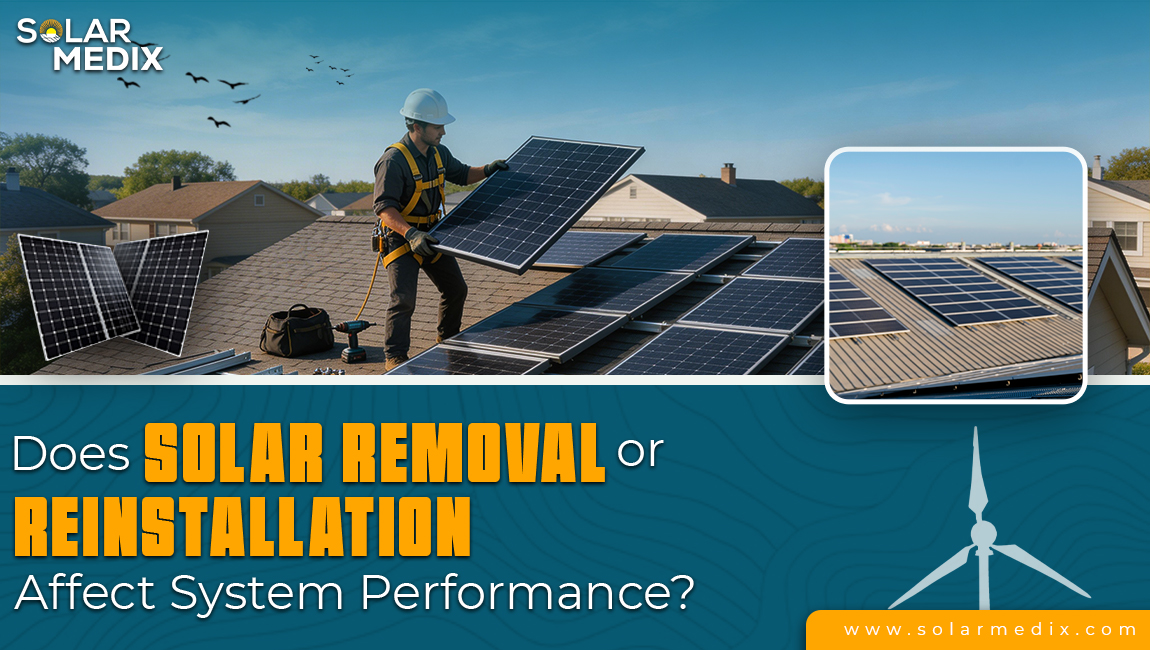
Owning solar panels feels great until you realize your roof needs work. It is a common concern for homeowners in our community. You might wonder if taking those panels down and putting them back up will ruin the efficiency you paid for. The short answer is that your system can actually run better than before if the job is done right.
Most people worry about the physical stress on the hardware. Solar modules are built to be tough, but they are still sensitive electronic equipment. If you treat them with care, they will continue to produce clean energy for decades.
Think of this process like moving a high-end computer to a different room. If you unplug everything properly and set it up carefully, it works perfectly. If you yank the cords and drop the monitor, you have a problem. At Solar Medix, we focus on keeping your production levels high by treating every component with respect.
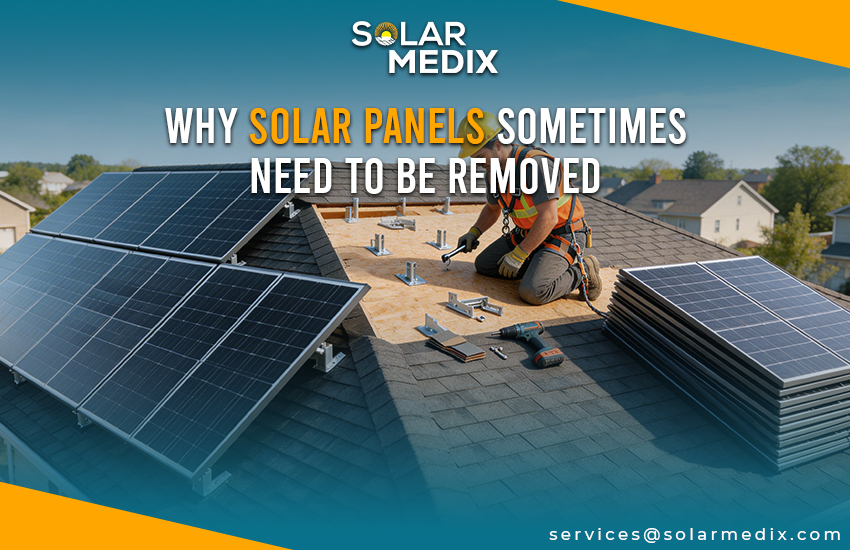
Why Solar Panels Sometimes Need to Be Removed
The most frequent reason we see for a removal project is a roof replacement. Shingles do not last as long as solar cells do. If your roof begins to fail, the panels have to come off so the roofers can reach every square inch of the surface. We also see many cases where a small leak develops directly under a mounting bracket. In those situations, we have to clear the area so the leak can be patched and sealed for good.
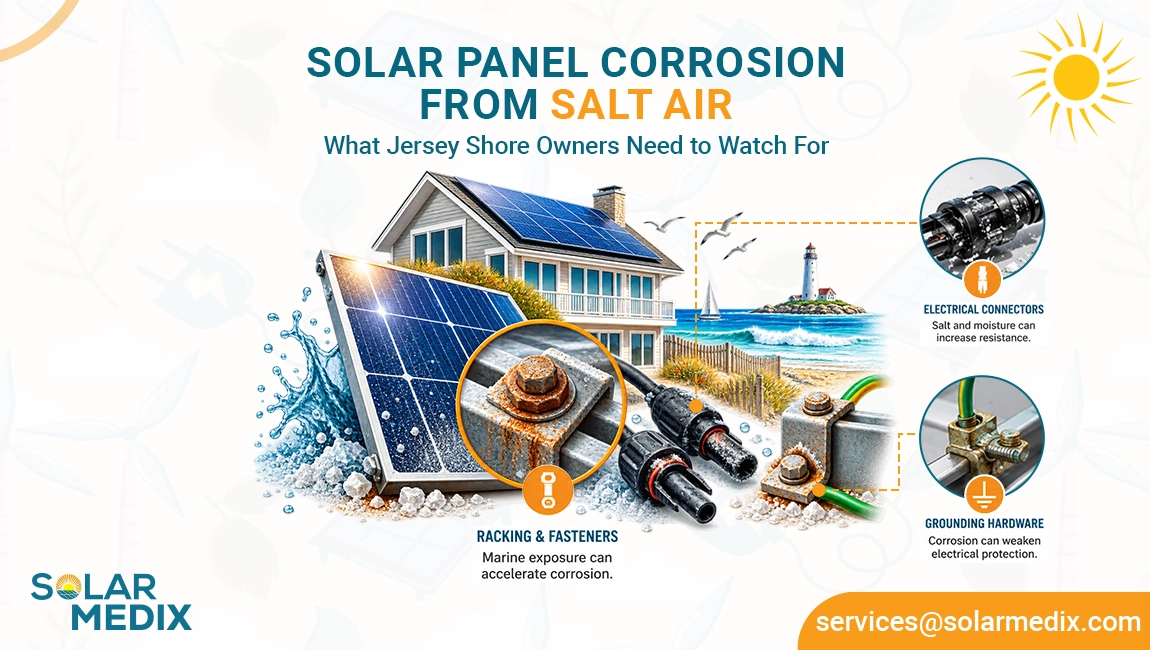
Sometimes the issue is about the house itself. You might need structural upgrades to support the weight of the system or to meet new building codes. Other times, homeowners realize that nearby trees have grown too tall, or they want to relocate panels to a different roof face for better sun exposure. We also handle solar panel removals to replace damaged mounting systems that have rusted or loosened over the years.
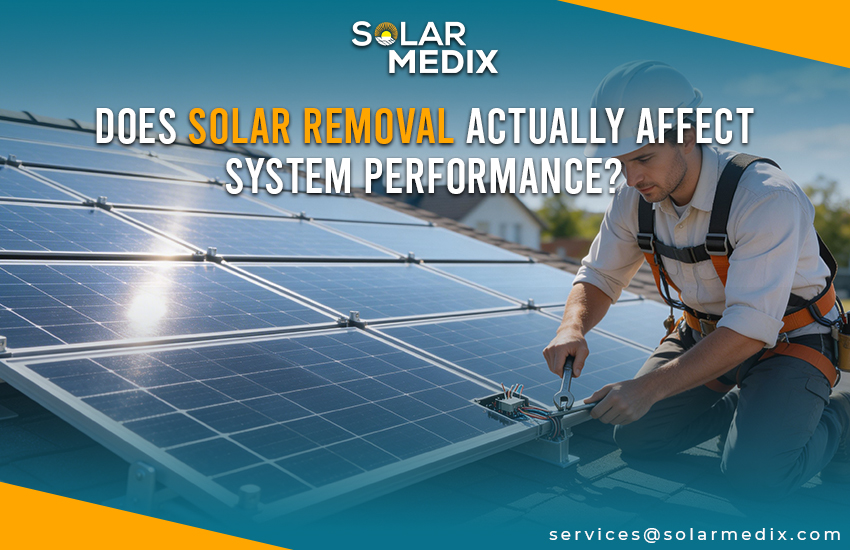
Does Solar Removal Actually Affect System Performance?
Removing your array does not automatically degrade the system performance. As long as your technicians follow safety protocols, the hardware stays in peak condition. Problems usually stem from human error rather than the act of moving the equipment itself, particularly if:
- Panels are mishandled or dropped during the removal process
- Wiring is improperly reconnected during the final stage
- Mounting hardware is installed incorrectly or left loose
- System calibration is not checked after the power is turned back on
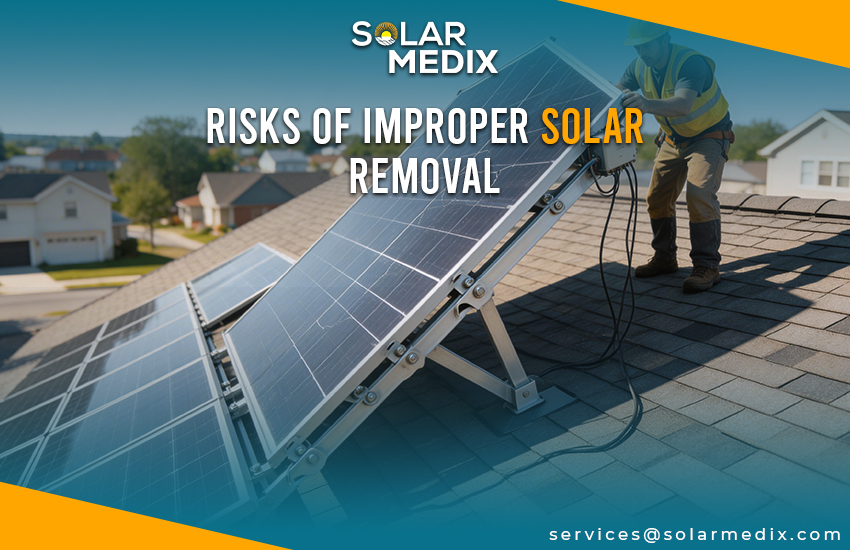
Risks of Improper Solar Removal
If a team lacks the right experience, your solar investment could suffer. It is not just about moving heavy objects. It is about protecting electrical integrity.
- Cracked or damaged solar panels: Too much pressure on the glass causes invisible fractures that block energy flow.
- Wiring damage: Tugging on cables breaks the internal copper strands or ruins weather-proof seals.
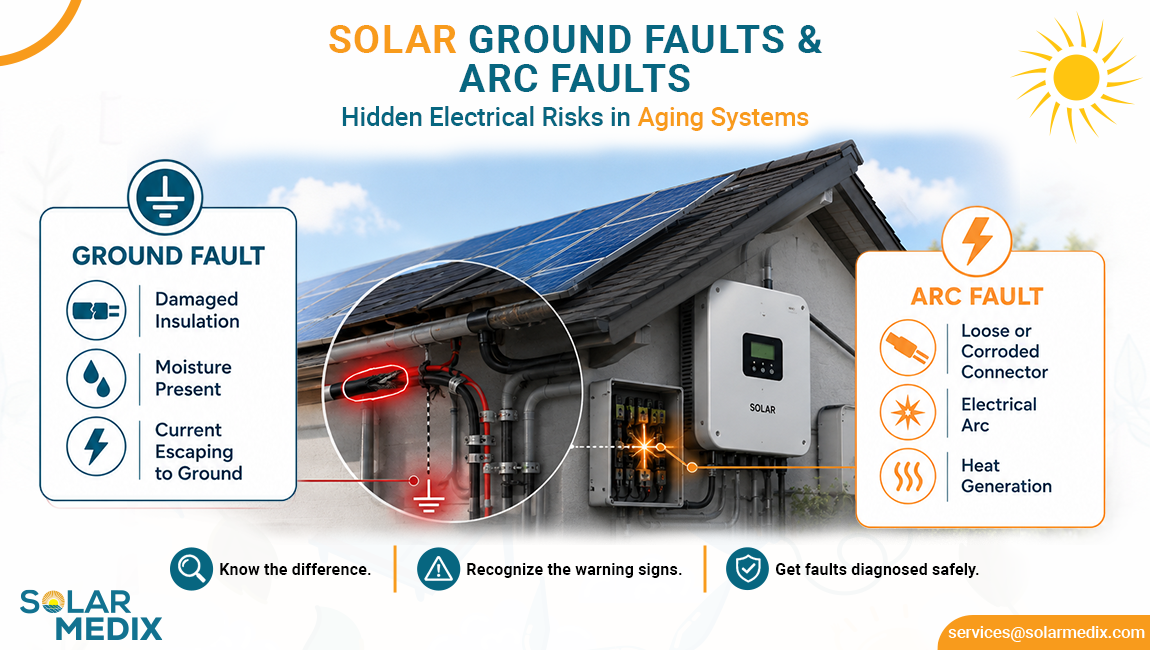
- Inverter communication issues: Poor connections prevent the brain of the system from talking to the panels.
- Mounting system misalignment: Crooked rails cause physical stress on the frames and look unprofessional.
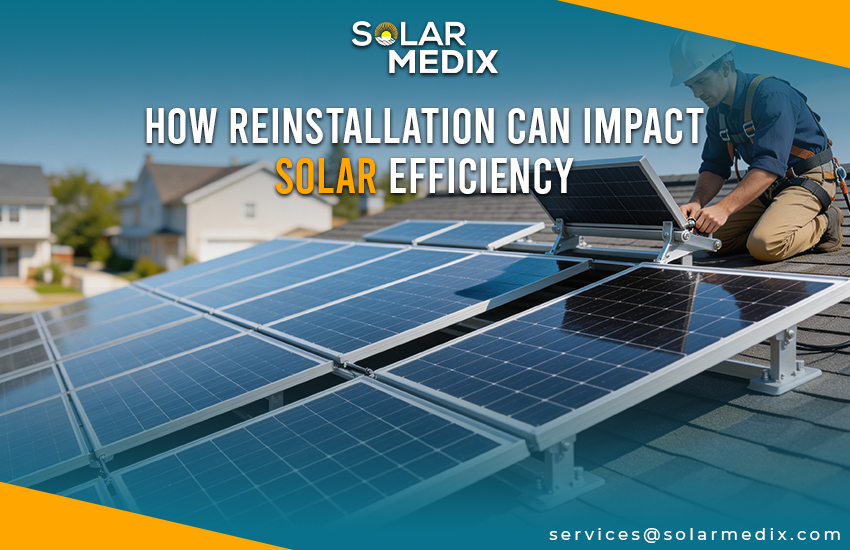
How Reinstallation Can Impact Solar Efficiency
Putting the pieces back together is where the magic happens for your utility savings. Even a slight change in the setup can alter how much sun you capture throughout the day. This is because several technical factors during reinstallation affect how efficiently the system operates, including:
- Panel orientation and tilt
- Shading conditions
- Electrical reconnections
- Inverter configuration
- Mounting stability
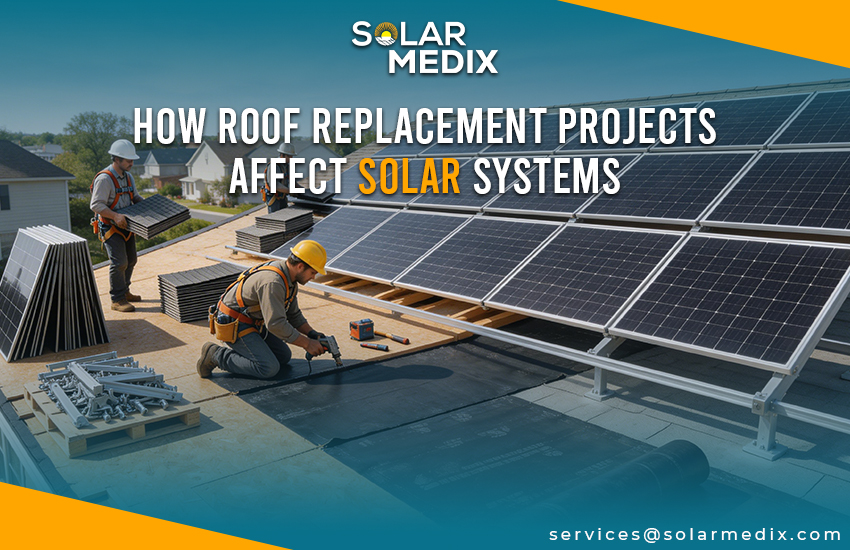
How Roof Replacement Projects Affect Solar Systems
A new roof is a perfect opportunity to verify your solar health. While the panels are on the ground, technicians can clean the glass and check for factory defects. It turns a necessary chore into a major maintenance win for your home.
Coordination between your roofing company and solar experts is vital. You want the solar crew there right after the roofers finish, so your house isn’t sitting idle without generation. A seamless handoff keeps your monthly costs low and ensures the new shingles remain undamaged.
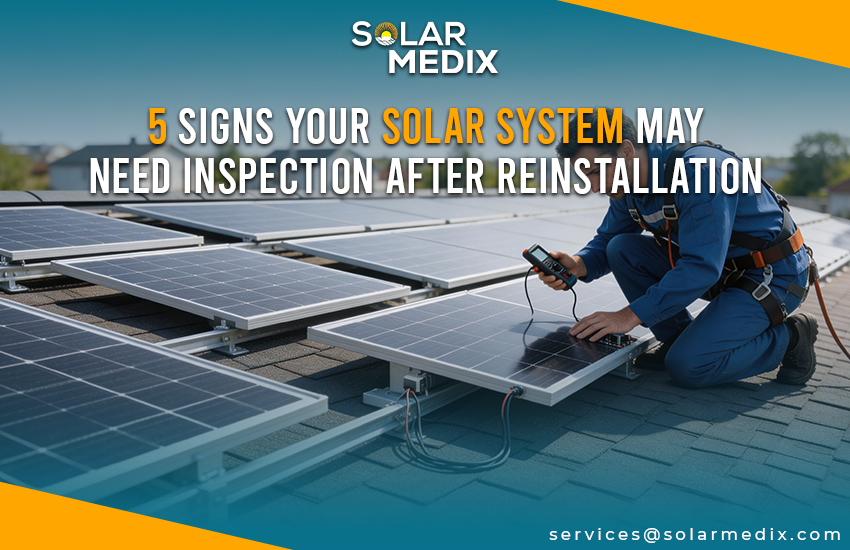
5 Signs Your Solar System May Need Inspection After Reinstallation
- Reduced solar energy production compared to the same month last year
- Inverter error messages blinking on your wall unit or in your app
- Monitoring alerts that show one specific panel is underperforming
- Inconsistent panel output where some units are “dark” during peak sun
- Unusual electricity bills that are much higher than you expected
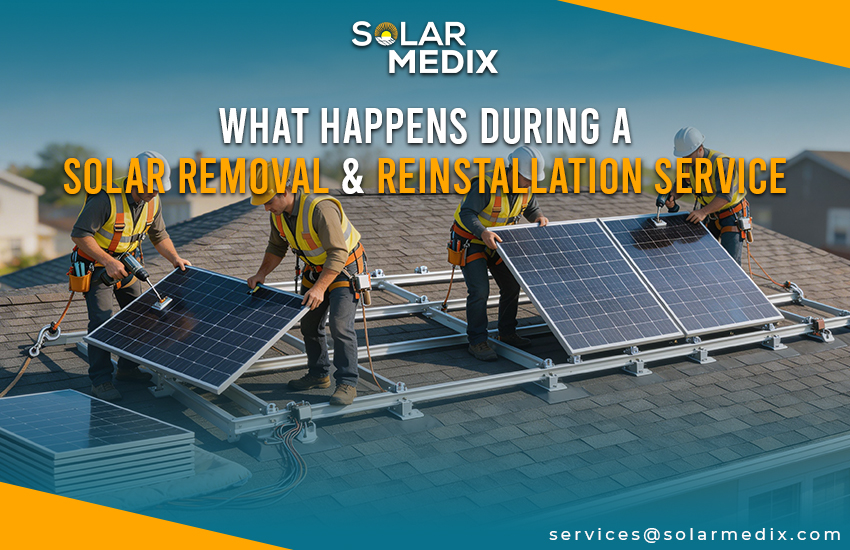
What Happens During a Solar Removal & Reinstallation Service
Our process is built to be predictable and safe for your home. We follow a strict checklist to make sure nothing is missed from start to finish.
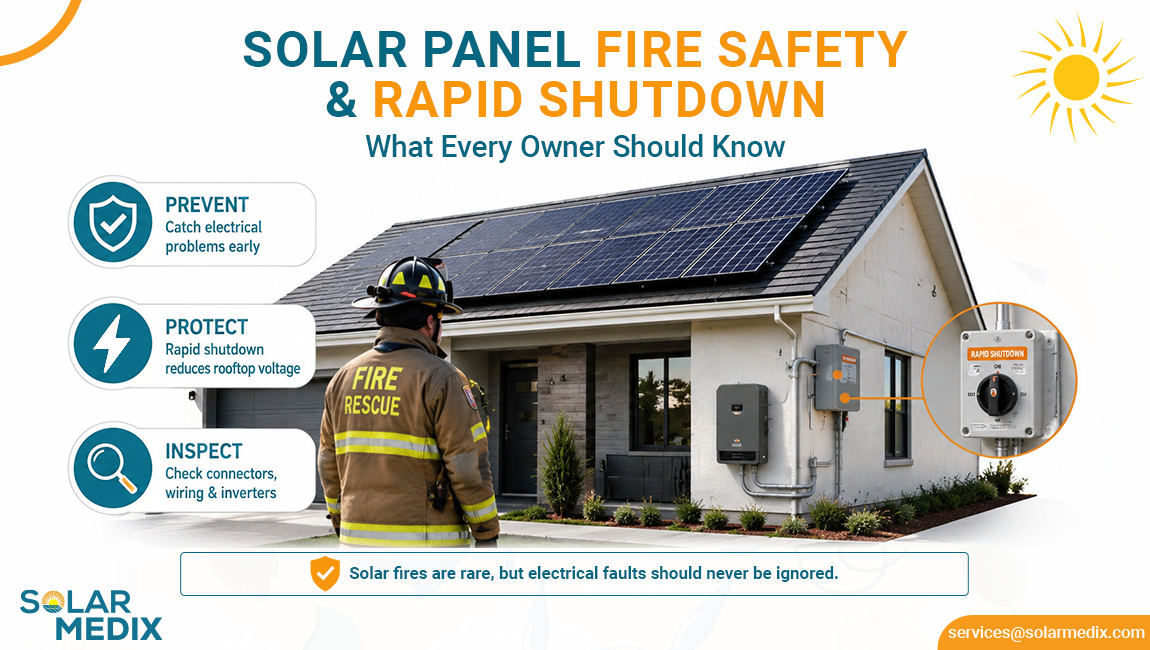
- System shutdown and safety procedures: We turn off the high-voltage DC and AC breakers to make the site safe.
- Careful panel removal: Each module is unbolted and carried down with specialized equipment.
- Mounting hardware removal: We take off the rails and the “feet” that connect to your roof rafters.
- Roof work completion: This is when your roofing contractor does their part of the job.
- Reinstallation and alignment: We put everything back using new flashing to prevent future leaks.
- Electrical testing and system verification: We test the voltage of every string to confirm the system is healthy.
Need Solar Panel Removal or Reinstallation? Schedule a Professional Inspection Today!
Your solar panels are a major investment. We want to help you protect them. Whether you are getting a new roof or just need to fix a leak, our team is ready to help. We make sure the transition is smooth. So you can get back to saving money on your utility bills.
- Professional assessment of your current system
- Coordination with your roofing company
- Safe storage of your panels during construction
- Expert reinstallation with a focus on maximum output
Don’t leave your energy future to chance. Get our solar panel removal and reinstallation services today, or contact our team to talk about how we can help you. We are here to answer your questions and provide a clear plan for your home.
Frequently Asked Questions (FAQs)
Q1. Do solar panels need to be removed for roof replacement?
Yes. Solar panels cover the roof surface. So, they must be cleared to allow for the installation of new shingles or materials.
Q2. Will removing solar panels damage them?
No. Professional handling ensures the glass and cells remain intact. Problems only arise if someone mishandles the equipment during the transition.
Q3. How long does solar panel removal take?
A typical home removal takes three to five hours. This timeframe varies based on the size of your array and the pitch of your roof.
Q4. Can the same solar panels be reinstalled after roof replacement?
Absolutely. You can reinstall your existing panels. There is no need for new hardware. Not unless your current system is outdated or damaged.