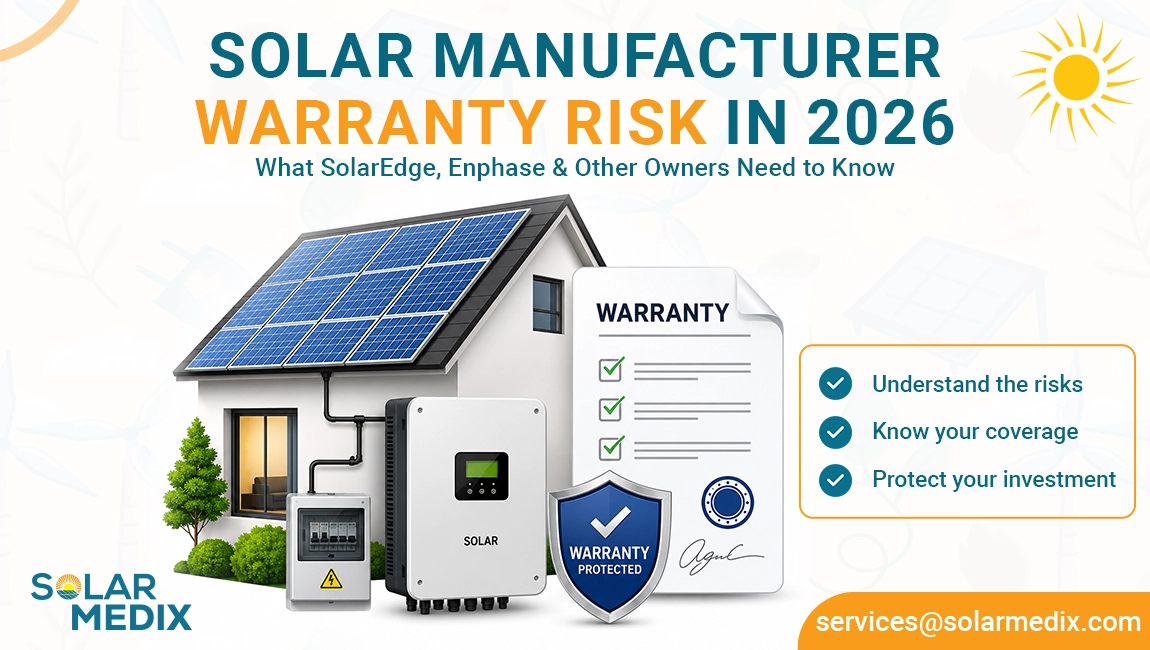
SolarEdge, Enphase, and other solar equipment owners face a growing 2026 warranty risk from manufacturer financial pressure, restructuring, and slower support, but these developments do not automatically void existing equipment warranties. The main risks are longer RMA timelines, difficulty getting replacement equipment or technical support, and reduced support for older models, so owners should confirm their warranty terms, equipment details, and claim process now.
For years, the standard warning to solar owners was some version of “make sure your installer stays in business.” That’s still worth watching, but 2026 has surfaced a quieter, less obvious version of the same risk: the company that actually manufactured your panels or inverter. SolarEdge has spent the past two years working through steep losses, layoffs, and volatile guidance, while Maxeon, the manufacturer behind many SunPower-branded panels, entered court-supervised restructuring in Singapore this spring. Enphase owners also need to consider the long-term availability of manufacturer support, replacement equipment, and RMA processing. This guide explains what these developments mean for existing warranties and what owners can do to protect their coverage.
Solar Manufacturer Warranty Risk: What’s Actually Changed
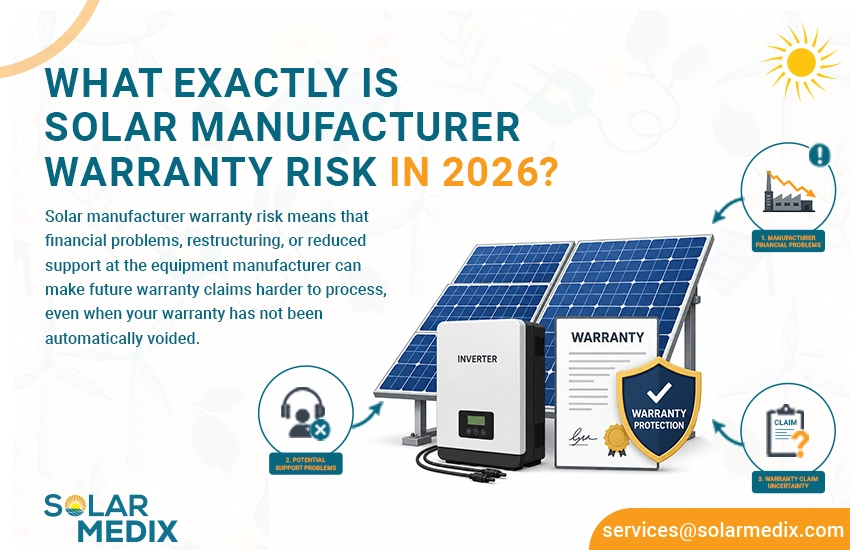
Solar warranty risk is shifting from installer failures to manufacturer financial stability. Most of the “orphaned system” conversation over the past few years has centered on installers, companies that sold and mounted the system, closing their doors and leaving homeowners without a workmanship warranty. That risk is real, but it’s a different animal from manufacturer risk. Your panels, inverter, and racking each carry a product warranty from the company that made them, completely separate from whoever installed them. When the maker itself comes under financial pressure, the exposure isn’t a leaky roof penetration or a bad mounting job. It’s whether the company will still be there in ten or twenty years to honor a defect claim, ship a replacement part, or keep the firmware and monitoring platform running.
What’s Actually Happening With SolarEdge, Enphase, and Maxeon Right Now?
SolarEdge is recovering but still volatile, Maxeon is going through a court-supervised restructuring, and Enphase remains comparatively stable.
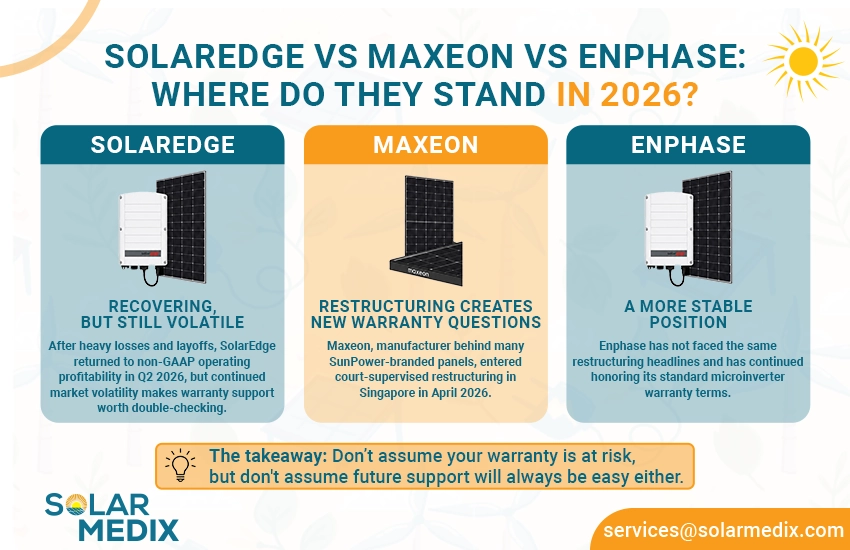
SolarEdge: Recovering, But Still Volatile
SolarEdge, one of the most widely installed inverter brands in the U.S., posted a stretch of heavy operating losses, layoffs, and unsettled investor sentiment through 2024 and 2025 as the residential solar market slowed, before narrowing its losses and returning to non-GAAP operating profitability in its second quarter of 2026. That’s a real recovery, but the company’s own quarterly guidance has continued to swing sharply, and analysts have flagged ongoing softness in U.S. residential demand. That kind of volatility makes SolarEdge warranty support worth double-checking rather than assuming.
Maxeon: Restructuring Creates New Warranty Questions
Maxeon, the manufacturer behind many SunPower-branded panels sold before that brand’s 2024 bankruptcy, filed for judicial management in a Singapore court in April 2026, a court-supervised restructuring process, after U.S. customs detentions cut off its largest market and a planned U.S. manufacturing expansion fell through.
Enphase: A More Stable Position
Enphase, by contrast, hasn’t seen the same restructuring headlines and has continued honoring its standard microinverter warranty terms as usual. The takeaway isn’t that any one brand is doomed; it’s that “my equipment still works” and “I can make an Enphase warranty claim if something goes wrong” are not automatically the same statement.
Manufacturer Warranty vs. Installer Warranty: Why the Difference Matters
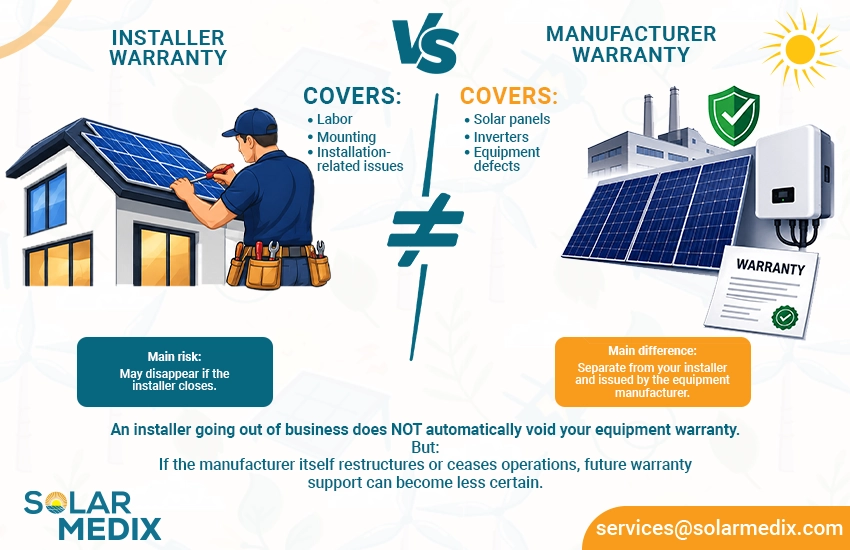
The key difference is that your installer warranty covers the work, while the manufacturer warranty covers the equipment itself.
Your installer’s workmanship warranty covers labor, mounting, and installation-related issues, and it typically disappears the moment that company closes. That is one of the main risks of an installer going out of business. Your manufacturer’s equipment warranty is a separate contract entirely, issued directly by the company that made the panel or inverter, and it doesn’t depend on your installer still being in business. An installer closing doesn’t automatically mean your solar equipment warranty is still valid or void your equipment coverage.
The complication is that the reverse protection doesn’t fully exist. If a manufacturer restructures, sells its assets, or ceases operations, the equipment warranty is only as strong as whoever ends up standing behind it afterward: sometimes a court-appointed successor, sometimes a new owner, sometimes no one at all for older or discontinued product lines. That means not losing coverage today, but losing certainty about who will honor a claim five or ten years from now.
How Does the RMA Process Actually Work When You File a Claim?
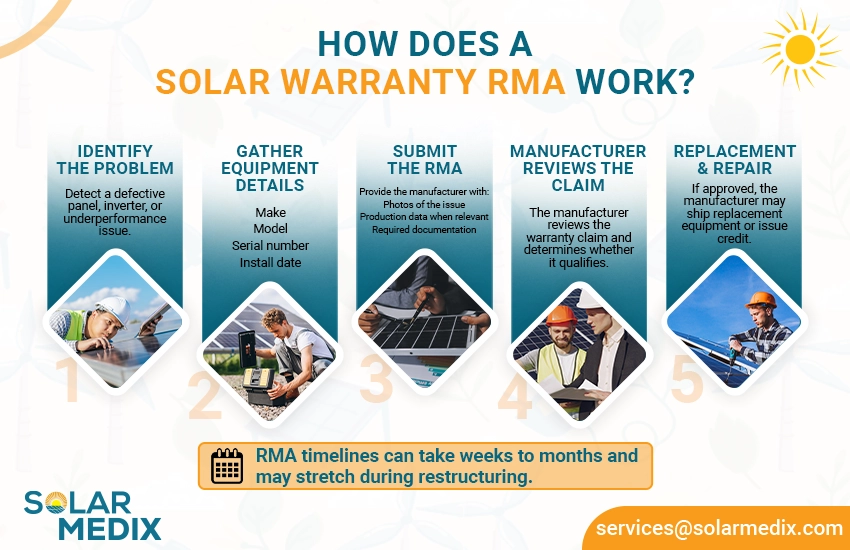
The RMA process is the manufacturer’s formal process for reviewing a warranty claim, approving a return or replacement, and resolving the issue.
What You Need to File an RMA
Filing a claim on a defective panel or inverter means submitting an RMA, a Return Merchandise Authorization, directly to the manufacturer. In practice, that usually means providing your install date, the equipment’s make, model, and serial number, photos of the issue for a suspected product defect, and production data if you’re claiming an underperformance issue. The manufacturer reviews the claim, and if approved, ships a replacement part or issues credit, but a certified technician still has to diagnose the fault and physically swap the component.
If problems like these keep resurfacing on your system, our breakdown of common solar panel warranty problems walks through the patterns worth flagging early.
How Long Does an RMA Take?
RMA processing tends to run for weeks to months rather than days. When a manufacturer is mid-restructuring, that timeline can stretch further, and the paperwork requirements can shift as the company reorganizes its support operations. None of that means the claim won’t be honored. It means starting the process early and keeping thorough documentation matters more than usual right now.
What Can Quietly Disappear Before Your Panels Do
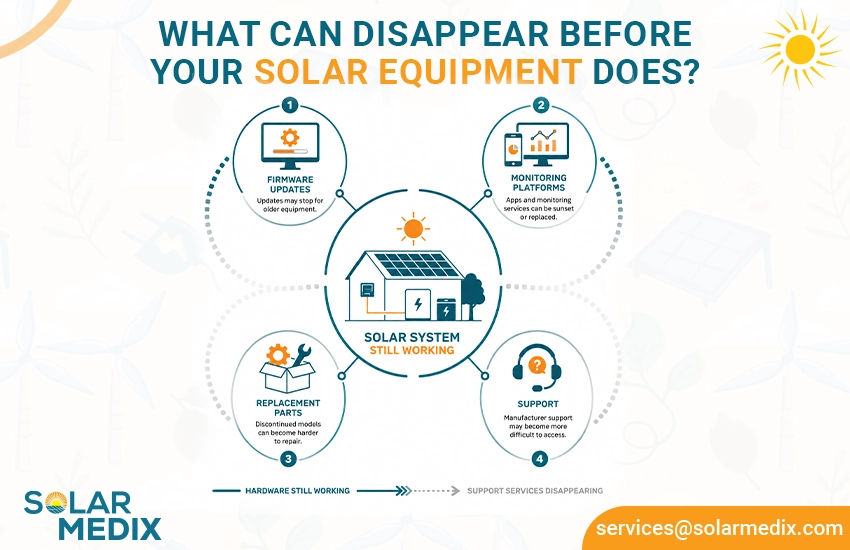
A panel or inverter can keep physically running for years after a manufacturer stops actively supporting it, but the surrounding services go first. Firmware updates stop shipping. A monitoring app gets sunset or folded into a different platform, sometimes with a deadline to register your system or lose visibility into production. Replacement parts for a discontinued model become harder to source.
This has already happened in the SunPower ecosystem, where legacy customers had to actively re-register their systems with the new warranty holder to keep coverage intact, a pattern worth remembering, because the U.S. Department of Energy’s consumer guidance specifically recommends confirming warranty paperwork and manufacturer contact information rather than assuming it will still be easy to find years later.
None of this is cause for alarm about a system that’s producing normally today. It’s a reason to treat your warranty documentation the way you’d treat a home insurance policy: something you locate and verify occasionally, not something you file away and forget.
How Do You Check What You’re Actually Covered For Right Now?
You can check your current solar warranty coverage by confirming your equipment details, warranty terms, manufacturer registration, and monitoring status.
A quick self-audit answers most of this. Before you ever need to file a claim, make sure you have:
- Panel and inverter make, model, and serial numbers, plus your original install date
- A copy of the original warranty documentation, or the manufacturer’s current warranty terms if the paperwork is missing
- Confirmation that your system is registered with the manufacturer, especially if it changed hands through a bankruptcy or restructuring
- Active, working monitoring, so a fault or output drop gets caught while it’s still a minor issue
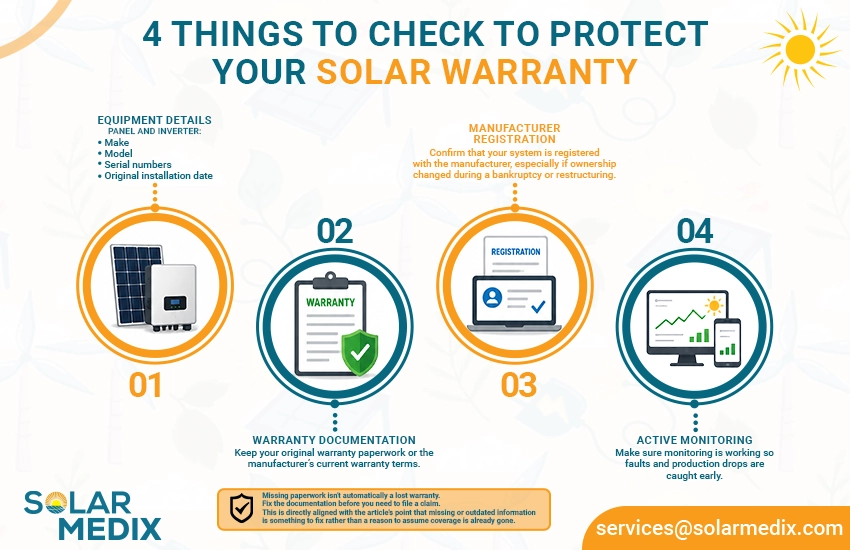
If any of those are missing or out of date, that’s the fix, not a reason to worry that coverage is already gone. For the step-by-step process, see our guide on how to check if your solar system is still covered under warranty.
Protecting Your Warranty Starts With One Call to Solar Medix
Solar manufacturer warranty risk in 2026 makes documentation, registration, and monitoring more important than ever when it comes to keeping a warranty claim on track. That’s exactly the gap Solar Medix exists to close. Our technicians work with SolarEdge, Enphase, Maxeon-era, and legacy equipment alike, and we file and manage RMAs on our clients’ behalf regardless of who originally installed the system or which manufacturer made the equipment.
If you’re not sure what you’re currently covered for, or you’d rather have someone else track the paperwork and deadlines while your warranty situation sorts itself out, Solar Medix can run a full warranty and equipment check on your system and keep it properly documented going forward.
Manufacturer Warranty Risk FAQs
If my solar manufacturer is in financial trouble, is my warranty still good?
Often yes, but with caveats. Equipment warranties are obligations of the manufacturer, so a company in restructuring may still honor claims, but turnaround can slow, and firmware or monitoring support for older models can be quietly discontinued. The safest move is confirming your equipment’s make, model, and warranty term now, while records are easy to find.
What’s the difference between an installer warranty and a manufacturer warranty?
Your installer’s workmanship warranty covers labor and mounting and disappears if the installer closes. Your manufacturer’s equipment warranty covers the panels and inverter for defects and comes directly from the maker, so it can survive an installer closure but is exposed if the manufacturer itself struggles.
How do I file a warranty claim if I don’t have my original installer?
You file an RMA directly with the equipment manufacturer, which usually requires documentation of the fault and a certified technician to diagnose and install the replacement. A third-party O&M provider like Solar Medix can handle this end-to-end, even on systems it didn’t originally install.
Can my inverter stop being supported even if it still works?
Yes. When a manufacturer sunsets an older model or shuts down a monitoring platform, you can lose firmware updates, app visibility, and parts availability while the hardware keeps running. That’s a strong reason to have aging equipment assessed before support lapses.
What should I do right now to protect my coverage?
Locate your equipment’s serial numbers, make and model, and warranty terms; confirm your monitoring is active so faults are caught early; and have a qualified service provider on record who can file RMAs. Acting before a claim is needed is far easier than scrambling during a failure.