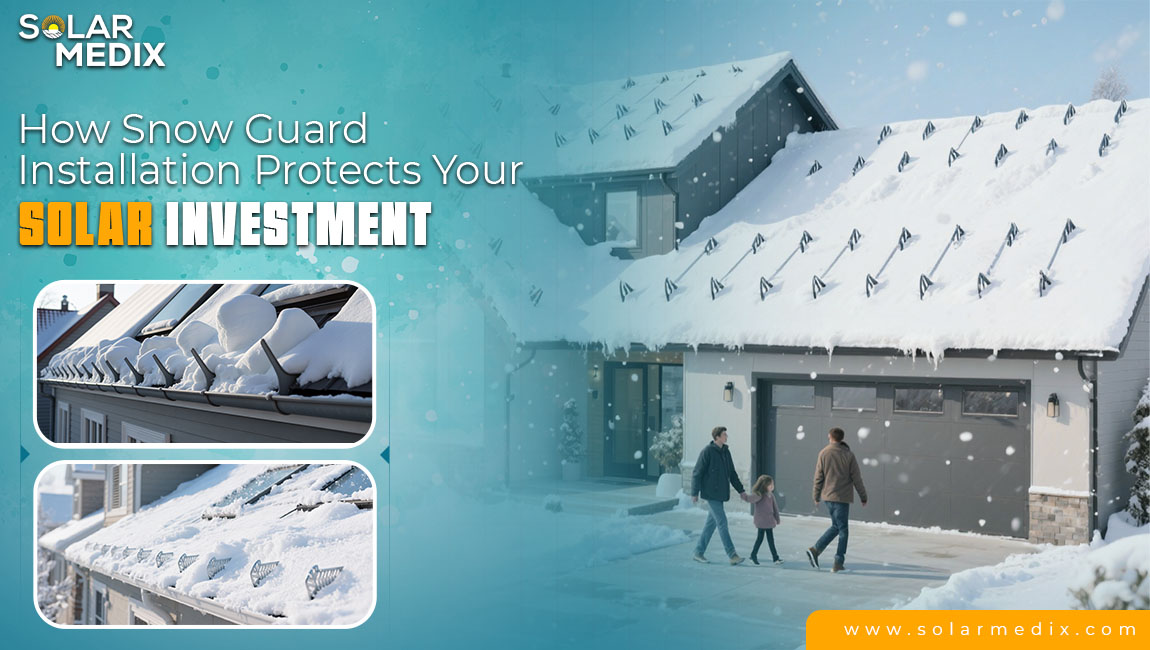
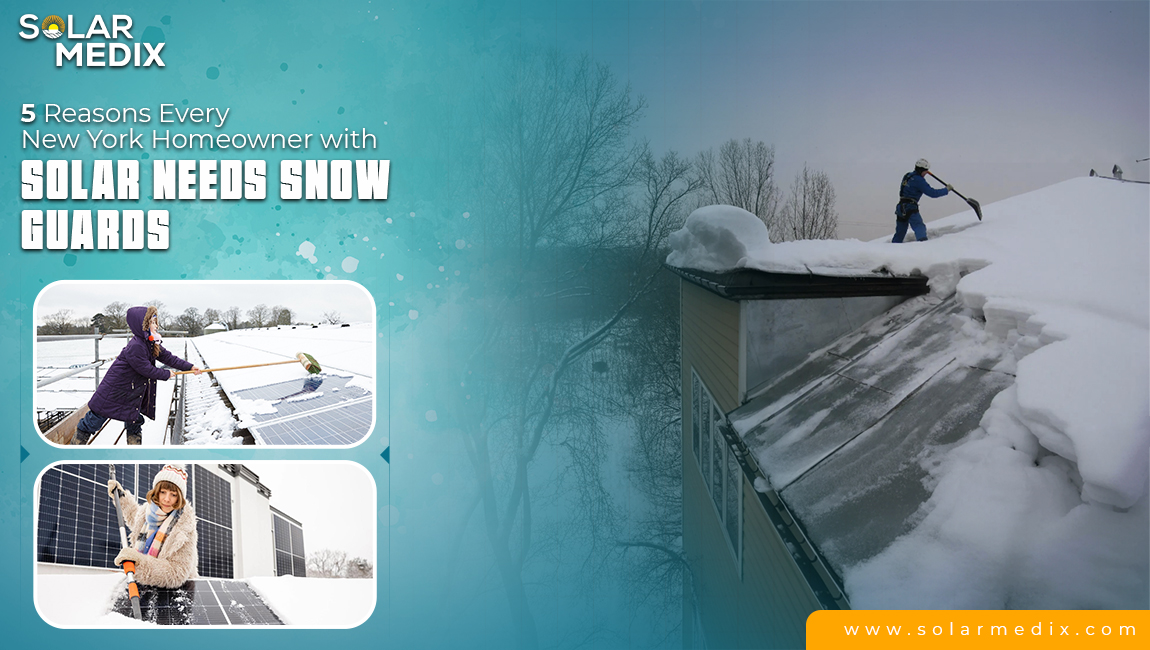
What happens when a frozen sheet of snow avalanches from slick solar glass toward your front steps?
In heavy storms, snow can block solar production up to 100%, turning bright winter afternoons into zero‑output hours unless panels clear safely. Smooth modules often shed compacted snow in sudden slabs that can tear gutters, dent vehicles, and injure anyone below the eaves.
New York’s repeated freeze–thaw cycles amplify these hazards because midday melts refreeze by evening, priming abrupt releases overnight or at dawn. Installed snow guards that meter release, protect panels and roof edges, and help arrays rebound to winter output without risky rooftop clearing.
Keep reading to discover five decisive reasons to act now, plus smart placement principles and pro tips that safeguard your family, your roof, and your long‑term investment.
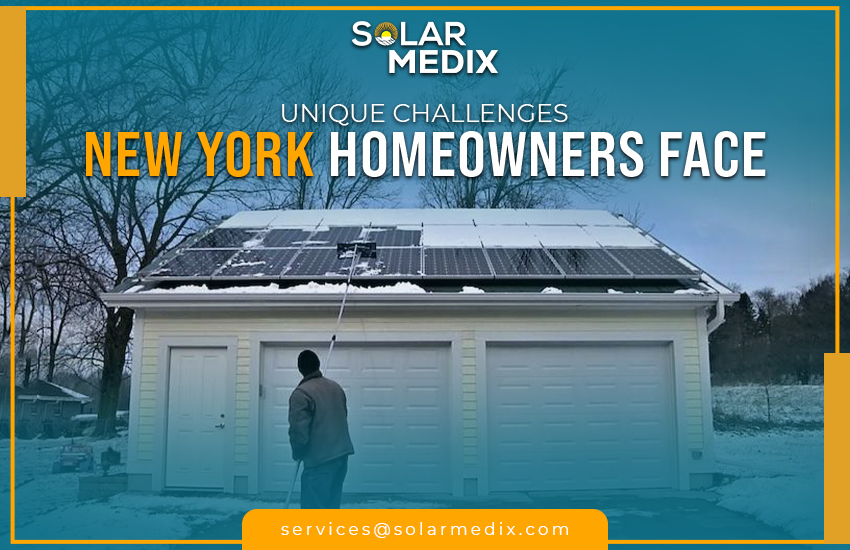
Unique Challenges New York Homeowners Face
Think your roof only sees light flurries, not storms that push solar to the limit? More than 60% of New York averages over 70 inches of snow each year, which means heavy, recurring loads on smooth modules. Conditions vary sharply: Central Park averages about 29.8 inches, while Syracuse reaches roughly 127.8 inches in a typical year.
Winters in New York swing between long quiet stretches and sudden, heavy bursts that test rooftops.
Some seasons delay snow for record spans, which squeezes late‑winter systems into tighter, more intense windows. Daytime thaw with subfreezing nights fuels ice dams and primes surprise slab releases from sleek solar glass.
When that mass drops, doors, walkways, parked cars, and gutters face real risk in a single jolt. Given this volatility, managing how snow leaves your array becomes a practical, preventative safety step.
Why risk a midnight dump when steady, metered release keeps people and hardware out of harm’s way ?
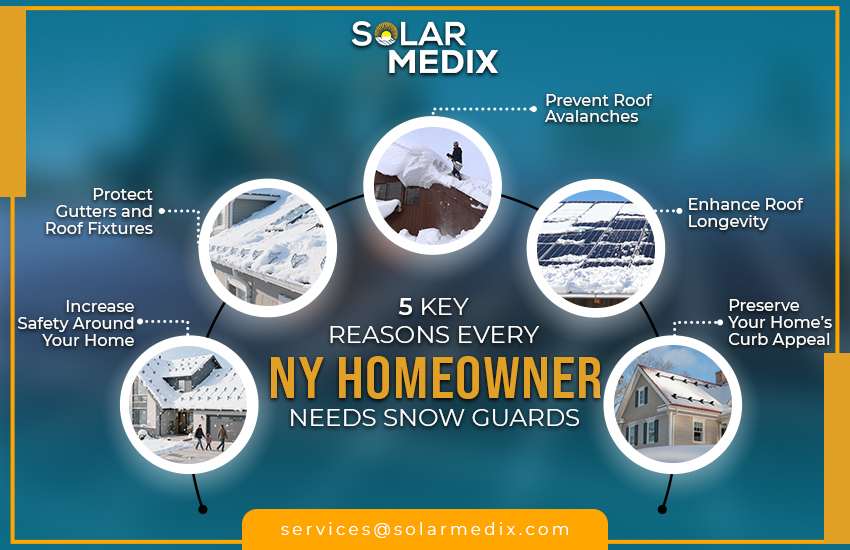
5 Key Reasons Every NY Homeowner Needs Snow Guards
Snow guards reduce avalanche‑style slides from solar arrays, so they protect people, pets, vehicles, and landscaping. They also steady winter performance and curb repair bills triggered by snow events on roofs and gutters.
Reason 1: Prevent Dangerous Snow Slides
A smooth solar surface releases compacted snow all at once, which creates a hazardous wall of ice and snow at eaves and around doors. Retention devices break loads into smaller sections that melt gradually and fall safely without surprise slides.
- Use snow guards to limit slide mass near entries and paths where people pass daily.
- Place retention above eaves to protect driveways, patios, and decks from sudden dumps.
- Add rails or pads sized to the roof pitch and array width for predictable release.
Reason 2: Protect Your Solar Panels From Damage
Repeated sliding creates impact forces at lower panel edges and racking connections, which can stress hardware and frames over time. Snow guards reduce load movement and abrasion, helping panels avoid unnecessary wear during thaw cycles.
- Choose snow pads or rail systems that match the module layout to distribute forces evenly.
- Retain snow so thawing doesn’t scuff faces or expose wiring to falling ice chunks.
- Reduce emergency service calls after a slide event by controlling melt behavior.
Reason 3: Avoid Roof & Gutter Damage
Large slides can rip gutters, bend hangers, and overload lower roof planes with heavy snow that drops as a single slab. Retention lowers the impact on eaves and valleys, which helps keep drainage working during freeze‑thaw cycles.
- Protect gutters from downward shock loads that follow a midday thaw on clear glass.
- Reduce shingle edge uplift and fascia damage from slab‑style melts.
- Prevent door and window blockages that trap heat and moisture along the wall line.
Reason 4: Maintain Solar Efficiency In Winter
Snow cover blocks sunlight and depresses generation, and the effect can be material in snowy regions. Retention helps snow clear predictably, then arrays return to producing without hazardous dumps or risky roof trips.
- Expect better winter efficiency when melt patterns clear panels cleanly after storms.
- Allow reflected light from nearby snow to boost output once panels are exposed.
- Avoid unsafe rooftop brushing because controlled melt restores production naturally.
Reason 5: Increase Long‑Term ROI & Safety
Fewer repairs and fewer accidents add up, and steady winter production supports stronger lifetime returns. Retention acts as low‑cost insurance for assets below and for the array itself across years of freeze‑thaw cycles.
- Cut repair costs from gutter failures, dented cars, and damaged landscaping.
- Extend system life by minimizing repetitive impact along eaves and racking.
- Improve safety outcomes in winter around entries and high‑traffic areas.
Protect your roof, panels, and family this winter—click to read “5 Reasons New York Homeowners Need Snow Guards for Solar Panel Protection” now and get practical steps you can use today.
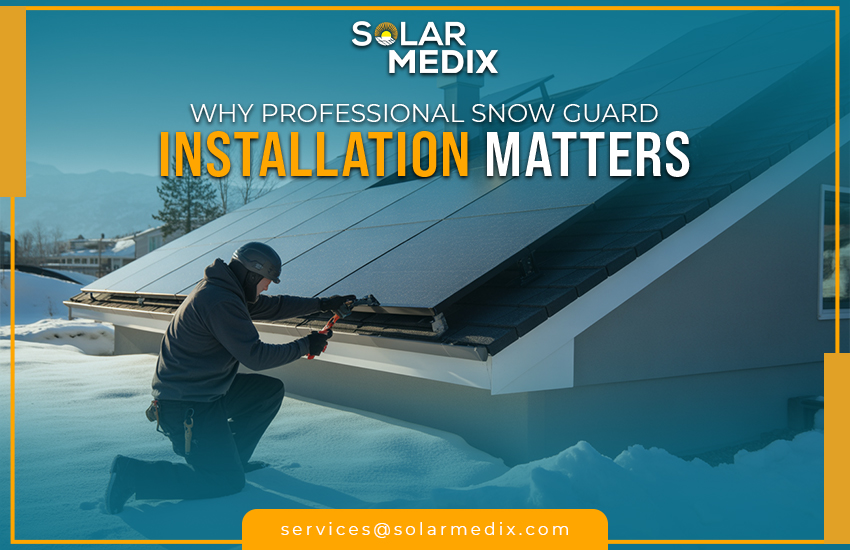
Why Professional Snow Guard Installation Matters
Placement and load path matter, so trained installers map roof pitch, array dimensions, and melt direction before laying out retention. Correct spacing ensures the entire snow field is managed instead of shifting loads to weak spots.
- Expert design sets snow guards in rows that match panel geometry and roof structure.
- Pro installation aligns with manufacturer guidelines to avoid system issues later.
- Proper hardware choice prevents galvanic mismatch and preserves roof integrity.
- Local experience matches solutions to typical storms and thaw cycles for predictable results.
Professional installation closes the loop by delivering safety, performance, and clean winter operations without the risk or guesswork of DIY. Teams that work in snowy regions understand how to size and place retention so panels stay safe and productive.
Solar Medix Advantage In NY
Solar Medix focuses on specialized snow guard solutions for rooftop solar arrays, so installations align with roof design and panel layout. The team combines local experience with proven retention hardware to protect homes, panels, and people in winter.
- Tailored snow guards for residential arrays with rails or pads matched to pitch and span.
- Local knowledge of storms, thaws, and typical roof geometries for reliable outcomes.
- Emphasis on safety at eaves, entries, driveways, and patios during melt events.
- Focus on winter efficiency with designs that help panels clear and return to output.
- Attention to long‑term value with placements that reduce repair calls and downtime.
- Clear homeowner guidance on care and seasonal expectations after installation.
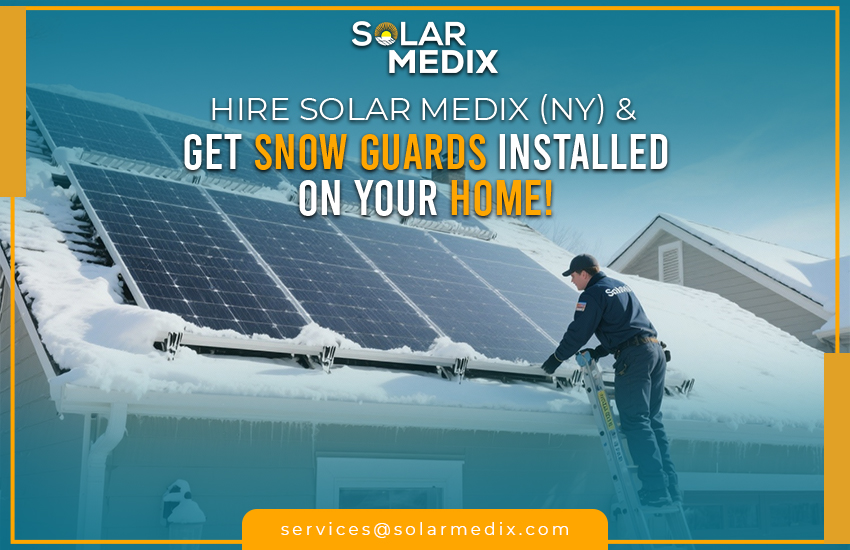
Hire Solar Medix (NY) & Get Snow Guards Installed On Your Home
Ready to stop winter slides before the next storm hits your roof and steps? Snow guards turn dangerous avalanches into slow, controlled melt that protects people, gutters, and vehicles. They also help solar panels return to producing faster after storms, so winter output and savings stay on track.
Professional layout matters because correct spacing and hardware keep loads predictable and roofs watertight through freeze–thaw cycles. Avoid risky rooftop clearing; let controlled melt restore production naturally without ladders or costly repairs.
Solar Medix designs snow retention for your array, pitch, and eaves, using proven methods that fit local conditions. Want a safer entry, fewer gutter failures, and steadier winter generation this season?
Schedule your Solar Medix assessment today for options, timelines, and a clear estimate before the deep freeze arrives.
Let this winter be routine, not risky. Our team is ready when you are.
Frequently Asked Questions (FAQs)
Q1: Do I need snow guards for my solar panels?
If you see regular accumulation of snow and have entries, paths, or vehicles below the eaves, snow guards add safety and help prevent costly damage. Retention is a practical upgrade for smooth glass arrays that shed snow in dangerous sheets.
Q2: What happens to solar panels when they get covered with snow?
Light snow sometimes slides or melts quickly, yet deeper accumulations block sunlight and stop generation until panels clear. Retention helps manage the melt so output returns without hazardous dumps or risky rooftop work.
Q3: Are you supposed to remove snow from solar panels?
Avoid climbing onto a slick roof because the hazard outweighs short‑term energy gains, so let the system clear under controlled melt. Retention reduces the need for manual clearing while protecting people and property below.
Q4: How much snow can solar panels handle?
Panels are built for weather loads, yet large slides can cause impact at edges, racking, and gutters, leading to damage and repairs. Snow guards distribute and slow release to keep forces small and predictable during thaws.