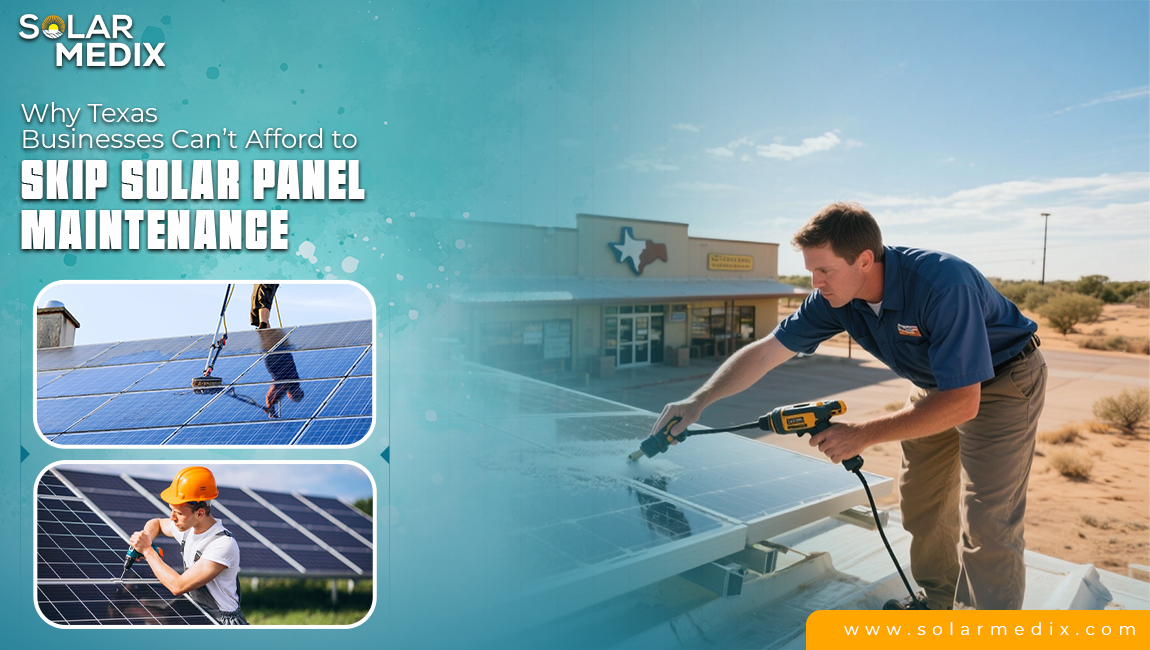
What if the solar panels on your Texas business roof are quietly costing you thousands each year, even when they are absorbing and converting solar energy from the sun?
At Solar Medix, we’ve seen it firsthand—neglected systems lose up to 5.77% more efficiency than the national average due to dust, heat, and storms, according to the 2024 Raptor Maps Global Solar Report. This isn’t just a minor dip; it translates to higher utility bills and slower ROI on your green investment.
From our years servicing arrays across scorching Texas plains, we know that proactive maintenance isn’t optional—it’s the shield that keeps your energy costs down and production humming.
Stay with us through this post, and you’ll uncover the hidden risks, smart strategies, and real steps to safeguard your savings, ensuring your solar setup delivers the payoff it promised from day one.
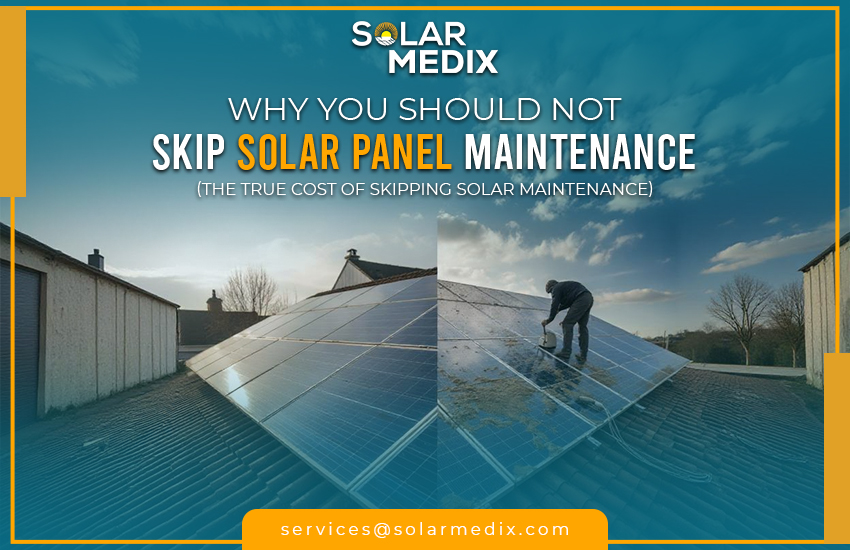
Why You Should Not Skip Solar Panel Maintenance (The True Cost Of Skipping Solar Maintenance)
Dust, pollen, and debris cut irradiance at the glass, which lowers energy yield in ways that may not trigger alarms yet still inflate utility purchases month after month. Skip seasonal cleaning, and you will find hidden losses instead of harvesting inexpensive kilowatt‑hours from an asset meant to pay back steadily over decades.
Texas heat and UV push components harder during peak seasons, so small defects propagate faster without inspections that catch loose connectors, hot spots, or panel cleaning needs before they escalate.
Worse, missed service records can complicate warranty support because many manufacturers and installers expect proof of proper upkeep to honour coverage.
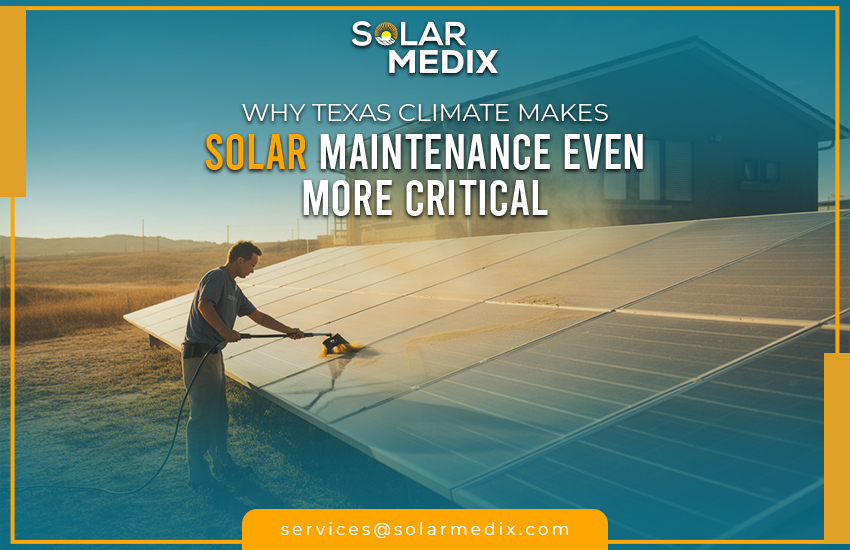
Why Texas Climate Makes Solar Maintenance Even More Critical
Long, bright seasons mean components run hot for extended periods, which raises stress on inverters and balance‑of‑system parts unless they are checked and tuned on a schedule. In many regions, windborne debris and seasonal pollen coat glass quickly, so uncleaned arrays give up easy gains that cleaning services can restore efficiently.
- Extreme heat increases component stress and can magnify minor faults without testing and documentation that verify normal operation after hot spells.
- Dust and pollen accumulation reduce transmittance, so output falls until residue is removed by trained crews using appropriate methods.
- Heavy rain and hail can introduce micro‑cracks or loosen hardware, which routine inspections can identify before water ingress or vibration causes bigger failures.
- Higher solar potential rewards meticulous upkeep because optimized performance compounds savings across long, sunny seasons in competitive markets.
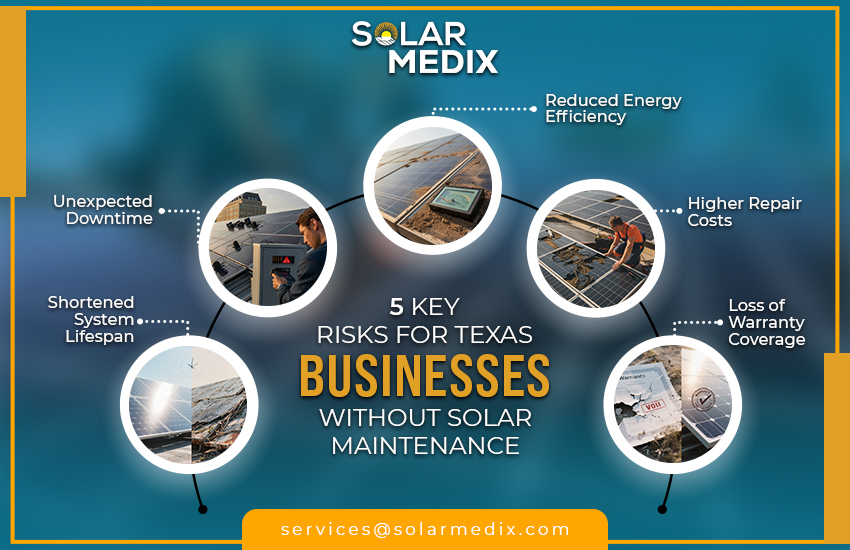
5 Key Risks For Texas Businesses Without Solar Maintenance
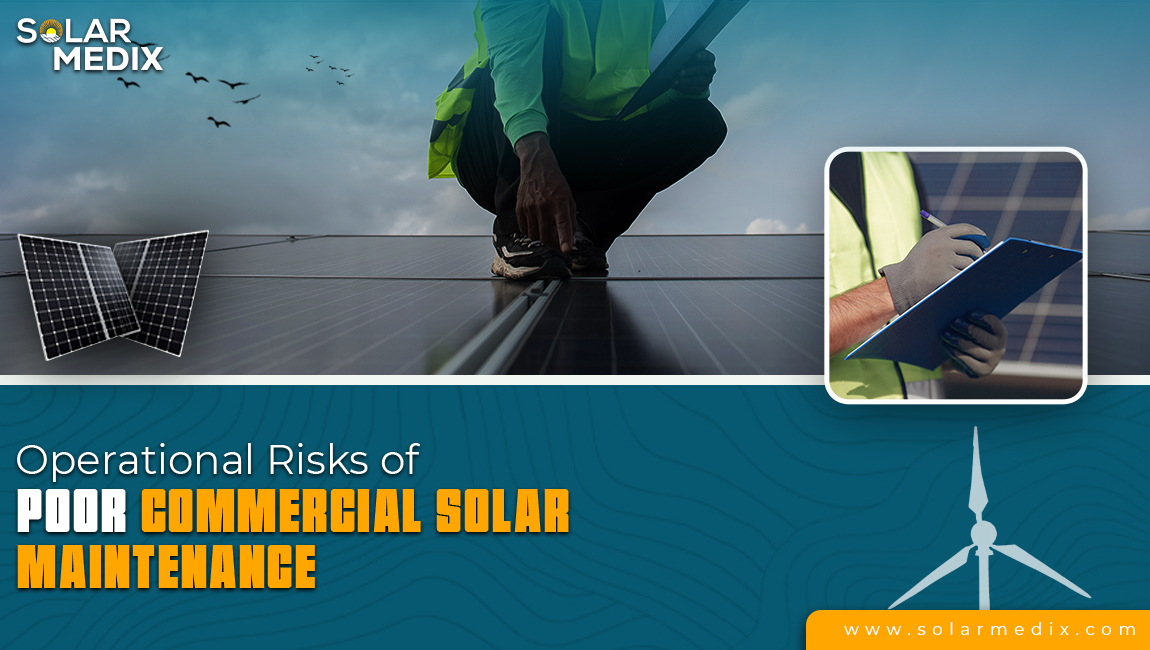
Unchecked systems drift toward lower production and higher operating costs, which undermines payback schedules and energy budgets that assumed steady output. Proactive service converts small, cheap fixes into avoided outages, preserved warranties, and a longer, more profitable service life for the array.
Reduced Energy Production & Higher Utility Bills
Neglected residue and unnoticed component derating push energy purchases up even as the asset looks fine at a glance, which means the spreadsheet loses accuracy over time. Routine cleaning and verification recover output and keep bill reductions aligned with original projections.
- Dirty glass reduces irradiance capture, which drops production until cleaned by a qualified crew.
- Under‑performing strings hide in aggregate data unless diagnostics pinpoint the fault early.
- Optimized settings and verified inverters stabilize yield during long, hot seasons.
Shortened System Lifespan
Heat cycles, vibration, and moisture find weak points faster in uninspected arrays, which can shorten useful life if small issues linger. Periodic tune‑ups and performance monitoring reduce stress and extend asset longevity.
- Tightened mounts and checked seals prevent water ingress and frame fatigue.
- Prompt replacement of failing electronics avoids cascading failures downstream.
- Clean modules run cooler, which reduces thermal stress on laminated stacks.
Safety & Liability Concerns
Loose conductors, degraded insulation, or damaged junctions raise safety risks that inspections can mitigate before they affect personnel or property. Documented fixes meet codes and demonstrate prudent maintenance for risk management.
- Hardware checks catch slipped rails or fasteners after storms and thermal cycling.
- Electrical tests flag abnormal resistance or overheating at terminations.
- Clear reports show corrective actions for insurance or compliance needs.
Missed Warranty Coverage
Manufacturers and many installers expect reasonable upkeep, which means missing records can complicate claims even when defects are covered. Scheduled visits produce timestamped reports that preserve warranty compliance and speed resolutions.
- Service logs prove care and help validate parts replacement requests.
- Annual inspections align with typical labour and product terms.
- Vendor documentation shortens response times on authorized repairs.
Lost Competitive Advantage
Solar savings support pricing flexibility and margin control, so any preventable shortfall concedes ground to better‑maintained competitors. Sustained performance compounds ROI and helps reach the payback window sooner, particularly in high‑sun markets.
- Stable production protects budgets during peak demand seasons.
- Verified output maintains expected bill credits or buyback benefits where available.
- Clean arrays present a better brand image for customers and stakeholders.
What Solar Medix’s Professional Solar Maintenance Includes
Professional care targets the highest‑value tasks first, with documented procedures that restore output, validate safety, and maintain eligibility for coverage and incentives. The result is consistent performance through hot seasons and faster recovery after storms thanks to clear reports, trained technicians, and scalable system diagnostics.
- Comprehensive panel cleaning that removes dust, pollen, and residue with approved methods.
- System diagnostics and performance monitoring to isolate string‑level shortfalls early.
- Inverter testing and repair to stabilize conversion efficiency and uptime.
- Safety checks for mounts, wiring, and connections to mitigate mechanical and electrical risks.
- Reporting for warranties and compliance, so records are audit‑ready when needed.

Why You Should Also Choose Solar Medix For Texas Business Solar Maintenance
Throughout two decades serving Texas commercial arrays, we’ve watched businesses transform their bottom lines simply by committing to regular upkeep schedules that cost far less than the production they protect.
The harshest lesson we deliver involves panels covered in months of grime, inverters showing stress from unchecked heat, and warranty claims denied because service records went missing.
Those painful conversations reinforce why we built Solar Medix around preventive care rather than reactive repairs. Your solar investment deserves the same disciplined attention you give any revenue‑generating asset.
Choose a team that treats maintenance as a performance program, not a chore, because strong procedures and clear reports build resilience and save money over time.
We at Solar Medix align service cadence with hot seasons and local debris patterns to protect yield when your system works hardest, which sustains savings across long, bright months.
- Proven scope that maps to warranties, inspections, and inverter health metrics for fewer surprises.
- Cost‑smart planning that keeps annual upkeep modest compared to the value of recovered production.
- Actionable reporting that tracks trends, flags risk, and supports timely warranty actions when needed.
Schedule your next inspection now, document every visit, and let consistent performance fuel the savings you planned when you signed that first contract.
Strengthen the savings you saw in Why Texas Businesses Can’t Afford To Skip Solar Panel Maintenance—read our latest blog, Top Commercial Solar Maintenance Tips to Protect Your Investment, for practical steps that protect uptime, warranties, and ROI now.
Frequently Asked Questions (FAQs)
Q1: Do solar panels need regular maintenance?
Solar panels are built to last with minimal fuss. Yet dust, pollen, and heat slowly shave output. Schedule periodic cleaning and an annual inspection to keep performance steady. Small fixes cost little compared with lost production. Catch issues early, and your system stays efficient and safe.
Q2: What happens to my solar warranty if I do not do regular solar maintenance?
Most warranties require reasonable care and proof of service. Skip maintenance, and claims can stall. Missing records invite denials or narrower remedies. Keep timestamped reports, photos, and technician notes for every visit. With documentation in place, your provider can authorize parts and labour faster.
Q3: Does solar panel maintenance affect warranty?
Yes. Maintenance supports compliance with product and workmanship terms. Manufacturers expect clean modules, secure wiring, and timely repairs. Service logs and test results prove you met those conditions. When trouble appears, you present evidence. That shortens investigations and reduces out‑of‑pocket costs for approved fixes.
Q4: Why is solar maintenance important?
Because consistent maintenance protects output, lifespan, safety, and cash flow, clean glass transmits more light. Tight hardware resists storms. Verified inverters waste less energy. Together, these steps preserve savings and reduce downtime. Treat the array like a revenue asset, and it will pay you back longer.