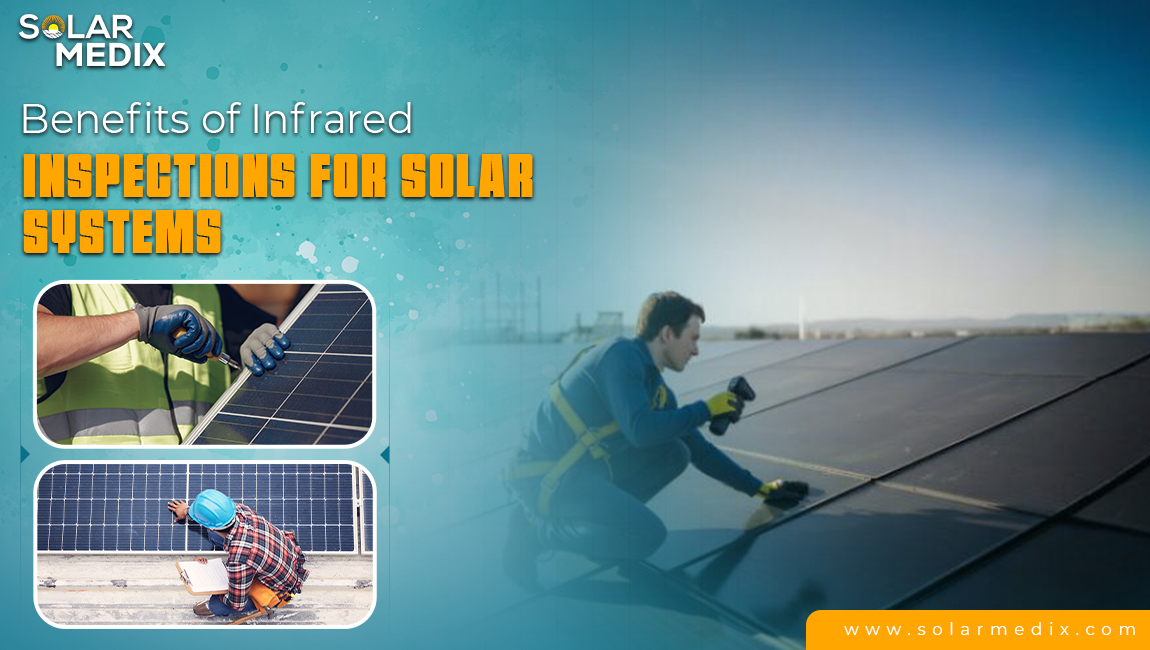
Infrared (IR) inspections provide a thermal blueprint of your solar array to find hidden defects like hot spots or faulty wiring before they cause system failure. These specialized scans detect heat signatures invisible to humans, which helps prevent energy loss and fire hazards. By using thermography, technicians pinpoint exact locations of energy leakage, ensuring your panels operate at peak performance levels.
Relying on Solar Medix maintenance services ensures your technology stays efficient. You can find technical data on how thermal imaging improves asset management at PV Magazine. Another great resource for technical standards is Solar Power World, which frequently discusses hardware longevity.
What Is an Infrared (IR) Inspection in Solar Systems?
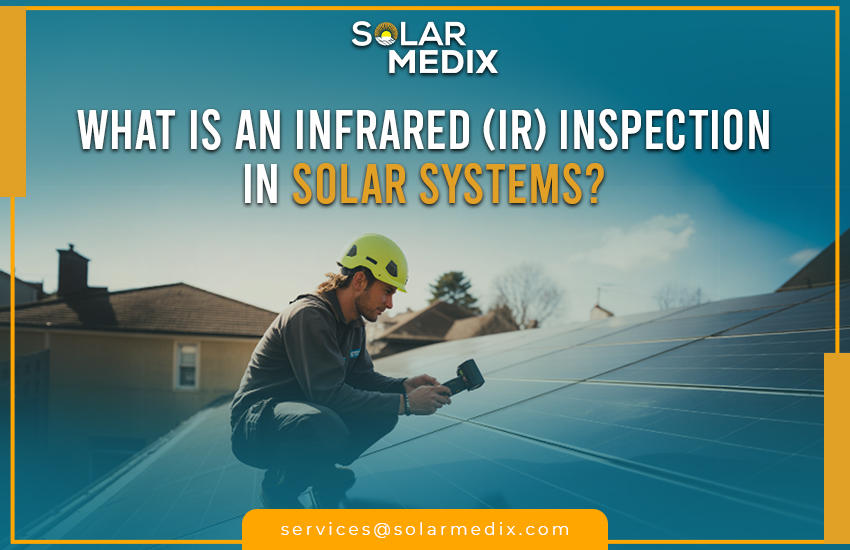
Imagine seeing heat. That is exactly what happens when a technician uses a thermal camera on your roof. These devices capture infrared radiation. If a cell is cracked, it resists electricity. Consequently, it gets hot. This heat shows up as a bright spot on the screen.
You don’t have to turn the power off for this. The process is extremely quick. Because it is non-invasive, your panels stay safe while we look for trouble. We catch issues while the sun is shining brightest. It is the most effective way to see “inside” the hardware without taking anything apart.
6 Common Solar Problems Only Infrared Inspections Can Detect
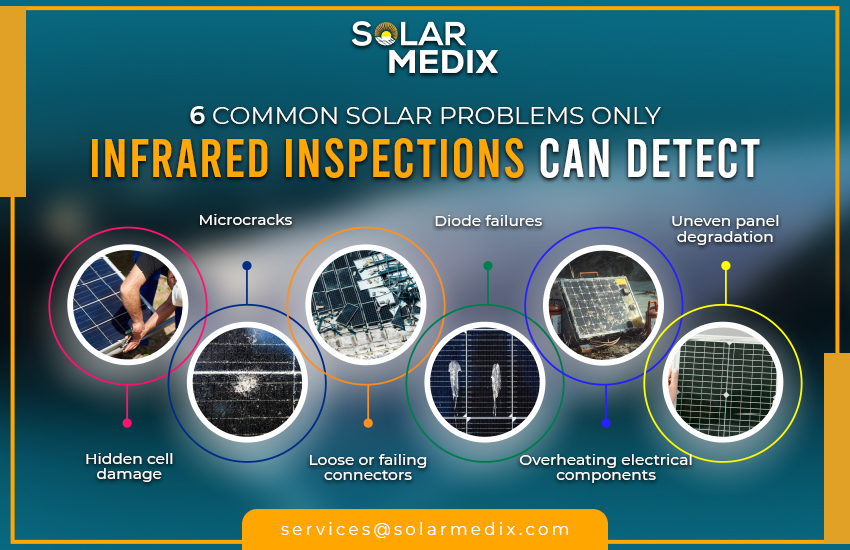
Some solar issues stay hidden until your bill spikes. You might think everything is fine because the glass looks clear. However, internal failures often hide in plain sight.
- Hidden cell damage: Impacts or manufacturing flaws you can’t see.
- Microcracks: Tiny fractures that block the flow of electrons.
- Loose or failing connectors: These create high resistance and heat.
- Diode failures: A faulty diode can drop the output of an entire string.
- Overheating electrical components: Fire risks live inside these hot zones.
- Uneven panel degradation: One panel might age faster than its neighbors.
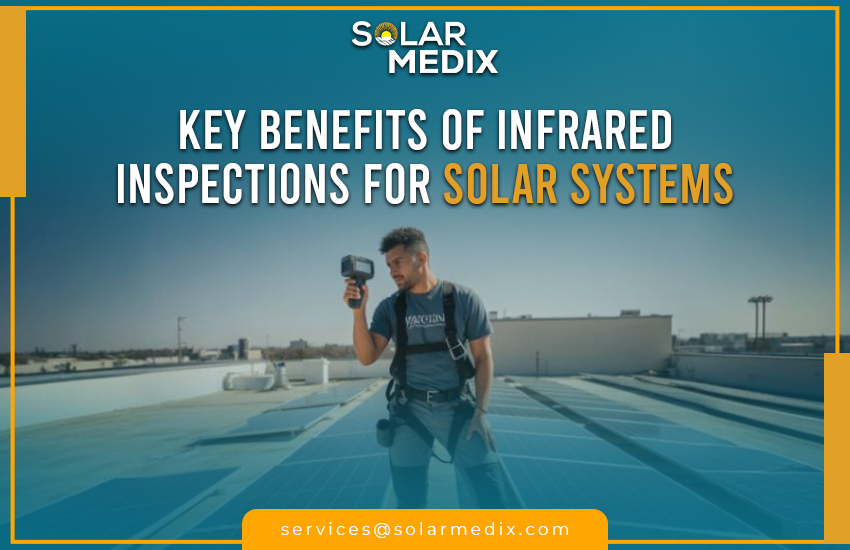
Key Benefits of Infrared Inspections for Solar Systems
Prevention saves your wallet. Finding a small heat spot now avoids a full panel replacement later. Your system lasts longer when you catch these “silent killers” early.
- Early problem detection
- Improved system efficiency
- Reduced risk of fire or electrical failure
- Lower long-term repair costs
- Better system reliability
- Peace of mind for owners
These advantages showcase why IR inspections are crucial for solar panels.
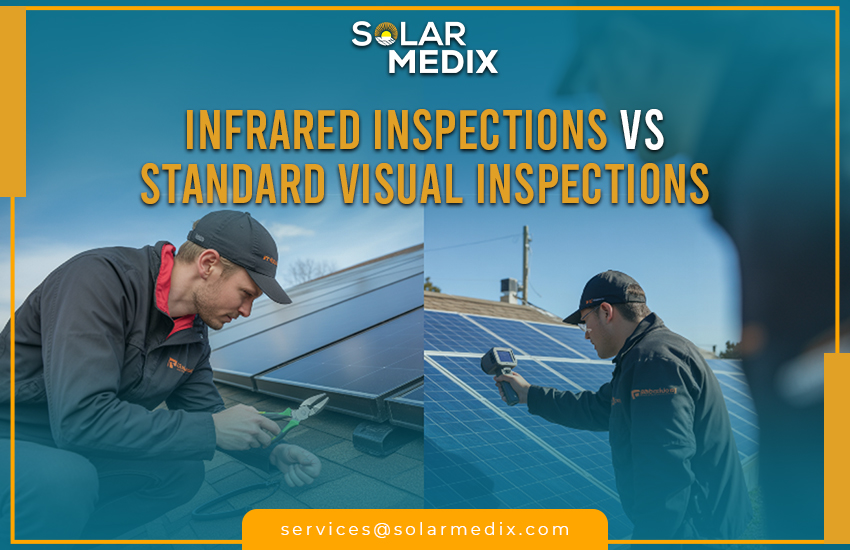
Infrared Inspections vs Standard Visual Inspections
A visual check looks for bird droppings or broken glass. It is a surface-level glance. IR goes deeper. While a technician might see a clean panel with their eyes, the thermal camera might show a cell that is literally cooking itself.
Infrared Inspections
- Detect internal thermal signatures that signal electrical resistance.
- Provide 100% accuracy for identifying dead cells or bypass diode issues.
Standard Visual Inspections
- Identify physical obstructions like shading, dirt, or cracked glass.
- Miss internal bottlenecks that lead to significant power loss.
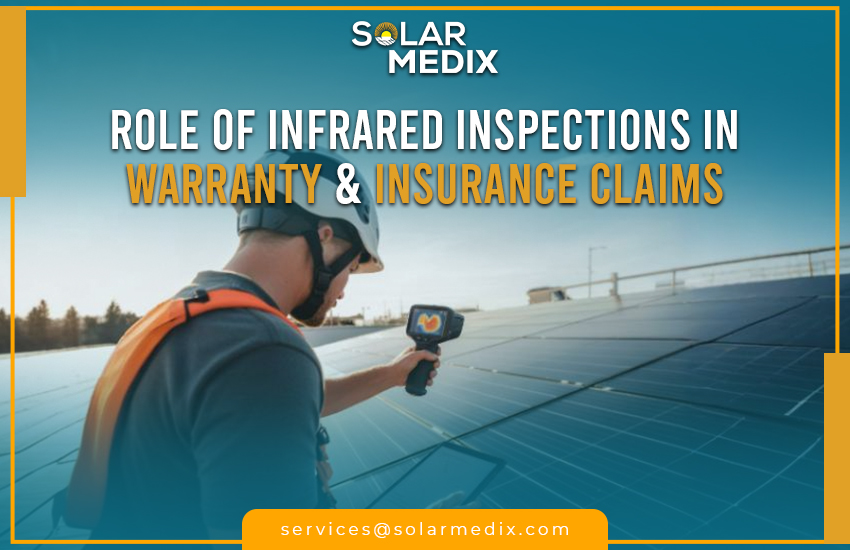
Role of Infrared Inspections in Warranty & Insurance Claims
Manufacturers want proof. If you claim a panel is bad, they need a report showing the specific failure. An IR scan provides a “heat map” of the defect. This evidence is hard to argue against. It speeds up the replacement process.
Insurance companies love documentation, too. If a fire happens, having a recent IR report shows you looked after the system. This helps avoid disputes during a claim. Professional reporting makes the whole process smooth. It proves you are a responsible owner.
Schedule an IR Inspection with Solar Medix & Protect Your Solar Investment
Your solar array is an investment. It needs to produce power for decades. We make sure that happens by using the best diagnostic tools available. Check out our solar O&M services to see how we handle these issues.
- Fast scheduling for residential and commercial sites.
- Expert analysis from certified technicians.
- Detailed reports for your records.
Contact Solar Medix today. We keep your energy flowing. Don’t wait for a total system shutdown to act.
Frequently Asked Questions (FAQs)
Q1: How long does an IR inspection take?
Usually 30 to 60 minutes. The duration depends mostly on the size of your array. Residential homes are very quick.
Q2: How often should solar systems get IR inspections?
Once every year. Annual checks ensure no new microcracks appear during winter or heavy storm seasons.
Q3: Can IR inspections detect inverter issues?
Yes. We scan the inverter’s internal components for overheating. This prevents total system shutdowns and protects your home.
Q4: Do I need IR inspections for warranty claims?
Frequently, yes. Most manufacturers require technical proof of a “hot spot” before they will ship a replacement panel. Thermal images are the standard proof they accept.